
 Buy gold bars
 Buy gold coins
 Series
 Buy silver coins
 Buy silver bars
 Series
 Buy silver collectible coins
 Silver collectible coin series
 Buy gold collectible series
 Gold collectible coin series
 Author:
  Date: 28 May 2026
Structural wealth accumulation: long term vs short term
 Rolf van Zanten
18 May 2026
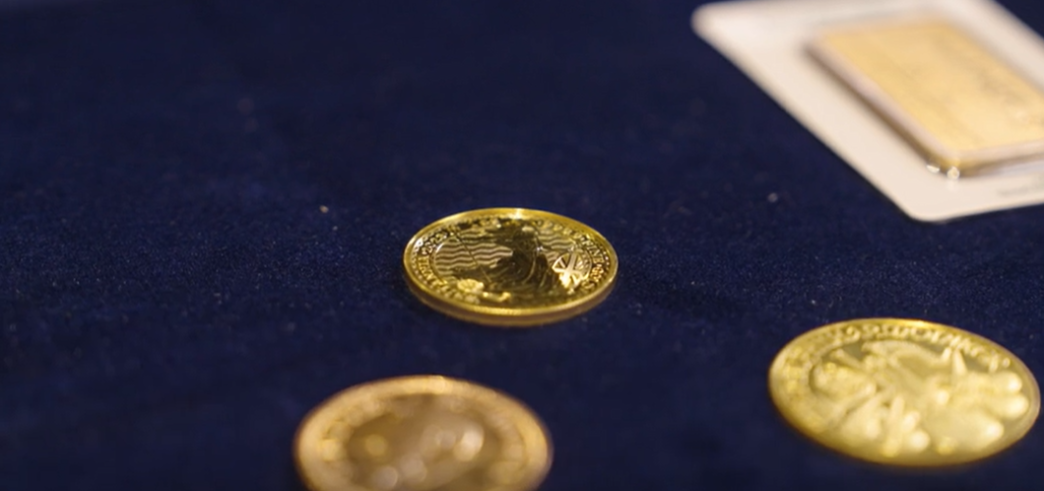
The moment you sell your precious metal is actually much more important than the moment you bought it. Your initial purchase determines the cost price but the final sale determines whether you actually realize a good return. Yet many investors spend years focusing on collecting coins or bars and only think about how to successfully reduce this position at the very last moment.
In this knowledge center article, we share our expertise on strategic profit-taking. We explain exactly how you set up a selling strategy, which tax rules apply in the Netherlands and how you secure your return without depending on emotions or the issues of the day.
Within successful wealth management, there is a world of difference between gambling on a price increase and executing a well-thought-out financial plan. A sales strategy is a predetermined framework with which you rationally decide under which specific circumstances you will sell your physical precious metal.
This is fundamentally different from speculating. Speculating means you desperately try to predict exactly when the price peak on the stock market will be reached. With a speculative approach, you are guided by daily financial news and human emotions such as fear or greed.
What successful investors do instead is stick to a strong and personal process. This professional framework protects you against the two biggest pitfalls in the investment world:
If you wonder whether timing the market is really that difficult, independent scientific research offers the definitive answer. The renowned financial research firm Dalbar publishes the well-known study called Quantitative Analysis of Investor Behavior every year.
For decades, this leading report has conclusively shown that active speculators structurally achieve a much lower return than the market itself. According to the researchers, the main cause for this lies purely in the emotional and hasty decisions of the investor.
Investors who follow a predetermined sales strategy and do not get distracted by the issues of the day perform significantly better in the long term. This directly proves why a clear sales strategy is indispensable for a healthy investment portfolio.
Determining the perfect selling moment never depends on a single factor or a sudden rumor in the media. Professional wealth managers always look at a balanced combination of different indicators to determine whether a portfolio needs adjustments.
When you are considering partially liquidating your physical gold or silver, you can base your decision on 4 pillars.
Your personal situation is always the most important guiding principle within your sales strategy. Physical precious metal is usually purchased with a horizon of at least seven to ten years to bridge larger economic cycles.
Are you still in the middle of this previously planned period? Then historically speaking, there is rarely a good reason to sell in the interim during temporary market fluctuations.
However, as soon as your investment horizon approaches its end because, for example, you reach your retirement age or want to donate your wealth, the situation changes. Approaching your personal end goal is one of the most rational reasons to convert your precious metal into liquid assets in phases.
The global gold price and silver price react extremely strongly to a select number of macroeconomic forces. Precious metals historically excel in times of a deeply negative real interest rate, which means that inflation is significantly higher than the interest on regular savings accounts.
As soon as this economic dynamic changes, it can be a fundamental signal to critically evaluate your position. When central banks aggressively raise nominal interest rates and inflation structurally cools down, the real interest rate increases.
Historically, this creates headwinds for precious metals because gold and silver, after all, do not pay a direct dividend or interest. A sustained strengthening of the US dollar index also usually depresses the global gold price.
Technical analysis never predicts the future, but it does show very clearly when a market becomes overheated. A frequently used tool is the so-called 200-day moving average. When the current gold price or silver price rises extremely far above this, it indicates an overextended market in which an interim correction is logical.
In addition, the gold/silver ratio offers a strategic indicator for the mutual proportions. This ratio shows exactly how many ounces of physical silver you need to purchase a single ounce of pure gold.
Is this ratio historically very low? Then silver has become relatively expensive compared to gold, which for many investors is a direct signal to liquidate their silver positions instead.
The final pillar relates to factors outside the financial markets that do have a major impact on your ultimate net return. Think of acute personal liquidity needs such as the opportunity to purchase a dream home or to finance a business investment.
Changes in national legislation by the Tax and Customs Administration can also trigger a selling moment. When the tax rules surrounding the wealth yield tax in box 3 change drastically, reconsidering your physical assets before the annual reference date of January 1 can be an exceptionally smart move.
In the table below, you will find a clear summary of the four most important pillars so that you can immediately use them as an objective decision framework for your own portfolio.
| Core factor | Most important indicators | Strategic selling signal |
|---|---|---|
| 1. Personal horizon | Age, retirement date, and predefined return goals | Approaching your end date or achieving your targeted capital |
| 2. Macroeconomics | Real interest rates, inflation figures, and the global dollar rate | Structurally rising real interest rates and a strong cooling of inflation |
| 3. Market analysis | The 200-day moving average, resistance levels, and the gold-silver ratio | Extreme price overheating above the average or a historically low ratio |
| 4. Practical matters | Acute need for capital and changing legislation from the Tax Authorities | New opportunities in real estate or tax changes around the reference date in box three |
In practice, we see at The Silver Mountain that the most successful investors rarely rely on their gut feeling or the latest news. They almost always use one of the five well-thought-out strategies below.
Which specific method suits you best depends entirely on your financial goals and your willingness to actively follow the market.
You determine hard prices in advance at which you sell a part of your portfolio. For example, you decide to cash in a quarter of your coins at a gold price of 2500 euros and the rest only at 3000 euros.
The big advantage of this is that you completely eliminate any form of emotion. The market dictates when you sell and therefore not your state of mind. This is perfect for investors with crystal-clear return goals.
You periodically sell a fixed percentage or a predetermined amount of your total position. For example, you liquidate exactly 5% every quarter over a period of two years.
With this calm spread, you average your final yield price and you avoid the risk of selling all your assets at a historical low. This is a wise method for investors who are approaching their retirement age.
Within your broad wealth management, you agree with yourself that physical precious metal may always comprise exactly 10% of your total wealth. As soon as this position grows to 15% due to huge price increases, you simply sell the resulting surplus.
With this methodology, you very systematically sell what has become relatively expensive, after which you can reinvest the profit in other categories.
You keep your total precious metal position intact, but you shift extremely strategically between the different metals. Is buying silver historically incredibly expensive compared to gold? Then you immediately sell your silver bars to buy physical gold coins back on the spot.
This method requires some market knowledge but offers active investors fantastic opportunities to increase their total holdings without investing extra capital.
You let your assets ride along carefree on an upward trend, but you do set a hard percentage lower limit in advance. For example, as soon as the international price drops by 10% from the very last peak, you immediately liquidate a part of your wealth.
With this, you protect all your previously accumulated profits in a rising market without immediately panicking at every small dip.
The most experienced precious metal owners almost never bet on one horse. They combine the above methods with each other for the very best result. An annual rebalancing, for example, can be perfectly combined with a target price.
By using this smart combination, you immediately cover multiple scenarios, and your wealth remains optimally protected under all conceivable market conditions.

A good selling strategy for precious metals depends on your financial goals, not on emotion or panic in the market.
Knowing when it is better to hold on tightly to your assets is just as important for your wealth accumulation as finding the perfect selling moment. Many novice investors make unnecessary mistakes because they let themselves be carried away by the issues of the day and the current financial news.
Our experts strongly advise against liquidating your physical precious metal in the following three specific situations:
If the global financial markets collapse unexpectedly, selling often feels like the best option to prevent further losses. In practice, however, we see that precious metals often experience a very temporary dip during a major crisis. This simply happens because large investors sell gold en masse to supplement their acute shortages elsewhere.
Financial history teaches us that physical gold and silver actually recover extremely quickly after such a panic reaction. Those who sell during blind panic are almost guaranteed to miss the subsequent and often very strong price rally.
Physical precious metal performs strongest in an economic climate where inflation is significantly higher than the interest on your savings account. We call this unfavorable economic phenomenon a negative real interest rate.
When you decide to liquidate your assets at a time when this interest rate is deeply negative, you are literally throwing your strongest financial defense overboard.
A large amount of cash in your bank account might sound very comfortable and safe after a successful sale. Yet this fiat money rapidly loses its hard purchasing power due to constant inflation and tax pressure. Only sell your value-retaining precious metals when you have determined in advance what you are going to do with the released liquidity.
Do you not yet have a concrete plan for purchasing real estate or stocks? Then it is simply much wiser to let your wealth yield safely in the secured vaults until you do have a clear investment goal.
When you own both gold and silver, the follow-up question is: which metal do you sell first? Three considerations are relevant here.
Gold is generally less volatile than silver; the annual volatility of silver can be 2 to 3 times as high. At the same time, gold has a deeper market and a lower spread (difference between bid price and ask price).
In practice, this means that gold can be sold faster and at a price closer to the spot price, while silver is more sensitive to timing and transaction costs.
The gold/silver ratio offers a rational guide. With a ratio of 90 (silver historically cheap), it is more attractive to sell gold and stay in silver, or, in the case of a general reduction, to sell your gold before your silver.
With a ratio of 50 (silver historically expensive), the reverse applies.
For private individuals in the Netherlands, the tax difference between gold and silver is limited; both fall under box 3 (see below). There is, however, a practical difference: investment gold is exempt from VAT in the EU, while VAT is levied on physical silver.
This is incorporated in the purchase price but plays no role in the sale itself, except that it makes your effective break-even price for silver higher than it seems at first glance.
If you follow the financial news channels, you constantly hear the international spot price. However, this is a virtual wholesale price for extreme trading volumes. As a private seller, you receive the dealer's bid price.
The difference between the international spot price and the final bid price is what we call the spread. With this margin, a dealer covers their logistical risks, production costs and insured storage.
With large gold bars, this spread is significantly smaller than with very rare and labor-intensive silver collector coins. Silver is also naturally much more volatile than gold.
For private investors in the Netherlands, precious metal in their own possession falls under the wealth tax in box 3. As a result, you do not pay income tax on the actual sales profit. Instead, you pay an annual wealth yield tax on the total value of your assets on the reference date of January 1.
Furthermore, investment gold is completely exempt from VAT throughout Europe, which makes it an exceptionally tax-attractive product.
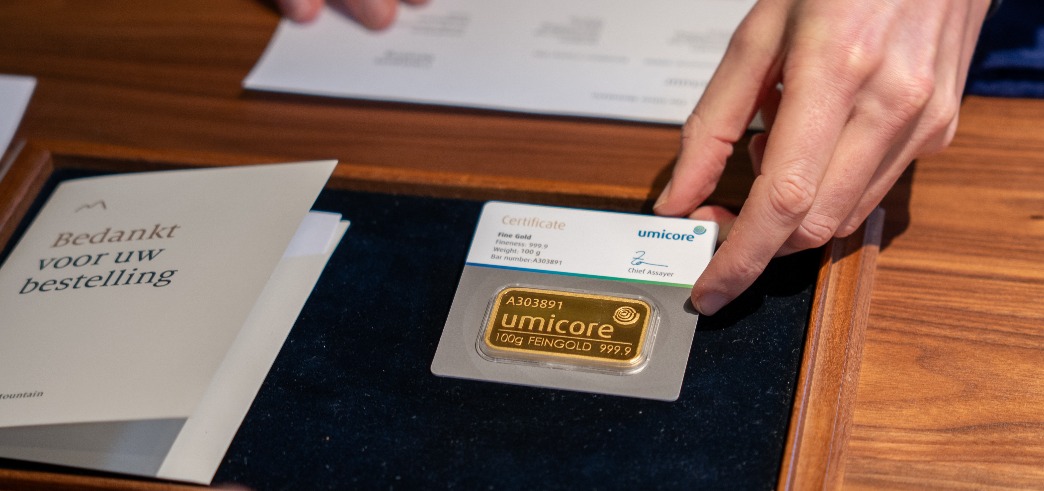
There are several selling strategies when you want to sell gold, the best one depends on your personal investment preferences.
With this practical step-by-step plan, you are optimally prepared to liquidate your wealth when the time is right.
When you have decided to liquidate a part of your gold or silver, you face the important choice of which sales channel you will use for this. After all, the choice of the channel has a direct impact on your safety, convenience, and the final yield price.
To help you make a decision, we have clearly compared the 5 most common sales channels for you.
| Sales channel | Important advantages | Points of attention |
|---|---|---|
| Recognized precious metal dealer | Extremely reliable, a competitive market price, and professional, discrete handling. | It is wise to always compare the current yield prices between different parties in advance. |
| Online sales platforms of dealers | Extremely fast and transparent processing with a fixed and guaranteed price per product. | The insured and secure shipping of precious and valuable goods requires extra care. |
| Specialized auction | Possibly a higher yield for very rare coins or unique historical pieces. | There is an uncertain final yield, high auction costs, and a relatively long lead time. |
| Private sale via marketplace or friends | There is no spread between the purchase price and the selling price. | A significant risk of fraud and personal liability, while an official guarantee of origin is also missing. |
| Regular bank | A trusted and familiar institution for most private consumers. | By no means all banks still buy physical precious metal nowadays, and they often use less favorable prices. |
Are you ready to put your strategy into practice? For the sale of your physical gold pieces and silver bars, The Silver Mountain works extremely closely with sister company Inkoop Edelmetaal.
Thanks to this trusted connection, you are assured of transparent bid prices that are directly linked to current international stock market prices. We offer you a unique buy-back guarantee for all specific products you have ever purchased through us. This allows you to always cash in your accumulated wealth discretely, safely, and quickly.

Determining the right selling moment for your precious metal is an important part of successful wealth management. A well-thought-out sales strategy prevents you from making hasty decisions based on emotions or temporary market fluctuations.
By putting your personal goals first and choosing a proven method such as phased selling or portfolio rebalancing, you always retain full control. In this way, you safely cash in your achieved return and optimally protect your accumulated wealth.
The Silver Mountain does not provide investment advice. This article is for educational purposes only. Past performance is not indicative of future results.
A wise selling moment depends entirely on your own financial goals and not on daily market predictions. Strategically speaking, it is an excellent moment when your predetermined target price is reached or when your investment portfolio becomes unbalanced due to huge price increases.
This is not necessary because both precious metals react fundamentally differently on the stock market. Gold primarily functions as an extremely safe haven during economic turmoil. Silver, on the other hand, reacts extremely strongly to global industrial demand. Therefore, always evaluate both investments separately.
For private investors, your physical precious metal falls within the regular wealth tax in box 3. As a result, you pay no income tax at all on your actual sales profit. The Tax Authorities only look at the total financial value of all your assets on the annual reference date.
Your actual return is the current bid price of the precious metal dealer minus your original total purchase amount. With the original costs, absolutely do not forget to include the production costs paid at the time and any VAT on silver bars in your final calculation.
The spot price is exclusively the international reference price for huge trading volumes on the stock exchange. As a private seller, however, you receive the dealer's bid price. The small difference between these is the spread with which the dealer fully covers their administrative costs and logistical security risks.
This well-known historical ratio shows exactly how many ounces of physical silver you need to buy a single ounce of pure gold. Many active investors use this powerful signal to shift within their portfolio without actually reducing their total investment in precious metals.
By selling your assets in small steps, you lower the significant risk of liquidating everything at an unfavorable moment. In this wise manner, you partially take your profit and yet you continue to wonderfully benefit when current prices rise further in the future.
Rolf van Zanten is the founder and owner of The Silver Mountain, a specialist in physical precious metals since 2008. With nearly twenty years of experience in the precious metals trade, Rolf shares his expertise on investing in gold, silver, and platinum in an accessible and reliable way. His knowledge of the international gold and silver markets helps investors make well-informed decisions. In his role as an expert, he strives to ensure that transparency, security, and trust are at the heart of every purchase.

Be the first to discover the latest products and the latest news about precious metals.



 Nederlands