
 Buy gold bars
 Buy gold coins
 Series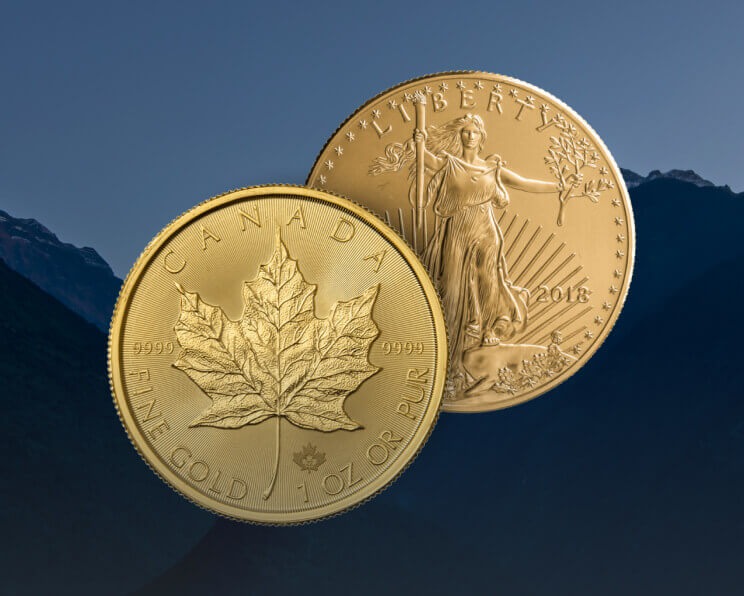
 Buy silver coins
 Buy silver bars
 Series
 Buy silver collectible coins
 Silver collectible coin series
 Buy gold collectible series
 Gold collectible coin series
 Author:
  Date: 21 February 2025
 About
About Can the government take my gold and silver?
 Daan Wesdorp
19 March 2025
Purchasing physical gold often raises questions about taxation. Many investors hear that investment gold is "VAT-exempt", but do not always know why, when this exemption applies, and which exceptions exist.
In this knowledge article, we clearly explain how VAT on gold is regulated by law, why investment gold is exempt from VAT, and what buyers should take into account.
This article is intended to provide fiscal clarity, enabling you to make well-informed decisions when investing in gold.
The VAT exemption for investment gold is not a temporary measure or special favour — it is a fixed part of European legislation. The background lies in both economic considerations and fiscal harmonisation within the EU.
To understand why investment gold is not subject to VAT, it is important to look at gold’s role in financial markets and how this is legally defined.
The core of the exemption is that investment gold is treated in law as a form of financial asset, similar to currency or other investment products. Because VAT is a consumption tax, it applies to consumer goods and not to financial assets.
Therefore, legislation distinguishes between:
The VAT exemption for investment gold is uniformly regulated across Europe through EU Directive 98/80/EC, introduced in 1998. This directive states that gold meeting specific quality and form requirements must be exempt from VAT.
Why the directive was introduced:
Harmonisation of the European gold market:
Before 1998, rules varied by country: some applied VAT to gold, others didn’t — causing market distortions and unequal competition.
Encouraging gold as an investment:
The EU wanted to make the gold market more accessible to both private and institutional investors. VAT exemption resulted in more transparent and efficient trading with fewer price distortions.
Gold as a reserve asset:
Central banks also use gold as a store of value. To keep this asset freely tradable, tax burdens must be eliminated.
Not all gold offered for sale automatically qualifies for the VAT exemption. The exemption applies exclusively to gold classified as investment gold under European and Dutch law. This classification ensures gold is treated as an investment product rather than a consumer good.
The distinction matters because VAT is aimed at consumption, not investment. Only gold used primarily for value storage, and meeting strict quality criteria, may be traded without VAT.
In practice, gold is VAT-free only when it meets objective criteria such as purity, form, market recognition, and identification as an investment product. These requirements ensure a reliable, standardised European gold market.
Below is an overview of the two categories legally recognised as VAT-exempt investment gold: gold bars and gold investment coins.
Gold bars qualify as VAT-free investment gold only when they meet the following conditions:
Approved producers are often certified by the London Bullion Market Association (LBMA), such as Umicore, C. Hafner or the Royal Canadian Mint. LBMA certification ensures that the bar’s origin and purity are trusted worldwide.
Not all gold coins are automatically VAT-free. Only coins recognised by the European Commission as investment coins qualify. Each year, the EU publishes a list of approved coins meeting the legal requirements.
A coin is VAT-exempt when it meets all of the following criteria:
Common examples include:
These coins are globally recognised investment products and are traded based on the current gold price, not on collector value.
In the EU you don't have to pay VAT on investment gold, like gold bars and coins.
Although investment gold is exempt from VAT, the exemption does not apply to all forms of gold. Products that do not meet the legal criteria for investment gold are considered consumer goods or collector items, in which case standard VAT (21% in many EU countries) applies.
The key difference is the intended purpose of the product: Is it bought as an investment in pure gold, or does it have use value, collector value or artistic value? When gold value is not the main price-determining factor, the product does not qualify for VAT exemption.
Gold coins purchased for historical, cultural or collector value do not meet the definition of investment gold. Their price is usually determined by rarity, condition (grading), or historical significance and not by their gold content.
Examples:
These are seen as collector’s items and therefore subject to 21% VAT.
Gold jewellery, such as rings, necklaces or bracelets, falls under luxury consumer goods. The gold price is only one component of the final price, which also includes design, labour, brand, gemstones and craftsmanship.
Therefore:
Gold only qualifies for VAT exemption if it meets strict quality requirements. Bars must be at least 99.5% pure; coins at least 90%. Lower-purity products, such as 14k or 18k gold, are treated as raw material or scrap gold and taxed with standard VAT.
The same applies to gold processed into jewellery, art or designer pieces where craftsmanship and exclusivity determine the value. Additionally, investment gold must be internationally recognisable and tradable.
Bars without hallmarks, non-certified smelter gold, or unstamped “raw gold” do not meet market standards and are therefore fiscally treated as taxable goods.
The VAT exemption simplifies the buying and selling of gold for private investors. Although the tax rules are technical, the process is straightforward.
When you buy investment gold, you do not pay VAT on the gold itself. However, dealers must meet specific administrative and quality requirements to ensure transparency and international standardisation.
For buyers, this means that the price of a gold bar or coin is determined directly by the current gold price plus a premium for production, transport and distribution, but without VAT added.
To sell investment gold without VAT, dealers must follow strict control and registration requirements:
When buying investment gold, the price consists of:
When private individuals sell investment gold:
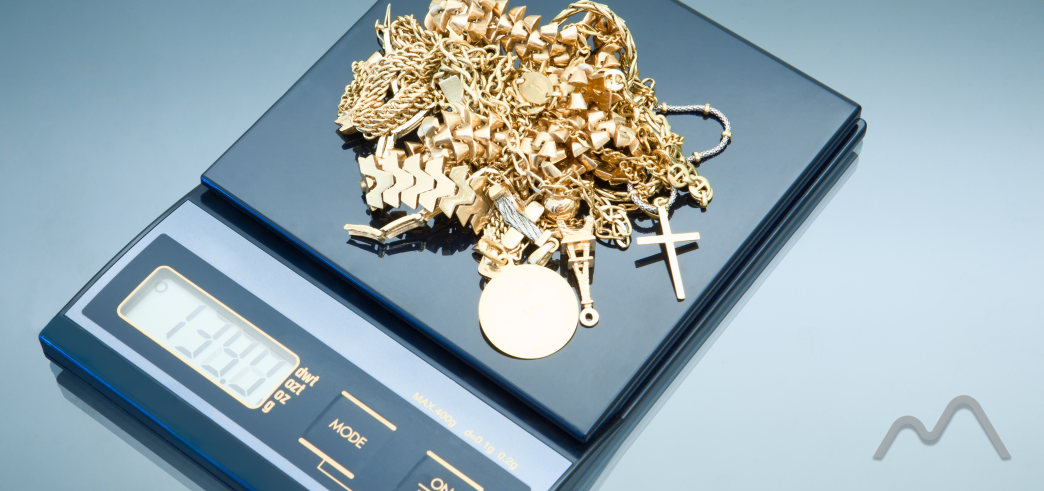
You don't have to pay VAT on gold, but it is taxed under Box 3 (Wealth Tax).
The term “VAT-free gold” sometimes causes the misconception that gold is completely tax-free. In reality, VAT exemption only concerns the buying and selling of investment gold.
Other types of taxation may still apply to your wealth. It is therefore important to distinguish between tax rules for VAT and tax rules for owning physical gold.
When buying investment gold, you do not pay VAT because it is considered a financial asset. Likewise, when private individuals sell gold, VAT is not due because the sale is not considered a business activity but part of normal asset management.
However, gold is not fully exempt from all taxes. In the Netherlands, physical gold is included in Box 3 (wealth tax) of the income tax system. The value is included as part of your total assets, similar to savings or investments. Annual tax depends on your total wealth minus the tax-free allowance.
There is also no capital gains tax in the Netherlands: profits from a rising gold price are not taxed separately. Likewise, selling gold to a recognised dealer does not trigger tax on your profit.
The VAT exemption makes investment gold more efficient and accessible. Because you do not pay 21% VAT, your entire investment goes directly into the gold itself. This enhances long-term return potential and maintains gold’s attractiveness in a diversified portfolio.
No VAT is charged on gold bars and investment coins, meaning you avoid a 21% surcharge. This allows you to acquire more gold for the same amount, and your investment reflects the market value immediately.
Because VAT is not added, the purchase price closely aligns with the global spot price. This prevents distortions and ensures transparent price comparison between dealers.
VAT-free gold is globally recognised and easily tradable. VAT does not affect resale, making investment gold highly liquid.
Without VAT overhead, gold is an efficient hedge against inflation and uncertainty. Its fiscal efficiency supports long-term stability and value preservation.
In Belgium, gold purchased for investment purposes is also typically exempt from VAT, just as in the Netherlands. This applies to gold bars and gold coins that meet the criteria for “investment gold”.
Belgian legislation follows the European directive: gold coins must have at least 90% purity and bars must meet 995‰ purity, among other requirements. Coins must also be minted after 1800.
At The Silver Mountain, you can easily buy investment gold without 21% VAT. All products are authenticity-checked and sourced exclusively from recognised producers. This ensures the highest purity and global tradability.
We also offer a unique buy-back guarantee through our subsidiary Inkoop Edelmetaal. If your investment gold comes from a recognised producer, we can buy it back from you.
Investment gold is exempt from VAT across the European Union because it is treated as a financial instrument, not a consumer good. As a result, you buy gold at a transparent, market-based price without tax markup.
The exemption applies only to gold meeting strict purity and quality standards. Other forms of gold, such as jewellery or collector coins, are subject to VAT.
Thanks to this fiscal framework, investment gold remains an efficient, liquid and reliable component of a diversified investment portfolio.
The Silver Mountain does not provide individual investment advice. This article is for informational purposes only. Past results and described market developments offer no guarantees for the future.
Investment gold is exempt from VAT because European law classifies it as a financial instrument. Therefore, no tax is charged at purchase or sale. The exemption applies only to gold meeting strict purity and quality standards, such as recognised bars and investment coins.
Only coins meeting EU criteria are sold VAT-free: ≥ 90% purity, minted after 1800, legal tender, and listed on the EU’s annual list of recognised investment coins. Examples include the Krugerrand, Maple Leaf, Britannia, Kangaroo and Philharmoniker.
No. Although investment gold is VAT-free, it is included in Box 3 of the income tax system. Its value counts towards your total assets. However, you do not pay tax on capital gains and no VAT is charged when selling.
You pay VAT when the product is not investment gold. This applies to jewellery, low-purity gold, numismatic items, artwork and gold that is not internationally tradable.
A gold bar is VAT-free if it is at least 99.5% pure, produced by a recognised manufacturer, and has a serial number, hallmark and certificate. Products without clear identification do not qualify.
No. Selling investment gold as a private individual falls under normal asset management and is VAT-exempt. The sale price depends on weight, purity and the current gold price.
Yes. The VAT status does not change based on storage. As long as the gold qualifies as investment gold, it remains VAT-free — whether delivered physically or stored securely. Storage services may involve fees, but no VAT on the gold itself.
Rolf van Zanten is the founder and owner of The Silver Mountain, a specialist in physical precious metals since 2008. With nearly twenty years of experience in the precious metals trade, Rolf shares his expertise on investing in gold, silver, and platinum in an accessible and reliable way. His knowledge of the international gold and silver markets helps investors make well-informed decisions. In his role as an expert, he strives to ensure that transparency, security, and trust are at the heart of every purchase.

Be the first to discover the latest products and the latest news about precious metals.



 Nederlands