
 Buy gold bars
 Buy gold coins
 Series
 Buy silver coins
 Buy silver bars
 Series
 Buy silver collectible coins
 Silver collectible coin series
 Buy gold collectible series
 Gold collectible coin series
 Author:
  Date: 19 March 2025
VAT on Gold: everything you need to know about buying VAT-Free Gold
 Rolf van Zanten
21 February 2025
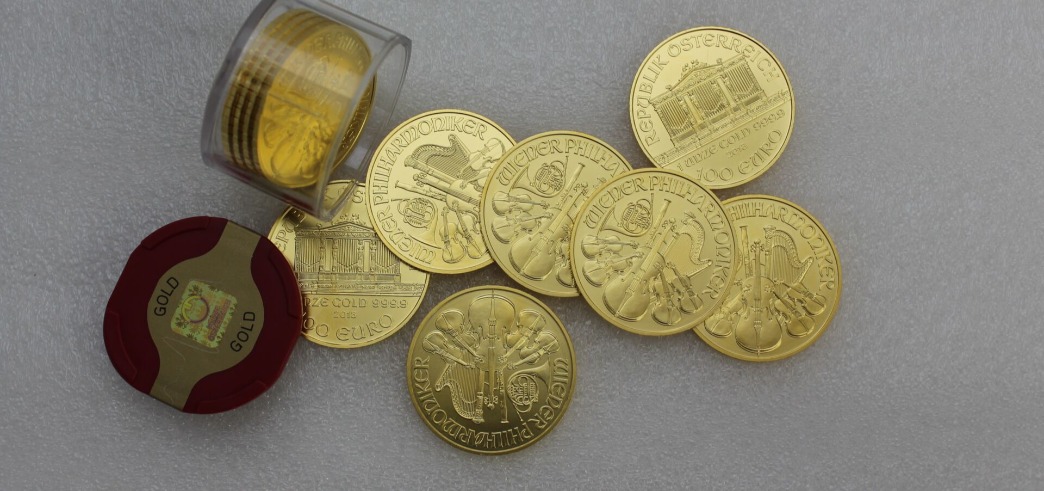
Anyone who owns physical gold, silver, platinum, or palladium will encounter fiscal rules. In practice, the taxation of precious metals raises many questions: do you have to declare precious metals to the Tax Authorities? Do coins and bars always fall into Box 3? And why is VAT applied to silver and platinum, but not to investment gold?
In this knowledge center article, we clearly explain how the taxation of precious metals is regulated. We cover the differences between the various precious metals, the role of VAT, the valuation on the reference date, and the fiscal treatment of coin collections.
In doing so, we distinguish between private and corporate ownership and provide practical tools for correct processing in the tax return.
The Tax Authorities do not use a separate legal definition of precious metals, but in practice, they look at the nature of the metal, the form in which it is held, and the purpose of the ownership. In a fiscal sense, this usually concerns the following precious metals:
These precious metals can occur in the form of coins, bars, or collectibles. For fiscal treatment, it is not only the material that is important, but especially the question of whether the ownership is classified as an investment or as possession for personal purposes.
When precious metals are easily tradable and their value is mainly determined by the current precious metal price, the Tax Authorities see this in most cases as an investment. This applies in particular to common bullion coins and bars of gold, silver, platinum, and palladium.
Only in exceptional situations can precious metal ownership be classified as personal possession or a collection, for example, when the value is primarily cultural, historical, or numismatic and is not primarily related to the precious metal value.
For private investors, precious metals are in most cases classified as assets in Box 3 (savings and investments). This means that you do not pay tax on the ownership itself, but on the notional return that the Tax Authorities assume over your total Box 3 assets.
Precious metals generally fall into Box 3 when:
This applies to both coins and bars, regardless of whether they are kept at home or stored externally.
For the tax return, the purchase price is not decisive, but the value of your precious metals on the reference date of January 1st of the tax year. You add this value to your other assets in Box 3, such as savings and investments.
It is important to use a consistent and well-substantiated valuation method. For investment gold and other precious metals, market prices around the reference date can be used.
Within Box 3, a tax-free allowance applies. Only when your total Box 3 wealth exceeds this limit are you liable for tax. Precious metals are part of this total and are not separately exempted.
Starting in 2028, the way the tax authorities tax your gold and silver in Box 3 will change significantly. The current calculation method based on a fictitious return will be replaced by a tax on actual price gains (the capital growth tax). Read all about what is changing in Box 3 and the impact on your precious metals in our news article.
Only in exceptional situations can precious metal ownership fall outside Box 3, for example, when it is demonstrably personal possession or a special collection. In practice, however, precious metal is almost always classified as an investment.
Investment gold occupies a special position within taxation. This is because different VAT rules apply to gold than to other precious metals, while its ownership is fiscally included in Box 3.
According to European and Dutch regulations, gold qualifies as investment gold when it meets specific conditions. This concerns:
Many common bullion coins, such as the Maple Leaf and the Krugerrand, fall under this definition.
An important advantage of investment gold is that it is exempt from VAT. Therefore, when purchasing investment gold, you do not pay 21% VAT, which distinguishes gold from silver, platinum, and palladium.
However, the VAT exemption does not mean that investment gold is tax-free. For private investors, investment gold is seen as wealth and must be declared in Box 3 at its value on the reference date of January 1st.
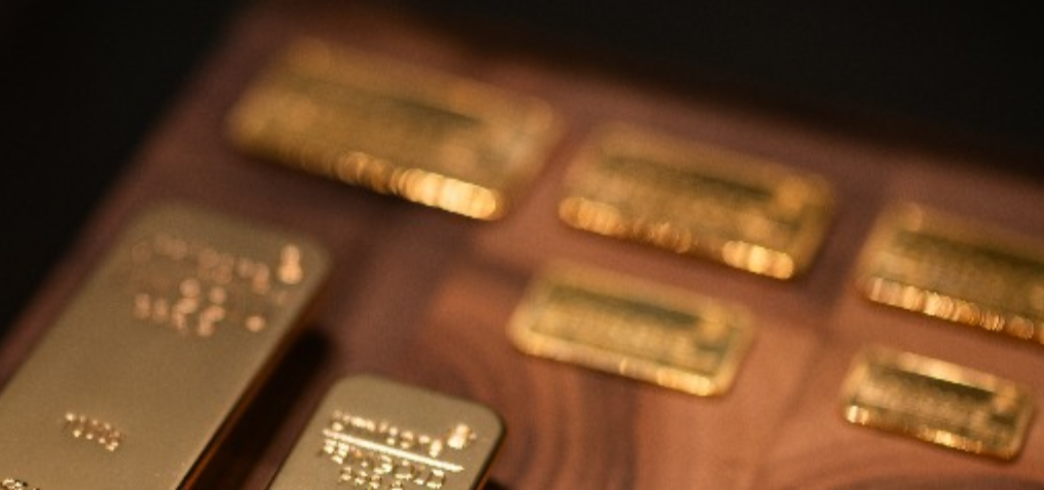
Investment gold is exempt from VAT, but it is taxed in Box 3.
In contrast to gold, silver, platinum, and palladium are fiscally regarded by the legislator as raw materials. This has consequences for both the VAT treatment upon purchase and the processing in Box 3 for private ownership.
When purchasing silver, platinum, and palladium, the standard VAT rate of 21% applies in principle. However, there are important differences per form:
For private investors, silver, platinum, and palladium (just like gold) fall under Box 3 (savings and investments). You declare these precious metals at their value on the reference date of January 1st and add this to your other Box 3 wealth.
The form in which the precious metal is held (coin or bar) makes no difference for Box 3. However, it is important to establish the valuation carefully and consistently.
Due to the combination of VAT upon purchase and Box 3 levy upon ownership, silver, platinum, and palladium are fiscally treated differently than investment gold. In practice, this difference plays an important role in the choice between gold and other precious metals as an investment.
Platinum coins are often compared to gold bullion coins, but fiscally the treatment is fundamentally different. Platinum does not qualify as investment gold and therefore does not fall under the VAT exemption that applies to gold.
In European regulations, the VAT exemption applies exclusively to investment gold. Platinum, like silver and palladium, is fiscally classified as a raw material. This means that when purchasing platinum coins, 21% VAT is levied in principle.
The form of the platinum, coin or bar, makes no difference here. Also, the fact that a platinum coin is (or has been) legal tender does not lead to a VAT exemption, as is the case with gold.
For private investors, platinum coins fall under Box 3 (savings and investments). You must declare the coins at their value on the reference date of January 1st of the tax year. This value counts as part of your total Box 3 wealth.
Anyone considering investing in platinum coins would do well to take into account:

Coins that have been designated as investment gold by the European Commission are always taxed in Box 3.
A frequently asked question is how the Tax Authorities deal with a coin collection. Not every collection is automatically seen as an investment, but in practice, coin collections often fall under Box 3 anyway.
The Tax Authorities assess a coin collection based on facts and circumstances. A coin collection is usually classified as Box 3 wealth when:
This applies in particular to collections consisting of common bullion coins. In that case, the coin collection must be declared to the Tax Authorities at its value on the reference date of January 1st.
In exceptional situations, a coin collection can be classified as possession for personal purposes. This may be the case, for example, when:
The Tax Authorities do not use a fixed list or threshold for this. Each situation is assessed individually, whereby consistency and substantiation are of great importance.
The distinction between bullion coins and collector coins is fiscally relevant. Coins that have been designated as investment gold by the European Commission always fall under Box 3.
Many well-known coins, such as the Maple Leaf and the Krugerrand, are therefore not fiscally seen as collectibles, but as investments.
The fiscal treatment of precious metals is strongly related to who the owner is and for what purpose the precious metal is held. The Tax Authorities distinguish between private ownership, collections, and corporate ownership.
For private investors, the ownership of gold, silver, platinum, and palladium is in most cases seen as an investment. For that reason, precious metals must be declared in Box 3 (savings and investments) of the annual tax return.
You declare the value on the reference date of January 1st of the year for which you are filing a return. Not the purchase price, but the value on this reference date is decisive for the fiscal processing.
As a dealer, The Silver Mountain does not provide purchase or ownership data to the Tax Authorities. The declaration of precious metals is therefore always the own responsibility of the owner. It is important to use a consistent and well-substantiated valuation method.
In specific cases, ownership of precious metals can be classified as possession for personal purposes, for example, in the case of a collection. However, this does not automatically mean that the ownership falls outside Box 3.
Furthermore, for investment gold, the European Commission has drawn up an official list of coins that always fall under this category. Well-known bullion coins such as the Maple Leaf and the Krugerrand therefore do not fiscally qualify as collectibles, but as investments and thus fall into Box 3.
Although exemptions exist for collections and objects of art and science, it is assessed factually per situation whether this is the case.
To determine whether and to what extent you can make use of such exemptions, expert fiscal advice is recommended. The Silver Mountain does not advise on this.
You can find more information about Box 3 on the website of De Belastingdienst.
Legal entities, such as a BV, can also invest in precious metals. In that case, the precious metals belong to the assets of the company. Value changes and results from precious metal investments form part of the profit and are, in principle, taxed with corporate income tax.
Corporate investments in precious metals can be fiscally valued at:
When valued at a lower market value, a (not yet realized) loss may be deductible from the profit in the relevant year. A higher market value, on the other hand, leads to a (not yet realized) profit, which is taxed.
The chosen valuation basis must be applied consistently in the following years.
Because every corporate situation is unique, it is advised to always consult with a bookkeeper or accountant about this.

Press the image to start the video.
Correctly declaring precious metals in your tax return requires care, but is manageable with a clear approach. The checklist below helps you step by step with processing your precious metal ownership in Box 3.
The taxation of precious metals requires clear knowledge and a careful approach. Whether you invest in gold, silver, platinum, or palladium, in most cases, precious metals fall under Box 3 and the value on the reference date is decisive for the tax return.
By distinguishing between investments, collections, and corporate ownership, and by valuing consistently, you prevent lack of clarity. With the right preparation and up-to-date information, you maintain control over your fiscal position and can responsibly include precious metals in your wealth strategy.
In summary, you will find the tax rules for gold, silver, platinum, palladium, and coin collections below.
| Precious metal / situation | VAT upon purchase | Box 3 (private) | Details |
|---|---|---|---|
| Investment gold (coins & bars) | No VAT | Yes | Meets EU definition; exempt from VAT, but not from Box 3 |
| Silver (coins) | Margin scheme | Yes | VAT included in price; often more favorable than bars for private individuals |
| Silver (bars) | 21% VAT | Yes | Fiscally regarded as a raw material |
| Platinum (coins & bars) | 21% VAT | Yes | No VAT exemption like gold |
| Palladium (coins & bars) | 21% VAT | Yes | Same fiscal treatment as platinum |
| Coin collection (investment-oriented) | Depends on metal | Yes | Usually Box 3 due to wealth function and tradability |
| Coin collection (numismatic) | Depends on metal | Sometimes no | Exceptional; factual assessment by the Tax Authorities |
| Corporate ownership of precious metals | Depends on form | No | Taxed via corporate income tax; valuation at cost price or market value (apply consistently) |
The Silver Mountain does not provide individual investment advice. This article is for informational purposes only. Past performance and the market developments described do not guarantee future results.
Yes. Physical gold, silver, platinum, and palladium are in most cases seen as assets by the Tax Authorities. As a private individual, you declare these precious metals in Box 3 at their value on the reference date of January 1st of the tax year.
Yes. Although investment gold is exempt from VAT upon purchase, it is not exempt from wealth tax. For private investors, investment gold almost always falls under Box 3 and must be declared at its value on the reference date.
The VAT exemption applies exclusively to investment gold according to European regulations. Silver, platinum, and palladium are fiscally regarded as raw materials and are therefore, in principle, taxed with 21% VAT. This applies to both coins and bars.
You do not use the purchase price, but the market value on January 1st. For a consistent and substantiated return, you can use reliable market prices or established reference values for gold, silver, platinum, and palladium around the reference date.
Not always, but in most cases. When the value of a coin collection is largely determined by the precious metal and the coins are easily tradable, the Tax Authorities usually see this as Box 3 wealth.
A coin collection can fall outside Box 3 if it is demonstrably possession for personal purposes, for example, due to a predominantly historical or numismatic value. This is assessed per situation and occurs relatively rarely in practice.
Yes. Also precious metals that are stored externally, for example, in a safe or storage facility, belong to your wealth. For the tax return, it makes no difference where the precious metals are physically located; ownership is decisive.
In corporate ownership, precious metals belong to the assets of the company. Value changes form part of the profit and are, in principle, taxed with corporate income tax. The valuation takes place at cost price or market value, provided it is applied consistently.
Rolf van Zanten is the founder and owner of The Silver Mountain, a specialist in physical precious metals since 2008. With nearly twenty years of experience in the precious metals trade, Rolf shares his expertise on investing in gold, silver, and platinum in an accessible and reliable way. His knowledge of the international gold and silver markets helps investors make well-informed decisions. In his role as an expert, he strives to ensure that transparency, security, and trust are at the heart of every purchase.

Be the first to discover the latest products and the latest news about precious metals.


 Daan Wesdorp
 Nederlands