
 Buy gold bars
 Buy gold coins
 Series
 Buy silver coins
 Buy silver bars
 Series
 Buy silver collectible coins
 Silver collectible coin series
 Buy gold collectible series
 Gold collectible coin series
 Author:
  Date: 16 December 2024
Why is platinum considered an alternative to gold?
 Rolf van Zanten
17 December 2024
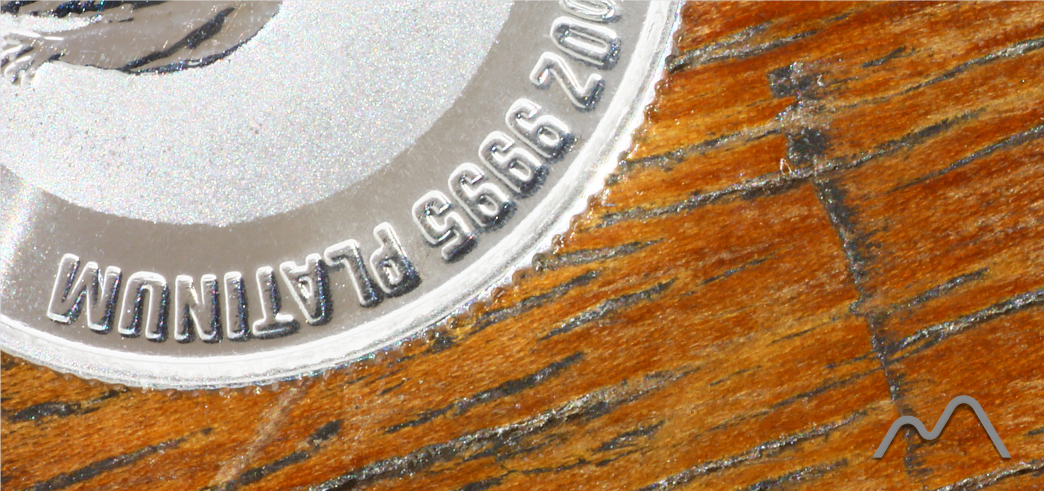
Palladium and platinum look very similar because of their silvery-white color, but they differ clearly in density, applications and price behavior. At the same volume, platinum is about 79% heavier, while palladium is much more dependent on the automotive industry. As a result, the prices of the two precious metals do not always react to the same developments.
Both metals belong to the platinum group and are valued for their catalytic properties and their resistance to corrosion. Yet they are not equivalent versions of the same metal.
In this article we explain the main differences between palladium and platinum in their physical properties, their uses, their origin and their role for those who follow the precious metals market. That way you will not only know that they differ, but also why.
Palladium and platinum resemble each other because they belong to the same metal family: the platinum group, also called the platinum group metals or PGM. Besides platinum and palladium, that group includes rhodium, ruthenium, iridium and osmium.
Metals from this group share a silvery-white luster, good resistance to corrosion and the ability to act as a catalyst, speeding up chemical reactions without being consumed themselves.
Those similarities cause confusion: both are silvery-white, look almost identical to a layperson and are both widely used in the automotive industry.
If you want to learn more about each metal separately first, read our explanation of what platinum is and what palladium is. This page focuses on the distinction between the two precious metals.
The clearest physical difference is density: at the same volume platinum is about 79% heavier than palladium. The metals also differ in melting point and atomic number, while the color hardly differs.
| Characteristic | Platinum (Pt) | Palladium (Pd) |
|---|---|---|
| Atomic number | 78 | 46 |
| Density | Approximately 21.5 g/cm³ | Approximately 12.0 g/cm³ |
| Melting point | Approximately 1768 °C | Approximately 1555 °C |
| Color | Silvery-white | Silvery-white, sometimes slightly darker |
| Position in the platinum group | Heaviest, highest melting point | Lightest, lowest melting point |
An important misconception is that a heavier metal would automatically contain "more" precious metal. That is not correct: a platinum coin and a palladium coin of each 1 troy ounce both contain the same 31.103 grams of precious metal. The difference is that platinum is more compact because of the higher density, so a platinum object feels heavier than a palladium specimen of comparable size.
Opinions differ on hardness because it depends strongly on purity, the alloy and the processing. It is therefore unwise to state categorically that one metal is always harder or more durable than the other. And because both are naturally silvery-white, an object cannot reliably be identified by color alone. For a proper authenticity check you need hallmarks, weight and, if necessary, professional testing.
The biggest difference in use is that platinum is used more broadly, while palladium is heavily reliant on one market: gasoline car catalysts. Both convert harmful exhaust emissions into less harmful compounds in a catalytic converter, but their broader demand profiles differ.
Besides gasoline catalysts, palladium is mainly used in electronics, dentistry and, to a lesser extent, jewelry, and it has particular properties when absorbing hydrogen. Because the auto industry is so decisive, a shift in production or in the balance between gasoline, hybrid and fully electric cars can have a relatively large impact on palladium demand.
Platinum is also used in vehicles, traditionally mainly in diesel applications, but it also sees strong demand from the chemical industry, glass production, medical technology, jewelry and hydrogen technologies such as fuel cells. That broader profile makes platinum less dependent on a single sector, although the platinum price is also linked to the auto industry.
Platinum and palladium can be partially substituted for one another in certain automotive catalysts, but not immediately. An automaker cannot simply switch to a different metal during production. A new composition must be developed and tested for emissions, durability and performance requirements, and is usually tied to the development of a vehicle platform.
Research by the World Platinum Investment Council indicates that substitution in some catalysts can be close to a 1-to-1 ratio. Once a manufacturer chooses a different composition, that choice often remains for the lifetime of that platform.
As a result, industrial demand responds with a lag to price differences between the two metals. Substitution therefore links the two markets, but it does not make their prices automatically move in the same direction.
The prices of palladium and platinum differ because the balance of supply and demand for each metal is determined separately. That one metal is more expensive than the other at a given time therefore does not tell you which metal is scarcer or more attractive; their relative positions have shifted many times in the past. Four factors carry the most weight:
The palladium price is generally more volatile than platinum's, because the market is smaller and more dependent on a single outlet. To learn why palladium can fluctuate so much, read our article on why palladium is so volatile.
For current prices we refer to the page with the platinum price.
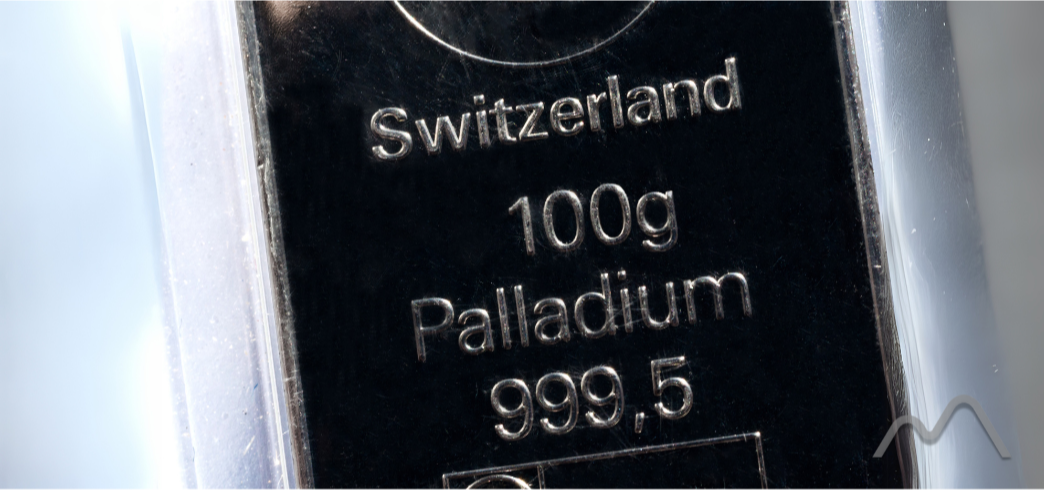
Platinum has a density of about 21.5 g/cm³ compared with 12.0 g/cm³ for palladium, and is about 79% heavier at the same volume.
Fully electric cars have no traditional exhaust catalyst and therefore do not require platinum or palladium for that component. A growing share of battery-electric vehicles can therefore influence demand from automotive catalysts in the longer term. However, that development is not separate from hybrid vehicles, which do keep such a catalyst, and from existing vehicle fleets, emissions standards and differences between countries.
For palladium this issue carries relatively more weight due to the strong exposure to the automotive industry. For platinum, another question plays a role at the same time: platinum is used in certain hydrogen applications, including electrolysers and PEM fuel cells, which forms a separate potential source of demand.
How large and how fast that market develops is uncertain. It is therefore too simple to state that the energy transition is automatically beneficial for one metal and detrimental to the other.
There is no metal that is "better" for everyone; what is relevant depends on the purpose for which you compare them. A lower price does not necessarily mean a metal is undervalued, just as a higher price does not prove it is scarcer or more attractive. The table below provides an initial guide, not individual advice.
| Your consideration | Often suitable | Why |
|---|---|---|
| Broader range of applications and hydrogen technology | Platinum | More end markets, including fuel cells |
| Strong industrial focus, higher risk appetite | Palladium | High dependence on the automotive industry, more volatile |
| Preference for the less volatile of the two | Platinum | Generally more stable than palladium |
| Niche diversification alongside gold and silver | Both possible | Different demand dynamics than the more precious metals |
Many investors see platinum and palladium as a complement to gold and silver. If you want to first see how these two compare to the better-known precious metals, read our comparison of gold, silver, platinum and palladium.
If you specifically want to know how platinum works as an investment, our guide on investing in platinum goes deeper into that.
For investors, platinum and palladium are treated the same for tax, but both differently from investment gold. On both platinum and palladium you pay 21% VAT in the Netherlands, while investment gold is exempt under certain conditions. As a result, the net entry cost for these two metals is higher than the bare metal value might suggest.
In addition, the markets for platinum and palladium are smaller and less liquid than those for gold and silver, which can increase the premium and the spread between buying and selling prices.
If you are considering a purchase, you can find our current offerings on the pages buy platinum and buy palladium. For both metals, take into account the stronger price fluctuations and the wider spread between purchase and sale price.
Platinum and palladium are often lumped together because they have the same silvery-white color and are both important for catalysts. Anyone who looks a bit further, however, sees two quite different markets. Palladium is much more closely linked to the automotive industry, while platinum is spread over more applications. When comparing these metals, I therefore don't look at today's price, but mainly at demand, supply and developments in the industry.
Rolf van Zanten - The Silver MountainIf you're considering platinum or palladium, you can buy from The Silver Mountain with confidence. We have specialized in physical precious metals since 2008 and, as an AFM licensee, are accustomed to working carefully and transparently. Our prices on the website continuously follow the market, so you always see the current rate.
You can have your order delivered insured via our own delivery service or pick it up by appointment in Baarn and The Hague, and, if desired, have your precious metals stored insured via Edelmetaal Beheer Nederland. Platinum and palladium bars from recognized producers comply with the quality standards of the London Platinum and Palladium Market (LPPM), the international body for these two metals.
If you later want to sell platinum or sell palladium, sister company Inkoop Edelmetaal offers you the sales certainty to easily sell your precious metals back to us.
Palladium and platinum belong to the same platinum group and look very similar in appearance, but they differ in density, applications, supply and volatility. Platinum is heavier, has a broader range of applications and is generally more stable. Palladium is lighter, is strongly tied to gasoline car catalytic converters and shows larger price fluctuations. Because they can partially substitute for each other in certain catalytic converters, their markets are linked without moving in lockstep.
So the question is not which metal is best, but which metal suits your goal and risk tolerance. Look beyond the similarity and today's price: origin, applications, substitution and volatility together determine how each metal behaves.
The Silver Mountain does not provide investment advice and this article should therefore not be considered as such. Platinum and palladium generally experience stronger price fluctuations than gold and silver. Past performance is no guarantee of future results; the price of precious metals can both rise and fall.
The clearest physical difference is weight: platinum has a much higher density at about 21.5 g/cm³ compared with palladium at about 12.0 g/cm³, and is around 79% heavier at the same volume. Demand also differs: palladium is closely linked to automotive catalytic converters, while platinum has broader uses, including in chemistry, jewelry and hydrogen technology.
No, platinum is significantly heavier than palladium at the same volume. One cubic centimeter of platinum weighs about 21.5 grams, compared with about 12 grams for palladium. A 1 troy ounce coin is equally heavy for both metals, namely 31.103 grams; the difference is then in the volume, because the platinum is denser.
Not necessarily, because hardness depends greatly on the alloy and the processing. Pure metal, a 95% alloy and an industrial material can have different hardnesses. The general claim that palladium is always harder or more durable is therefore too simplistic. For automotive catalytic converters, the catalytic properties are decisive, not scratch resistance.
That varies over time and has no fixed ranking. Prices arise from the balance between mine production, industrial demand, recycling, stocks and substitution, and palladium is heavily dependent on the automotive industry. Therefore always compare current prices instead of relying on a fixed price ratio between the two metals.
Yes, in certain catalytic converters platinum and palladium can partially replace each other, but not immediately. A different composition must be technically developed and validated for performance, durability and emission standards. As a result it can take years before price differences are reflected in vehicle production, and a chosen solution often remains in place for the lifetime of a vehicle platform.
Fully electric cars have no exhaust catalytic converter and therefore require no platinum or palladium, which mainly affects palladium due to its strong dependence on the automotive sector. Hybrid cars still have that converter. For platinum there may be new demand from hydrogen technology, such as fuel cells. So it is too simplistic to say that the energy transition favors one metal over the other.
Yes, in the Netherlands you pay 21% VAT on both platinum and palladium, unlike investment gold which is exempt under certain conditions. This means the net entry cost for these two metals is higher than the bare metal value. Check the current tax treatment before purchase, as the rules can vary by situation and year.
Rolf van Zanten is the founder and owner of The Silver Mountain, a specialist in physical precious metals since 2008. With nearly twenty years of experience in the precious metals trade, Rolf shares his expertise on investing in gold, silver, and platinum in an accessible and reliable way. His knowledge of the international gold and silver markets helps investors make well-informed decisions. In his role as an expert, he strives to ensure that transparency, security, and trust are at the heart of every purchase.

Be the first to discover the latest products and the latest news about precious metals.


 Daan Wesdorp
 Nederlands