
 Buy gold bars
 Buy gold coins
 Series
 Buy silver coins
 Buy silver bars
 Series
 Buy silver collectible coins
 Silver collectible coin series
 Buy gold collectible series
 Gold collectible coin series
 Author:
  Date: 1 August 2024
Investing in commodities: explanation about investing in raw materials
 Rolf van Zanten
10 January 2025
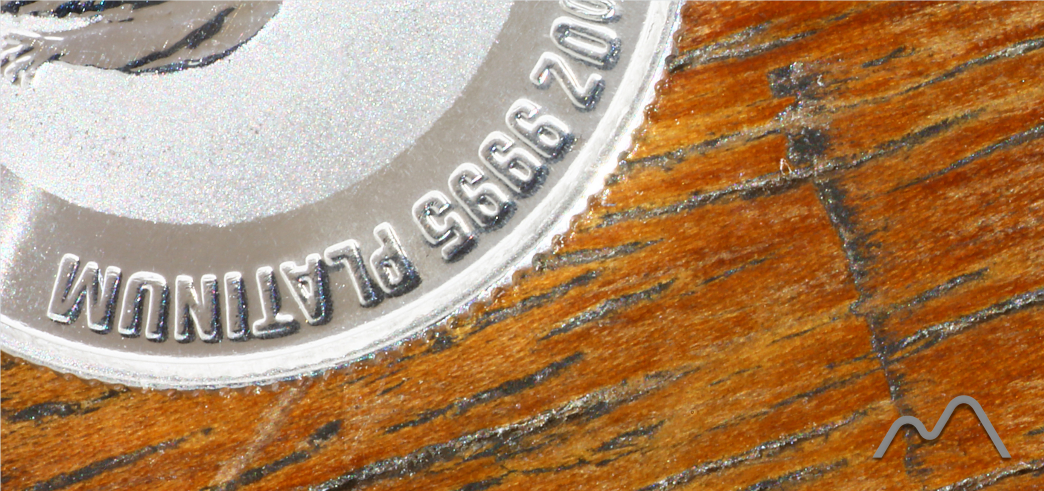
Gold and silver often dominate the conversation in the world of precious metals. But in the shadow of these monetary metals stands a precious metal that is many times rarer and indispensable for our future economy: platinum.
More and more investors are discovering platinum as an interesting diversification of their portfolio. The price of this white-gray metal is driven by completely different factors than that of gold. Where gold relies on fear and inflation, platinum relies on industrial growth and scarcity.
In this knowledge center article, you will read everything you need to know about investing in platinum. From the complex dynamics of supply and demand to the smartest way to purchase platinum with regard to VAT.
Platinum is a precious metal that belongs to the platinum-group metals (PGMs). The metal is silver-gray in color, extremely corrosion-resistant, and has a very high melting point. Unlike gold and silver, platinum is only used to a limited extent as a jewelry metal or store of value. The primary value of platinum lies in its industrial use.
Platinum (Pt) is a chemical element that belongs to the platinum metals, which also include palladium and rhodium. It is a precious metal, which means it does not rust or decay. But what makes it so interesting for investors?
If you were to gather all the gold ever mined, you would fill about three Olympic swimming pools. If you do the same with platinum, you would barely fill a single footbath.
The annual production of platinum is minuscule compared to gold and silver. Only about 200 tons of platinum are mined annually (compared to approx. 3,000 tons of gold).
Gold is pure money/store of value. Copper is pure industry. Platinum is a hybrid: it is both a precious metal (investment value/jewelry) and an indispensable industrial metal. This creates a unique price dynamic.
If you want to successfully invest in platinum, you must understand where the price comes from. Unlike gold, the platinum price is primarily determined by physical scarcity and industrial demand.
The demand for platinum is diverse, which spreads the risk:
The mining of platinum is extremely concentrated and vulnerable.
When industrial demand picks up while mines in South Africa falter, a shortage immediately arises, which can cause the price to rise explosively.
Platinum is very rare; it is only mined in a few places in the world. Besides platinum being very rare, it is also a very costly process.
To mine one troy ounce (31.1 grams) of platinum, no less than ten tons of ore must be extracted from the ground, a process that takes about 8 weeks.
Platinum is mined in only a few places in the world. Platinum usually occurs in combination with other metals from the platinum group. Platinum is prepared by dissolving the ore or mineral in aqua regia. This creates residues that are removed first.
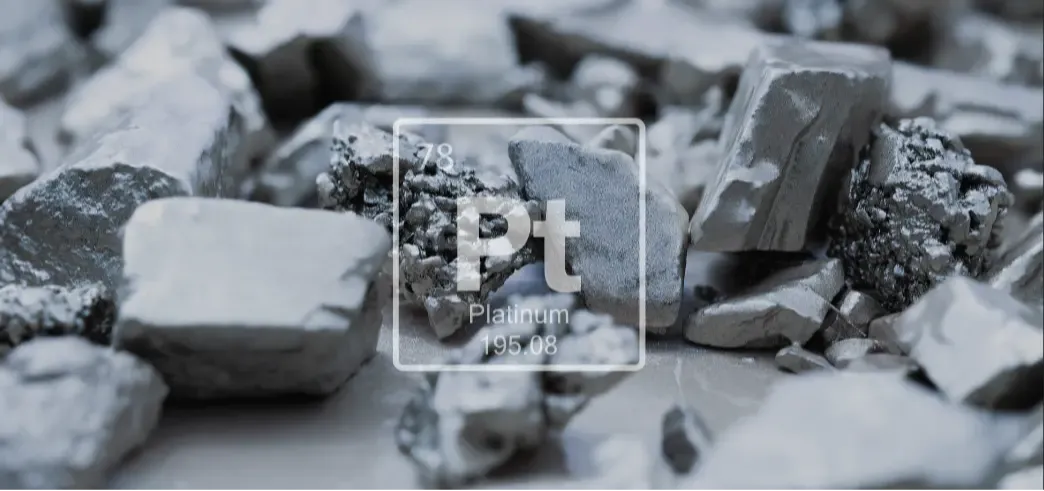
Platinum is an extremely rare precious metal with a strongly concentrated global production, especially in South Africa.
The annual production of platinum is extremely limited and strongly concentrated. Where over 3,000 tons of gold are mined annually, the counter for platinum gets stuck at only circa 180 tons. This further underscores the rarity of the metal: platinum is over 15 times rarer than gold.
When we zoom in on the origin, we immediately see why analysts worry about supply security. The table below shows that South Africa is still by far the largest producer, but production there is under pressure due to power shortages and operational challenges.
| Country | Production in tons (approx.) |
|---|---|
| South Africa | 120 |
| Russia | 20 |
| Zimbabwe | 19 |
| Canada | 6 |
| United States | 3 |
| Other countries | 4 |
| Total | ~ 172 |
Source: USGS Mineral Commodity Summaries
Investing in platinum differs fundamentally from investing in gold or silver. Where gold is mainly seen as a safe haven and monetary store of value, platinum derives its value largely from scarcity and industrial application.
Precisely this combination makes platinum interesting for investors who want to diversify their portfolio and look beyond traditional precious metals.
Platinum is one of the scarcest precious metals in the world. Annual production is many times lower than that of gold and silver. Moreover, mining is strongly concentrated in a few countries, with South Africa as the dominant producer.
This limited and geographically concentrated supply makes the supply vulnerable to disruptions, which can cause price pressure over time.
For investors, this means that platinum is structurally dependent on a fragile supply side, making the metal sensitive to sudden market movements.
Unlike gold, platinum is largely used in industry. The metal is indispensable in, among other things, catalytic converters for cars, chemical processes, and medical applications. As a result, the platinum price is closely linked to economic activity and technological developments.
When the industry picks up, the demand for platinum can increase sharply. This makes investing in platinum more cyclical than gold, but also offers more upward potential in growth phases of the economy.
Platinum plays an increasingly important role in hydrogen technology and fuel cells. These applications are seen as essential building blocks of the global energy transition. As governments and companies invest in cleaner energy and alternative propulsion techniques, this can ensure a structurally higher demand for platinum.
For long-term investors, this is an important reason to consider platinum not only as an industrial metal but also as a strategic investment.
Historically, platinum does not always move in the same direction as gold and silver. Therefore, buying platinum can play a valuable role within a diversified portfolio. In periods when gold remains stable or consolidates, platinum can actually benefit from industrial growth.
By combining platinum with other precious metals, a broader spread of risks is created, where both monetary and industrial factors play a role.
The greater growth potential of platinum goes hand in hand with higher price fluctuations. For investors willing to accept this volatility, platinum can be attractive as a supplementary investment.
It is less suitable as a primary safe haven, but particularly interesting as an addition within a broader investment profile.
Those who want to invest in platinum have various options. Each form of investing in platinum has its own risk profile, cost structure, and degree of exposure to the platinum price. The right choice depends on your investment goal, horizon, and risk appetite.
Physical platinum is the most direct way to invest in this precious metal. You actually own the metal, usually in the form of bars or coins.
Characteristics of physical platinum:
An important difference with gold is that physical platinum is subject to VAT within Europe. This increases entry costs and makes physical platinum less suitable for short-term trading. However, for investors with a long horizon and a focus on diversification, physical platinum can still be interesting.
Additionally, practical aspects play a role, such as secure storage and insurance. Physical platinum is traded less than gold, which can lead to higher spreads when buying and selling.
Another way to invest in platinum is via shares of companies active in the mining and processing of platinum. These so-called platinum stocks give indirect exposure to the platinum market.
Benefits of platinum stocks:
Disadvantages:
Platinum stocks can be attractive for investors who already have experience with stocks and are willing to take extra risk in exchange for potentially higher returns.
Via exchange-traded funds (ETFs or ETCs), you can easily get exposure to platinum without physically owning the metal. Some products are physically backed, others track the price synthetically.
Characteristics:
On the other hand, there are costs such as management fees and possible counterparty risk, depending on the structure of the product. With synthetic products, it is important to look closely at how the price is tracked.
The choice for a specific form of platinum investment depends strongly on your profile:
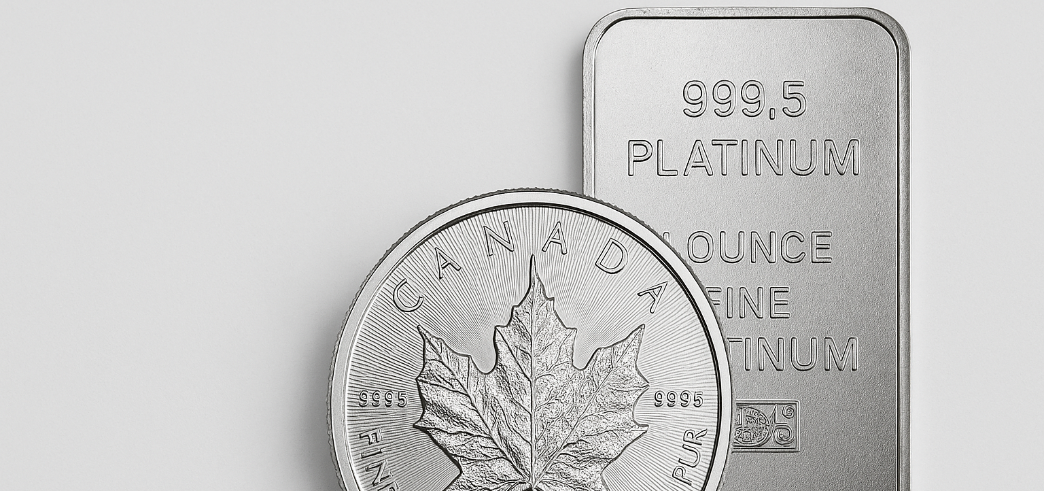
There are multiple ways to invest, such as physical platinum, platinum stocks, and ETFs.
Where the gold price mainly responds to macroeconomic fear, inflation, and interest rates, the platinum price behaves much more like a commodity. The price is a direct reflection of the balance between industrial demand and mining supply. Because the market for platinum is much smaller than that for gold, small disruptions can lead to large price fluctuations.
These are the four most important factors determining the price:
The health of the global auto industry is by far the biggest price driver. Because platinum is essential for catalytic converters (to clean harmful exhaust gases), the price often rises when more cars are produced.
Nowhere in the world is the production of a raw material as geographically concentrated as with platinum. South Africa accounts for about 70% to 80% of the global supply. This makes the platinum price extremely sensitive to local problems:
Platinum is a cyclical metal.
Finally, exchange rates and substitution play a role:
The price of platinum is strongly influenced by industrial demand, mine production, and recycling. According to data from the World Platinum Investment Council, disruptions in supply and changing industrial applications also play a role in this.
At The Silver Mountain, we believe it is important to share current price information. That is why you can follow the current platinum price in our handy chart. This way, you can see that the price per kilo in 2026 is significantly higher than a year ago (start of 2025).
Anyone in the Netherlands wanting to buy physical platinum faces a fiscal challenge. Unlike investment gold (which is exempt from VAT), platinum is viewed by the Tax Authorities as an industrial metal.
This means that 21% VAT is levied on platinum bars and coins. For a private investor, this is disadvantageous; after all, you start with a backlog of 21%.
The Silver Mountain offers the ideal solution for this. You can invest in platinum via our storage partner Edelmetaal Beheer Nederland. Your platinum is then stored in a secure customs bonded warehouse in Switzerland.
Platinum is often compared to gold and silver, but fulfills a clearly different role within the precious metals market. Although all three are scarce and traded globally, they differ strongly in function, price dynamics, and risk profile.
Gold is primarily seen as a monetary store of value and safe haven.
Central banks hold gold as a reserve and in times of economic uncertainty, demand often increases. As a result, buying gold is relatively stable and less volatile.
Silver combines two functions: it is both a precious metal and an industrial raw material.
This causes more price fluctuations than with gold, but also offers extra growth potential when industrial demand picks up.
Platinum, on the other hand, is primarily an industrial metal.
Demand is largely determined by applications in the auto industry, chemistry, and hydrogen technology, among others. As a result, platinum is more sensitive to economic cycles and industrial developments. This makes the price more volatile than that of gold and often also than silver.
A popular indicator for investors is the gold-platinum ratio. This ratio indicates how many ounces of platinum you can buy for one ounce of gold.
Many investors see this 'undervaluation' relative to gold as a buying opportunity. They speculate that this gap will close again in the future (mean reversion).
A ratio like this is also used for gold and silver. Read our explanation of the gold-silver ratio here.
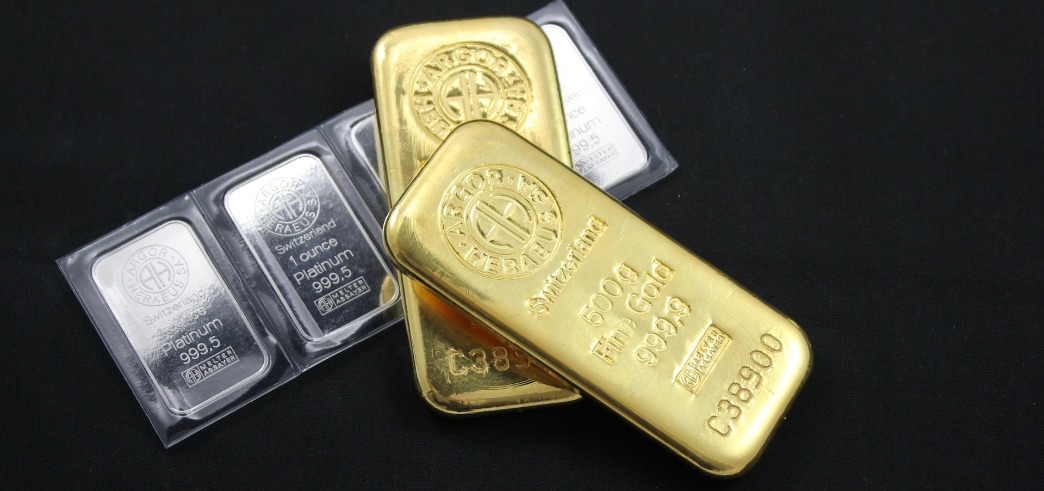
Platinum is more volatile and less liquid than gold but can offer more growth potential.
Although platinum can offer interesting opportunities, it is important to understand the risks well. Investing in platinum carries a different risk profile than investing in gold or silver.
Platinum is strongly dependent on industrial demand. When economic growth slows down or specific sectors, such as the auto industry, are under pressure, the demand for platinum can decrease rapidly. This causes larger price fluctuations than with gold, which often benefits from economic uncertainty.
Global platinum production is strongly concentrated in a few countries, with South Africa as the main producer. Strikes, political instability, or problems in mining can disrupt supply and cause sudden price movements. This concentration increases market risk.
The market for platinum is significantly smaller than that of gold. As a result, spreads on buying and selling are often higher, and it may take longer to sell positions at a favorable price. This makes platinum less suitable as a quickly tradable reserve.
Unlike investment gold, physical platinum is not exempt from VAT. This increases entry costs and affects the return, especially in the short term. Additionally, storage and insurance costs play a larger role with physical ownership.
Investing in platinum is not without risk, but offers enormous opportunities for the investor who looks further ahead. The combination of extreme scarcity, a vulnerable supply from South Africa, and the indispensable role in the future hydrogen economy makes it a metal with great upward potential.
However, volatility is often higher than with gold. Platinum is therefore less suitable as a pure 'safe haven' for your savings, but excellently suitable as a speculative addition (for example 5% to 10%) to a broader precious metal portfolio.
Do you want to invest? Then pay close attention to the VAT. Via The Silver Mountain, you buy safely and VAT-free, with our buy-back guarantee as security for the future.
The Silver Mountain does not provide investment advice. This article is for educational purposes only. Past performance is not indicative of future results.
Investing in platinum can be wise as an addition within a diversified portfolio. Platinum is scarce and has strong industrial applications but has more price volatility than gold. It is mainly suitable for investors with a long-term vision and risk appetite.
The main difference is the function. Gold is mainly seen as a safe haven and store of value, while platinum is primarily an industrial metal. Therefore, the platinum price reacts more strongly to economic growth and industrial demand than gold.
Platinum can be interesting in the long term due to limited availability and increasing use in technology and the energy transition. At the same time, the price is more sensitive to economic fluctuations, making platinum mainly suitable as a supplementary investment.
The price of platinum is strongly influenced by industrial demand and a concentrated supply. Changes in the auto industry, economic cycles, or production problems in mining countries can quickly cause large price fluctuations.
You can invest in platinum via physical platinum (bars or coins), platinum stocks, or ETFs. Each form has a different risk profile. Physical platinum offers direct ownership, while stocks and ETFs are more dependent on financial markets.
Yes, physical platinum is subject to VAT in Europe. This is an important difference with investment gold, which is VAT-free. The VAT increases entry costs and can influence the return, especially with shorter investment horizons.
Platinum is less suitable as a first precious metal due to higher volatility and lower liquidity. Novice investors often start with gold or silver, after which platinum can serve as a supplementary investment for extra diversification.
Rolf van Zanten is the founder and owner of The Silver Mountain, a specialist in physical precious metals since 2008. With nearly twenty years of experience in the precious metals trade, Rolf shares his expertise on investing in gold, silver, and platinum in an accessible and reliable way. His knowledge of the international gold and silver markets helps investors make well-informed decisions. In his role as an expert, he strives to ensure that transparency, security, and trust are at the heart of every purchase.

Be the first to discover the latest products and the latest news about precious metals.


 Daan Wesdorp
 Nederlands