
 Buy gold bars
 Buy gold coins
 Series
 Buy silver coins
 Buy silver bars
 Series
 Buy silver collectible coins
 Silver collectible coin series
 Buy gold collectible series
 Gold collectible coin series
 Author:
  Date: 23 September 2026
 About
About Why is physical gold more expensive than the spot price?
 Rolf van Zanten
28 January 2025
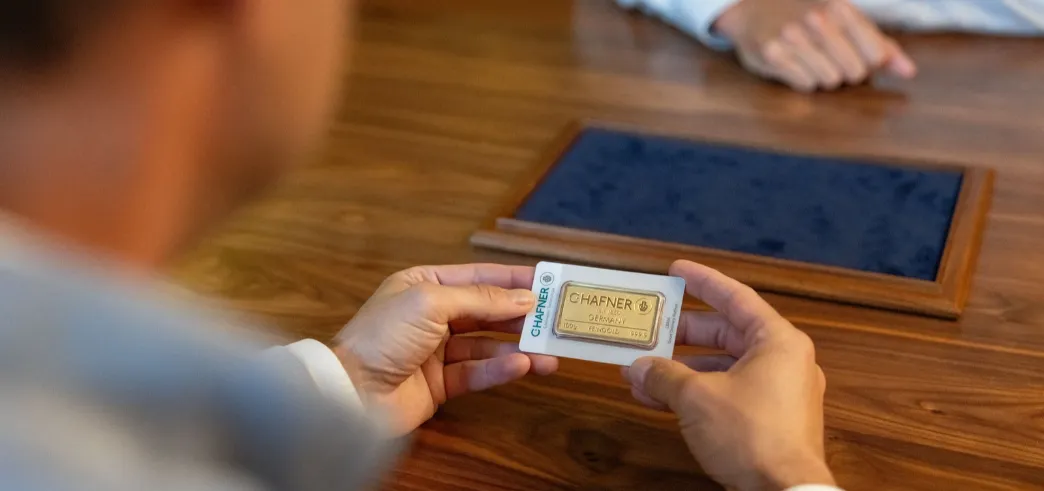
A reliable gold dealer makes clear which company you are dealing with, what you are buying, how you will pay and when you will receive your gold. You should be able to verify that information yourself. A professional website, a registration number or good reviews are useful clues, but none of them on their own is sufficient proof.
When ordering gold you almost always pay in advance, often a substantial amount, for a product that will only arrive later. That unfortunately makes the market attractive to fraudsters. In this article you will read which checks to perform before payment, what official registrations do and do not indicate, how to recognize a fake webshop and what to do if you have doubts.
Go through these points before you transfer money. One unclear point does not have to indicate fraud, but it is a reason to ask for an explanation first.
When buying physical gold, it often involves large sums that you transfer in advance, and money that has ended up with a fraudster is rarely recovered. In addition, gold is a product many people do not buy every day. Those who do not know the market well are less likely to recognize an unrealistic offer. A few checks beforehand take little time and prevent many problems.
A verifiable company identity shows which company you are entering into an agreement with. Look beyond whether the details exist: check whether they belong together.
Every Dutch company is registered with the Chamber of Commerce. The KvK number should appear on the website, usually at the bottom in the footer or in the general terms and conditions. Look up the number in the trade register and compare the company name, the address and the activities with what the website states. A trade name may differ from the legal name on your invoice. That is not a problem as long as the connection is clear.
Note: A correct KvK number does not yet prove that the website belongs to that company. Fake online shops sometimes use the name, the number and even the house style of an existing company. The KvK itself warns about this.
A counterfeit gold online shop can closely resemble an existing website. Therefore check the full web address. Watch for a missing or extra letter, an added word or a different extension, such as .com instead of .nl. If you arrive at a site via an advertisement, email or message, check the address extra carefully.
The padlock in the address bar, HTTPS, only means that the connection is encrypted. Fraudulent websites also use that. So it says nothing about the seller's reliability. If you are in doubt, look up the company yourself and call them on that number to ask whether the website really belongs to them.
A physical location you can visit and a long company history help with your assessment, but are not proof on their own. A dealer who only operates online is therefore not necessarily untrustworthy, and a young company with few reviews is not either. Conversely, a scammer can take over the address or history of an established company. More important is whether the details are correct and whether you can actually speak to the company.
An AFM license is a strong signal of trust, but it is good to know exactly what it covers. A gold dealer needs an AFM license to offer investment objects. In practice this concerns precious metals in combination with storage or management. Whoever has such a license has been assessed by the AFM and is under supervision for that service.
Two things follow that many buyers do not know. A dealer who only sells and delivers physically does not need an AFM license. Its absence is therefore not an alarm signal in itself. And AFM supervision relates to storage services, not to a purchase that is delivered to your home or that you pick up yourself.
The AFM also emphasizes that a license for investment objects is not a quality mark for the quality of an investment. So a license says much about a dealer's diligence, but does not replace your own checks. If a provider claims a license, check the company name, the license number and the permitted activities in the AFM's public register.
Equally useful is the AFM's warning list, with parties that offer financial services without a license or about which the AFM warns. If a provider is on it, do not buy. If they are not on it, that is not proof of reliability: new fake online shops are often not listed yet.
Use our checklist at the top of this article to see what criteria a trustworthy gold seller should meet.
A reputable dealer shows how their price is composed and follows the current gold price. Physical gold always costs slightly more than the spot price. That difference is called the premium, and it covers production, packaging, insured transport and the dealer's margin. You can read more about this in our article on why physical gold is more expensive than the spot price.
That makes one signal very clear: a price below the spot price. No legitimate dealer can structurally sell a standard product for less than the metal itself is worth. If you see such an offer, first check exactly what the price includes. Is it for the full product, a down payment, or a promise of delivery later? If a price remains below the metal value without a clear explanation, that is one of the strongest warning signs there is.
A low premium, however, is not automatically suspicious. Large dealers buy in larger volumes, and the premium also differs by size, product type and availability. Therefore compare the same product at the same time, based on the same amount of pure gold, and include additional costs such as shipping.
An agreement about gold that still has to be mined or produced is fundamentally different from the purchase of a gold bar or a gold coin that is in stock. With existing gold you know what you are buying and when you will receive it. With a promise of future delivery you are dependent on parties and circumstances you cannot control.
A well-known example is the investigation by the FIOD into the investment product Forward Gold Sales. Participants bought claims on future gold deliveries from African mines, at a price below the market price. The FIOD made arrests on suspicion of investment fraud. This was a suspicion; a press release is not a judicial ruling.
The practical lesson: always ask whether you are buying existing gold or a claim to later delivery. Ask who must deliver, what the delivery depends on and what happens in case of delay. If the answer sounds vague, or the discount is too good to be true, then do not buy.
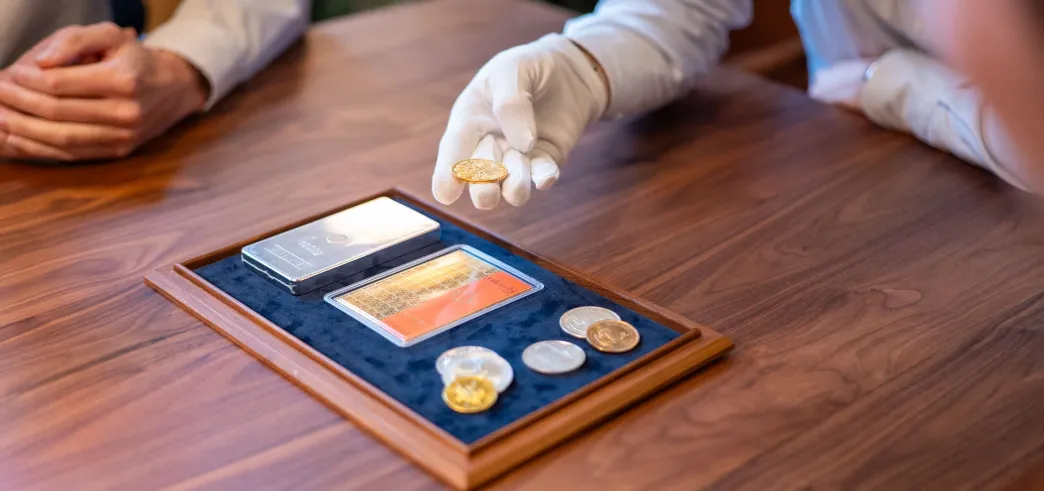
A reputable dealer clearly states from which producer a bar or coin comes and how they verify authenticity. Gold bars from refineries on the LBMA Good Delivery List and coins from recognized mints are globally recognizable. That makes them easier to verify for authenticity and later to sell. That LBMA listing applies to the refinery, not to each individual bar.
New products are often delivered in sealed packaging with a serial number, and sometimes with a certificate. A certificate says something about the product, but it does not prove that the seller is reliable. A photo of a certificate on a website also does not show which product you will actually receive.
Pre-owned gold can be sold without the original packaging; that is not suspicious as long as the dealer has checked the metal themselves. How to test the authenticity of gold and silver yourself can be read in our article on testing gold and silver for authenticity.

In the video above, Rolf van Zanten, the founder of The Silver Mountain, explains how ordering gold with us works. Click the image to start the video and see for yourself how safely and reliably we handle your order.
The way a trader handles payment, delivery and identification says a lot about their reliability. This is where the clearest differences between a reputable trader and a fake webshop appear.
Paying in advance by bank transfer or iDEAL is common for gold and is not, in itself, a reason for concern. The question is whether you are paying the correct party for a clearly described order. Sometimes the payment screen shows the name of a payment service provider instead of the trader; that is normal, but ask for an explanation if the connection is unclear.
Be extra careful if you can only pay with crypto, to a foreign account, to an account in a person’s name, or via gift cards and money transfer services. Such payments are difficult to reverse. If you receive a message after your order with a changed account number, do not pay. Call the trader first using a number you have looked up yourself, and ask whether the change is correct.
Many traders no longer accept cash. There are legal limits on cash payments to traders intended to combat money laundering. A party that specifically encourages you to pay a large sum in cash therefore deserves extra suspicion.
It may feel cumbersome, but a trader who asks for your identity for larger purchases is doing what is required. Dealers in precious metals fall under the Dutch Anti-Money Laundering and Anti-Terrorist Financing Act (Wwft) and must carry out customer due diligence for certain transactions. A trader who asks nothing for a large amount is less careful about the rules.
At the same time, scammers sometimes collect copies of ID documents for identity fraud. Ask what your data is needed for and how to submit it securely. A trustworthy trader will be happy to explain that. For a secure copy you can use the KopieID-app from the government, which masks your citizen service number (BSN) and adds a watermark.
Gold should be sent insured, and a careful trader will check your identity on delivery so the package only reaches you. Check the delivery time in advance and who to contact if a shipment is delayed.
If you choose storage, have them explain how your gold is registered, whether it is in your name, and how you can have it delivered or sold. In all cases keep the product description, your order confirmation and the terms and conditions in your records.
A trustworthy trader will tell you in advance whether, how and under what conditions you can sell your gold later. That is important, because you generally buy gold for the long term and may want to convert it back into cash someday. Check whether the trader publishes a current buyback price, whether it is linked to the gold price, and whether you can sell gold purchased elsewhere. A provider who is vague about this will make things difficult for you later.
People sometimes ask why we request an ID while they just want to buy gold. I then explain that this is standard practice for a careful trader: we need to know who we are doing business with. I am more concerned when a party asks nothing for a large amount or offers a price below the gold price. Also check whether the website really belongs to the company. And never let yourself be rushed: someone who is trustworthy gives you the time to ask questions.
Daan Wesdorp - precious metals expert at The Silver MountainReviews on platforms such as Trustpilot and Google give an impression of how a trader deals with customers, provided you read them carefully. Don’t just look at the average rating.
The same applies to trust marks and memberships. A logo on a website proves nothing; check with the organization behind the mark whether the trader is really affiliated.
A fake gold webshop usually stands out because of a combination of an unrealistic offer and little verifiable information. Watch for these signs:
One sign alone doesn't have to mean much. If you see several at the same time, do not pay.
If you have doubts before your purchase, postpone the payment until everything is clear. Note what is wrong and ask for a concrete explanation via a contact channel that you have looked up yourself. Check the account number, the e-mail address and the webshop via the trader verification on the police website. Not finding a report does not mean a provider is reliable. A trustworthy trader understands that you do this and will be happy to help.
If you have already paid and suspect fraud, act quickly:
Feel free to compare this checklist with ours. We have specialised in physical precious metals since 2008 and are listed in the AFM register with licence number 12048860 for offering investment objects. You can find us by appointment in Baarn and The Hague, and our customer service is reachable by phone on working days. More about who we are can be found on our page about The Silver Mountain.
For each product you can see the premium, and our prices move automatically with the market. Our gold bars come from refineries on the LBMA Good Delivery List and our coins from recognised mints. We do not accept cash payments. Your order is delivered insured via our own delivery service, with an identity check on delivery, or you collect it by appointment.
If you want your gold stored, that can be done allocated and in your name via Edelmetaal Beheer Nederland. And if you want to sell later, sister company Inkoop Edelmetaal offers you the sale guarantee to sell your gold back to us.
What customers think of us can be read on Trustpilot. Our customers rate our service 4.8/5 based on 4.641 reviews.
How we securely order and arrange your gold purchase can be found on our page about safe shopping at The Silver Mountain.
You don't identify a reliable gold dealer by a single trust mark, but by a series of points you can check yourself. Are the company details correct, and do they belong to this website? Does the price follow the gold price? Are you buying existing gold from a recognised producer? Do you pay safely to the correct party, is delivery insured, and can you resell later?
Know what official registrations mean. An AFM licence is a strong signal for traders who offer storage, but it is not mandatory for every seller and is not a quality mark. The strongest alarm signal remains an offer that is too good to be true: gold below the market price, with urgency and a story. Take your time, check via channels you have looked up yourself, and only pay when everything is correct.
The Silver Mountain does not provide individual investment advice; this article is intended for information only. Laws and regulations, registers and reporting routes may change, so consult the official sources if in doubt. Careful verification reduces the risk of fraud but does not eliminate it entirely.
Yes, buying gold online can be safe, provided you check in advance who you are buying from. Check the company details, the web address, the payment instructions and the delivery terms, and read experiences outside the seller's website. No single check completely rules out fraud, but several checks together provide much more assurance than a professional appearance or a trustmark logo.
Not always. An AFM license is required for offering investment products, in practice precious metals with storage or management. A dealer who only sells and delivers does not need one, and is therefore not necessarily untrustworthy. A license is moreover not a quality mark. If a provider claims to have one, check the permitted activities in the AFM register.
Not necessarily. Fake webshops sometimes use the name, the KvK number and the house style of an existing company. A correct number therefore does not prove that the website belongs to that company. So also check the web address and call the company using a number you looked up yourself, asking whether the website is really theirs.
By a combination of an unrealistic offer and little verifiable information. Think of prices below the spot price, a web address that differs slightly from a well-known dealer, company details that don't match the site, payment only via crypto or a bank account in a person's name, and time pressure. One signal alone means little; if you see several, do not pay.
No, advance payment by bank or iDEAL is common for gold. Still, check that you pay the party you ordered from, for a clearly described order. If you receive a changed account number after placing your order, do not pay and call the dealer first via a number you looked up yourself. Also be cautious with payments via crypto or gift cards.
Because dealers in precious metals fall under the Wwft, the law against money laundering and terrorist financing. For certain transactions they must identify their customer. That is therefore a sign of due diligence. Do ask what your data is needed for, and make a secure copy with the KopieID-app from the government so that your citizen service number is masked.
Many dealers no longer accept cash. There are legal limits on cash payments to dealers, intended to combat money laundering, and many dealers do not accept cash at all. At The Silver Mountain cash payment is not possible. A party that specifically encourages you to pay a large amount in cash deserves extra suspicion.
Usually not; it is more of a warning sign. The spot price is the market value of the metal itself, and a legitimate dealer cannot consistently sell a standard product below that price. Check whether it concerns the complete product, a deposit or a promise of later delivery. A low premium above the spot price, on the other hand, is not automatically suspicious.
No, reviews are one part of your assessment. First check whether the review profile belongs to the same company and website, because a clone webshop can point to the reviews of a real company. Read concrete experiences about delivery and complaint handling, spread over a longer period, and combine that with a check of the company details and the payment instructions.
Contact your bank immediately, because sometimes a payment can still be stopped or reversed. Also file a report with the police and report the webshop to the Fraudehelpdesk so others are warned. If the provider posed as an investment provider without a licence, report that to the AFM as well.
Daan Wesdorp is Purchasing Manager at Inkoop Edelmetaal, part of The Silver Mountain, and a specialist in trading physical precious metals. With a background in economics and years of experience in the financial markets, Daan possesses in-depth knowledge of stocks, cryptocurrencies, and precious metals. His broad market insight makes him a reliable source for investors looking to diversify and protect their assets. In his articles, Daan combines up-to-date market information with practical insights for both new and experienced investors.

Be the first to discover the latest products and the latest news about precious metals.



 Nederlands