
 Buy gold bars
 Buy gold coins
 Series
 Buy silver coins
 Buy silver bars
 Series
 Buy silver collectible coins
 Silver collectible coin series
 Buy gold collectible series
 Gold collectible coin series
 Author:
  Date: 23 August 2022
 About
About Why buy gold?
 Daan Wesdorp
17 June 2025
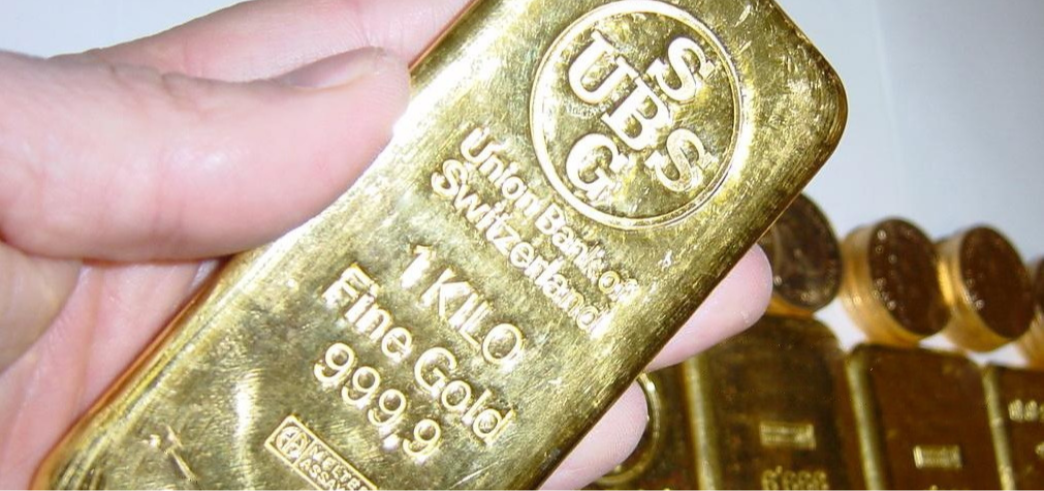
If you are buying gold for the first time, pay particular attention to four things: buy physical gold instead of paper gold, choose a recognized seller who guarantees authenticity and buyback, consciously decide whether you want coins or bars, and arrange secure storage in advance. Make your purchase with a long-term goal in mind, not to trade quickly on the spot price.
The first purchase often feels exciting, precisely because it concerns a tangible and valuable asset. In this article we go through five practical tips that help you take that first step calmly and responsibly.
You will read how to recognize a reliable address, how to choose between coins and bars, and what to look for regarding price and storage. That way you buy not based on feeling, but on the points that really matter.

Physical gold gives you direct ownership of your gold; with paper gold you only hold a claim. When you buy physical gold in the form of coins or bars, you actually have the metal in your possession or it is stored in your name. With a gold ETF, a gold certificate or shares in gold mines you do not own that underlying gold directly.
That difference matters especially if you buy gold as a diversification within your assets. Worldwide, far more gold is traded on paper than is physically available, so a paper position has a different risk profile than a bar or coin in a safe. If you want gold as a tangible, globally tradable investment, physical gold is the logical choice for most beginners.
Want to read more about reasons to invest in gold? In this article we explain why buying gold is popular among investors.
There is no fixed percentage that is right for everyone; what fits depends on your personal situation and goals. In the market a rule of thumb of 5 to 10% of assets is often mentioned as a guideline for diversification, but that is not a law and not advice from The Silver Mountain.
Gold is generally bought to diversify part of the assets and protect purchasing power, not to put your entire fortune into it. How much is appropriate for you depends on your other holdings, your time horizon and how much price volatility you are willing to accept.
The Silver Mountain does not provide individual investment advice on this; if in doubt, discuss it with an independent financial advisor.
The most important decision for your first purchase is where you buy, not what you buy. Especially at a high gold price it is more attractive for malicious actors to counterfeit gold or fail to deliver. Therefore choose a specialized dealer who guarantees authenticity, provenance and transparent pricing. Pay attention to a few points:
If you buy from a recognized party, home tests such as the magnet or vinegar test are unnecessary. The dealer vouches for authenticity after all. A spot price that seems too good to be true is a warning sign. If you want a more detailed comparison of the considerations when choosing a provider, also read our guide on where to buy gold.
A separate certificate is not necessary for every gold product and does not by itself prove that gold is genuine. Some new gold bars are delivered in a sealed blister pack with product information and a serial number; many common investment coins have no individual certificate at all. More important than a paper statement is that you buy from a party that knows the origin and inspects products.
When selling later, a professional buyer usually does not rely on a certificate but checks the gold itself for weight, dimensions and purity. Do keep the original packaging if it belongs to the product, and always keep your invoice and delivery documents at hand.
Coins and bars are not a matter of better or worse, but of what fits your goal and budget. Both are investment-grade gold, tradable worldwide and exempt from VAT. The difference is mainly in the entry level, the premium per gram and the flexibility when selling later. The table below lays out the main points side by side.
| Feature | Gold coins | Gold bars |
|---|---|---|
| Entry | Low to medium, fractional sizes also available | From small (grams) to large (kilograms) |
| Premium per gram | Higher, especially for small denominations | Lower as the bar size increases |
| Tradability | Highly common, globally recognizable | Common, but you sell the whole bar at once |
| Flexibility | Good: you can sell by coin | More limited with a single large bar |
| Best for | Starting small or building up gradually | Investing a larger sum efficiently |
Characteristics and premiums vary by product and by year; always compare the current price.
If you're unsure about coin choice, our choice guide: which gold coins to buy will guide you step by step.
The real costs of physical gold go beyond the purchase price alone. You almost always pay something above the pure gold value, and what you get back later determines whether a product is advantageous overall. Two concepts help you compare.
| Term | Meaning | Why it matters |
|---|---|---|
| Gold price | The market value of pure gold | Forms the basis of the product price |
| Premium | Amount above the gold value (production, packaging, margin) | Shows how much extra you pay for the physical product |
| Buyback price | The offer a dealer makes when you sell | Helps determine what you'll receive later |
| Spread | Difference between purchase and buyback price | Gives the most complete picture of the costs |
The product with the lowest purchase price is therefore not automatically the most advantageous choice: a slightly more expensive coin with a more favorable buyback price can turn out better overall.
If you want to invest in gold smartly, compare both the premium and the buyback conditions. The current prices and spreads can be found on the product pages themselves; on the website of The Silver Mountain they are updated every three minutes.
Small bars and coins generally have a higher premium per gram, because part of the production and packaging costs do not scale with weight. A tiny 1-gram bar is therefore more expensive per gram than a larger bar.
There is an advantage in return: small denominations lower the entry amount and give you the flexibility to sell only a portion later. The lowest price per gram is therefore not always the best choice for your situation; seek a balance between cost and practical sellability.
The gold price moves daily and it's tempting to wait for the perfect entry moment. For those buying gold to diversify their assets, that is rarely wise: with every purchase and sale you pay premium and transaction costs again. Regularly timing the market thus eats into your returns.
Gold is generally seen as a long-term holding, intended to protect purchasing power rather than for short-term trading. Many beginners therefore spread their purchases over time, so that a single entry moment becomes less decisive.
Important: Past prices say nothing about the future and The Silver Mountain does not provide investment advice. Decide for yourself, in line with your situation, what amount and timing suit you.
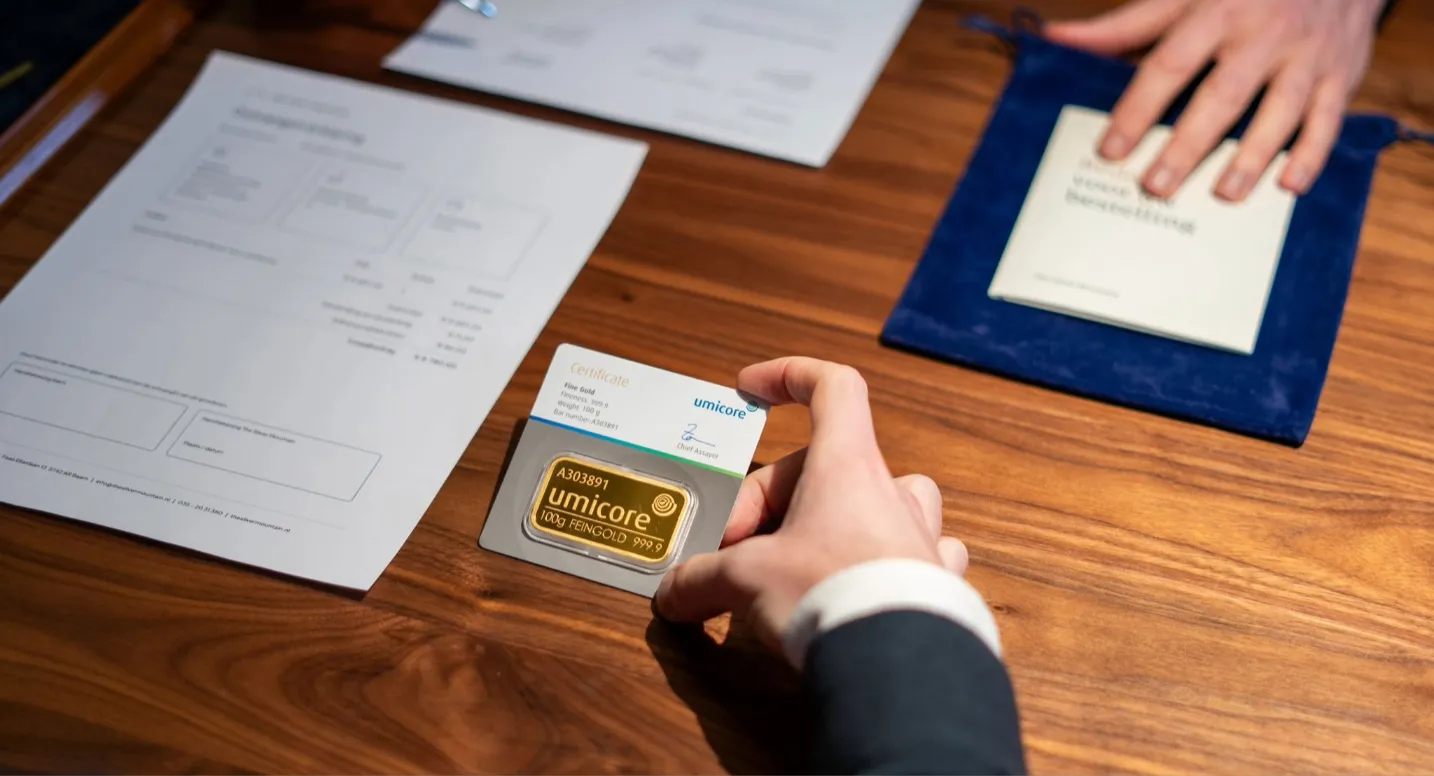
Buy your gold only from recognized and reliable providers, such as The Silver Mountain. We check the authenticity of your gold purchase.
Decide before your purchase where the gold will be stored safely and how you might sell it later. If you keep gold at home, keep it at a limited value and be discreet about who you tell. Also check what your household insurance covers, because precious metals often fall under a lower maximum coverage.
If it's for a higher value, or you find it uncomfortable to have gold at home, you can have it stored by a professional party. At Edelmetaal Beheer Nederland your gold is insured and stored in your name. The downside is that you then cannot physically access it yourself.
Also think in advance about resale: via our sister company Inkoop Edelmetaal you can easily sell your gold back later. Which option suits best depends on the value and how much peace of mind you want.
As a beginner you buy gold most safely from a recognized, specialized dealer who guarantees authenticity, provenance and a transparent price. The Silver Mountain has specialized in physical precious metals since 2008 and is listed in the AFM register under license number 12048860 for offering investment objects.
Our coins and bars come from recognized mints and from refineries on the LBMA Good Delivery List. You can have your order delivered insured via our own delivery service or pick it up by appointment in Baarn and The Hague. Thanks to the buyback guarantee through our sister company Inkoop Edelmetaal, you can easily sell your gold back to us later.
If you have a practical question about the ordering process, our customer service will gladly help you; we are not allowed to and do not provide investment advice.
If you're ready for your first purchase, you'll find the full range and the live prices on the pages about buying gold coins and buying gold bars.
The biggest mistake I see beginners make is buying too quickly without first determining their goal. Don't only look at the lowest price, but also at the premium, the denomination (coupure) and what you get when you resell. Start small, buy from a party that will also buy back from you later, and take your time.
Rolf van Zanten - founder of The Silver MountainYou are well-prepared for your first order when your objective, product choice, total costs, and storage method are clear. Review the following five points before checking out.
Have you reviewed these points and would like to compare products? On our page on buying gold, you will find our current selection of gold coins and gold bars, complete with live pricing and availability.
The Silver Mountain does not provide investment advice and this article should therefore not be considered as such. Past results do not guarantee future performance.
As a beginner you are safest buying from a recognized, specialized dealer who is supervised, guarantees authenticity and offers a buyback guarantee. Pay attention to verifiable supervision, transparent purchase and buyback prices and a physical address. In our separate guide on where to buy gold we list the main considerations.
Yes, provided you buy from a reliable, recognized provider. The biggest risk for beginners is not the gold itself, but an unreliable seller. Choose a party that guarantees authenticity and provenance, and bear in mind that the gold price can fluctuate; gold is intended as a long-term asset.
You can start with a limited amount. Small gold bars and fractional coins make an entry possible for a few hundred euros, although the premium per gram is then higher. First determine how much you want to invest and, if necessary, split that into multiple smaller purchases over time.
That depends on your goal and budget. Coins are common and flexible: you sell them individually and can start small. Bars have a lower premium per gram at higher weights, but you sell them in one go. For building up gradually, smaller denominations are often more practical.
No, not every reliable gold product comes with a separate certificate. Some new bars come in a blister with a serial number, while common coins often do not have an individual certificate. The origin and checks by a recognized dealer weigh more than a paper statement. Always keep your invoice.
Yes, checked pre-owned gold can be attractive. It contains the same amount of gold as a comparable new product, but is often offered at a lower premium. Be sure to check that the dealer has inspected the product for weight, dimensions and purity, and what the buy-back conditions are.
No, investment gold that meets the European conditions is exempt from VAT. This applies to common gold investment coins and bars. Silver is not covered by this and is subject to VAT. If in doubt, check whether the product is offered as VAT-exempt investment gold before you buy.
Check immediately whether the number of items, the manufacturer or coin series, the weight and the packaging match your order and invoice. Do not open a sealed blister without reason, as that can affect the buy-back conditions. Keep the shipping packaging and report any discrepancy to customer service immediately.
Rolf van Zanten is the founder and owner of The Silver Mountain, a specialist in physical precious metals since 2008. With nearly twenty years of experience in the precious metals trade, Rolf shares his expertise on investing in gold, silver, and platinum in an accessible and reliable way. His knowledge of the international gold and silver markets helps investors make well-informed decisions. In his role as an expert, he strives to ensure that transparency, security, and trust are at the heart of every purchase.

Be the first to discover the latest products and the latest news about precious metals.



 Nederlands