
 Buy gold bars
 Buy gold coins
 Series
 Buy silver coins
 Buy silver bars
 Series
 Buy silver collectible coins
 Silver collectible coin series
 Buy gold collectible series
 Gold collectible coin series
 Author:
  Date: 27 May 2026
The history of the Dutch guilder: from florin to euro
 Rolf van Zanten
21 February 2025
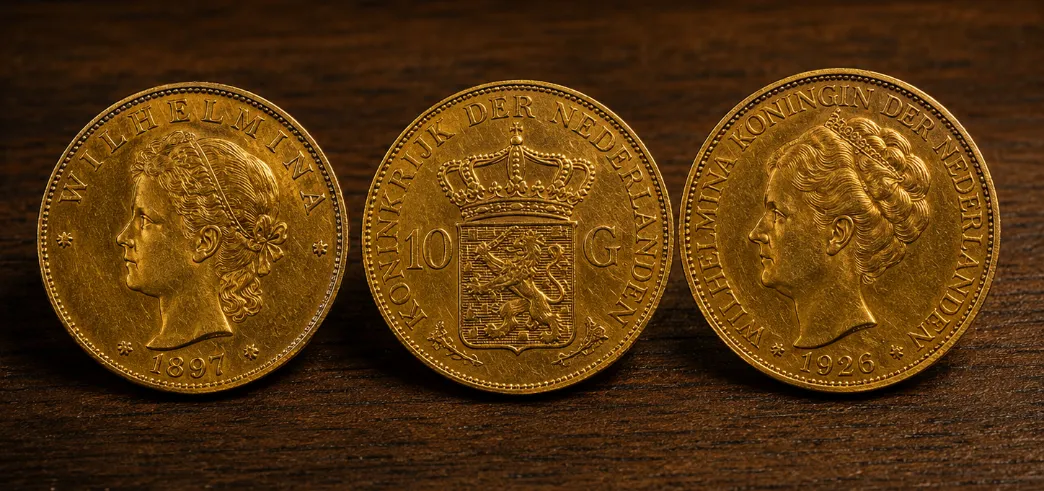
The Dutch Gold Tientje is undoubtedly the most iconic historical gold coin of our country. For over a century, this tangible gold piece played a central role in the Dutch monetary system. Between 1818 and 1933, tens of millions of specimens were minted under the reign of 4 different monarchs.
In this knowledge center article, we delve deep into the rich history, the specific designs, the rare years of issue, and the numismatic background of this world-famous coin.
This is an informative reference work. Would you like to purchase a specimen immediately? Visit our Dutch Gold Tientje product page.
The history of the gold ten-guilder coin is inextricably linked to the economic development of our country. Although Louis Napoleon introduced an early version as early as 1806, the true history of this iconic currency only began 10 years later.
In the 19th century, the Dutch monetary system changed radically. This happened in a number of important historical steps that laid the foundation for the unprecedented popularity of the coin:
To provide a clear overview of this monetary evolution, you can see exactly what role the coin played during the various historical periods below.
| Historical period | Monetary system | Role of the Gold Tientje |
|---|---|---|
| 1816 to 1847 | Bimetallism | Equivalent legal tender alongside silver coins |
| 1847 to 1875 | Silver standard | Demoted to a trade coin without a fixed exchange rate |
| 1875 to 1936 | Gold standard | The absolute and legal foundation of the economy |
From the year 1875 onwards, the Netherlands experienced unprecedented economic stability. Because the government equated the value of exactly 10 guilders with 6.048 grams of pure gold, the Tientje became the anchor value of the Dutch economy. Banknotes from the Dutch Central Bank could be exchanged for physical gold at any time.
This flourishing period of monetary certainty only ended due to the global economic crisis in the 1930s. In 1933, the very last regular specimen left the Mint in Utrecht, and 3 years later, in 1936, the gold standard was definitively and officially abandoned in the Netherlands.
The name "Gold Tientje" refers to the face value of the coin: 10 guilders. In everyday language, "tientje" was used for an amount of ten guilders. Because this version was struck in gold, the name Gold Tientje originated.
The official coin value was therefore 10 guilders, but the true value today lies primarily in the gold content and, for certain specimens, in the collector's value.
That is an important difference from modern euro coins: a Gold Tientje is no longer in circulation as legal tender, but it is still valued for its gold and historical significance.
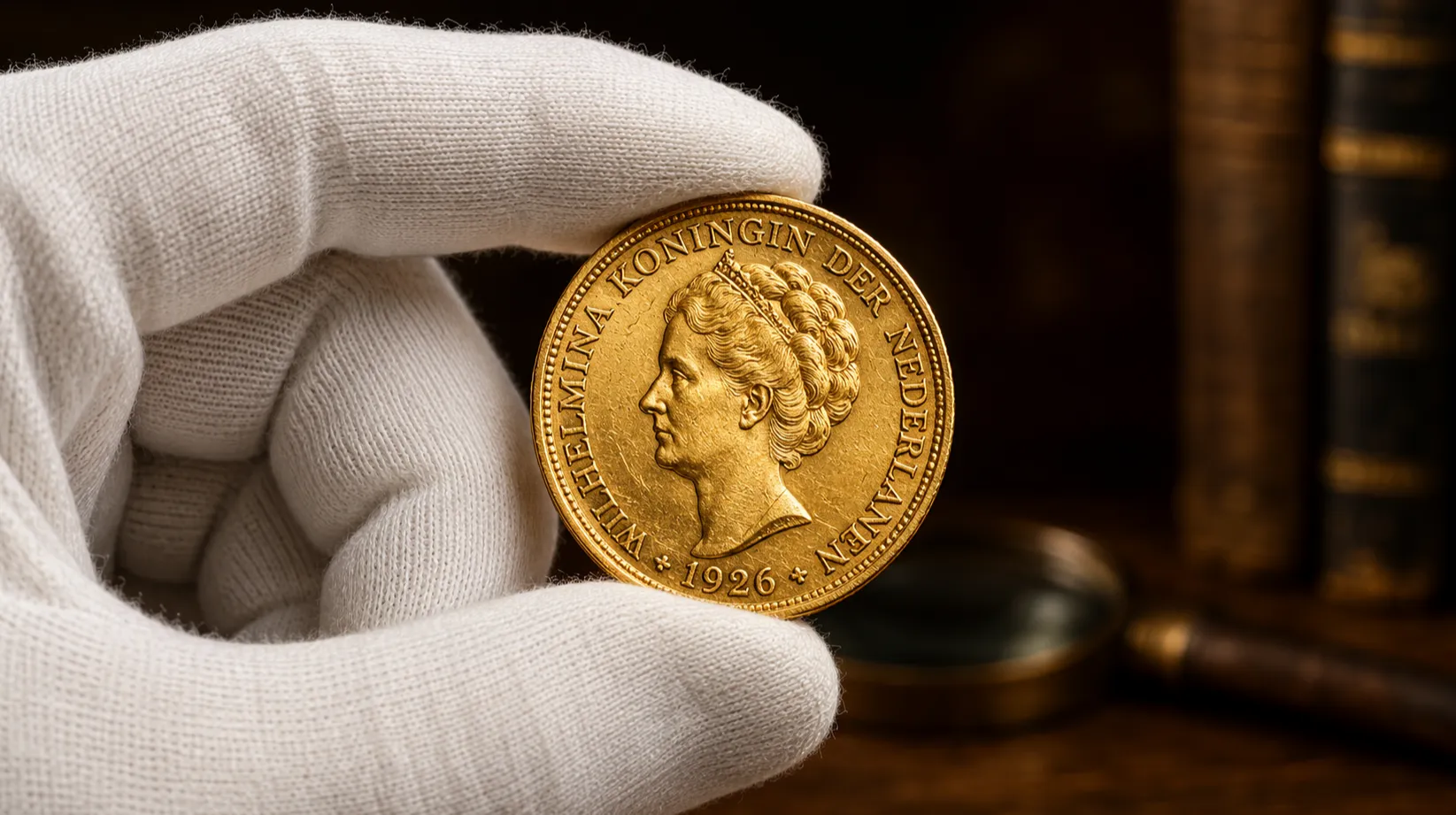
The Dutch Gold Tenner was first issued in 1818 and has been used for over 100 years as a legal currency.
Over a period of more than 100 years, 4 different Dutch monarchs adorned the obverse of this famous coin. Each king or queen introduced a unique design that reflected the spirit of the times. This great variety makes collecting the coins incredibly fascinating from a historical perspective.
Below you can read exactly which monarchs passed in review and what makes their specific issues so special from a numismatic point of view.
The so-called Merchant King issued the very first regular specimens. His effigy shows a classic portrait with a laurel wreath. This specific design was strongly inspired by the ancient Roman emperors and radiated authority.
The coins from his early reign are very scarce today and represent a very high numismatic value.
During the reign of this monarch, a Tientje was struck in only a single year. The 1842 design shows a sober and realistic portrait without the lavish laurel wreath of his predecessor.
Because of this extremely short production period, the coin is particularly rare and therefore incredibly popular among avid collectors.
Under the rule of this king, the coin was once again produced in massive mintages. With the coins of Willem III, specialists make a very clear and visual distinction between two different designs:
Because Wilhelmina ascended the throne at a very young age, her effigy evolved beautifully on the minted coins. Over the decades, this has resulted in four world-famous portrait variants.
Because this is the most complex and directly also the most popular series, we have arranged these specific editions clearly for you in a table.
| Portrait variant | Production years | Special features and rarity |
|---|---|---|
| Hanging hair | 1892 | Extremely rare child portrait with an enormously high collector's value |
| Updo | 1895 to 1898 | Classic girl's portrait with elegantly pinned-up hair |
| Teenage portrait | 1911 to 1917 | Shows the monarch as a young adult woman |
| Mature portrait | 1925 to 1933 | Stately profile with the iconic royal ermine mantle |
The 1892 hanging hair variant is valued significantly higher on the collector's market than other Wilhelmina Tientjes and can fetch a multiple of the pure gold value, although this depends entirely on condition and specific auction context.
Although the faces of the monarchs changed over the years, the Royal Dutch Mint always adhered to a very strict and recognizable design. This visual consistency inspired a huge amount of trust in the payment traffic and international trade of the time.
Each authentic specimen follows a fixed iconographic framework that is built up of 4 specific and characteristic elements:
Between the years 1818 and 1933, a total of over forty million specimens of this gold coin were struck. Yet, the actual number that has been preserved today is significantly lower. During various historical periods with an extremely high gold price, gigantic quantities of coins were melted down en masse into gold bars.
For the modern investor and the enthusiastic collector, it is important to understand how rarity determines the final value. Within the precious metals market, our experts always make a very strict distinction between two valuations: the pure intrinsic metal value and the numismatic collector's value.
The year of issue and the preserved condition of the coin play a major role in determining any premium on top of the current gold price. We have clearly arranged the different degrees of rarity for you in the table below.
| Category | Specific years of issue | Numismatic context |
|---|---|---|
| Extremely rare | Wilhelmina 1892 with hanging hair and early Willem I issues | Very minimal mintages that yield sky-high premiums at international auctions |
| Very scarce | The issue of King Willem II from the year 1842 | Due to the one-year production period, very few specimens have been preserved |
| Relatively unique | Late Willem III years such as the years 1888 and 1889 | A significantly lower mintage at the end of his reign provides a slight added value |
| Very common | Wilhelmina with mature portrait from 1925 to 1933 | Minted in millions and therefore primarily traded for the pure gold value |
For the regular investor who buys physical gold to solidly secure their wealth, the common Wilhelmina years are by far the wisest choice. With these specific coins, you pay exclusively for the pure gold value without extra collector margins.
However, do you possess a very rare year of issue that is in excellent condition? Then there is a huge chance that your coin is worth a lot more on the collector's market than the 6 grams of gold it contains.
Due to the enormous popularity and rich history of this coin, countless copies have been brought to the market over the decades. For you as a serious investor or collector, it is useful to know exactly the difference between an original historical specimen and a later reproduction.
Within the precious metals market, we very regularly encounter official restrikes. In the past, these were mostly produced for the jewelry industry or as commemorative coins. Such restrikes are often minted in 14 or 18 karat gold instead of the mandatory content of over 21 karats.
Although these Dutch Gold Tientje restrikes still represent a certain gold value, they have never been legal tender. In addition, there are unfortunately also outright forgeries made of base metals that are merely provided with a wafer-thin layer of gold.
To guarantee the authenticity of a coin, our precious metal specialists always check a number of physical properties. An authentic specimen must meet the following strict specifications:
Are you unsure about the origin or purity of a specimen in your possession? Always have your precious metal checked by a recognized dealer. Using professional testing equipment, experts can immediately and safely eliminate any form of doubt surrounding authenticity for you.
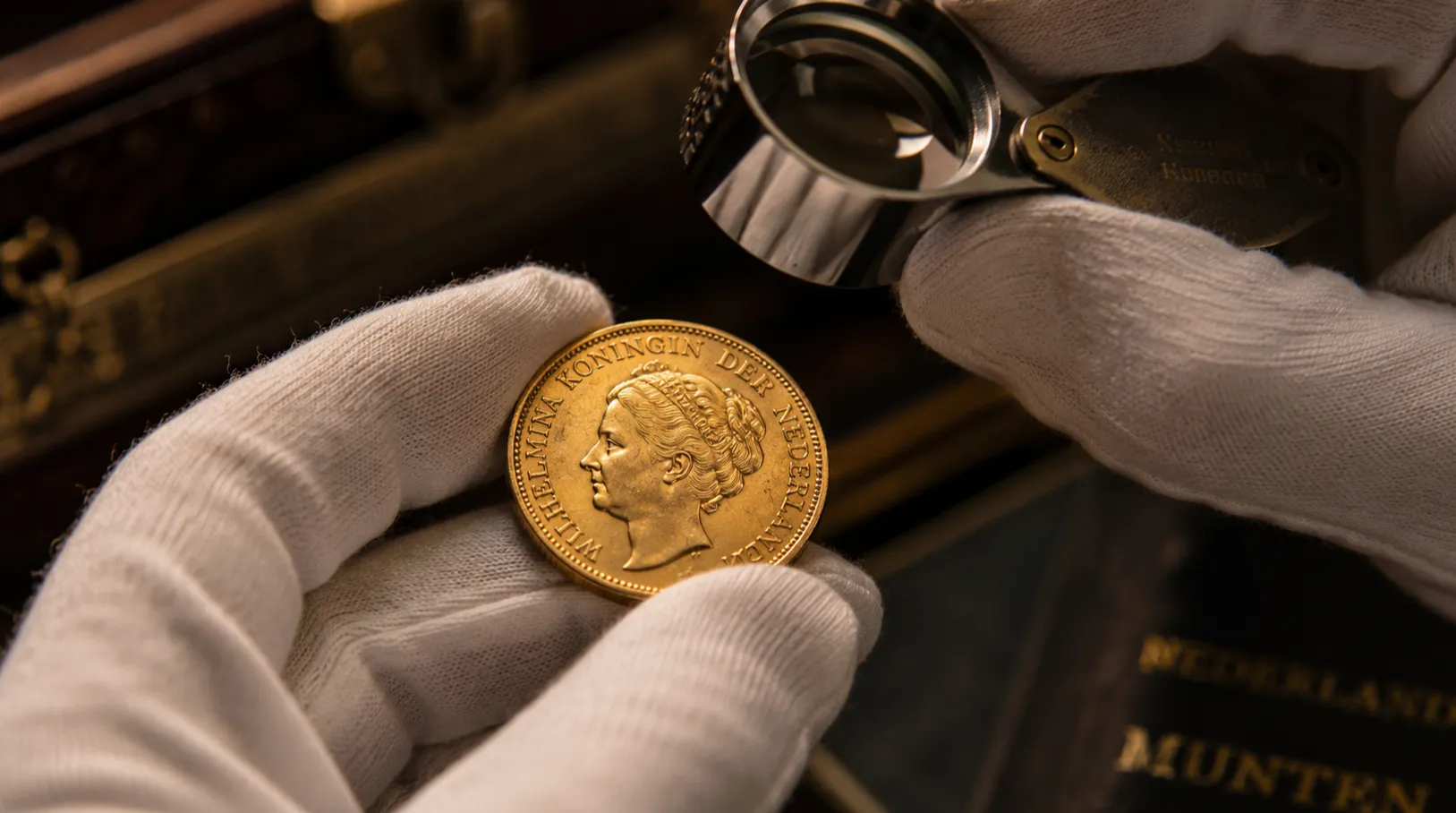
Do you have Dutch Gold Tenners and want to check if their legit? A specialist can examine your coins and guarantee their realness.
When we analyze the position of this historical Dutch coin within the global precious metals market, it immediately stands out that the Tientje occupies a very strategic position.
Whereas many modern investors stare blindly at heavy bars or large coins, this classic actually offers unique advantages in terms of flexibility and tradability.
To fully understand its market position, our specialists have placed the Dutch showpiece alongside a number of other world-famous investment coins in the table below.
| Coin | Country | Net gold | Gold content | VAT-free in NL | Characteristic |
|---|---|---|---|---|---|
| Dutch Gold Tientje | Netherlands | 6.048 g | 90% (21.6 kt) | Yes | Historical coin, small denomination |
| Gold Ducat | Netherlands | 3.494 g | 98.3% (23.5 kt) | Yes | Still actively minted, high content |
| Krugerrand | South Africa | 31.103 g (1 oz) | 91.67% (22 kt) | Yes | The world's most famous investment coin |
| Maple Leaf | Canada | 31.103 g (1 oz) | 99.99% (24 kt) | Yes | Highest gold purity |
| American Eagle | US | 31.103 g (1 oz) | 91.67% (22 kt) | Yes | Well-known in North American markets |
| Vreneli 20 Franc | Switzerland | 5.807 g | 90% (21.6 kt) | Yes | European counterpart in terms of size |
What immediately stands out in this comparison is the difference in physical gold weight. Modern investment coins such as the Maple Leaf and the Krugerrand contain exactly one troy ounce of pure gold by default, which equates to over 31 grams. With just over six grams, the Dutch Tientje falls into a completely different and lighter weight class.
For the smart investor, this smaller format is a strategic advantage. It offers you the perfect opportunity to build your portfolio in very small steps.
Furthermore, you enjoy maximum liquidity in the future. Should you unexpectedly wish to liquidate a part of your wealth, you can very easily sell a few Tientjes without immediately being forced to sell an expensive troy ounce coin in its entirety.
At The Silver Mountain, you can buy a guaranteed authentic Gold Tientje at the current daily price. Every specimen is checked for weight and content, is VAT-free, and available from stock. You will receive a random year of issue, who knows, it might include a rare edition. View the Dutch Gold Tientje price.
The Dutch Gold Tientje is much more than just a lump of precious metal. It is a tangible piece of national history that perfectly reflects the economic development of our country.
Whether you are a passionate collector looking for the rare years of issue of Wilhelmina or a serious investor wanting to secure their wealth in flexible and tangible gold; this historical coin offers something for everyone.
The Silver Mountain does not provide investment advice. This article is for educational purposes only. Past performance is not indicative of future results.
Within the collector's market, the 1892 specimen with Wilhelmina's hanging hair is considered an absolute masterpiece. Due to its extremely low mintage, this coin yields sky-high premiums at auctions. For the regular investment market, the year is irrelevant, and only the gold value counts.
Between 1818 and 1933, an estimated forty million specimens were produced. However, the exact number still circulating today is significantly lower. In periods of high gold prices, gigantic quantities of these historical coins were definitively melted down into new gold bars.
These two well-known Dutch gold coins differ enormously from each other. The Ducat has a much higher gold content but at the same time possesses less net gold than the Tientje. Furthermore, the Ducat is still actively minted today, while the very last Tientje was produced in 1933.
The severe economic crisis in the 1930s made the further issue of gold coins as legal tender completely unsustainable. Therefore, the Netherlands decided in 1936 to definitively abandon the familiar gold standard. From that historical moment on, these coins lost their monetary function.
An authentic specimen weighs exactly 6.72 grams and has a diameter of 22.5 millimeters. In addition, pure gold is absolutely not magnetic. Does your coin show a slight deviation in weight, dimensions, or details? Then always have it professionally checked by a recognized precious metals dealer.
No, these are totally different products. The historical Tientje was legal tender in the guilder era. The modern ten-euro coins are exclusive commemorative coins that were only issued after the introduction of the euro. These new variants possess completely different weights and purity levels.
Rolf van Zanten is the founder and owner of The Silver Mountain, a specialist in physical precious metals since 2008. With nearly twenty years of experience in the precious metals trade, Rolf shares his expertise on investing in gold, silver, and platinum in an accessible and reliable way. His knowledge of the international gold and silver markets helps investors make well-informed decisions. In his role as an expert, he strives to ensure that transparency, security, and trust are at the heart of every purchase.

Be the first to discover the latest products and the latest news about precious metals.


 Daan Wesdorp
 Nederlands