
 Buy gold bars
 Buy gold coins
 Series
 Buy silver coins
 Buy silver bars
 Series
 Buy silver collectible coins
 Silver collectible coin series
 Buy gold collectible series
 Gold collectible coin series
 Author:
  Date: 24 April 2026
Gold in our history: from antiquity to the modern gold price
 Rolf van Zanten
16 April 2026

Money has become almost invisible in the modern economy. The euro and the US dollar are nowadays mainly digital numbers on a screen. Yet this is a relatively new phenomenon. For centuries, the value of our money was directly linked to the tangible security of physical precious metals.
Although almost all countries have now abandoned this monetary system, the gold standard is still a highly relevant subject. Understanding this historical system directly helps you comprehend how our current monetary system functions, what causes persistent inflation and why investors still buy physical gold en masse today.
The gold standard is a historical monetary system where the economic unit of account of a country is directly linked to a fixed weight of physical gold. Within this system, a paper banknote is absolutely not an empty promise, but legal proof of ownership of a specific amount of precious metal.
To understand exactly how this worked in practice, three factors defined this system:
This mechanism created unprecedented confidence in the national currency. Because the money supply was strictly limited by the physical and scarce supply of gold, the purchasing power of citizens remained stable for decades.
Extreme inflation or reckless government debt had virtually no chance due to this strong monetary discipline.
The period from the early nineteenth century to the outbreak of the First World War is known among economists worldwide as the golden age of this monetary system. Within this so-called classical gold standard, London functioned as the undisputed financial center of the world.
Almost all major industrial nations decided to firmly link their own national currencies to gold. This created a unique and prolonged period of monetary peace and provided the global economy with three benefits:
The outbreak of the First World War brought an abrupt change. To be able to pay for the sky-high military expenditures, governments had to turn on the printing presses and were forced to abandon the strict gold backing.
In the interwar period, many countries frantically tried to return to the old system, but the underlying economic relations proved to be permanently disrupted.
The fatal test for the classical gold standard presented itself during the Great Depression in the 1930s. When stock markets collapsed worldwide and unemployment rose to record highs, the system suddenly proved to be an economic straitjacket.
Governments desperately wanted to stimulate the stalled economy by putting more money into circulation and lowering interest rates. The rigid rules of the gold standard simply forbade this. After all, a country could impossibly increase the money supply without first mining or buying extra physical gold.
This led to a devastating spiral of deflation and bankruptcies. To save their own economies from total ruin and to be able to implement flexible policies again, major powers such as the United Kingdom in 1931 and the United States in 1933 let go of the direct gold link.
After a long political struggle, the Netherlands also had to definitively leave the classical gold standard in 1936 as one of the last Western countries.
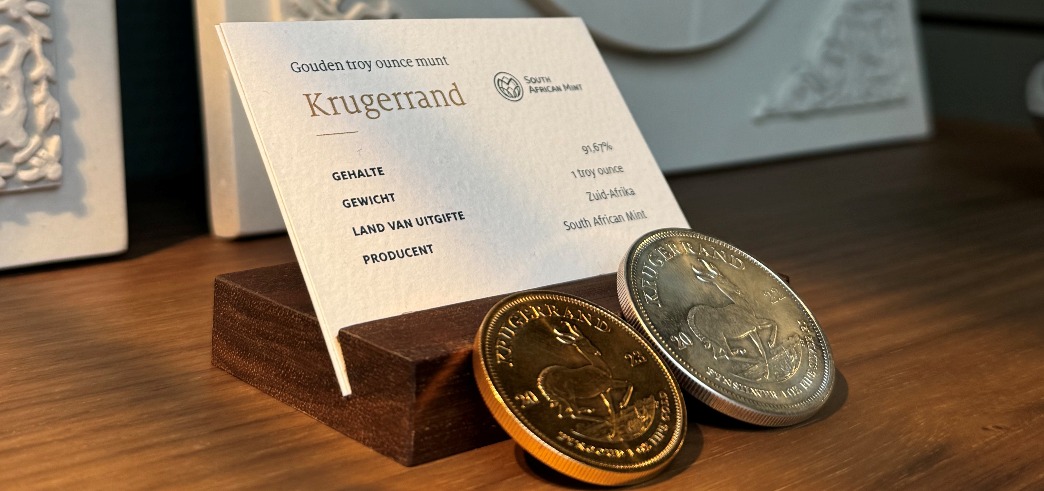
The gold standard connected the value of paper money to a fixed amount of gold.
After the Second World War, the global economy was in ruins. There was a huge and urgent need for monetary stability to stimulate international reconstruction and global trade.
Therefore, in the summer of 1944, delegates from forty-four countries gathered in the American town of Bretton Woods to design a brand new financial system.
This historic agreement changed the rules of the gold standard enormously. They did not opt for a return to the classical system, but introduced a so-called gold exchange standard. This system rested on the following agreements:
This system worked excellently in the first decades and caused a massive economic boom. However, the system was completely dependent on one important detail. The United States had to have sufficient physical gold reserves to guarantee global confidence in the ever-growing amount of dollars.
To give you a clear overview of this monetary history, you will find the most important historical years and events listed in the table below.
| Year | Historical event | Economic impact |
|---|---|---|
| 1870 - 1914 | Heyday of the classical gold standard | Period of unprecedented price stability and stimulus for global trade. |
| 1914 | Outbreak of the First World War | Countries temporarily suspend gold backing to finance their armies. |
| 1929 | Start of the Great Depression | The global crisis puts the rigid rules of the gold standard under heavy pressure. |
| 1931 - 1936 | Currencies are decoupled | Major powers and eventually also the Netherlands (1936) definitively leave the classical gold standard. |
| 1944 | The Bretton Woods agreement | Introduction of a new international system with the US dollar as the world reserve currency. |
| 1971 | The Nixon Shock | The US suspends the convertibility of dollars for gold. The definitive end of the gold standard. |
In the first decades after the war, the Bretton Woods agreement worked excellently. The global economy flourished and fixed exchange rates offered maximum certainty. During the 1960s, however, significant cracks appeared in this system.
The United States let its budget deficits rise enormously to finance expensive domestic projects and the war in Vietnam. New dollars were created on a large scale for this purpose.
More and more countries became suspicious as to whether the American government still had sufficient gold reserves to back all those newly printed dollars. Countries like France and the Netherlands decided to be better safe than sorry and demanded physical gold en masse in exchange for their dollars.
The American gold reserves melted away at an unprecedented pace. This led to the world-famous 'Nixon Shock'. On August 15, 1971, President Richard Nixon announced that the convertibility of the dollar into gold was suspended immediately. This brought the curtain down on the gold standard and gave the world a system of freely floating exchange rates.
Since 1971, we worldwide pay exclusively with fiat money. Fiat money is money that has no fixed gold backing or intrinsic value whatsoever. Its value relies 100% on confidence in the economy, the central bank and the legislative government.
This modern system has a totally different dynamic than the historical gold standard. The table below clarifies the main differences for you as a consumer and investor.
| Characteristic | Gold standard | Fiat Money System |
|---|---|---|
| Backing of value | Physical precious metals in the vault | Confidence in government and central bank |
| Pace of money creation | Naturally limited by gold mining | Unlimited and controllable by policy |
| Risk of inflation | Very low and historically stable | Structurally present in the long term |
| Economic flexibility | Very limited in times of recession | Very high via targeted monetary policy |
The main reason modern economies do not return to a gold backing is the need for flexibility. Central banks want to be able to intervene quickly and decisively in the event of a looming recession, a pandemic or a banking crisis.
They do this by manipulating interest rates and injecting extra liquidity into the market. Under a gold standard, that monetary policy space is simply not there.
In addition, the gold standard carries a serious risk of deflation. When money becomes increasingly scarce and prices fall, consumers postpone their spending en masse. This slows down economic growth and can lead to rising unemployment.
Finally, the global economy today is so immense that a fixed link to the relatively small, physical above-ground gold supply would inevitably lead to severe liquidity problems.
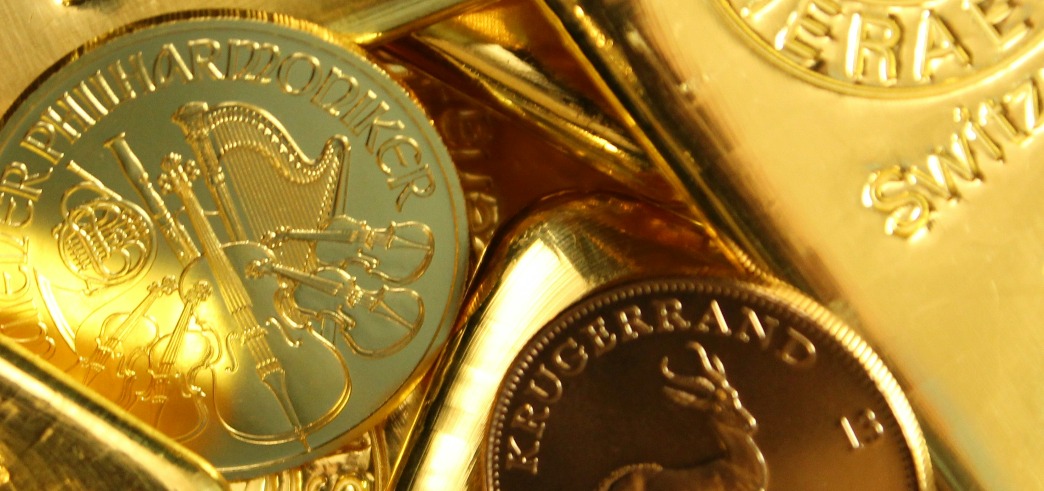
De gold standard prevented extreme inflation because central banks could not endlessly print money.
Yet many economists still look back at the past with interest. The advantages of the gold standard are considerable, especially when we look at the preservation of purchasing power.
Zimbabwe tried to combat ongoing hyperinflation in April 2024 with the introduction of the ZiG (Zimbabwe Gold). This new currency was partially backed by national gold reserves.
Although this shows that countries in crisis instinctively fall back on precious metals to gain trust, the currency quickly devalued. After all, a successful currency requires a stable government policy in addition to physical backing.
The gold standard may have been officially abolished, but precious metals have never disappeared from the financial system. In fact, the demand for gold is unprecedentedly high today. Central banks worldwide add thousands of kilos to their vaults every week as the ultimate reserve.
For private investors, owning physical gold offers exactly what the fiat money system lacks: tangible certainty without counterparty risk. A gold coin or gold bar is not dependent on a central bank, requires no internet connection and cannot possibly go bankrupt.
Although it pays no interest or dividends, it acts as an independent vault for your purchasing power. Especially in times of geopolitical unrest and persistent inflation, gold remains a stable investment.
The gold standard was an extremely stable system that ensured monetary discipline worldwide. Although the urge for economic flexibility led to the definitive switch to fiat money, the appeal of precious metals has never disappeared. Today, physical gold still offers the ultimate protection against structural inflation and uncertainty.
Do you also want to secure your accumulated wealth with this tangible certainty? Then keep a close eye on the current gold price to determine your perfect entry moment.
The Silver Mountain does not provide investment advice. This article is for educational purposes only. Past performance is not indicative of future results.
The gold standard was a monetary system in which the value of national paper money was directly linked to physical precious metals. You could always exchange your banknotes at the central bank for a fixed amount of gold. This system ensured massive price stability for decades and prevented unlimited money creation by governments.
The modern international gold peg ended definitively on August 15th, 1971. On that day, US President Richard Nixon decided to fully suspend the convertibility of the dollar into physical gold. This world-famous economic decision is known in the history books as the Nixon Shock.
Modern governments and central banks nowadays need much more policy flexibility. During an economic recession, they want to be able to intervene at lightning speed by lowering interest rates and pumping extra money into the economy. A strict gold standard blocks these necessary interventions due to the physical link.
Bretton Woods was the international monetary system that emerged after the Second World War. Here, only the US dollar was linked to gold. All other global currencies were then linked to this dollar with a fixed exchange rate. This immediately made the dollar the most important world reserve currency.
No major economy currently uses a classical gold standard. However, we do see that countries in severe economic crises sometimes fall back on precious metals. In 2024, for example, Zimbabwe introduced a currency with partial gold backing to try and restore lost confidence in its own economy.
Rolf van Zanten is the founder and owner of The Silver Mountain, a specialist in physical precious metals since 2008. With nearly twenty years of experience in the precious metals trade, Rolf shares his expertise on investing in gold, silver, and platinum in an accessible and reliable way. His knowledge of the international gold and silver markets helps investors make well-informed decisions. In his role as an expert, he strives to ensure that transparency, security, and trust are at the heart of every purchase.

Be the first to discover the latest products and the latest news about precious metals.



 Nederlands