
 Buy gold bars
 Buy gold coins
 Series
 Buy silver coins
 Buy silver bars
 Series
 Buy silver collectible coins
 Silver collectible coin series
 Buy gold collectible series
 Gold collectible coin series
 Author:
  Date: 16 April 2026
Gold confiscations in the past: can the government seize gold?
 Rolf van Zanten
19 March 2025
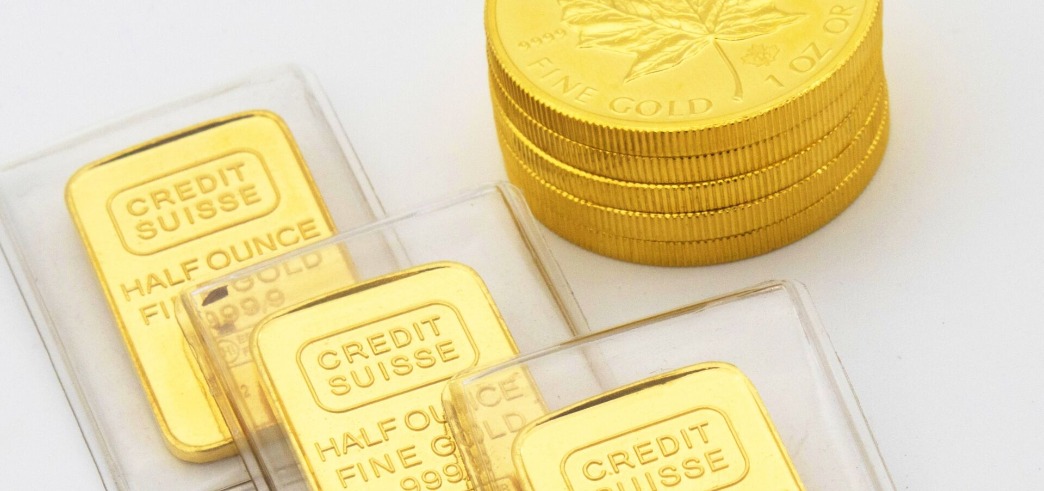
Gold has captured the imagination of humanity for thousands of years. Initially, the precious metal was admired purely for its rarity and unique shine. Soon it grew into an exclusive status symbol and a reliable coinage metal. Ultimately, gold even formed the absolute foundation under our global monetary systems and international reserves.
Anyone who studies the history of gold therefore sees much more than the development of a shiny precious metal. It is the tangible history of political power, international trade, warfare, and financial trust.
From the very first gold jewelry in prehistoric times to the turbulent historical gold price after the fall of the Bretton Woods system; gold has played a decisive role through almost every phase of civilization. In this article, we take you on a journey, from the role of gold in prehistory to modern history.
Are you short on time? Here is a summary of the most important historical milestones of gold:
The origin of gold takes us thousands of years back in time, long before the rise of written sources. Archaeological finds in Mesopotamia prove that peoples around 5000 BC were already skilled in working this precious metal. In that early period, they used it primarily for detailed jewelry and ceremonial decorations.
The frequently asked question "who discovered gold?" is therefore impossible to answer with one specific name or culture. Historians and geologists agree that physical gold was discovered in several places around the world completely independently of each other.
The fact that gold was discovered first is a purely geological phenomenon. Unlike iron or copper, gold does not oxidize. It is a precious metal that often occurs in nature in its pure, unmixed form.
Where other metals only became usable after mankind had invented complex smelting processes, our ancestors could literally pick up the pure gold nuggets from the shallow river water and forge them directly cold into the right shape.
This accessible geological property explains why early gold mining could start relatively small-scale and simple. Long before humanity was capable of building deep and advanced mine shafts, prospectors focused exclusively on alluvial deposits. These are the places where old water currents left behind sand, gravel, and gold dust.
To filter the gold from these riverbeds, historical prospectors used surprisingly simple tools. They cleverly made use of the exceptionally high density of the metal. Because gold is significantly heavier than the surrounding earth, it sinks directly to the bottom in water.
Prospectors and pioneers in the past mainly worked with the following manual methods:
This exhausting physical labor formed the global standard for thousands of years, until the industrial revolution paved the technological way for the massive, large-scale mining we know today.

In the old days, gold was 'mined' with the help of boxes, sieves or gold pans.
In early civilizations, the veneration of gold reached its first absolute peak. Especially in ancient Egypt, the metal gained a central role that was both religious and political in nature.
For the Egyptians, gold was not just a valuable possession. They considered the precious metal to be the flesh of the gods.
Historical hieroglyphs from around 2600 BC show how important gold was to the pharaohs. The metal was mined on a large scale in the Nubia region, an area that at the time was even known as the land of gold. The Egyptians perfected the techniques for purifying and working gold into refined objects.
Although gold was initially reserved exclusively for the elite, this changed around 1500 BC. In this period, Egypt increasingly began using gold as a universal measure of value in international trade. This laid the first foundation for gold's role as a globally recognized medium of exchange.
On the other side of the world, a crucial next step was subsequently taken. In China, in 1091 BC, small gold blocks were officially legalized as legal tender for the first time.
Despite this early innovation, it took centuries before practical coinage existed in the rest of the world. Merchants had to manually weigh the gold and check its purity for every transaction.
The true monetary revolution took place in the seventh and sixth centuries BC in the kingdom of Lydia, located in present-day Turkey. Under the leadership of the legendary King Croesus, the oldest coin in the world was minted here from pure gold.
The Lydian innovation of coins with a uniform weight and an official stamp permanently changed world trade. Trust became the new foundation of the economy. This system was soon adopted by the Greeks and later perfected by the Romans with their gold Aureus.
Julius Caesar used this gold coin extremely strategically as a tool for political power. After his successful campaigns, he paid his legionnaires a generous bonus of exactly 200 gold coins per soldier.
With this, he not only bought their unconditional loyalty, but through the enormous influx of gold, he simultaneously managed to pay off the massive debts of the Roman state.
| Era | Form of gold | Primary function |
|---|---|---|
| 3000 BC | Rings and dust | Decorative and religious symbol for the elite. |
| 1500 BC | Weighed gold pieces | First use as an international standard of value. |
| 560 BC | Lydian gold coin | First standardized coin with government guarantee. |
| From 50 BC | Roman Aureus | Widely accepted medium of exchange throughout the classical world. |
This transition from a raw natural product to an official and stamped medium of exchange forms one of the most important milestones in human history. It enabled governments to finance armies, collect taxes, and maintain complex trade networks over thousands of kilometers.
After the collapse of the Roman Empire, a turbulent period began in Europe. The extensive trade networks ground to a halt, and physical gold as a circulating coinage metal became significantly scarcer locally. The focus of the global gold trade shifted in this period to other continents, with Africa in particular claiming an unprecedented leading role.
In the fourteenth century, West Africa became the beating heart of gold production. The powerful Mali Empire produced unimaginable quantities of precious metal at that time.
The wealth was so immense that when King Mansa Musa went on a pilgrimage to Mecca in 1324, he gave away so much gold along the way in Egypt that the local gold price completely collapsed for years due to the sudden oversupply.
While international trade slowly blossomed again in the late Middle Ages, the need for reliable money in Europe increased sharply. Large independent trading cities resolutely took the lead in this.
Between 1284 and 1300, the maritime superpower Venice introduced the iconic gold ducat. This recognizable coin brought back the absolute trust needed to successfully complete international trade transactions.
Other European superpowers quickly followed this monetary standard. For instance, in the year 1377, England officially switched to a strict monetary system based exclusively on the pure value of gold and silver.
If we look at the period around gold 1500, we see that the world was on the threshold of a gigantic monetary shift. The international voyages of discovery opened up completely new shipping routes to Asia and the Americas.
In this early modern era, gold grew into an indispensable factor for global colonial expansion and overseas trade.
For the Republic of the Seven United Netherlands, one specific coin played a starring role in this new world economy. From August 4, 1586, the Gold Ducat was legally established in the Mint Act as the principal gold piece from 1586 onwards.
This reliable gold coin dominated international trade routes deep into Asia. This immense success was due to three fundamental characteristics:
| Era | Name of the coin | Origin | Historical role |
|---|---|---|---|
| 560 BC | Lydian gold coin | Lydia (present-day Turkey) | Oldest pure gold coin in the world |
| Until 309 AD | Aureus | Roman Empire | The essential medium of exchange of the Romans |
| Late 13th century | Florin and Ducat | England and Venice | Extremely popular medieval coins |
| From 1586 | Gold Ducat | The Republic of the Netherlands | The undisputed and primary trade coin worldwide |
| 1967 | Krugerrand | South Africa | The first modern investment coin for private individuals |
This rock-solid and proven reputation ensured that the Dutch ducat formed the undisputed standard in global shipping for hundreds of years. It perfectly demonstrates how reliable precious metal formed the backbone of the most prosperous periods in Dutch trade history.
The turbulent twentieth century fundamentally changed the role of gold. The road to this change actually began in 1933. In that year, US President Roosevelt decided to confiscate all private gold from citizens and store it in the highly secure vaults of Fort Knox.
With this, gold transformed from a private possession into a crucial strategic instrument for the state.
When the threat of war in Europe palpably increased in the late 1930s, many countries took drastic and unprecedented measures. Central banks, including the Dutch central bank, shipped their physical gold reserves in deep secret to safe havens in the United States, Canada, and the United Kingdom.
This was a necessity to prevent this enormous wealth from falling into the hands of the Nazis. Despite these efforts, the occupiers carried out an active and ruthless gold robbery in the conquered territories.
They used this confiscated precious metal directly to purchase essential raw materials for their war industry from neutral countries. In this dark period, gold once again proved its universal and timeless acceptance.
Even before the war officially ended on the battlefield, forty-four Allied countries came together in the summer of 1944 in the American town of Bretton Woods. Their joint goal was very ambitious: to design a completely new, stable, and international monetary system for post-war reconstruction.
Within this historic international agreement, physical gold was given the absolute starring role, albeit in a renewed form. To restore confidence in the global economy, the following three rock-solid agreements were made:
During the reconstruction in 1945, however, an important change was immediately implemented in the monetary foundation. The gold backing of the US dollar was reduced by exactly 25.5 percent that year.
In the 1960s, this stable system began to show cracks. To cover American deficits, President Lyndon B. Johnson decided in 1966 to bring the confiscated gold from Fort Knox onto the international market.
This action aroused great suspicion among international allies. French President Charles de Gaulle subsequently decided to demand physical gold bullion in exchange for his dollars from then on, instead of accepting the paper promise.
This enormous outflow of gold from the United States was the direct catalyst for President Nixon's historic decision in 1971 to definitively abandon the gold standard.
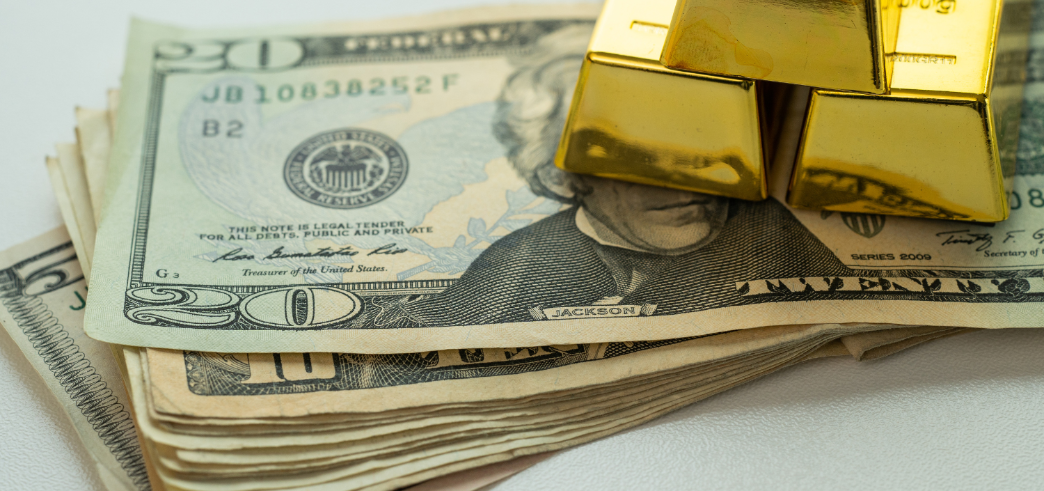
President Nixon ended the fixed gold standard of the dollar in 1971.
The end of the Bretton Woods system in 1971 marked the beginning of a completely new era. Because the US dollar was no longer convertible into physical precious metal, its value was suddenly left entirely to the free market.
This had massive consequences for the historical gold price and the way investors viewed the metal.
In the turbulent 1970s, the global economy struggled with skyrocketing inflation and severe economic uncertainty. Private and institutional investors flocked en masse to tangible security.
As a result, the gold price shot up at an unprecedented rate. From the original fixed price of 35 dollars per troy ounce, the market peaked in early 1980 at an absolute record at the time of over 800 dollars.
This explosive peak was followed by a long period of cooling off and stabilization. Central banks aggressively raised interest rates to combat inflation, which temporarily weakened the appeal of non-yielding precious metals.
The gold price in the 1980s was therefore mainly characterized by a sideways movement, with the price largely fluctuating in a stable channel between 300 and 500 dollars during that decade.
This moderate trend stealthily continued throughout the 1990s. At the end of that decade, market sentiment reached an absolute low point. Major governments, including the United Kingdom, openly announced that they would sell a significant portion of their national gold reserves on the free market.
This caused blind panic. Investors feared a massive and uncontrolled dump of precious metals. The 1999 gold price collapsed completely and reached a historical low of just 252.80 dollars per troy ounce in the summer. Gold's centuries-old status as a safe haven suddenly seemed to totter seriously.
To prevent a total collapse of the market, fifteen major European central banks intervened resolutely in September 1999. They signed the historic 'Central Bank Gold Agreement' (CBGA). Within this unique agreement, they made the following binding commitments:
This agreement proved to be an absolute masterstroke. It immediately removed the prevailing fear of a flooded market and brought back the much-needed stability and trust among investors.
Since reaching that bottom in 1999, gold has shown an exceptionally impressive, multi-year advance. During the 2008 credit crisis, the subsequent European debt crisis, global pandemics, and ongoing geopolitical tensions, the metal repeatedly proved its irreplaceable function.
Today, we look back on an impressive period in which the gold price has broken consecutive records. Both private investors and central banks worldwide recognize gold more than ever as the ultimate, scarce foundation for structural wealth preservation in a rapidly changing world.
When we take a bird's-eye view of the history of gold, exactly the same functions and characteristics constantly return. At its core, gold was rare and admired for its beauty, then sacred and prestigious in Egypt, subsequently an efficient medium of exchange in Rome, and ultimately an unwavering financial reserve in modern times.
The physical form changed, but the absolute essence always remained intact: gold was invariably trusted as the ultimate store of value, especially when political governments fell or monetary systems came under heavy pressure.
Therefore, anyone who decides to buy physical gold today is not just speculating on a price gain. That person consciously steps into a robust monetary tradition that is thousands of years old and has proven its ability to preserve purchasing power time and time again.
The Silver Mountain does not provide investment advice. This article is for educational purposes only. Past performance is not indicative of future results.
Gold was not discovered by one specific individual or people. Because it sometimes occurs in nature in pure form and absolutely does not rust, different civilizations found it independently of each other. The earliest applications date back to 5000 BC in Mesopotamia.
The Lydian gold coin is universally considered the very first standardized coin. King Croesus introduced this innovation around 560 BC in present-day Turkey. These historical coins had a uniform weight and an official stamp, which made trading significantly easier at the time.
Historical prospectors mainly worked with manual methods in shallow rivers. They used simple woven baskets, iron gold pans, and long wooden sluice boxes. By rinsing sand and water, the very heavy gold particles ultimately remained safely at the bottom of their tools.
The Gold Ducat was legally designated as the most important Dutch trade coin from August 1586. Due to a very high and reliable gold content, this ducat inspired enormous international confidence. This ensured that the coin flourished for centuries within global maritime trade.
The gold price fell to a historical low of just 252 dollars per troy ounce in 1999. This drop was caused by massive panic because several central banks threatened to sell their reserves en masse. Fortunately, a saving European gold agreement subsequently restored calm.
European countries moved their physical gold reserves in deep secret to safe havens in America and England. They did this out of bitter necessity to prevent Nazi Germany from stealing this valuable national wealth and using it for their own war industry.
Rolf van Zanten is the founder and owner of The Silver Mountain, a specialist in physical precious metals since 2008. With nearly twenty years of experience in the precious metals trade, Rolf shares his expertise on investing in gold, silver, and platinum in an accessible and reliable way. His knowledge of the international gold and silver markets helps investors make well-informed decisions. In his role as an expert, he strives to ensure that transparency, security, and trust are at the heart of every purchase.

Be the first to discover the latest products and the latest news about precious metals.



 Nederlands