
 Buy gold bars
 Buy gold coins
 Series
 Buy silver coins
 Buy silver bars
 Series
 Buy silver collectible coins
 Silver collectible coin series
 Buy gold collectible series
 Gold collectible coin series
 Author:
  Date: 26 February 2025
Gold in our history: from antiquity to the modern gold price
 Rolf van Zanten
16 April 2026
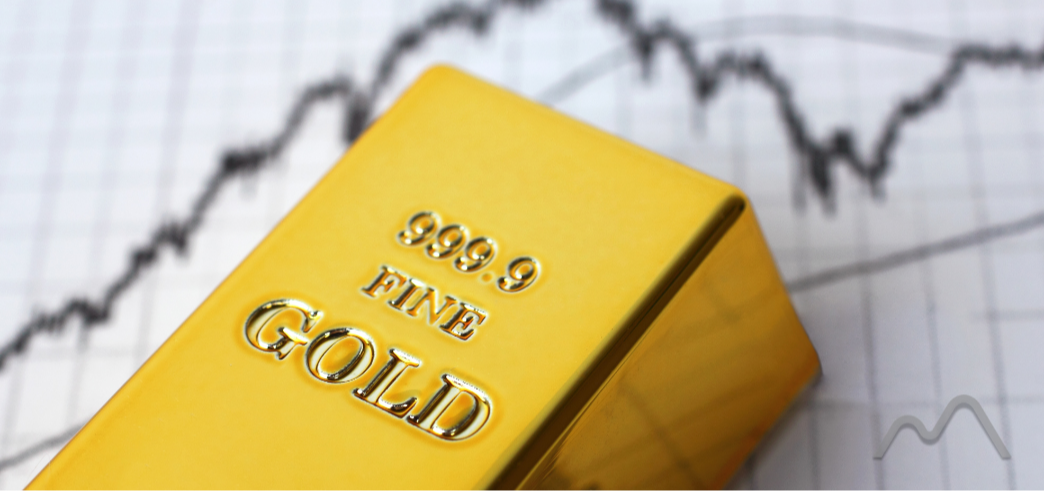
The gold price is making history. With the breaking of the magical barrier of €100,000 per kilo (and prices above $4,000 per troy ounce), gold has definitively stepped out of the shadows as the ultimate store of value. But for the long-term investor, the current price is merely a snapshot in time.
Those buying gold for their retirement or as wealth transfer to the next generation look further ahead. What is the gold price forecast for 2040?
In this article, we analyze the structural trends that will determine the value of gold over the next 15 years. We base this on data from the World Gold Council, historical return models, and macroeconomic shifts.
To make a reliable prediction for 2040, we must first understand the current market situation. The rise of recent years was not driven by speculation, but by fundamental changes in the financial system.
Where gold was sometimes seen in the past as a 'barbarous relic', it has now returned as an indispensable pillar in the global economy.
Major financial institutions such as J.P. Morgan and Deutsche Bank have already adjusted their price targets for the end of this year upwards. This structural rise is supported by three factors that will remain relevant towards 2040:
According to data from the World Gold Council, central banks (especially in Asia and the Middle East) have been buying record amounts of gold since 2022. This is not a temporary trend, but a strategic choice to be less dependent on the dollar and the euro.
Because these major players continuously take physical gold out of the market, a strong price floor is created. Even during economic headwinds, these parties continue to buy, which supports the price.
The costs to extract one ounce of gold from the ground, known in mining as all-in sustaining costs (AISC), have risen explosively in recent years. This is due to more expensive energy, higher wages, and stricter environmental requirements.
For many mines, it is simply no longer profitable to mine at lower gold prices. These high production costs create a natural price level below which the gold price can barely drop, because supply would then immediately dry up.
Western governments are struggling with historically high debt burdens. Interest payments on these sovereign loans weigh heavily on budgets. The only way out for policymakers is a period of 'financial repression': keeping interest rates artificially low while inflation remains relatively high.
In such a climate, where savings in the bank decline in purchasing power, capital historically always flees to gold.
Those investing with a horizon of fifteen years are not betting on tomorrow's price. The expectation for the gold price in 2040 rests not on daily speculation, but on three fundamental economic pillars that will be decisive in the coming decades.
Since 1971, world trade has been largely based on the US dollar. However, we are seeing a clear break in this trend. Countries within the BRICS bloc (including China, India, Russia, and Brazil) are actively working on trading systems that are less dependent on the dollar.
Central banks in these regions are buying gold at a record pace for a reason: they are preparing for a financial system in which gold once again plays a central role as neutral collateral.
If gold gets a formal role in international trade settlements or as backing for new digital currencies (CBDCs) towards 2040, the demand for physical gold will increase exponentially.
Current gold reserves are simply insufficient to cover the financial system at current prices, which would necessitate a massive revaluation.
While monetary demand is rising, the supply side is under heavy pressure. We are approaching, or perhaps have already passed, the point of 'peak gold': the moment when maximum global gold production has been reached and begins to decline structurally.
Gold does not so much rise in value; it is primarily the euro and the dollar that fall in value. Since the introduction of the euro, its purchasing power has halved. This is not a bug in the system, but a feature of fiat money: more of it is continuously printed.
If we assume an average inflation of just 2% to 3% per year until 2040, your savings in the bank will lose another 30% to 40% of their purchasing power. Gold cannot be printed by central banks.
The amount of above-ground gold grows by only about 1.5% per year. This mathematical certainty ensures that gold always overtakes the purchasing power of paper money in the long run.
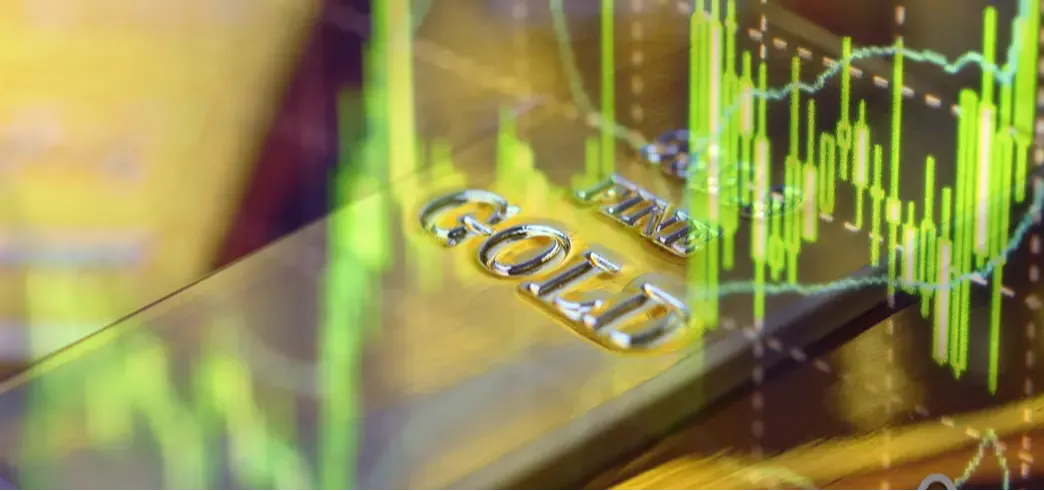
Steady growth is the most realistic scenario for the gold price towards 2040.
No one has a crystal ball, but we can calculate. Financial markets often move in cycles, and by projecting historical data onto the future, we get a realistic picture of potential price development.
To make a gold price prediction for 2040, analysts often use the compound annual growth rate (CAGR). This is the average annual growth percentage. Since leaving the gold standard in 1971, gold has achieved an average return of over 7% per year.
Below we outline three scenarios for the gold price in 2040. The calculations take the price at the beginning of 2026 as the starting point.
| Scenario | Expectation | Explanation | Price Indication ($/oz) | Price Indication (€/kg)* |
|---|---|---|---|---|
| Bearish (Conservative) | Gold keeps pace with inflation (CAGR ~4%). | Economic stability returns and debts are reduced. Gold functions purely as purchasing power preservation. | $7,000 - $7,500 | € 225,000 - € 250,000 |
| Base (Realistic) | Structural bull market (CAGR ~7%). | Based on the long-term historical average. Persistent money creation and central bank purchases drive the price. | $10,500 - $11,000 | € 340,000 - € 360,000 |
| Bullish (Crisis) | Reset of monetary system (CAGR >10%). | Loss of confidence in fiat money (euro/dollar), return to gold as a monetary anchor. | > $15,000 | > € 500,000 |
*Estimates are based on current exchange rate ratios. With a weaker euro relative to the dollar, the price in euros per kilogram will turn out even higher.
Even in the most conservative scenario ('bearish'), in which gold only follows official inflation figures, we see a doubling of the price relative to levels from a few years ago.
The 'base' scenario, supported by models from GoldRepublic among others and data from the World Gold Council, assumes a continuation of the current trend. In this, we see gold fulfilling its role as a wealth protector and not only preserving the saver's purchasing power but increasing it.
The 'bullish' scenario takes into account a larger shock in the financial system, as we have seen more often in history at the end of a debt cycle. In that case, gold functions as the ultimate insurance, and the price can detach from traditional models.
Analysts at GoldRepublic also point to the power of historical data. Assuming a conservative return of 7% per year, the gold price would already head towards $7,500 per ounce in 2040.
In a scenario where the returns of the past decade (9-10%) continue, prices above $10,000 are very realistic.
The most likely scenario for 2040 is the 'Base' scenario, with an expected gold price between $10,500 and $11,000 per troy ounce. This scenario follows the historical trend: since 1971, gold has risen by an average of over 7% per year.
The rationale is powerful: central banks are placing a stable floor in the market with their record purchases, while mining costs (AISC) continue to rise due to scarcity ('Peak Gold').
As long as governments struggle with high debts and have to print money, the purchasing power of the euro and dollar will continue to fall. Gold simply functions as the constant factor that compensates for this loss of value.
"At its core, gold compensates for the loss of our purchasing power," states Rolf van Zanten, founder of The Silver Mountain. "Since 2000, we have seen an average increase of about 9% per year. That trend will continue unabated, although investors should prepare for greater fluctuations.
The global debt mountain is mathematically impossible to pay off, and geopolitical unrest is high, especially now that we are slowly counting down to the end of Trump's term. Something must happen in the long run, such as a monetary reset. There is currently an absurd amount of money flooding the markets. Stocks are becoming more expensive purely because that money is looking for a way out. Saving is not a good alternative, because interest rates are still far too low.
With precious metals, the dynamics are different: gold is actually becoming more valuable, while the euro and dollar are steadily losing value. Whatever price tag you put on 2040, even if it is $10,000, put that into perspective. If everything becomes twice as expensive, such a price is a logical correction. It is purely about preserving purchasing power."
To base our expectation for 2040 not only on historical averages, we also look at fundamental valuation models. The most authoritative research in the precious metals market is the annual In Gold We Trust report by asset manager Incrementum AG.
Their analysts, Ronald-Peter Stöferle and Mark Valek, use complex models that set the gold price against the global money supply (M2) and the balance sheets of central banks.
A core point in their analysis is the 'coverage ratio'. This measures what percentage of all fiat money (euros and dollars) is theoretically covered by the gold reserves of central banks.
In their reports from the beginning of this decade, they already predicted a gold price of around $4,800 by 2030. Now that we are already close to this level in 2026, their model proves accurate.
If we extend their conservative growth scenarios to 2040, and take into account the persistent debt problems in the US and Europe, their data supports our 'base' and 'bullish' scenarios.
According to these models, the current bull market is not a temporary peak, but part of a structural revaluation of gold relative to paper money.
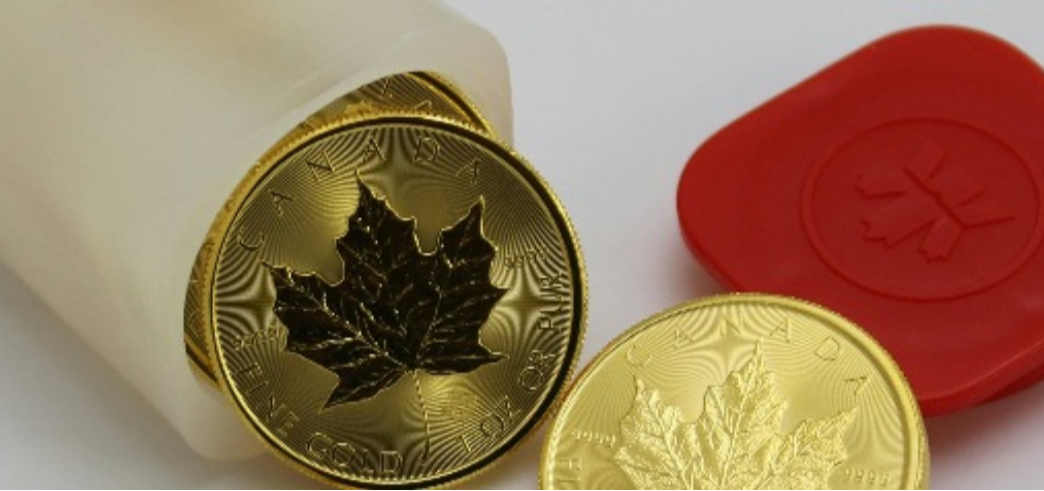
For the long term buying gold is not speculation. It's a protection against inflation.
No investment is without risk, and that applies to gold as well. Although long-term trends (debt and scarcity) point to a rising price towards 2040, scenarios are conceivable in which the gold price could stagnate or fall. A balanced investor takes the following factors into account:
The biggest enemy of gold is the so-called 'real interest rate'. This is the interest you receive on the bank or government bonds, adjusted for inflation.
Since the approval of crypto ETFs in the US and Europe, bitcoin has become an established asset class. Younger generations in particular sometimes view bitcoin as 'digital gold'.
An important argument for a higher gold price is 'peak gold' (scarcity).
Although a total ban on gold ownership (like in the US in 1933) seems unlikely in the current digital economy, governments can discourage the flight to gold.
Think of higher taxes on capital gains from precious metals or import duties. This could influence the net return for the investor in 2040.
Curious about today's market movements? The gold price is constantly changing. To determine the perfect entry point for your long-term strategy, real-time insight is key. Check our interactive charts to track the current gold price and follow the latest developments closely.
Do you want to protect your wealth and grow along with the gold price? Start building your future today. At The Silver Mountain, you buy not just gold, you buy certainty. As a market leader, we offer you guarantees that are important for the long-term investor.
Those looking towards 2040 see a financial landscape that is changing irrevocably. The combination of structural scarcity ('Peak Gold'), central banks diversifying their reserves, and the mathematical certainty of currency devaluation forms an ironclad foundation under the gold price.
It is no coincidence that 'smart money' is positioning itself now. In this context, gold is not a speculative stock, but necessary insurance for your wealth. Whether the price stands at $7,500 or $15,000 in 2040: in both cases, the precious metal has done what it has been doing for centuries: protecting your purchasing power against the erosion of paper money.
At The Silver Mountain, we are happy to help you lay this foundation. With our expertise and unique buy-back guarantee, you are assured of a reliable partner, today and in the future.
The Silver Mountain does not provide individual investment advice. This article is intended for information purposes only. Expectations, scenarios, market developments, and past results offer no guarantee for future results.
Based on historical returns (average 7% per year), analysts take into account a gold price between $7,500 and $11,000 per troy ounce in 2040. In euros, this would mean the price per kilo could rise above €300,000, driven by scarcity and persistent inflation.
Yes, historically, gold is the ultimate protection against loss of purchasing power. Where savings in the bank evaporate due to inflation, gold rises in the long term along with the cost of living. It functions as necessary insurance for your wealth against economic crises and currency devaluation.
The long-term trend is positive. This is due to structural factors such as 'Peak Gold' (declining mining supply) and record purchases by central banks. As long as governments print money and incur debt, the price of gold in euros and dollars is expected to continue rising to compensate for this loss of value.
Financial institutions such as J.P. Morgan and Deutsche Bank have sharply raised their price targets. They foresee a structural bull market, driven by interest rate cuts and geopolitical tensions. Many analysts view current price levels merely as a starting point for a further rise towards 2030 and 2040.
Gold is a universal currency without counterparty risk. Should a currency like the euro or dollar collapse or experience hyperinflation, gold functions as the ultimate 'safe haven'. The value in that local currency will then rise explosively to preserve your purchasing power.
A bearish scenario assumes higher real interest rates and a stable economy, causing gold to grow more quietly. The average scenario follows a historical growth path with cycles and persistent demand. A bullish scenario assumes monetary stress, negative real interest rates, and strong investment demand, with higher projections.
Not always in the short term. Gold responds primarily to real interest rates: with high inflation and rapidly rising interest rates, gold can temporarily fall. Over longer periods, gold is used more often as protection of purchasing power. Therefore, inflation is relevant, but not the only determining factor.
No, the gold price in 2040 cannot be predicted exactly, because macroeconomics and policy change. Reliable analyses therefore work with scenarios and assumptions. Look primarily at real interest rates, central bank demand, and dollar development. Use forecasts as direction, not as a guarantee or purchase advice.
Rolf van Zanten is the founder and owner of The Silver Mountain, a specialist in physical precious metals since 2008. With nearly twenty years of experience in the precious metals trade, Rolf shares his expertise on investing in gold, silver, and platinum in an accessible and reliable way. His knowledge of the international gold and silver markets helps investors make well-informed decisions. In his role as an expert, he strives to ensure that transparency, security, and trust are at the heart of every purchase.

Be the first to discover the latest products and the latest news about precious metals.


 Daan Wesdorp
 Nederlands