
 Buy gold bars
 Buy gold coins
 Series
 Buy silver coins
 Buy silver bars
 Series
 Buy silver collectible coins
 Silver collectible coin series
 Buy gold collectible series
 Gold collectible coin series
 Author:
  Date: 11 December 2025
Why does the gold price rise or fall? The influence of interest rates, inflation, and geopolitics
 Rolf van Zanten
5 February 2026
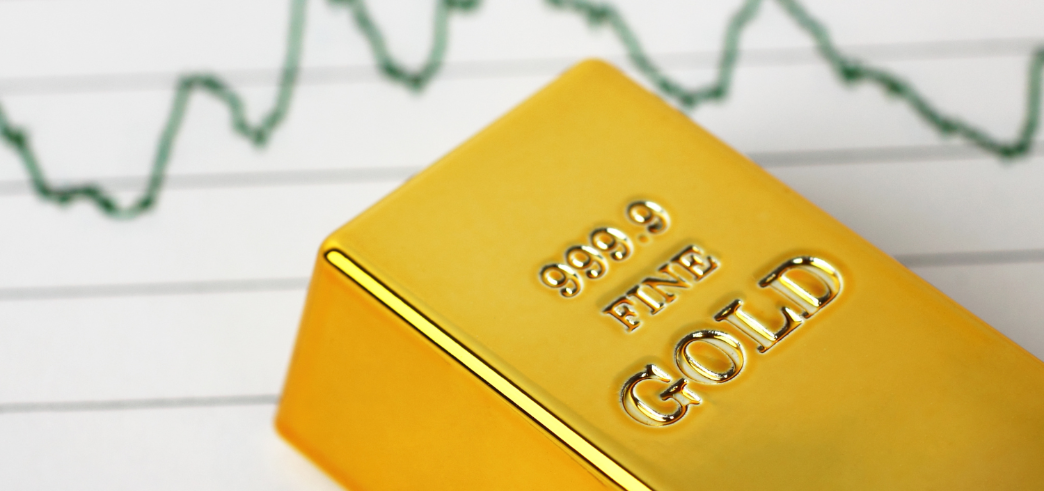
The gold price performed exceptionally well in 2025. Globally, gold traded at new record highs more than fifty times in a row, with returns by the end of November well exceeding 60%. For many investors, this immediately raises the question: what does this mean for the gold price forecast in 2026?
In this article, we do not focus on a single price target, but rather on realistic scenarios. We explain which factors drive the gold price, what the outlook for 2026 looks like, and what this could mean for you as a (future) investor in physical gold.
To do this, we use our own analyses combined with the most recent 'Gold Outlook 2026' report from the World Gold Council and insights from major banks such as Goldman Sachs and JPMorgan.
The gold price in 2026 depends on the global economy, interest rates, the dollar, and geopolitical tensions. Based on recent analyses by the World Gold Council and various macroeconomic scenarios, we can summarize it as follows:
Important: These are scenarios, not guarantees. For retail investors, understanding why the gold price moves and how gold can be used as part of a diversified portfolio is more relevant than speculating on an exact level. Do not use these outlooks as investment advice.
The gold price experienced exceptional development through 2025, driven by geopolitical tensions, fluctuating interest rates, and strong investment flows. Below we discuss the key trends and events that shaped the market and determine current sentiment.
Since the abandonment of the gold standard in the early 1970s, gold has traded freely and has developed into a globally recognized store of value and diversification tool. Historically, gold has:
2025 stands out as one of the strongest years for gold since 1971. According to the World Gold Council, November ended with more than 60% returns in US dollars, with gold outperforming most equity and bond markets.
Key drivers were:
Based on model analysis (GRAM – Gold Return Attribution Model), the World Gold Council concludes that the four main drivers (economic growth, risk & uncertainty, opportunity costs (interest rates & currency), and momentum) contributed relatively evenly to returns in 2025.
The gold price is determined by supply and demand on the world market. These are influenced by several recurring macro factors.
Gold itself does not pay interest. Therefore, investors look at the real interest rate (nominal interest rate minus inflation):
In 2026, a possible cooling of the US labor market, the reaction of central banks to inflation, and the question of whether further rate cuts are necessary will play a major role.
Gold is largely traded globally in US dollars. A strong dollar makes gold relatively expensive for non-dollar investors; a weak dollar does the reverse.
The World Gold Council points out that both real interest rates and the dollar index were still at relatively high, “restrictive” levels at the end of 2025. This means that further decline in 2026 could actually provide room for the gold price.
Gold is known as a safe haven. In periods of:
We often see a flight to buying physical gold.
Statistical measures such as stock market volatility and the cost of downside protection show an increase in “tail risks” in recent years: extreme outcomes are statistically priced in more often.
This is a key explanation for why investors value gold structurally higher than in calmer decades.
Besides retail investors, banks, and asset managers, central banks play an increasingly large role in the gold market:
In addition, gold ETFs (exchange-traded funds that hold physical gold) are a crucial link. In recent bull markets, we saw that inflows into ETFs (tens to hundreds of billions of dollars globally) correlate with strong price increases.
However, a shift from inflow to outflow (for example, in a pronounced “risk-on” climate) can also quickly create downward pressure.
The physical gold market roughly consists of:
Recycling is an important “swing factor”: at high prices, the incentive to sell old gold is significant, increasing supply. Remarkably, recycling has not risen as sharply with the gold price in recent years as might historically be expected.
One explanation is that in India, for example, more gold is being used as collateral for loans instead of being sold directly.
Should the economy in such a country unexpectedly deteriorate sharply, a wave of forced liquidations could create extra supply and downward pressure on the price.
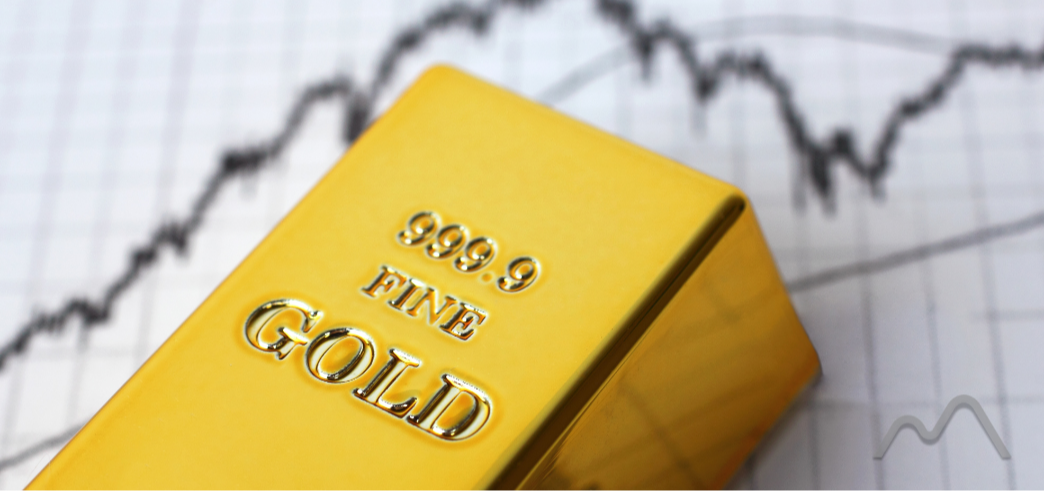
Experts prediction on the gold price in 4 scenarios; from stable to strongly positive or negative.
Analysts at the World Gold Council use a Gold Valuation Framework in which various macroeconomic scenarios are calculated. These scenarios do not give a price target but show how gold has historically behaved under comparable conditions.
Analyzing these scenarios is quite complex and time-consuming. Below, we translate these scenarios into a clear overview for 2026.
In the base scenario:
In such an environment, current gold prices largely reflect expectations. The gold price can of course continue to fluctuate, but on balance, we speak of a sideways movement: no major trend-based rise or fall.
For investors, this means: gold remains interesting primarily as a stabilizer within the portfolio, not necessarily as a source of exceptional returns.
In the scenario the World Gold Council calls “a shallow slip,” the US economy cools further:
The Fed responds with faster and larger rate cuts than currently priced in. The dollar weakens, long-term rates fall, and risk-averse behavior increases.
In this scenario, the model shows that gold could rise by approximately 5–15% in 2026 relative to late-2025 levels, depending on how strong the growth slowdown and rate cuts actually are.
For investors, this is the classic environment where gold performs well: falling real rates, increased uncertainty, and a weaker dollar.
In the doom loop scenario, the economic slowdown becomes much deeper and more synchronized:
Investors flock to safe havens en masse. In such an environment:
Model-wise, this amounts to a potential rise of 15–30% in 2026.
This is exactly the scenario where gold has historically proven itself strongest: as insurance against systemic risk and deeper economic crises. For balanced portfolios, this is a reason to maintain a structural gold position even in calmer times.
On the other hand is the reflation return scenario:
In this climate:
The World Gold Council estimates that the gold price could end 5–20% lower in such an environment than late-2025 levels.
Even in a bearish scenario, gold often continues to play a useful role within a well-diversified portfolio precisely because it reacts differently than stocks and some bond categories.
For those considering buying physical gold, it is important to know that no gold price forecast offers a guarantee. The gold market reacts to a combination of interest rate developments, geopolitical risks, the US dollar, and investment flows. The gold report therefore emphasizes that scenario thinking is the only realistic and professional way to look ahead.
By working with multiple scenarios, from moderately positive to strongly rising or correcting, a clearer picture of the risks and opportunities emerges. This prevents investors from pinning themselves to a single price target and supports a thoughtful strategy in which gold primarily serves as a stable store of value and wealth protection.
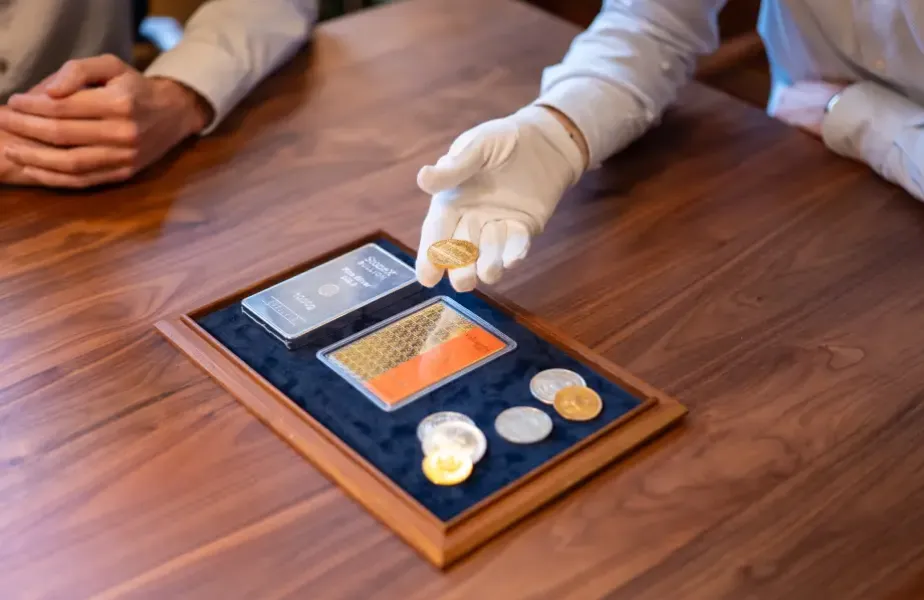
Scenario thinking increases the reliability of any analysis and helps you be better prepared for various economic conditions.
Based on current information, we consider the combination of the base scenario and the moderately positive scenario most likely at this moment:
This does not mean a strong correction is impossible, but rather that underlying forces are more likely to support gold than undermine it.
For 2026, we expect:
For investors with a longer horizon, looking further ahead remains relevant. Therefore, separate studies and articles exist on the gold price forecast towards 2030 and 2040, with scenarios focusing more on:
"Looking ahead to 2026, I expect gold to remain particularly attractive as a form of strategic protection within a diversified portfolio. Structural factors such as persistent geopolitical uncertainty, high government debt levels, and the role of central banks will continue to support demand for gold.
As 2026 approaches, I also anticipate ongoing support from central banks, with countries such as China further expanding their gold reserves in order to reduce their dependence on the US dollar. At the same time, the gold price is likely to remain volatile and highly sensitive to developments in interest rates and inflation expectations.
For this reason, I consider gold not so much as a mean for short-term gains, but primarily as an instrument for long-term wealth preservation."
The gold price forecast for 2026 offers valuable guidance for investors looking to strengthen their portfolios. The insights below help you determine what role gold can play within your strategy, regardless of whether you focus on protection, diversification, or long-term wealth accumulation.
The most important question is not: “What will the gold price be in December 2026?” But: “What role can gold play in my total wealth, given the scenarios above?”
In practice, we see three main motives:
While gold mining stocks and ETFs offer certain advantages, many private investors consciously choose physical gold:
In a volatile gold market, there are roughly two approaches:
For many private investors, a spread-out approach works more calmly and is more manageable.
With physical gold, practical questions arise: how safe is storage, what about insurance, and how easy is it to sell?
These operational aspects are just as important as the gold price forecast itself: they determine the extent to which you can execute the chosen strategy pleasantly and safely in practice.
The gold price constantly moves with international markets. On our website you can track the current price per gram, kilogram, and troy ounce, supplemented with historical data for a clear picture of long- and short-term trends.
The interactive gold price chart shows fluctuations per hour, day, month, or longer periods. This allows you to immediately see how the price reacts to economic news, while the long-term development (from doubling since 2013 to previous peaks in crisis times) underscores gold's value-retention function.
At The Silver Mountain, you can buy physical gold easily, safely, and transparently. Our range consists of LBMA-certified gold bars and globally recognized gold coins, directly from official suppliers.
Orders are delivered discreetly and insured, or stored securely via Edelmetaal Beheer Nederland. Thanks to our buyback guarantee and years of expertise, you always choose reliability and professional guidance with every purchase.
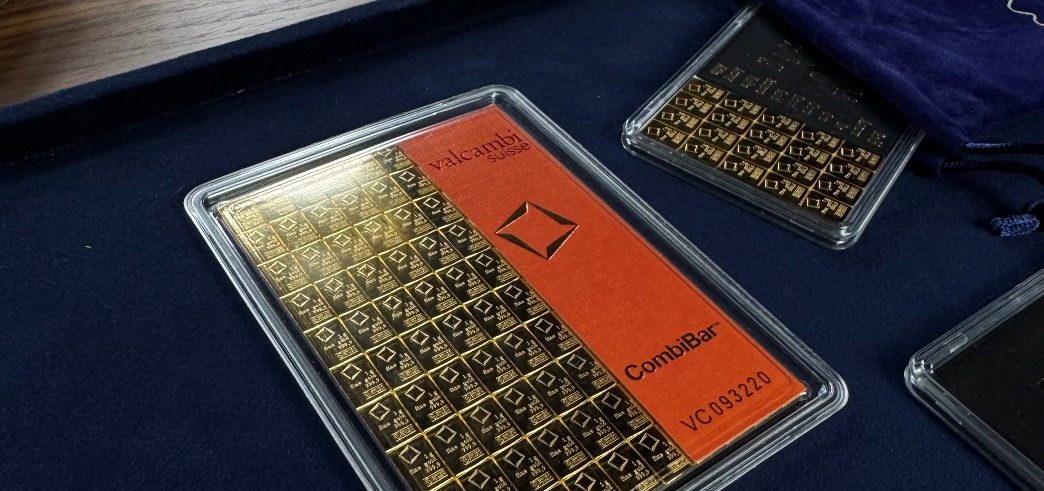
The Silver Mountain is your reliable and trusted partner for buying gold.
The gold price forecast for 2026 shows a number of possible outcomes. According to the recent gold report from the World Gold Council, the gold price remains largely stable in the base scenario, while moderately positive conditions could lead to a rise of 5–15%. In a strongly risk-averse environment, this could even rise to 15–30%, while a reflation scenario puts pressure on the price.
These divergent scenarios emphasize the importance of gold as a strategic store of value. With physical gold and expert guidance, The Silver Mountain offers investors stability in an uncertain market.
The Silver Mountain does not provide individual investment advice. This article is intended for information purposes only. Expectations, scenarios, market developments, and past results offer no guarantee for future results.
The World Gold Council outlines four scenarios for the coming year, with outcomes varying widely. In an economic recession, the gold price could rise by 15% to 30% to new records, while a soft landing points to moderate growth of 5% to 15%. If inflation flares up unexpectedly strongly, analysts account for a possible price correction of 5% to 20%.
The gold price forecast for 2026 is primarily influenced by interest rate developments, the value of the US dollar, geopolitical tensions, and investment flows from both private investors and central banks. These factors together determine whether the market moves towards stabilization, further growth, or a temporary correction.
Yes, in certain scenarios, the gold price can rise in 2026. Analyses show that a cooling economy, lower interest rates, and increased uncertainty can support the price by 5–15%. In a deeper crisis, this could rise to 30%, while strong growth could lead to a correction.
Gold price predictions are useful for understanding possible scenarios but are never guaranteed. The gold market reacts to complex economic and geopolitical factors that can change. Therefore, expectations are primarily a tool for assessing risks, not for predicting exact price levels or basing timing decisions on.
Analysts use different models and assumptions. Where one focuses on interest rates and inflation, another emphasizes geopolitics or capital flows towards gold ETFs. This leads to divergent views. Scenarios therefore offer more insight than a single prediction because they account for multiple potential market developments.
For long-term investors, the expectations in 2026 mainly confirm gold's role as a strategic stabilizer. Regardless of the short-term outcome, physical gold remains valuable during periods of inflation, uncertainty, and market turbulence. As a result, it functions more as wealth protection than as a speculative instrument.
Rolf van Zanten is the founder and owner of The Silver Mountain, a specialist in physical precious metals since 2008. With nearly twenty years of experience in the precious metals trade, Rolf shares his expertise on investing in gold, silver, and platinum in an accessible and reliable way. His knowledge of the international gold and silver markets helps investors make well-informed decisions. In his role as an expert, he strives to ensure that transparency, security, and trust are at the heart of every purchase.

Be the first to discover the latest products and the latest news about precious metals.


 Daan Wesdorp
 Nederlands