
 Buy gold bars
 Buy gold coins
 Series
 Buy silver coins
 Buy silver bars
 Series
 Buy silver collectible coins
 Silver collectible coin series
 Buy gold collectible series
 Gold collectible coin series
 Author:
  Date: 5 February 2026
Gold price forecast 2026: scenarios, opportunities and analysis
 Rolf van Zanten
11 December 2025
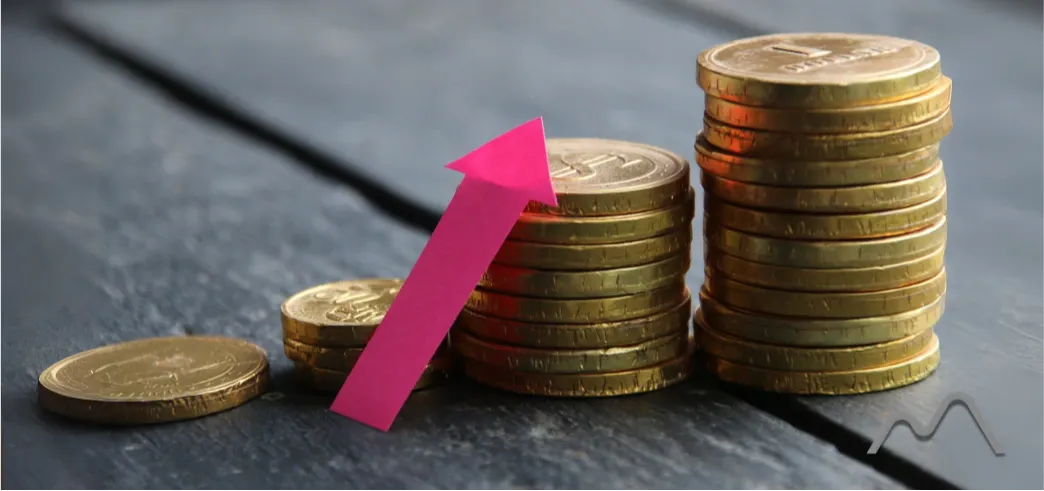
The gold price rises or falls due to an interplay of interest rates, inflation, currency movements, geopolitical uncertainty, and investor expectations. No single factor explains every price movement on its own. For instance, gold can fall while inflation is high, or rise precisely when central banks raise interest rates.
Anyone looking to understand the gold market must look beyond a single news item or economic release. In this article, you will learn how the key forces interact, why the gold price sometimes moves contrary to expectations, and which indicators you can track to better interpret price fluctuations.
The gold price can fall when real interest rates rise, the dollar strengthens, uncertainty wanes, or investors take profits following a previous rally. A price decline rarely has a single cause.
Financial markets continuously price in shifting expectations regarding interest rates, inflation, economic growth, and politics. Investor positioning also plays a role: if many participants are already positioned for a rally, relatively minor news can be enough to trigger profit-taking.
Therefore, a falling gold price does not automatically mean a fundamental driver has disappeared; sometimes it is primarily market expectations that shift, while the underlying reality remains largely unchanged.
| Potential cause | Why this can put pressure on gold |
|---|---|
| Rising real interest rates | Yield-bearing assets become relatively more attractive |
| Stronger US dollar | Gold becomes more expensive for buyers using other currencies |
| Lower inflation expectations | The need for protection against purchasing power erosion diminishes |
| Less geopolitical uncertainty | A previously built-in risk premium unwinds from the price |
| Profit-taking | Investors lock in gains following a strong price rally |
| Need for liquidity | Gold is sold to cover losses or meet financial obligations elsewhere |
| News was already priced in | Even seemingly positive news does not necessarily lead to a price increase |
Of all economic factors affecting the price of precious metals, the interest rate is perhaps the most dominant. The interest rate policy of central banks, and specifically that of the US Federal Reserve (the Fed), acts as the thermostat of the global economy.
To understand why the gold price falls or rises after an interest rate decision, we must look at the concept of 'opportunity cost' and the interaction with the dollar.
The fundamental difference between gold and other asset classes is that gold generates no cash flow.
This difference forms the core of price formation. We call this the opportunity cost: the cost of missing out on income elsewhere.
When central banks raise the policy rate, the return on 'safe' government bonds and savings accounts increases. For large institutional investors, it becomes more attractive at that moment to park capital in bonds rather than in gold. After all, you receive a guaranteed return of, for example, 4% or 5%.
Holding gold becomes relatively 'more expensive' because you miss out on that interest. Historically, we therefore often see the gold price under pressure during periods of aggressive interest rate hikes.
When the interest rate is close to zero (or even negative), the advantage of bonds and savings disappears. The opportunity cost of gold is then negligible. In such a climate, investors are quicker to choose gold because of the potential for price appreciation and wealth protection, since the alternative (money in the bank) yields nothing.
When interest rates fall, the opportunity cost of holding gold typically decreases. Even then, gold does not automatically benefit. A rate cut driven by rapidly falling inflation or restored confidence plays out differently than a rate cut during a crisis. You can read about the specific European context in our article on the impact of ECB interest rates on precious metals.
The real interest rate shows the return that remains after adjusting for inflation, and is therefore often more relevant for gold than nominal interest rates alone. In simplified terms: real interest rate = nominal interest rate − inflation. At 4% interest and 2% inflation, the real interest rate is 2%; at 3% interest and 4% inflation, it is negative.
| Real interest rate | Potential impact on gold |
|---|---|
| Rising and positive | Yield-bearing alternatives become more attractive |
| Falling but positive | Headwinds for gold may diminish |
| Negative | Holding cash and bonds can erode purchasing power, more favorable for gold |
| Highly volatile | Expectations and volatility become more prominent |
Moreover, markets are forward-looking, meaning expectations of future interest rates and inflation often carry more weight than the most recent figures. The relationship between gold and the real interest rate is historically evident, but not immutable: according to the World Gold Council, this traditional dynamic has been frequently decoupled since 2022 by factors such as central bank buying.
The American central bank has a disproportionately large influence on the gold market. This is because gold is traded internationally in dollars. An interest rate hike by the Fed often makes the dollar stronger (foreign investors buy dollars to benefit from the high US interest rate).
A stronger dollar makes gold directly more expensive for anyone paying with other currencies (like us with the euro), which can dampen demand. Therefore, gold investors watch the speeches of the Fed Chair closely.
Often, the gold price reacts to the expectation of policy:
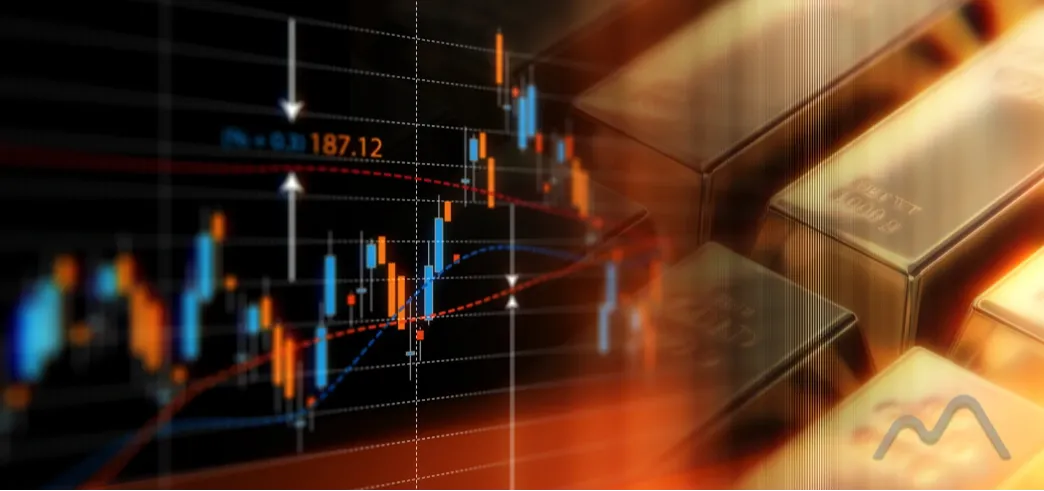
Gold primarily protects against long-term inflation and loss of purchasing power
The gold price and the dollar often move in opposite directions, but that relationship is not absolute. The international gold price is typically denominated in dollars per troy ounce. When the dollar strengthens, buyers using euros need more of their own currency for the same amount of gold, which can dampen international demand. Furthermore, a stronger dollar often coincides with higher US interest rates, allowing the currency effect and higher opportunity costs to reinforce each other.
On international futures markets (such as the COMEX in New York and the LBMA in London), gold is traded and settled in US dollars. The symbol for gold is XAU and the currency is USD. This means that the value of gold is inextricably linked to the strength (or weakness) of the American currency.
As a rule, we see a negative correlation: if the dollar moves up, gold moves down, and vice versa. This phenomenon is driven by two main factors:
As a client of The Silver Mountain, you buy your gold in euros. This adds an extra dimension to your investment: the exchange rate between the euro and the dollar (EUR/USD).
This currency effect often works in your favor and dampens volatility, an effect we also call the 'natural currency hedge':
There are rare moments when gold and the dollar rise simultaneously. We often see this during acute crisis situations or extreme geopolitical tensions.
At such a moment, there is so much fear globally that investors sell everything (stocks, bonds, commodities) to be as liquid as possible. They then flee to the two most liquid and safe markets in the world: the US dollar (cash) and gold.
In this scenario, the dollar acts as the safest means of payment and gold as the ultimate store of value.
To see the theory in practice, we don't have to look far back. At the end of January 2026, we saw a textbook example of how political news, Fed policy, and the dollar can influence the gold price in a single day.
What happened?
On Friday, January 30, 2026, the gold price fell by no less than 10% (to approx. $4,800) and silver even by 30% (to approx. $80). This happened shortly after both metals had hit record highs.
The trigger was the nomination of Kevin Warsh as the new Chairman of the Federal Reserve by President Trump.
This moment perfectly illustrates that gold and the dollar are communicating vessels: if confidence in the dollar returns (temporarily), gold often takes a step back.
Inflation is often called the 'silent killer of wealth'. It is the process by which your money slowly loses its value; for the same euro, you can buy less in a few years than today.
For centuries, gold has been known as the ultimate hedge (protection) against this phenomenon. But how exactly does this mechanism work, and is gold always perfect protection?
The primary reason gold protects against inflation lies in its natural scarcity. Central banks, like the ECB and the Fed, have the power to print unlimited money ('fiat money'). Since the financial crisis and the corona pandemic, the money supply in the system has increased explosively.
When more money comes into circulation for the same amount of goods and services, prices rise. Your savings are diluted.
Physical gold, on the other hand, cannot be printed. The annual addition of gold through mining is very stable and limited (about 1.5% to 2% per year).
Because the amount of gold remains relatively constant while the mountain of paper money grows, the price of gold rises when expressed in that paper money. You simply need more and more euros to buy that same unique amount of gold.
It is important to distinguish between price and purchasing power. Investors often look at the daily price, but the real power of gold is the preservation of purchasing power.
A classic example illustrates this perfectly:
The currency has changed or even completely disappeared over those thousands of years, but the exchange value of the gold has remained the same. Gold does not necessarily make you 'richer' in goods, but it prevents you from becoming poorer due to inflation.
Yet there is a nuance that is often overlooked. Gold is a perfect inflation protector in the long term, but it does not always react 1-to-1 to inflation figures from month to month.
Sometimes inflation is high, but the gold price drops temporarily anyway. This is often due to the intervention of central banks (see point 1: interest rates). If inflation rises, central banks raise interest rates to cool down the economy. That higher interest rate can temporarily depress the gold price, despite high inflation.
Only when it becomes clear that inflation is structural ('sticky') and does not simply go away with an interest rate hike, or when the real interest rate remains negative, do we see gold catching up.
Stagflation can create a supportive environment for gold, but it does not mean the price will automatically rise or always outperform other investments. Stagflation combines persistent inflation with weak economic growth. Central banks then face a dilemma, as higher interest rates curb inflation but weaken the economy, while accommodative policy supports growth but fuels inflation.
In such an environment, gold can attract interest because the purchasing power of money is under pressure, uncertainty rises, and the expected real interest rate can remain low or negative. However, the ultimate reaction depends on interest rates, the dollar, market positioning, and the severity of the slowdown.

Geopolitical uncertainty can increase demand for gold, but the magnitude and duration of the price response depend on the economic consequences. Wars, trade conflicts, sanctions, and election uncertainty can erode confidence in financial markets, prompting some investors to seek liquid or tangible assets.
Gold can attract more interest as a result, because it carries no counterparty debt and cannot go bankrupt.
Yet not every conflict leads to a lasting price increase. If the event was already anticipated, or if the economic consequences remain limited, an initial risk premium can quickly dissipate. Geopolitics also has an indirect impact through energy prices, inflation, interest rates, and the dollar. Higher oil and gas prices can drive up inflation expectations, while a flight to the dollar can temporarily pressure gold in dollar terms.
We discuss a timely example of this interplay in our news article on the gold price, geopolitical tensions, and oil fears.
To understand why gold rises when war threatens, you must look at what gold is not.
In times of peace and prosperity, investors settle for 'paper promises' (stocks, bonds). But as soon as a conflict breaks out, fear arises that those promises cannot be kept, that borders will close, or that currencies will collapse.
Capital then flees in a so-called flight to safety to tangible assets with no counterparty risk.
The effect of geopolitics on the gold price is often twofold.
A very important development in the current geopolitical arena is the behavior of central banks themselves, particularly in the East (such as China, Poland, Turkey, and India).
Since the Western sanctions against Russia, where foreign exchange reserves were frozen, many countries have been shaken awake. The realization has grown that foreign exchange reserves in dollars or euros are politically vulnerable. "If you don't hold it, you don't own it."
In response, central banks are now buying physical gold at a record pace. Gold is neutral, politically unaligned, and accepted worldwide. These massive purchases by states place a solid floor under the gold price.
This is not a temporary hype, but a structural shift in the global financial system where gold is regaining a more prominent role as an independent reserve.
Not only wars, but also domestic politics in superpowers like the US influence the price. Markets hate uncertainty. When elections approach and the outcome is uncertain, or when candidates propose policies that will cause the national debt to explode, investors seek cover in gold.

Geopolitical uncertainty increases the demand for gold as a 'safe haven'.
No single development works in only one direction; whether something turns out to be favorable or unfavorable depends on other factors and on market expectations. The table below illustrates this interplay and helps prevent relying on universal rules.
| Development | Potentially favorable for gold | Potentially unfavorable for gold |
|---|---|---|
| Falling interest rates | Lower opportunity costs | May already be priced in |
| High inflation | Increased focus on purchasing power preservation | Higher interest rate expectations can create headwinds |
| Geopolitical unrest | Greater demand for safe-haven, liquid assets | Dollar strength and cash needs can temporarily pressure gold |
| Stagflation | Weak growth combined with inflation can support gold | Outcome depends on real rates and monetary policy |
| Stronger dollar | - | Gold becomes more expensive for buyers in other currencies |
| Profit-taking | - | Sharp pullback following a strong rally |
| Central bank buying | Structural demand can provide price support | Pace of purchases may fluctuate |
To better understand movements in the gold price, it is best to monitor multiple indicators simultaneously rather than focusing on a single figure.
These indicators provide context, not a reliable short-term forecast. For concrete scenarios, you can read further in our gold price outlook and our analysis of the potential gold price trajectory toward 2030.
| Indicator | What to monitor? |
|---|---|
| Real interest rates | Is the expected return after inflation rising or falling? |
| Fed and ECB policy | Does the tone diverge from what the market expected? |
| US Dollar and EUR/USD | Is the dollar strengthening or weakening, and what does that mean in euros? |
| Inflation expectations | Is the market pricing in transitory or persistent inflation? |
| Bond yields | Are the opportunity costs of holding gold changing? |
| Oil and energy prices | Is renewed inflationary pressure emerging from supply shocks? |
| Investor positioning | Is there room for fresh demand, or are many investors already heavily positioned? |
When the gold price moves, the first question is often: what news caused this? In practice, the answer is rarely that simple. Interest rates, inflation, the dollar, and geopolitics constantly interact, and gold sometimes drops on news that appears ostensibly bullish. That is why I prefer to look at the broader macro picture rather than day-to-day volatility, and focus on the long-term role gold plays within an overall wealth strategy.
Rolf van Zanten - gold expert since 2008Physical gold can serve for diversification and direct ownership; the role it deserves depends on your goals, risk tolerance, and investment horizon. The Silver Mountain has specialized in physical precious metals since 2008 and is registered with the AFM (license number 12048860) for offering investment objects. We operate with diligence and transparency, from your initial purchase to any subsequent sale.
You purchase gold and silver from us at live market prices, with delivery via our dedicated delivery service or collection by appointment in Baarn and The Hague. If you prefer secure storage, this is available on a fully allocated basis in your name via Edelmetaal Beheer Nederland, and with repurchase assurance via sister company Inkoop Edelmetaal, you can easily sell your gold back to us at a later date.
Those wishing to explore further can browse our physical gold range or compare popular 1 troy ounce gold coins.
Whatever happens, at The Silver Mountain we are always ready to help you with confidence. We offer you physical gold and silver at the sharpest prices in the Netherlands. Additionally, we maintain a unique buy-back guarantee.
This means that you can always easily offer your precious metal back to us and sell it based on fixed formulas relative to the then-current gold and silver price. We always buy, regardless of the volume you sell and regardless of the height of the gold price or silver price.
The gold price is determined by the interplay between real interest rates, inflation expectations, the dollar, geopolitical risks, and the behavior of market participants. Higher interest rates can put pressure on gold, but not when inflation accelerates even faster or uncertainty increases. Geopolitics can stimulate safe-haven demand, but also drive a stronger dollar or a need for cash liquidity. As a result, gold sometimes falls on news that seems favorable at first glance.
These factors help to understand price movements in their proper context, but do not make an accurate prediction possible. Anyone considering physical gold should therefore look beyond today's headlines and focus primarily on the intended investment horizon, diversification, costs, and the preferred form of ownership.
At The Silver Mountain, we guide investors who want to consciously use gold as part of a well-considered wealth strategy.
The Silver Mountain does not provide individual investment advice. This article is intended for information purposes only. Expectations, scenarios, market developments, and past results offer no guarantee for future results.
A rising interest rate is often unfavorable for the gold price because investors then choose interest-bearing alternatives like bonds. After all, gold pays no interest. However, if inflation remains higher than the interest rate (negative real interest rate), gold can still rise in value despite interest rate hikes.
Yes, gold is historically known as the ultimate protection against loss of purchasing power. While money becomes worth less due to inflation, physical gold retains its exchange value. Because gold cannot be printed by central banks, the price often rises in the long term along with structural currency devaluation.
Gold is traded internationally in dollars. A stronger dollar makes gold more expensive for investors paying with other currencies (like euros). This often depresses international demand, leading to a lower gold price. There is usually a negative correlation between the dollar and gold.
During wars or conflicts, investors flee to 'safe havens' like gold. Gold has no counterparty risk and cannot go bankrupt. This uncertainty often causes a rapid price increase (fear premium) because investors want to secure their wealth outside the financial system.
The real interest rate is the nominal interest rate minus inflation. For gold, this is crucial: with a negative real interest rate (where inflation is higher than the savings rate), savings lose purchasing power. Historically, this is the most favorable climate for gold, because gold retains its purchasing power.
Central banks buy gold to diversify their reserves and be less dependent on the US dollar (de-dollarization). Physical gold in their own vaults is a politically neutral asset with no counterparty risk. These record purchases by states place a structural floor under the gold price.
Sometimes gold falls because investors need liquidity (cash) to cover losses elsewhere. Also, a strong dollar can depress the price. Additionally, markets often anticipate: if the bad news is less severe than expected, the 'fear premium' can drain from the price, causing a correction.
Rolf van Zanten is the founder and owner of The Silver Mountain, a specialist in physical precious metals since 2008. With nearly twenty years of experience in the precious metals trade, Rolf shares his expertise on investing in gold, silver, and platinum in an accessible and reliable way. His knowledge of the international gold and silver markets helps investors make well-informed decisions. In his role as an expert, he strives to ensure that transparency, security, and trust are at the heart of every purchase.

Be the first to discover the latest products and the latest news about precious metals.


 Daan Wesdorp
 Nederlands