
 Buy gold bars
 Buy gold coins
 Series
 Buy silver coins
 Buy silver bars
 Series
 Buy silver collectible coins
 Silver collectible coin series
 Buy gold collectible series
 Gold collectible coin series
 Author:
  Date: 25 May 2021
 About
About VAT on Gold: everything you need to know about buying VAT-Free Gold
 Rolf van Zanten
21 February 2025
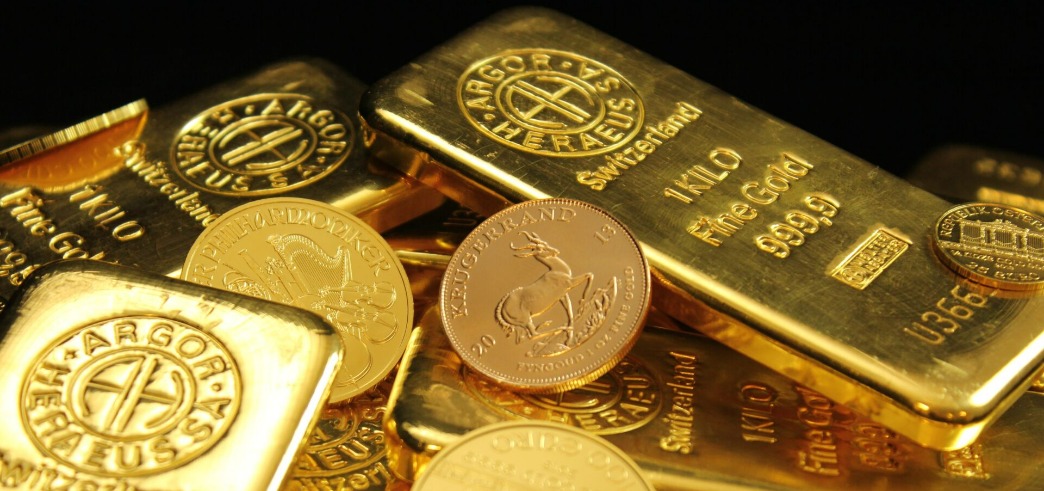
Anyone who wants to add physical precious metal to their portfolio soon faces a classic dilemma. Will you buy gold in coins or bars? The short answer is that there is no universal best choice.
The right form depends entirely on your budget, the desired flexibility during a later sale, the price per gram and the specific precious metal you are purchasing. For gold, this consideration is completely different than for silver or platinum.
At The Silver Mountain, we regularly see that investors start by choosing the metal, but along the way discover that the choice of form is at least as decisive for the return. Those who want to buy efficiently often look at larger bars. Those looking for flexibility end up with common investment coins.
In this knowledge center article, we explain exactly when coins are more logical, when bars are absolutely preferred and how tax rules influence your choice.
When you buy physical precious metals for the first time, the choice between a coin and a bar may seem like a matter of pure aesthetics. After all, the intrinsic value of the pure gold, silver, or platinum is exactly the same for both products.
Yet beneath the surface lies an important difference in the production method, the legal status, and the final price structure.
As an experienced precious metals specialist, we are happy to explain how these properties directly influence your investment and your targeted return.
Transforming raw precious metal into a safely tradable product always involves fixed costs. In production, we immediately see a major difference between the two forms:
The most important (and often unknown) difference lies in the legal origin of the product. Bars are exclusively produced by private, commercial smelters. Investment coins, on the other hand, are always minted by an official national mint, acting on behalf of a government.
This state origin gives a coin a nominal value, granting it the formal status of legal tender in the country of issue.
This unique legal status directly ensures that silver and platinum coins fall under the highly favorable margin scheme, while bars of these specific metals are viewed by the tax authorities as an industrial raw material and are thus taxed with 21% VAT.
To clarify these technical aspects for you, we have summarized the core differences in the table below. You can use this immediately to weigh the properties against each other.
| Property | Investment coins | Precious metal bars |
|---|---|---|
| Producer | Official national mints | Commercial private smelters |
| Legal status | Legal tender with nominal value | Financial product or industrial raw material |
| Production costs | Relatively high due to complex minting process | Very low due to highly efficient casting process |
| Valuation | Metal value plus possible collectible value | Exclusively based on the pure weight |
Before you make a final decision to invest in bars or coins, it is incredibly wise to have a clear picture of your personal investment strategy. The cheapest option on paper is by no means always the most suitable choice in practice.
To help you with this important consideration, we have listed the five most important questions for you.
If your goal is to acquire as much physical precious metal as possible for your available budget, then bars are usually the most logical choice. When producing larger weights, the relative production costs drop significantly.
This efficiency advantage is very clearly visible with gold bars from fifty grams upwards. The heavier the denomination you purchase, the lower the percentage premium on top of the global spot price will be.
A heavy kilo bar is extremely efficient to purchase, but you are obliged to sell it in its entirety in the future. Do you want to keep the option open to reduce your position later in small, manageable steps and quickly free up some liquid assets?
Then smaller denominations or a series of common investment coins of 1 troy ounce offer you much more financial freedom and diversification. Another option is to buy a convenient combibar, which is easily 'broken' into smaller denominations.
For investment gold, this question is less relevant, because this precious metal is always exempt from value-added tax in the Netherlands under the right conditions. For silver and platinum, however, this distinction is the most important factor for your final return.
This is because private individuals pay 21% VAT on bars of these specific metals. For corporate buyers, this is easy to reclaim. For this reason, private investors almost always choose coins, as these fall under the more tax-favorable margin scheme.
Are you exclusively looking at the lowest price per gram and the pure, underlying metal value? Then standard investment bars fit your profile perfectly. Do you also attach great value to a historical design, a unique vintage, or a limited global mintage?
Then gold and silver coins are extremely interesting. Certain coins can build up an extra premium or a significant numismatic collectible value in the market over time.
Whether you ultimately decide to buy a large bar or a series of coins, global acceptance is important for a carefree and quick sale in the future.
For gold and silver, therefore, always exclusively choose products from smelters with the prestigious LBMA Good Delivery status. For investments in platinum, the strict LPPM accreditation forms the absolute quality standard that always guarantees your international liquidity.
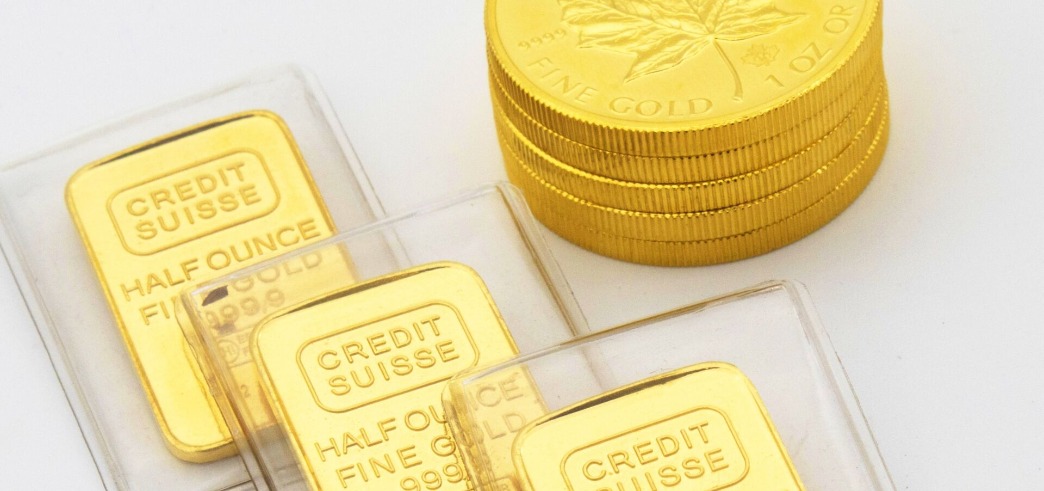
In an investment strategy, gold coins and bars can be combined to protect wealth and liquidity.
Tax legislation in the Netherlands has a massive impact on your final return. The Tax Authority and European regulations make a very strict distinction between the different types of physical precious metals.
Where gold is legally seen as a purely financial investment instrument, silver and platinum are primarily considered industrial raw materials.
This difference in legal classification ensures that the choice between a coin and a bar for silver and platinum has a completely different financial outcome than for gold.
To prevent unexpected costs, it is important that you fully understand the specific tax rules and the corresponding international quality standards before investing your capital.
Below, we have summarized the current legal provisions per precious metal very clearly for you.
| Precious metal | Tax rule for coins | Tax rule for bars | International standard |
|---|---|---|---|
| Gold | VAT-free (0% VAT) | VAT-free (0% VAT) | LBMA Good Delivery |
| Silver | Margin scheme | Taxed at 21% VAT | LBMA Good Delivery |
| Platinum | Margin scheme | Taxed at 21% VAT | LPPM Good Delivery |
As you can see in the overview above, investing in investment gold is by far the most accessible and straightforward. You never pay value-added tax on this, regardless of the form you choose.
With silver and platinum, however, the specific form of your purchase is decisive. Because coins have the legal status of legal tender, they fall under the highly favorable margin scheme.
If, as a private investor, you still choose bars of these two precious metals, you are legally obliged to immediately pay 21% VAT on the full purchase value.
For buying physical gold, the choice between coins and bars is the most balanced. Unlike silver and platinum, both gold coins and gold bars fall under the investment gold scheme in the Netherlands.
This means that your purchase is always completely free of VAT. As a result, your final decision revolves purely around the purchase premium, the desired size, and your need for flexibility in the future.
Gold coins are extremely interesting for individuals who want to enter with a manageable amount or attach great value to maximum liquidity. The size of 1 troy ounce (exactly 31.103 grams) is the absolute standard worldwide.
Choosing investment coins offers you a number of advantages:
Gold bars, on the other hand, become very interesting as soon as your purchase amount increases. When casting and stamping a sleek gold bar, the fixed production costs are significantly lower than when minting a finely detailed coin. This makes large bars the most efficient method of serious wealth accumulation:
Are you torn between the efficiency of a heavy gold bar and the flexibility of coins? Combibars form the perfect middle ground. You buy a larger weight, such as fifty grams, at a low premium.
Because you can easily break this bar down per gram, just like a chocolate bar, you combine low purchase costs with the unique freedom to sell in small units later.

Press the image above to play the explainer video.
Where the choice between coins and bars for gold is primarily a matter of personal preference and budget, the situation when buying physical silver is extremely straightforward.
The Tax Authority primarily considers silver an industrial raw material. This has major tax consequences for the price structure, making the choice for the private investor immediately clear.
For individuals who want to store physical silver at home, standard silver bars are financially unattractive. Regular silver bars are always subject to 21% VAT in the Netherlands.
You pay this tax on top of the metal value and production costs, but you do not get this VAT back in the event of a later sale. This means your investment starts with a significant handicap right away.
For corporate buyers, by the way, this is not a problem at all. They can easily reclaim this VAT in their periodic returns, making silver bars a highly efficient choice for them.
As a private investor, you therefore almost always choose silver coins. Well-known investment coins, such as the Canadian Maple Leaf, the Australian Kangaroo, and the Austrian Vienna Philharmonic, possess the legal status of legal tender in their country of origin.
Thanks to this special status, the coins fall under the highly favorable margin scheme. Investing in silver coins offers you as a private individual the following advantages:
Do you, as a private individual, want to invest in large weights of silver without buying hundreds of loose coins? We offer two tax-attractive alternatives for this.
First, the unique silver coin bars. These combine the efficient, rectangular format of a bar with the legal status of a coin. As a result, they fall entirely under the favorable margin scheme, making them ideal for your home storage.
Second, you can opt for VAT-free silver. You then buy industrial silver bars at the very lowest premium, without paying VAT. For this, we work together with our reliable partner Edelmetaal Beheer Nederland. They provide secure, allocated storage of your silver in a strictly secured customs warehouse in Zurich.

Press the image above to play the explainer video.
Although the market for platinum is significantly smaller than that of gold and silver, this rare precious metal is attracting more and more serious investors.
When weighing platinum coins against bars, it is wise to pay close attention to the tax rules and trading dynamics. The legislation for this metal is exactly the same as that for silver.
For the private investor, there is a decisive difference in taxation, which should directly guide your choice:
In addition to taxation, the so-called spread is an extremely important factor with platinum. The spread is the price difference between the purchase price and the selling price at dealers.
Because the global trade in this metal is on a smaller scale, this spread is logically slightly higher than with highly liquid gold.
To minimize the spread and guarantee liquidity, it is best to invest in internationally recognized coins of 1 troy ounce. Think of the Platinum Maple Leaf or Britannia.
Furthermore, always check for the official LPPM accreditation. This recognition guarantees the highest possible purity. This way, you are absolutely assured that you can easily cash in your valuable platinum worldwide in the future.
The final trade-off between coins or bars depends on your budget, the desired flexibility, and the tax rules per precious metal. However, realize that you do not have to make a black-and-white choice. A well-considered combination often forms the strongest strategy.
You create the ideal portfolio by building a solid foundation with medium-sized gold bars for maximum efficiency. You then smartly supplement this basis with platinum, gold, or silver investment coins for optimal diversification and liquidity.
Through this hybrid approach, you are not tied to a single large format in the future and you never pay unnecessarily high premiums per gram. Combining both forms simply offers you optimal financial peace of mind.
The Silver Mountain does not provide investment advice. This article is for educational purposes only. Past performance is not indicative of future results.
Not necessarily. Gold coins offer more flexibility because you can easily sell them in smaller units. Gold bars, on the other hand, have lower production costs and a more favorable premium. Certainly with larger weights, a gold bar is more efficient. Your choice depends on your budget and sales wishes.
For private buyers, regular silver bars are financially unattractive because you pay VAT on them. Silver coins, conversely, fall under the favorable margin scheme. With this, you only pay tax on the precious metal dealer's profit margin. This significantly lowers your total purchase price, making them perfect for home storage.
These are smart hybrid investment products. From a tax perspective, a coin bar is a coin, but it has the efficient shape of a silver bar. A combibar is a larger gold bar that you can break down into small individual grams without any problems. Both options combine efficiency with optimal flexibility for the future.
Bars are the most logical choice when you want to invest a larger capital. With heavy bars, the fixed production costs are distributed over many more grams. As a result, you benefit from a significantly lower premium and you purposefully steer towards maximum efficiency per gram.
For beginners, international recognition is important. For gold, the well-known troy ounce investment coin is a highly accessible start. For silver, a well-known coin under the margin scheme is absolutely the safest and most advantageous choice. This way, you always start immediately with a highly liquid portfolio.
The tax rules for platinum are exactly the same as those for silver. Platinum bars are taxed at 21% VAT for private individuals. Platinum coins hold the status of legal tender and fall under the margin scheme. For private investors, coins are therefore always the most profitable option.
Daan Wesdorp is Purchasing Manager at Inkoop Edelmetaal, part of The Silver Mountain, and a specialist in trading physical precious metals. With a background in economics and years of experience in the financial markets, Daan possesses in-depth knowledge of stocks, cryptocurrencies, and precious metals. His broad market insight makes him a reliable source for investors looking to diversify and protect their assets. In his articles, Daan combines up-to-date market information with practical insights for both new and experienced investors.

Be the first to discover the latest products and the latest news about precious metals.



 Nederlands