
 Buy gold bars
 Buy gold coins
 Series
 Buy silver coins
 Buy silver bars
 Series
 Buy silver collectible coins
 Silver collectible coin series
 Buy gold collectible series
 Gold collectible coin series
 Author:
  Date: 2 September 2026
Why does the gold price rise or fall? The influence of interest rates, inflation, and geopolitics
 Rolf van Zanten
5 February 2026
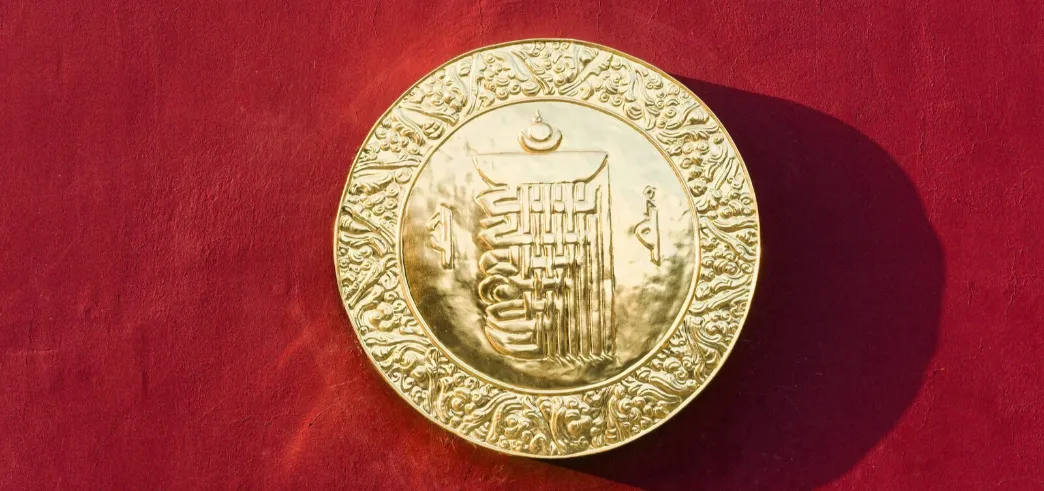
The gold market is shifting partly to Asia, as China and India play an increasingly larger role in demand for bars, coins, jewelry and exchange-traded gold products. The trading platforms in Shanghai are also gaining importance. However, London and New York are not being replaced. The international gold price arises from a continuous interplay of physical trade, futures contracts, currencies and global investment flows.
China and India are often seen as one Asian bloc, but the two markets operate differently. In China, retail demand, domestic production, gold ETFs and purchases by the central bank come together. In India, jewelry, weddings, festivals, import duties and the rupee's exchange rate weigh heavily.
In this article you will read how the Asian gold market is structured, what the Shanghai Gold Exchange does, and to what extent demand from China and India influences the global price.
Asia is becoming more important because a growing share of global demand for bars, coins and gold ETFs comes from this region. That demand comes from households, private investors, asset managers and central banks.
For a long time the gold market was described mainly from a Western perspective, with emphasis on US interest rates, the dollar, COMEX and trading in London. Those factors remain important, but they don't tell the whole story. A large portion of gold is ultimately bought and held by Asian households and investors.
According to the World Gold Council, Asian markets have for several years been taking a larger share of demand for bars and coins.
Moreover, demand is not the same everywhere. A rising gold price can attract Chinese investors, while Indian households may then buy less jewelry because gold becomes too expensive. Within the same region demand can therefore rise and fall at the same time. "Asian gold demand" is therefore not a uniform buying wave.
The global gold market consists of multiple trading centers that each have different functions. There is therefore no single exchange that unilaterally determines the gold price at all times. Gold is traded almost 24 hours a day: when the Asian trading day ends, European markets are already open and later the United States opens. Price differences usually narrow quickly because traders are active on multiple markets.
| Market | Main function | Main contribution |
|---|---|---|
| London | OTC trading, storage and international benchmark | Reference prices and large institutional trading |
| New York (COMEX) | Regulated futures trading | Liquidity, hedging and rapid price discovery |
| Shanghai Gold Exchange | Chinese physical and spot market | Chinese demand, supply and renminbi pricing |
| Shanghai Futures Exchange | Chinese derivatives market | Risk management and financial trading in China |
| India (MCX and physical) | Domestic physical and futures market | Local demand, imports and rupee pricing |
London is an important center for international OTC trading, where transactions are concluded directly between professional parties rather than through a single exchange. The LBMA Gold Price is used worldwide as a benchmark for valuations and financial products. It is a reference price for gold delivered in London, not the retail price of a specific coin or bar.
The London Bullion Market Association also manages the Good Delivery List. That list applies to recognized refiners and large professional bars, so an individual retail bar is not automatically "LBMA-certified".
New York plays a major role in gold futures and options via COMEX. Mining companies, traders and investors use those contracts to hedge price risks. Important to know: futures trading is not the same as physical demand. A large trading volume does not mean that an equal amount of gold is actually taken out of a vault.
The futures market mainly affects price discovery, while the physical market shows where gold is actually bought and held. You can read more about this in our explanation of the spot price and price formation of gold.
China is important because the country combines domestic gold production with private demand, imports, gold ETFs and purchases by the central bank. Virtually every part of the gold chain thus comes together in one market. China has for years been among the largest gold producers in the world, but domestic production is not always enough to cover all demand. That's why the country also imports gold.
Chinese demand roughly comes from 4 groups. Households buy jewelry, gifts and small bars, often for wealth preservation and tradition. Private investors opt to buy gold bars, gold coins and savings products. Professional investors use gold ETFs and futures. And the People's Bank of China holds gold as part of the official reserves.
Especially around Chinese New Year and weddings, gold is chosen as a gift, and the line between jewelry and investment is not sharp: a piece of jewelry can at the same time be family wealth.
Chinese demand responds to the gold price, consumer confidence, the renminbi and the performance of other investments. If equities become more attractive, Chinese gold ETFs may see outflows. In times of uncertainty or a weaker currency, interest may increase. So there is no fixed pattern in which Chinese buyers keep buying under all circumstances.
We will keep the strategic, monetary motive of the central bank brief here: you can read about it in our article on BRICS, de-dollarization and the gold price and on gold purchases by central banks.
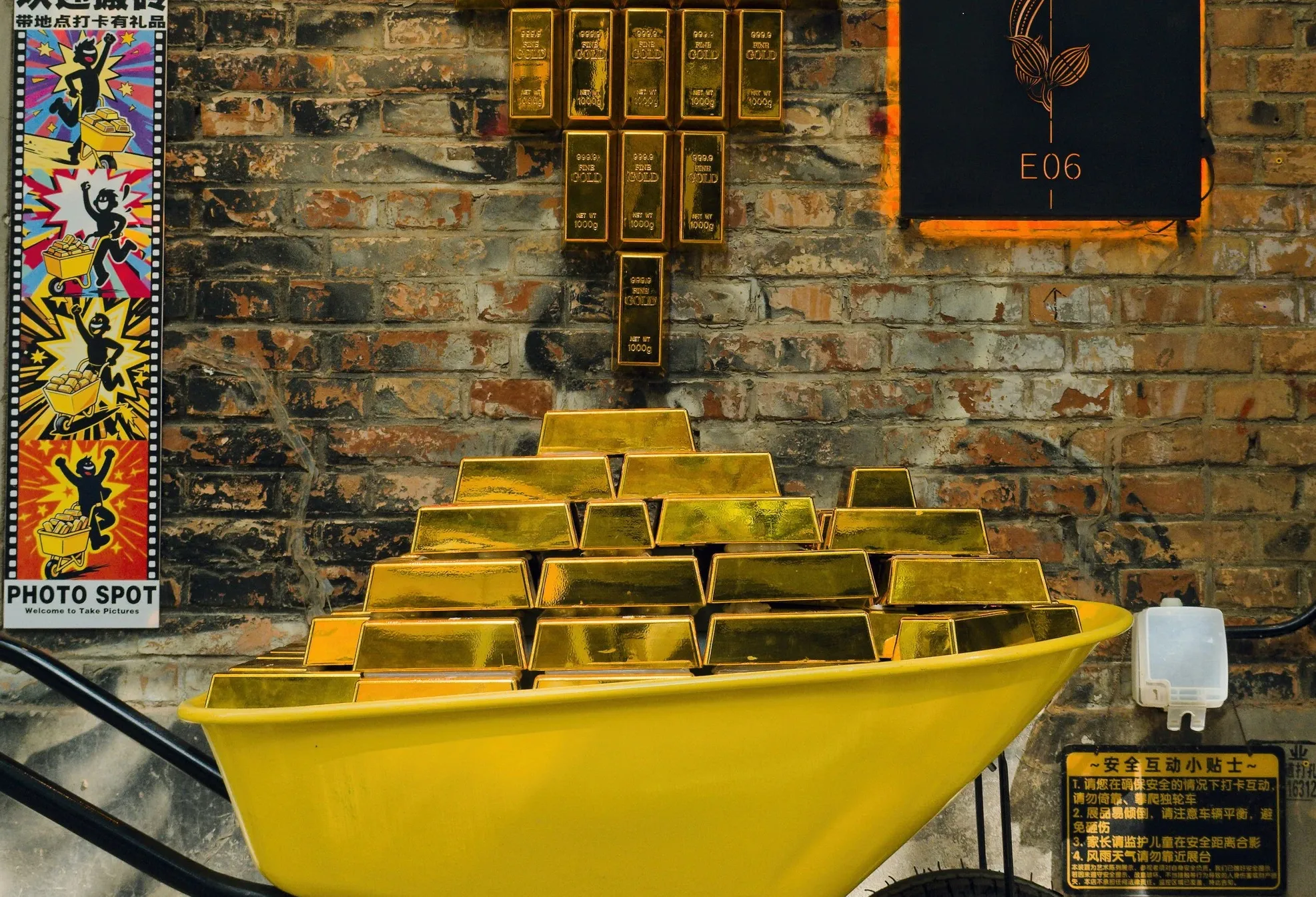
The Shanghai Gold Exchange is the central platform for the Chinese physical gold market.
India is a large gold market because gold combines financial, cultural and social functions there. Jewelry accounts for a large part of demand, but bars, gold coins, ETFs and digital gold products also play a role. Gold is bought heavily around weddings and religious holidays such as Akshaya Tritiya, Dhanteras and Diwali. It can be worn, given as a gift and passed down as family heirlooms. As a result, demand does not depend solely on expectations of rising prices.
The size of purchases remains sensitive to price. If gold becomes expensive locally, households opt for lighter jewelry, a lower karat, postponement or trading in existing gold. Two factors matter especially. The rupee determines how much a buyer pays in local currency: gold is often priced internationally in dollars, so a weaker rupee makes gold in India more expensive, even if the dollar price remains unchanged.
Import duties and trade policy also influence the local price. The monsoon also plays an indirect role, because part of the population depends on agricultural income.
China and India are both large gold markets, but they differ in structure, usage and price sensitivity. That explains why their demand does not always move in the same direction.
| Characteristic | China | India |
|---|---|---|
| Main forms of demand | Bars, coins, jewelry, ETFs and futures | Jewelry, bars, coins, ETFs and digital gold |
| Central bank | People's Bank of China | Reserve Bank of India |
| Key trading platform | Shanghai Gold Exchange | Multi Commodity Exchange and physical trading |
| Domestic mine production | Significant | Relatively limited |
| Import dependence | Important alongside domestic production | Heavily dependent on imports and recycling |
| Cultural occasions | Chinese New Year, weddings, gifts | Weddings, Akshaya Tritiya, Dhanteras, Diwali |
| Key currency | Renminbi | Rupee |
The Shanghai Gold Exchange (SGE) is the trading infrastructure for gold and other precious metals established by the People's Bank of China. The exchange provides trading, clearing, settlement, delivery and vaulting services. The SGE was founded in 2002 after approval by the Chinese State Council, and in 2014 its international arm opened access for foreign institutions.
Unlike a shop or a retail broker, the SGE is primarily a professional market used by banks, jewelers and refineries. A large part of Chinese wholesale passes through this system, and withdrawals from the SGE vaults are therefore often used as an indicator of the amount of gold moving toward jewelers and traders.
However, a withdrawal is not equivalent to new private investment demand. In addition, the SGE publishes the Shanghai Gold Benchmark Price, a renminbi benchmark established twice per trading day via an auction. That price is usually quoted in renminbi per gram, while international quotations are often in dollars per troy ounce. A comparison with London therefore requires conversion of currency, weight and contract terms.
The Shanghai Futures Exchange (SHFE) complements this with trading in gold futures and options. The SGE focuses more on the physical market, the SHFE on forward contracts. A high volume on the SHFE therefore does not mean that the Chinese consumer is buying more physical bars at the same time.
A Shanghai premium is the positive price difference between a comparable gold price in Shanghai and an international reference price, after you have first converted them to the same currency, weight unit and delivery basis. A positive premium can arise if Chinese buyers demand relatively large amounts of gold or if local supply is limited. If the converted Shanghai price is below the international price, there is a discount.
However, the premium is not a pure measure of current demand. Import permits, capital controls, taxes, local product standards and exchange rates can also widen or narrow the difference. A high premium therefore does not prove that there is a global shortage of physical gold. It mainly shows that één international gold price does not mean gold is available everywhere at exactly the same price.
No, Asia does not determine the gold price on its own, but the region is gaining more influence over physical demand, investment flows and regional price formation. The world price remains the result of markets that continuously influence each other. It helps to distinguish three forms of influence:
Asian demand can therefore be an important, structural factor, but it does not turn every news item immediately into a higher gold price. A rising US real interest rate, a stronger dollar or large ETF outflows elsewhere can weigh more in the short term. You can read more about that interaction in our article on interest rates, inflation, geopolitics and the gold price.
For you as a Dutch buyer, the growth of Asia is mainly additional context, not a buy or sell signal. Chinese and Indian figures are only useful together with interest rates, currencies, ETF flows and international expectations. You also have to deal with the gold price in euros. The international price is usually quoted in dollars, after which the euro-dollar exchange rate affects the converted value. As a result, gold can rise in euros while the dollar price hardly moves, or vice versa.
If you want to follow the Asian market, you can watch the World Gold Council's quarterly reports, SGE withdrawals, the Shanghai premium or discount, Asian ETF flows and changes in import rules.
None of these indicators predict the gold price on their own; they mainly help to understand where demand comes from. For the current value you can consult our live gold price.
If you only look at the gold price in euros, you don't see how many different markets lie behind it. In London much revolves around professional OTC trading, in New York futures react quickly to economic news, and in China and India we see large physical and cultural demand. It is precisely that interaction that makes gold tradable worldwide. A strong premium in Shanghai is useful information, but not a guarantee that the gold price will rise afterward. I therefore always place regional figures in their international context.
Rolf van Zanten - gold expert since 2008Anyone who buys physical gold pays the current metal value plus a product premium for, among other things, production, packaging, insurance and transport. Developments in Asia can indirectly influence that premium, but the price of a specific bar or coin also depends on the producer, the weight and availability. If you are buying gold for the first time, we are happy to advise you on the form that suits you.
The Silver Mountain has specialized in physical precious metals since 2008 and is registered as an AFM license holder (license number 12048860) for offering investment objects. You can choose from gold bars from various producers and internationally recognized gold coins. Where applicable we work with refineries on the LBMA Good Delivery List.
Your order is delivered insured via our own delivery service or will be ready for collection by appointment in Baarn or The Hague, and you can have your gold stored insured via Edelmetaal Beheer Nederland. If you want to sell later, sister company Inkoop Edelmetaal offers you the certainty of sale to sell your gold back to us.
The center of physical gold demand and part of investment demand is shifting toward Asia, but the gold market remains a global network. China and India are important because of their size, private demand, cultural ties to gold and their growing financial infrastructure.
The Shanghai Gold Exchange gives China its own physical market and a renminbi benchmark, while London and New York remain leading for international benchmarks, OTC trading and futures.
Therefore, anyone who wants to understand the gold market does not look only at the Federal Reserve or the dollar. Chinese ETF flows, Indian jewelry and investment demand, regional premiums and central banks add valuable information. No single factor guarantees a higher gold price; it is the interaction between all these markets that determines the outcome.
The Silver Mountain does not provide personal investment advice; this article is for information purposes only. The gold price can both rise and fall and past performance is no guarantee of future results.
The Asian gold market includes trade and demand in countries such as China, India, Japan, Singapore and Vietnam. China and India are the largest components due to their demand for jewelry, bars, coins and investment products. Trading platforms such as the Shanghai Gold Exchange and the Shanghai Futures Exchange are also part of this market.
The gold market is partially shifting toward Asia, especially with regard to physical demand, bars, coins and regional ETF flows. London remains important for OTC trading and benchmarks, and COMEX for futures and options. It is therefore more accurate to speak of a more balanced distribution than of a complete relocation of the market.
No, China does not determine the gold price on its own. Chinese physical demand, gold ETFs, central bank purchases and trading in Shanghai influence the market, but London, COMEX, interest rates, the dollar and global investment flows also count. The international price arises from the interaction between those markets, with the dominant factor varying by period.
China buys gold through households, private investors, financial institutions and the central bank. Motives include wealth preservation, diversification, gifts, currency risk and diversification of official reserves. Demand is not constant: high prices or more attractive equities can slow purchases, while uncertainty or a weaker renminbi can increase interest.
Gold in India has both a financial and cultural role. It is widely purchased around weddings and festivals such as Akshaya Tritiya, Dhanteras and Diwali. Jewelry can be worn, gifted and kept as family wealth at the same time. Final demand depends on affordability, the rupee, import duties, farm incomes and the local gold price.
The Shanghai Gold Exchange is a professional Chinese market for gold and other precious metals. The exchange provides trading, clearing, settlement, delivery and vault services, and was established in 2002 by the People's Bank of China. It plays a central role in the Chinese physical gold market and publishes a renminbi benchmark for gold delivered in China.
A Shanghai premium means that a comparable gold price in Shanghai, after conversion, is higher than an international reference price. That can indicate strong Chinese demand or limited local supply. Import quotas, currency, taxes and contract differences can also play a role. It is therefore not a pure gauge and not proof of a global gold shortage or a rising world price.
No, strong Asian demand does not automatically lead to a higher gold price. It can support the market, but other factors sometimes weigh more heavily, such as a rising real interest rate, a stronger dollar, ETF outflows or profit-taking. The gold price reacts to the combined effect of physical demand, financial positions, currencies and market participants' expectations.
Rolf van Zanten is the founder and owner of The Silver Mountain, a specialist in physical precious metals since 2008. With nearly twenty years of experience in the precious metals trade, Rolf shares his expertise on investing in gold, silver, and platinum in an accessible and reliable way. His knowledge of the international gold and silver markets helps investors make well-informed decisions. In his role as an expert, he strives to ensure that transparency, security, and trust are at the heart of every purchase.

Be the first to discover the latest products and the latest news about precious metals.


 Daan Wesdorp
 Nederlands