
 Buy gold bars
 Buy gold coins
 Series
 Buy silver coins
 Buy silver bars
 Series
 Buy silver collectible coins
 Silver collectible coin series
 Buy gold collectible series
 Gold collectible coin series
 Author:
  Date: 4 December 2024
 About
About What is the gold standard and why does it no longer exist?
 Rolf van Zanten
24 April 2026
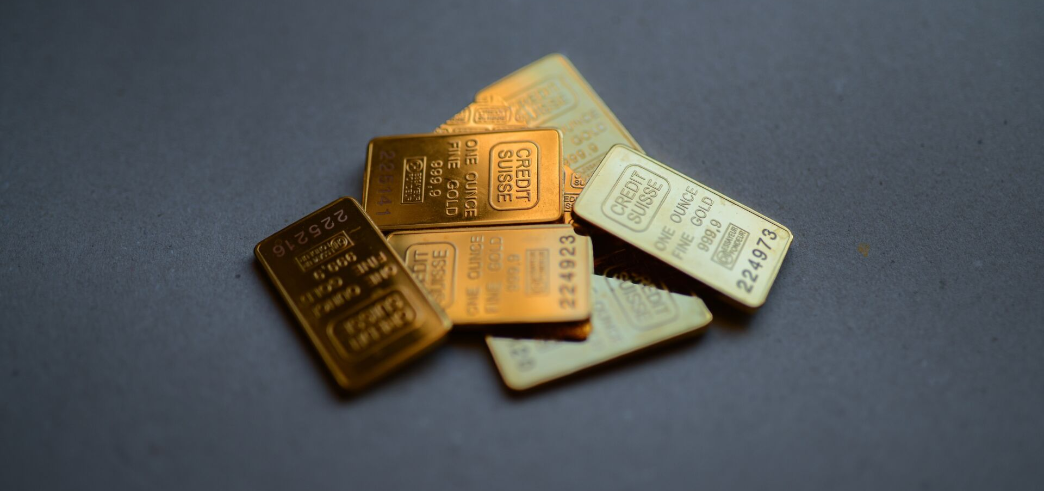
The global economy is in a transitional phase. For decades, the US dollar was the undisputed standard in global trade. Today, we see a strong international movement that we call de-dollarization, where a growing group of nations wants to be less dependent on this dollar.
Within this geopolitical shift, the BRICS countries play the absolute leading role. At the same time, net gold purchases by central banks are taking on historically large proportions.
In this knowledge center article, you will read exactly what the BRICS countries are, why they are seeking monetary independence, and what this means for the global gold price and your investment in physical precious metals.
To fully understand the impact of the BRICS countries on the current global economy, it is important to look at the remarkable history of this power bloc. The term was first introduced in 2001 by Jim O'Neill, an influential top economist at the investment bank Goldman Sachs.
He predicted that the emerging economies of Brazil, Russia, India, and China would dominate global growth in the 21st century and grouped these countries under the acronym BRIC.
What began as a theoretical economic concept quickly became a political reality. In 2009, the very first official summit between these 4 nations took place in Russia, formally establishing the alliance. A year later, in 2010, South Africa was accepted as a full member, creating the final and well-known acronym BRICS.
For years, the coalition consisted exclusively of these 5 major powers. That recently changed. The partnership has significantly expanded with strategic partners from the Middle East, Asia, and Africa. According to the most recent official sources, the coalition now consists of 11 influential members.
In the table below, you will find an overview of all current member states and when they joined this global network.
| Country | Membership status | Geographic region |
|---|---|---|
| Brazil | Founder (2009) | South America |
| Russia | Founder (2009) | Europe and Asia |
| India | Founder (2009) | Asia |
| China | Founder (2009) | Asia |
| South Africa | Joined in 2010 | Africa |
| Egypt | Joined in 2024 | Africa and Middle East |
| Ethiopia | Joined in 2024 | Africa |
| Iran | Joined in 2024 | Middle East |
| United Arab Emirates | Joined in 2024 | Middle East |
| Saudi Arabia | Joined in 2024 | Middle East |
| Indonesia | Joined in 2024 | Asia |
This recent expansion makes the alliance economically and geopolitically more dominant than ever before. Current data shows that the BRICS countries now collectively represent 49.5 percent of the total global population.
In addition, they account for over 40% of the global gross domestic product and control over a quarter of international trade. Control over global oil production has also become unprecedentedly large due to the accession of strategic countries from the Middle East.
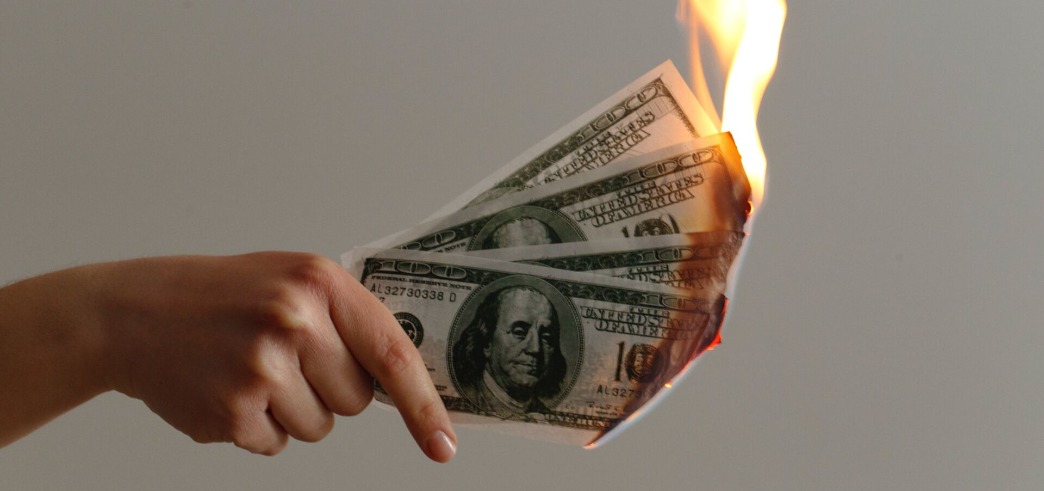
The BRICS-countries are working on financial independency from western currencies like the dollar.
For decades, the US dollar has served as the cornerstone of the global financial system. However, the BRICS countries are actively striving to drastically reduce this massive dependency. We call this strategic and geopolitical process de-dollarization.
The desire for financial independence is not new, but it has gained significant momentum in recent years. The direct catalyst for this was the Western response to the Russian invasion of Ukraine.
Russia was almost immediately cut off from the international payment system SWIFT. In addition, billions in national foreign exchange reserves were frozen by Western countries.
For many emerging economies, this was a harsh and confronting warning. It irrefutably demonstrated that the current Western financial network and the US dollar can be used as a direct weapon. To reduce this geopolitical vulnerability, the countries are now focusing on the following 3 points:
Although the flight from the dollar has begun, the US currency remains extremely dominant for the time being. According to the most recent reports from the International Monetary Fund (IMF) from 2025, 56.77 percent of all official global foreign exchange reserves still consisted of US dollars.
The US Federal Reserve also confirms that the dollar still predominates in global bank financing for now. A sudden collapse of the dollar in the short term is therefore not realistic, but the shift towards the East has definitely begun.
Within the financial world, there has been continuous speculation for years about the launch of a common currency by the BRICS countries. The goal of this currency would be to simplify international trade and break the dominance of the US dollar.
The term BRICS gold standard often comes up in these discussions. But how realistic are these grand monetary plans, really?
To provide immediate clarity: at this moment, there is absolutely no official BRICS currency in circulation. Furthermore, no concrete date for a potential introduction has been communicated. Creating a fully-fledged common currency is an extremely complex process that requires enormous political, legal, and monetary alignment.
The 11 current member states differ fundamentally from each other in terms of economic structure, inflation, and interest rate policies. A universal currency used by consumers in all these highly diverse countries, similar to the euro in Europe, is therefore highly unlikely in the short term.
Nevertheless, behind the scenes, serious work is being done on solutions to reduce dependence on Western currencies. When independent analysts discuss the monetary plans of the BRICS countries, they typically distinguish between 3 possible scenarios:
For the time being, the emerging economies are primarily focusing on the extremely important intermediate steps. The absolute priority currently lies in developing alternative payment systems and seamlessly linking their own national financial infrastructures.
Although a BRICS currency is not currently relevant for you as a consumer, the ongoing discussion about a gold-backed system is already playing a role in the increasing global confidence in physical precious metals.
Central banks of the BRICS countries are buying enormous quantities of gold to add to their reserves.
Regardless of the exact form of a future BRICS currency, emerging economies are clearly positioning themselves for a larger monetary role for precious metals.
Worldwide, governments are currently increasing their gold reserves at a rapid pace. They choose to buy physical gold to strengthen their national financial resilience, simply because it is the only reserve without counterparty risk.
This historic flight to precious metals is driven by 3 clear trends:
In the table below, you will find a clear summary of the most important current purchase figures and the strategic drivers of these countries.
| Period | Net purchase volume | The main strategic driver for governments |
|---|---|---|
| Entire year 2025 | 863 tonnes of physical gold | Diversifying the state treasury to drastically reduce the heavy reliance on the US dollar. |
| First quarter of 2026 | 244 tonnes of physical gold | Ongoing geopolitical uncertainty and building a financial fortress out of reach of Western sanctions. |
| Long-term vision | Structural increase | Guaranteeing absolute financial sovereignty by physically storing the precious metal within their own national borders. |
The rise of the BRICS countries influences the global gold market, but we must view this dynamic with nuance. These emerging economies do not steer the price directly by simply turning a dial.
The impact is fundamental in nature and occurs primarily through structural market demand and overall geopolitical sentiment.
Although the BRICS countries are a powerful catalyst, they do not determine the gold price alone. As an investor, you must monitor the complete picture. The current gold price is also heavily influenced by Western interest rate policies, global inflation, and fluctuations in the dollar exchange rate.
An official common currency is therefore not necessary for a rising gold price. The massive physical gold purchases by these Eastern central banks alone provide a solid foundation for your investment in precious metals.
Because the topic is globally popular, many private investors wonder if they can purchase a BRICS currency themselves. The answer to this is no. There is no official tangible currency for consumers.
Therefore, pay close attention: speculative cryptocurrencies or tokens with BRICS in the name are regularly offered online. These are private initiatives that have absolutely nothing to do with the monetary plans of these countries.
Do you want to protect your wealth and ride along with this global shift? Then purchasing physical gold through The Silver Mountain is the safest and most proven strategy. You then invest directly in the same scarce commodity used by superpowers to secure their financial future.
The rise of the BRICS countries is important for the gold market, although the US dollar remains dominant for the time being. Although an official BRICS currency or gold standard is still lacking, these nations are actively pursuing monetary independence.
Gold plays a leading role in this as a neutral reserve asset. The massive gold purchases by these central banks offer enormous structural support. For you as an investor, this geopolitical de-dollarization is therefore not a direct predictor, but it is a strong foundation for the future gold price.
The Silver Mountain does not provide investment advice. This article is for educational purposes only. Past performance is not indicative of future results.
The current alliance now consists of eleven official member states. The five founders, Brazil, Russia, India, China, and South Africa, were recently joined by Egypt, Ethiopia, Indonesia, Iran, Saudi Arabia, and the United Arab Emirates. Collectively, these countries represent nearly half of the total global population.
No, there is currently absolutely no official common currency in circulation that you can use. In the current phase, the participating member states are focusing exclusively on stimulating mutual trade in local currencies and setting up independent international payment systems.
These nations want to drastically reduce their economic dependence on Western influences. The strict financial sanctions and frozen assets against Russia have painfully demonstrated that massive use of the Western dollar system entails significant geopolitical risks for these emerging economies.
Physical gold is the only globally accepted financial reserve without a direct obligation or debt to another country. By massively accumulating precious metals, these nations safely diversify their state reserves and build a financial fortress outside the sphere of influence of the US dollar.
Because the central banks of these countries continue to buy physical gold structurally and in historically large volumes, they create an extremely powerful demand side in the market. This ongoing institutional accumulation provides a highly solid and upward foundation for the current global gold price.
You currently cannot buy an official BRICS currency, simply because this currency does not exist yet. Beware of online providers selling speculative cryptocurrencies with this name. You can, however, safely benefit from this global development by investing in physical precious metals yourself.
Daan Wesdorp is Purchasing Manager at Inkoop Edelmetaal, part of The Silver Mountain, and a specialist in trading physical precious metals. With a background in economics and years of experience in the financial markets, Daan possesses in-depth knowledge of stocks, cryptocurrencies, and precious metals. His broad market insight makes him a reliable source for investors looking to diversify and protect their assets. In his articles, Daan combines up-to-date market information with practical insights for both new and experienced investors.

Be the first to discover the latest products and the latest news about precious metals.


 Daan Wesdorp
 Nederlands