
 Buy gold bars
 Buy gold coins
 Series
 Buy silver coins
 Buy silver bars
 Series
 Buy silver collectible coins
 Silver collectible coin series
 Buy gold collectible series
 Gold collectible coin series
 Author:
  Date: 21 February 2025
 About
About How much gold does the Netherlands have?
 Daan Wesdorp
18 July 2024
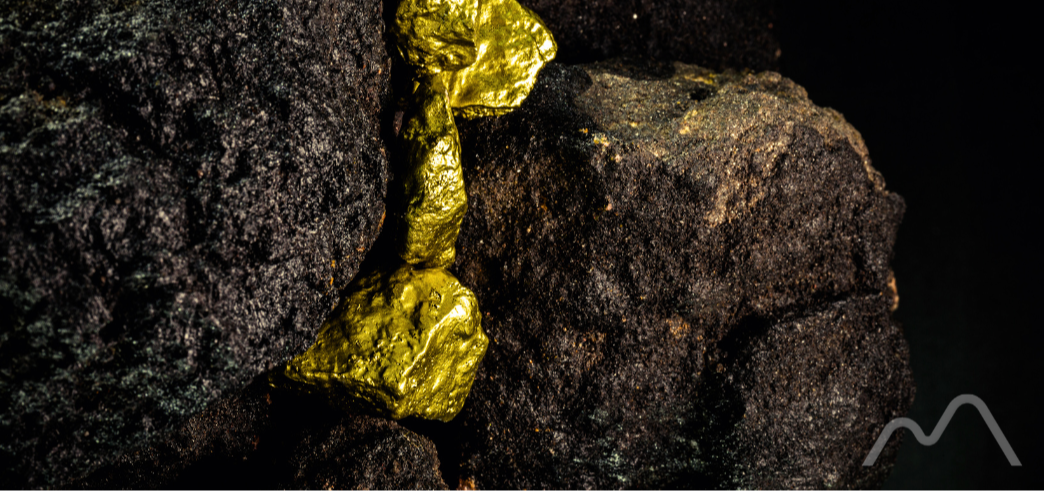
Gold is extracted worldwide, but the largest mining production comes from China, Russia, Australia, Canada and the United States. Gold is also released from river deposits and, increasingly, from the recycling of electronics and jewellery. Gold occurs naturally in gold-bearing rock, usually in very low concentrations, and only becomes extractable where geological processes have concentrated it.
In this knowledge centre article by the experts at The Silver Mountain, you will read where gold is found, how it is mined, and what that means for the global gold supply.
Gold occurs on almost every continent, but extractable quantities are very unevenly distributed. The metal is usually spread through the earth's crust in low concentrations and only accumulates into mineable deposits in specific locations. This happens mainly in areas with ancient rock formations, fault zones, former volcanic activity and river systems.
Gold occurs in nature in two main forms. In primary deposits, it is locked within rock, often in quartz veins, where it was once deposited by hot, mineral-rich water. In secondary deposits, it has broken loose from the rock through erosion and been carried by water; this is river gold. Well-known gold mining locations include the Witwatersrand basin in South Africa, the Carlin Trend in Nevada, Western Australia and the Grasberg mine in Indonesia.
How is gold formed?
Would you like to know how gold originally formed, in the universe before the Earth existed? You can read about that in our article on how gold is formed. This article focuses on where gold is mined on Earth today.
China has been the world's largest gold producer since 2007 and retained that position in 2025, with production of around 384 tonnes. That is more than 10% of global production. Russia followed with 345 tonnes and Australia with 293 tonnes. Canada and Peru round out the top five, each with more than 200 tonnes.
| Country | 2025 Production (tonnes) | Key mining regions |
|---|---|---|
| China | 384.3 | Shandong Province |
| Russia | 345.0 | Siberia and the Far East |
| Australia | 293.2 | Western Australia (e.g., Kalgoorlie) |
| Canada | 213.3 | Ontario and Quebec |
| Peru | 208.9 | Andes Mountains |
| Ghana | 187.3 | Largest producer in Africa |
| United States | 157.0 | Nevada (Carlin Trend), Alaska |
Notably, the picture has shifted over recent decades. South Africa was by far the largest producer for a long time, but production has been declining for years as mines become deeper, more expensive and more complex to operate. The centre of gravity of gold mining has shifted towards Asia and Oceania.
One important distinction: these are the countries with the largest annual production. That is different from the countries holding the largest gold reserves, such as the United States and Germany. You can read more about this in our overview of the top 10 countries with the largest gold reserves.
Gold is found in Europe and mined on a limited scale, but the continent plays a modest role in world production. Concentrations are generally low, permitting processes are strict, and mining is socially and environmentally sensitive. European countries therefore build their gold holdings mainly through purchases and recycling rather than domestic mining.
The main European gold producers:
Gold is also found in countries such as Romania, Spain and Greece, and small-scale river gold can be found on a limited scale. Even so, European production remains small compared with major producers such as China, Russia and Australia.
Gold ends up in rivers through erosion. When gold-bearing rock slowly breaks down, small particles of gold come loose. Because gold is much heavier than sand or gravel, it is not carried far, but sinks quickly to the riverbed and accumulates in bends, gravel banks and old riverbeds.
This so-called alluvial gold, or placer gold, was central to the historic gold rushes in California, Australia and the Klondike, when prospectors used a gold pan or sluice box to sift particles from the sediment. Today, river gold accounts for only a small share of professional production, but it remains a useful indicator: gold in a river often points to a gold-bearing rock formation upstream.
Gold mining does not start at the mine, but with exploration: geologists use soil surveys, drilling and measurements to map where gold has become concentrated and whether extraction is economically viable. Only once the ore grade is high enough is a mine developed. Extraction itself then takes place in three main ways.
In addition, gold sometimes occurs as a by-product of mining other metals, such as copper. In large polymetallic deposits, gold output can then partly depend on the production of those other raw materials.
Alongside traditional mining, recycling, also known as urban mining, is becoming increasingly important. Specialised companies recover gold from discarded electronics such as smartphones, circuit boards and computers, as well as from old jewellery. Recycling now accounts for roughly a quarter of the global gold supply.
What makes this notable is the concentration: a tonne of discarded smartphones typically contains far more gold than a tonne of raw ore from a traditional mine. Because gold can be reused indefinitely without any loss of quality, urban mining is becoming an increasingly important and more sustainable complement to mining. Read more about how much gold is used in phones.
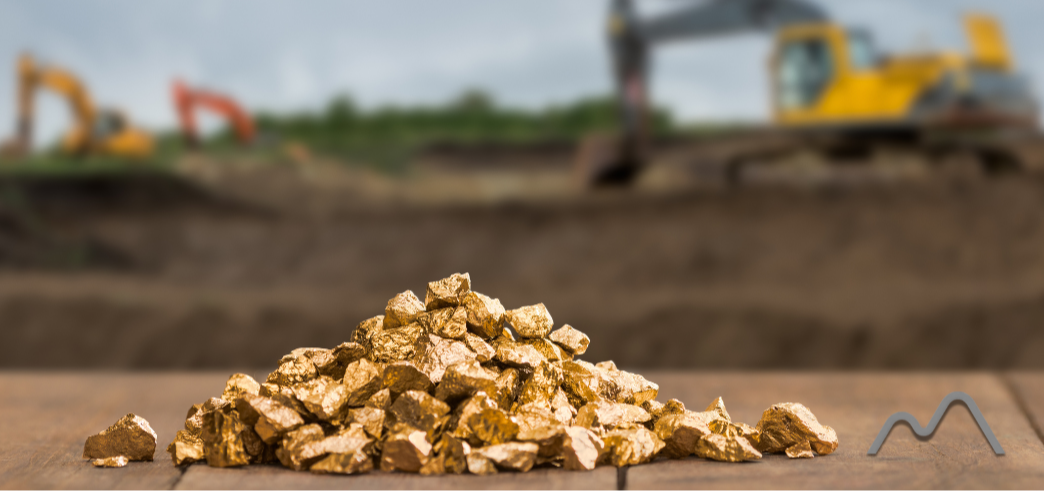
Gold is mainly extracted in China, Russia, Australia, Canada and the United States, together accounting for a large share of world production.
Mining gold is only the first step. Gold-bearing ore often contains just a few grams of gold per tonne of rock. The journey to a pure bar involves four stages:
For investors, this distinction matters: the gold in a mine is not yet a tradeable bar. Between extraction and the finished product lie exploration, processing, refining, certification and trading. Each step in this process adds cost and additional oversight.
Gold has played a role as a precious metal and means of payment for more than 6,000 years. For a long time, it was mined mainly by panning in rivers and in simple mines. The nineteenth century was marked by the gold rushes: large-scale migrations to newly discovered goldfields in the United States, Canada, Australia and New Zealand. That period laid the foundation for the large-scale, industrial mining seen today.
Gold mining determines the supply of new gold, but that supply grows slowly. Developing a new mine takes many years and requires major investment, and existing mines yield less as their richest ore bodies are depleted.
As a result, mine production barely responds to price increases: even in the record year of 2025, with sharply higher gold prices, production rose only slightly. This phenomenon fuels the debate around "peak gold", the idea that annual production is nearing a ceiling.
How vulnerable concentrated production can be became clear in 2025 at the Grasberg mine in Indonesia, one of the largest gold mines in the world. Following a fatal mudslide incident in the third quarter, production at this site fell sharply, causing Indonesia's gold production to drop by 24% that year. A disruption at a single major mine can directly affect global figures, even though total supply remains supported by production elsewhere.
Mining is also becoming steadily more expensive. The average all-in sustaining cost, the full cost per ounce mined, stood at around 1,605 US dollars per ounce in the third quarter of 2025. If the gold price falls towards that level, some mines become unavailable and production declines; in practice, this puts a floor under the price.
This structural scarcity helps explain gold's special position. Unlike many industrial commodities, the gold supply does not consist only of newly mined gold, but also of recycled gold and existing stocks returning to the market. Gold is, after all, rarely destroyed.
The gold price itself is also driven by interest rates, inflation, the dollar exchange rate, central bank purchases and investor demand. To follow the current price, visit our page with the live gold price.
It is precisely this combination of scarcity, complex extraction and rising costs that makes physical gold attractive to many investors as a way to preserve wealth.
Gold mining has an impact on people and the environment: land use, energy consumption, water management and chemicals. The industry is therefore working on sustainability, with stricter standards and the rehabilitation of mining areas. For buyers of physical gold, provenance matters.
Gold that meets the standards of the London Bullion Market Association (LBMA) comes from responsible, conflict-free sources. The Silver Mountain sources its gold exclusively from recognised, certified producers.
Part of global gold production does not come from large-scale, certified mining, but from artisanal and small-scale mining (ASGM), particularly in parts of West Africa and South America. This informal sector is growing and contributed to the record global production in 2025, but it often involves insufficient oversight of safety, working conditions and the use of mercury in gold extraction.
Gold is mined worldwide, with China, Russia and Australia as the largest producers. Through open-pit mining, underground mining, river gold and, increasingly, urban mining, new gold becomes available each year. Yet this production grows slowly, while extraction remains complex and costly.
It is precisely this structural scarcity that explains why gold has retained its value for centuries, and why physical gold remains a sought-after way for investors worldwide to preserve their wealth.
The Silver Mountain does not provide investment advice and this article should therefore not be regarded as such. Past results offer no guarantees for the future.
Most gold is mined in China, the world's largest producer with around 10% of global production. Russia and Australia follow in second and third place. Other major producers include Canada, the United States and Ghana, Africa's largest gold producer.
Gold is found in gold-bearing rock, old river deposits and sometimes as a by-product of other metals. Geologically, it mainly occurs in areas with ancient fault zones, former volcanic activity, mountain formation and river systems that have concentrated gold particles.
Gold is mined through open-pit mining (open pits), underground mining (shafts and tunnels), or alluvial mining from river deposits. After extraction, the ore is crushed, concentrated, chemically separated and refined into pure gold of 99.9% or higher.
Yes, but on a limited scale, including in Finland, Sweden, Romania, Bulgaria and Spain. Europe plays a small role in global production because concentrations are low and regulation is strict. European countries build their gold holdings mainly through purchases and recycling.
Gold ends up in rivers because gold-bearing rock slowly erodes. Small particles of gold come loose and are carried by water. Because gold is heavy, it sinks quickly to the riverbed and accumulates in gravel layers, river bends and old riverbeds.
Gold production is the amount mines extract each year. Gold reserves refer either to the official holdings of central banks or to gold that can still be economically mined from the ground. A country that produces a lot of gold does not automatically hold the largest official gold reserves.
Yes, gold can be reused without any loss of quality. Through urban mining, gold is recovered from old jewellery, coins and electronics. Recycling accounts for around a quarter of the global gold supply.
Rolf van Zanten is the founder and owner of The Silver Mountain, a specialist in physical precious metals since 2008. With nearly twenty years of experience in the precious metals trade, Rolf shares his expertise on investing in gold, silver, and platinum in an accessible and reliable way. His knowledge of the international gold and silver markets helps investors make well-informed decisions. In his role as an expert, he strives to ensure that transparency, security, and trust are at the heart of every purchase.

Be the first to discover the latest products and the latest news about precious metals.



 Nederlands