
 Buy gold bars
 Buy gold coins
 Series
 Buy silver coins
 Buy silver bars
 Series
 Buy silver collectible coins
 Silver collectible coin series
 Buy gold collectible series
 Gold collectible coin series
 Author:
  Date: 4 December 2024
The history of Dutch silver coinage
 Rolf van Zanten
29 June 2026
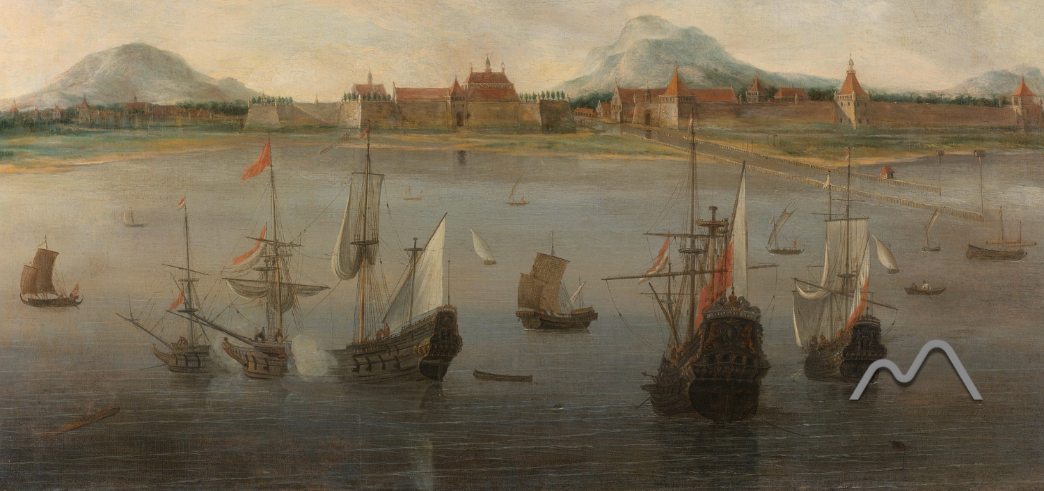
The Silver Fleet was the name for the Spanish convoys that transported silver and other valuables from the Americas to Spain. In the Netherlands the name mainly refers to the fleet that Piet Hein captured off Cuba in 1628. That capture made him famous and lives on in a song that generations of Dutch children learned at school.
Behind that story is a wider story about silver itself. The metal was global money in the 17th century and connected Europe, the Americas and Asia. In this article you will read what the Silver Fleet actually was, how the capture unfolded, what was really in the loot and what role silver still plays today.
The Spanish Silver Fleet was a recurring convoy with which Spain transported valuable cargoes across the Atlantic Ocean. From the 16th century the Spanish empire organized these transports to protect trade with the American colonies.
Sailing together was safer. Armed ships could fend off attacks by privateers and pirates, and that was necessary: a ship full of silver was an attractive target. The system consisted of several fleets. One came from the coast of Panama, with silver that had been brought overland from South America. The other departed from Veracruz in New Spain, the area that included what is now Mexico. They met in Havana for the joint crossing to Seville.
So the name Silver Fleet refers to a system, not to a single ship. The fleet that Piet Hein intercepted in 1628 was the fleet from New Spain. After that capture Spanish shipping to the Americas continued as usual.
Spain transported large quantities of silver because the metal formed the basis for coinage and international payments. Colonial mining supplied the silver with which merchants conducted business and with which the Spanish crown paid its army and wars, including the fight against the rebellious Netherlands.
The production was enormous. The best-known center was Potosí in present-day Bolivia, where around the Cerro Rico a whole system of mines and coin production arose. Zacatecas in Mexico was also important.
The Potosí silver mainly went via the fleet from Panama, while Hein captured the fleet from New Spain. To attribute all the captured silver to one famous mine is therefore too simplistic.
That silver was melted into coins that were accepted everywhere. The best-known is the real de a ocho, called the Spanish mat in the Netherlands and internationally known as the piece of eight. That coin had a fixed weight and fineness, which made merchants trust it from Europe to Asia.
China in particular had a great need for silver, because taxes and trade there were settled in silver. Asian merchants were not eager for European products, but they did accept silver. In this way a single metal became the lubricant of world trade.
You can read more about that broader development in our article on the history of silver and the silver mines.
Colonial silver mining went hand in hand with coercion and exploitation. In Potosí indigenous communities had to provide labor for the mines under a compulsory labor system, and later enslaved people also worked there. The conditions in the mines and in the mercury processing were harsh.
Wealth was therefore unevenly distributed. While officials and merchants profited, others worked under harsh conditions. The story of the Silver Fleet therefore begins long before the ships set sail.
Piet Hein intercepted the Spanish fleet off Cuba and captured the principal ships on 8 September 1628 in the Bay of Matanzas. He was leading an expedition of the West India Company.
The background was the war with Spain. After the end of the Twelve Years' Truce in 1621 the fighting flared up again, and that same year the WIC was founded. That company combined trade with military enterprises. Capturing enemy ships with government authorization is called privateering, and at that time it was a normal part of warfare. Hein was an experienced seaman who had previously sailed for the VOC.
The capture itself proceeded surprisingly peacefully. Part of the Spanish ships surrendered almost immediately. Four large galleons sought refuge in the bay and ran aground on the sandbanks. The crews fled ashore, after which the Dutch boarded the ships using longboats. So the image of a long, fierce naval battle is incorrect: the fighting was limited, the booty enormous.
| Date | Event |
|---|---|
| 1621 | The Twelve Years' Truce ends and the WIC is founded |
| 1628 | Piet Hein departs on behalf of the WIC to intercept Spanish convoys |
| 8 September 1628 | The capture at Matanzas yields an exceptionally large prize |
| 1629 | Hein returns to the Republic and is received as a hero |
| 19th century | The Silver Fleet song gives the event a new place in the national memory |
The haul consisted of much more than physical silver alone. In addition to a large amount of silver, the cargo contained gold, pearls, hides, sugar and precious dyes. And indeed oranges as well, the "appeltjes van Oranje" from the song.
Those "Spanish mats" mentioned in the song are meant literally. They were the silver coins of 8 reales that were minted in the Spanish colonies and accepted worldwide. A Spanish mat is therefore something different from a Dutch guilder or rijksdaalder: a different coin from a different monetary system.
The capture yielded the WIC an exceptional profit and struck Spain hard. The total booty was estimated at about 11.5 million guilders. Important to note: that amount refers to the complete capture, so including gold, trade goods and the ships themselves, not to silver alone.
With that money the Republic could take new steps. Part went to the fight against Spain, including the siege of 's-Hertogenbosch in 1629. The WIC could expand its activities. The symbolic impact was also significant: a young republic had intercepted a valuable shipment of a world power. Piet Hein thereby became a household name. The war was not decided by it, but the success gave the Republic both money and prestige.
A caveat is in order. Part of the proceeds was used to finance Dutch expansion in Brazil, which further involved the Republic in colonial trade and slavery. That does not make the event any less important, but it does make it more nuanced than the song suggests.
That question cannot be answered with a single reliable euro amount. That is because there are actually three different questions behind it:
Those outcomes vary widely. Online conversions circulate that range from one hundred million to one hundred billion euros, and such a spread mainly reflects the unreliability of the method. In addition, the booty consisted of much more than silver.
Simply multiplying the silver weight by a current price therefore does not give a meaningful valuation. For today's metal price you can follow our current silver price.
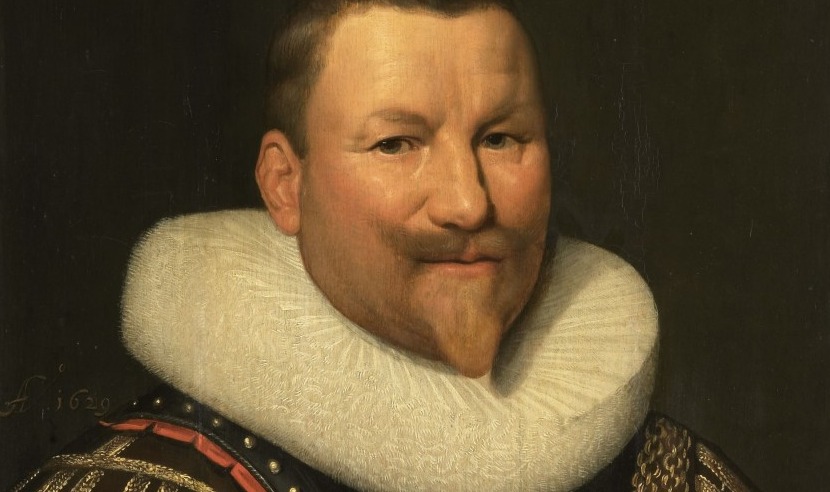
Piet Hein (1577-1629) - Captured the Spanish Silver Fleet in 1628
The well-known Silver Fleet song dates from the nineteenth century, with lyrics by Jan Pieter Heije and music by J.J. Viotta. It celebrates the capture more than two centuries after it took place.
The song was included in the school song collection If you can still sing, then sing along, which was used in schools for decades. As a result it remained known for generations.
Have you heard of the silver fleet
the silver fleet of Spain?
It had many Spanish mats on board
And little apples of Orange!Did not Piet Hein then speak with a slippery word:
“Well, boys of Orange,
Come, climb aboard this and that Spanish ship
And roll me the mats of Spain”?Did the boys not climb like cats into the rigging
And did they not fight like lions?
They put the Spaniards thoroughly to shame
Their cries sounded all the way in Spain!Piet Hein!, Piet Hein!, Piet Hein - his name is small,
His deeds are great
His deeds are great
He captured the silver fleet,
He captured, captured the Silver Fleet. (repeat)If such a silver fleet came again once more,
Tell me would you still be so easily beaten?
Or would you keep yourself safe and sound ashore
But quietly stop in your hammock?
Well, Dutch blood,
That blood still has courage!
Even if we are not big,
even if we are not big
We would win the Silver Fleet!
We would win, win the Silver Fleet!
We would win, win the Silver Fleet!
The song itself is a historical source, but about the 19th century. It turns the capture into a triumphant story full of bravery and patriotism, whereas the event in reality involved little fighting. The colonial origin of the wealth also remains out of sight. Whoever compares the song with other sources therefore sees two things at once: the capture, and the way the Netherlands later wanted to remember it.
Around the Silver Fleet circulate stories about objects that are said to have been made from the loot. A well-known example is a silver bowl attributed to Piet Hein. Researchers combined historical research with analysis of the metal and found silver of both European and Mexican origin. That fits with silver that circulated in the seventeenth-century Low Countries, but it does not prove a direct link with the 1628 loot. The handed-down provenance story seems to have been added later.
That example shows exactly what matters with precious metals. You can measure the composition of an object. But for a special attribution you need documents, ownership history and convincing evidence. Metal value and historical significance are two different things.
The connection between the Silver Fleet and silver today lies in the metal itself, whose function has changed over the centuries. Silver was a trade coin, later a Dutch means of payment, and is now mainly held as physical possession and used in industry.
| Form of silver | Function | What to mainly look for |
|---|---|---|
| Spanish mat | Historical trade coin | Authenticity, coin type, condition and silver content |
| Dutch silver coinage | Former means of payment | Coin type, fineness, weight and collector value |
| Modern silver investment coin | Physical silver ownership in coin form | Weight, purity and recognizability |
| Modern silver bar | Physical silver ownership in bar form | Weight, purity, producer and authenticity |
Those forms are not interchangeable. With an old coin the historical value can count, whereas with a modern bar the silver weight and the price are what matter. You can read more about the Dutch side in our article about the history of Dutch silver coinage.
Today silver also plays a role it barely had in 1628. Because of its good electrical conductivity it is used in electronics and solar panels. You can find more examples in our explanation of the applications of silver.
The story of the Silver Fleet shows how much meaning people can attach to silver. For some it is money, for others a historical object or simply a way to have precious metal in their possession. What has remained the same through the centuries is what really matters: weight, fineness and authenticity. A nice story can add value, but the origin must be verifiable. That was true in 1628 and it still applies today.
Rolf van Zanten - founder of The Silver MountainIf you want to bring physical silver into your home yourself, you can buy it from us with peace of mind. We have specialized in physical precious metals since 2008 and, as an AFM-licensed firm, operate carefully and transparently. Our prices continuously follow the market, so you always see the current rate.
You can choose from silver bars and internationally recognizable silver coins. If you like the historical side, take a look at old Dutch coinage, such as silver guilders and rijksdaalders. Our silver bars come from refineries on the LBMA Good Delivery List and our coins from recognized mints.
Your order is delivered insured via our own delivery service, or is ready by appointment in Baarn or The Hague. If you want it stored, that can be arranged through Edelmetaal Beheer Nederland. And if you sell later, sister company Inkoop Edelmetaal offers you the certainty of sale to sell your silver back to us.
Unsure which form suits you? Feel free to call us, we're happy to advise.
The Silver Fleet was the Spanish convoy system that brought American silver to Europe. Piet Hein captured one of those fleets in 1628, originating from New Spain, in the bay of Matanzas. The loot was estimated at about 11.5 million guilders, including ships and trade goods, and gave the Republic both money and prestige. The song that celebrates the event only appeared two centuries later.
What makes the story enduring is the silver itself. Mined under harsh conditions, struck into coins and accepted as far away as China. That monetary role has largely disappeared, but silver remains sought after as a precious metal and as an industrial raw material. The form changes, but the reason to look at weight, fineness and origin does not.
The Silver Mountain does not provide investment advice and this article is for information purposes only. Historical quantities and values are estimates that vary by source. The silver price can rise as well as fall and past results are no guarantee of future performance.
Silver Fleet is the name for the Spanish convoys that transported silver and other valuables from the Americas to Spain. In the Netherlands the name mainly refers to the fleet that Piet Hein captured in 1628 near Cuba. The term can therefore denote both the wider transport system and that one famous event, depending on the context.
Piet Hein captured the famous Silver Fleet on 8 September 1628 in the bay of Matanzas, on the north coast of Cuba. He was commanding a fleet of the Dutch West India Company there. The Spanish ships came from New Spain, present-day Mexico, and were on their way to Europe. It took place during the war between the Republic and Spain.
No, besides silver the booty included gold, pearls and trade goods such as sugar, hides and dyes. The captured ships themselves also represented value. The name emphasizes the role of silver, but does not cover the entire cargo. The often-cited amount of about 11.5 million guilders therefore refers to the complete capture.
The total booty was estimated at about 11.5 million guilders, including other valuables, trade goods and ships. A direct conversion into euros is misleading. Historical purchasing power, the current value of the precious metal and any collector's value each require a different method of comparison, leading to widely varying results.
Spanish matten are silver coins of eight reales, internationally known as pieces of eight. They were minted, among other places, in the Spanish colonies in the Americas and played a major role in world trade because weight and fineness were reliable. A Spanish mat is a different type of coin than a Dutch guilder or rijksdaalder.
No, in the capture Piet Hein acted as a privateer commissioned by the Dutch West India Company. Privateering was the seizure of enemy ships in wartime with government permission, which distinguishes him from a pirate without that authorization. That of course does not remove the consequences of violence and colonial dispossession.
The lyrics are by Jan Pieter Heije and the music by J.J. Viotta. The song arose in the nineteenth century, more than two centuries after the capture, and is therefore not an eyewitness account. It mainly reflects the patriotic imagery of that later period, with an emphasis on bravery and victory.
No, the story from 1628 concerns the capture of Spanish ships and their cargo, after which the loot was brought to the Republic. So no treasure fleet disappeared on the seabed. Stories about sunken Spanish treasure ships pertain to other voyages and events within the broader Spanish fleet system.
Rolf van Zanten is the founder and owner of The Silver Mountain, a specialist in physical precious metals since 2008. With nearly twenty years of experience in the precious metals trade, Rolf shares his expertise on investing in gold, silver, and platinum in an accessible and reliable way. His knowledge of the international gold and silver markets helps investors make well-informed decisions. In his role as an expert, he strives to ensure that transparency, security, and trust are at the heart of every purchase.

Be the first to discover the latest products and the latest news about precious metals.



 Nederlands