
 Buy gold bars
 Buy gold coins
 Series
 Buy silver coins
 Buy silver bars
 Series
 Buy silver collectible coins
 Silver collectible coin series
 Buy gold collectible series
 Gold collectible coin series
 Author:
  Date: 12 March 2025
Silver price forecast 2026: scenarios and outlook
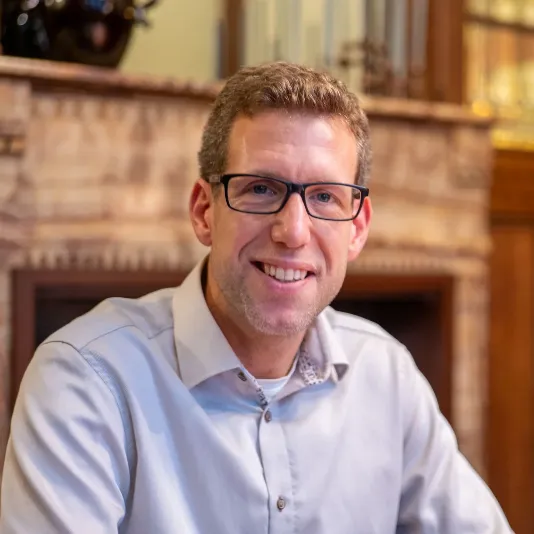 Rolf van Zanten
22 January 2026
Silver is currently in an extremely dynamic phase. An increasing number of investors are seeing the impressive potential of this precious metal and are wondering if this is a strategic moment to step in. The most important questions currently dominating the financial market are logical: will silver continue to rise in value and what is the concrete silver price expectation for 2030?
To get a clear answer to this question about the expected silver price, we analyze the fundamental market factors in this article. We dive into the hard data regarding the unprecedented industrial shortages, the stagnating mining supply, and the role of physical silver as a safe investment during persistent economic uncertainty.
Short on time? Here are the four absolute key points regarding the expected silver price towards 2030:
Anyone looking for an expected silver price in 2030 is naturally not looking for an unrealistic prediction, but a reliable and factual expectation. The silver market is complex and is simultaneously driven by industrial and monetary factors.
Based on the current market structure and macroeconomic data, experts take three plausible scenarios into account.
Industrial demand remains undiminished and the global economy grows at a moderate pace. In this scenario, a significantly higher silver price in 2030 is highly plausible. However, the increase occurs in steps, including the interim price corrections customary for precious metals.
Demand from the green sector and data centers explodes further, while global mining structurally lags behind in production. Combined with a flight to safety due to economic or geopolitical unrest, the silver price can rise significantly faster than that of gold.
The relatively small physical silver market reacts exceptionally strongly to a sudden influx of capital in this case.
Will interest rates remain high globally for a prolonged period, will the US dollar strengthen further or will industrial growth slow down due to an approaching recession? Then the silver price can temporarily come under severe pressure.
Because silver is more than half an industrial metal, it is and remains fundamentally more sensitive to economic contraction than purely monetary metals.
The underlying demand for physical silver has fundamentally changed over the past ten years. Silver is simply the very best conductor of electricity and heat in the world. As a result, it has changed from a traditional monetary metal to an absolute and indispensable raw material for the modern technological industry.
The figures from the renowned Silver Institute speak volumes and show exactly why market experts are positive. In the year 2024, global industrial demand reached a historical record of over 680 million ounces.
The absolute driver of this unprecedented growth is the global energy transition. If we look specifically at the production of solar panels, we see an explosive increase in silver consumption.
Whereas the solar energy sector accounted for only eleven percent of the total industrial silver demand in 2014, this share had already risen to no less than twenty-nine percent in 2024.
In addition, the broader green revolution relies heavily on the unique properties of this precious metal. Besides solar panels, the following sectors also structurally require more physical silver:
An inexorable economic reality applies to this technological revolution. The more green electricity and smart electronics we produce worldwide, the more silver we definitively consume.
Because silver is a scarce and finite material, this constant industrial hunger forms an unprecedentedly robust foundation under the expected silver price for the coming decade.
An analysis of the expected silver price for 2030 is not complete without critically highlighting the supply side. Although the global demand for silver is exploding, production is structurally lagging behind.
According to figures from the United States Geological Survey (USGS), global mine production in 2025 was approximately 26,000 tons. This sounds like a significant amount, but behind the scenes the silver market is struggling with a major bottleneck.
The biggest problem on the supply side is the nature of mining itself. Silver is mined for almost eighty percent as a byproduct in the extraction of base metals such as copper, zinc and lead, or as a byproduct of gold.
This has major consequences for the price development. It means that mining companies cannot simply scale up their silver production when the silver price rises sharply.
Does the global demand for zinc or copper fall due to a cooling economy? Then these mines lower their production or even temporarily close their doors. As a result, the supply of new silver automatically shrinks as well, regardless of how high the silver price is at that moment.
Furthermore, searching for new silver veins and making a specific silver mine operational is an extremely slow process that easily takes ten to fifteen years. This slow response of the supply leads, in combination with the enormous industrial demand, to significant shortages.
In the year 2024, the global physical market deficit amounted to almost 149 million ounces. If we look at the entire period from 2021 up to and including 2024, the combined deficit even rose to a staggering 678 million ounces.
The strategic and critical nature of this scarcity has also penetrated to the highest political level. This led to the United States officially adding silver to their national list of critical minerals in 2025.
Tip: discover how much silver exists on the whole world.
Recycling existing silver from discarded electronics is often put forward as the logical solution. Although this industry is growing steadily, recovering silver from complex components is a particularly expensive and technologically challenging process.
For the time being, recycling is absolutely failing to close the enormous gap between demand and mine production. This stagnating and inelastic supply forms a rock-solid, mathematical foundation under the positive silver price expectation for 2030.
Although industrial demand currently dominates the headlines, silver has a centuries-old and equally important monetary history. When wondering whether the silver price will continue to rise, we must explicitly look at the role of the precious metal as a financial safe haven investment.
In periods of economic contraction, persistent inflation, or geopolitical escalations, investors worldwide seek tangible security. They move their capital from volatile stock markets to hard assets.
In such crisis scenarios, silver, like gold, offers proven protection against the devaluation of traditional fiat money and carries no counterparty risk. The major difference with gold, however, lies in the market's reaction speed.
Because the total market value of all available silver is significantly smaller than that of gold, an influx of new investor capital has a much greater impact on the final price. Silver simply reacts faster and more fiercely to macroeconomic news.
History teaches us that as soon as investors flee en masse to precious metals, the silver price can rise by tens of percentages in a very short time. This inherent leverage makes the metal highly attractive to investors looking to protect their portfolios while simultaneously striving for higher returns during economic turmoil.
An indispensable tool for estimating market sentiment and the potential rise of silver is the gold-silver ratio. This indicator shows exactly how many troy ounces of silver are needed to purchase exactly one troy ounce of gold.
Renowned investors use this ratio as a gauge for relative valuation:
If we look at the silver price expectation for 2030, the gold-silver ratio forms an important data point. If the market fully prices in the structural industrial shortages in the coming years and the ratio returns to its historical average, this mathematically implies a significant further increase in value for physical silver.
Many private investors look exclusively at international market prices. However, anyone who wants to determine the actual expectation for the silver price in 2030 in euros and per kilo must look broader. The global spot price is only the starting point of your final purchase price.
Silver is always traded on the international global market in US dollars per troy ounce. This means that the expectation of the silver price in 2030 in euros is directly dependent on the currency market.
Does the euro weaken against the dollar? Then the silver price for European investors automatically rises along with it, even if the international silver price in dollars remains exactly the same.
This currency effect is an important reason why European investors use physical precious metals to protect themselves against local monetary devaluation.
In addition, there is a fundamental difference between the theoretical, paper spot price and the price you pay for a physical kilo of silver in your hands. There are always additional costs associated with the physical product. This so-called premium consists of the costs for melting, minting the coins or bars, logistics and secure storage.
Finally, the tax structure in the Netherlands plays a decisive role in your ultimate return. Regular silver bars fall under the high VAT rate of twenty-one percent by default, which often immediately makes them unattractive to private individuals.
Silver coins and the well-known silver kilo coin bars, on the other hand, fall under the favorable margin scheme, which significantly optimizes your purchase price per kilo.
In the table below we clarify how the price of your physical precious metal is exactly structured.
| Price component | Explanation of the factor | Impact on the final kilo price |
|---|---|---|
| International Spot Price | The global base price for raw silver (in USD per troy ounce). | Determines the absolute base value of your silver. |
| Exchange rate (EUR/USD) | The current strength of the euro against the US dollar. | A weak euro increases your purchase price in the Netherlands. |
| Physical Premium | Costs for production (melting and minting), secure transport and market scarcity. | Forms the markup on top of the global spot price. |
| Tax Structure (VAT) | The tax rules for the specific silver product in the Netherlands. | Regular bars (21% VAT) versus tax-favorable coin bars (margin scheme). |
As we explained in the previous section, you standardly pay twenty-one percent VAT on physical silver bars in the Netherlands. However, there is an extremely efficient and tax-attractive route for private and business investors to completely avoid this tax.
Via our partner Edelmetaal Beheer Nederland you can purchase physical silver bars completely VAT-free. After purchase, your precious metal is immediately stored in a strictly secured customs warehouse in Zurich, Switzerland.
Because the silver does not leave the customs zone, zero percent VAT is levied. This significantly maximizes your net amount of silver and your direct return.
At The Silver Mountain, we analyze silver as a unique precious metal with two powerful price drivers: the steadily growing industrial demand and the strong monetary investor demand. Looking objectively at these market dynamics, a positive long-term picture is significantly more plausible than a negative scenario.
Our vision is supported by hard data. The record demand from the green sector, consecutive years of physical market deficits and a stagnating mining supply together create a robust foundation for upward price pressure towards 2030.
Yet an expert view also requires nuance. The final silver price is never fixed in advance. Global interest rate decisions, exchange rates and economic growth inevitably cause interim fluctuations. We therefore advise working with strategic scenarios instead of one absolute prediction.
In short, our vision for 2030 relies on three fundamental pillars:
"We are seeing a fundamental shift in the precious metals market," emphasizes Rolf van Zanten, founder of The Silver Mountain. "Silver is much more than just a safe haven during high inflation. The unprecedented demand from the energy transition, combined with a limited supply, creates a scarcity that structurally supports the silver price towards 2030."
Rolf van Zanten - april 2026As a serious investor, you naturally do not need to follow the silver price daily to understand the long-term trend towards 2030. By keeping an eye on a limited number of specific macroeconomic signals, you can excellently interpret the market developments yourself.
We advise systematically adding these four indicators to your personal watchlist:
By evaluating these factors periodically, you effortlessly look right through the issues of the day. This gives you the peace of mind and overview to confidently manage your position in physical precious metals for the future.
The silver price expectation for 2030 is fundamentally extremely positive. Physical silver benefits from an unprecedented industrial demand, primarily driven by the global energy transition and new technologies. At the same time, the mining supply is structurally lagging behind, resulting in persistent market deficits.
If we add the persistent need for a monetary safe haven to that, a robust upward potential emerges. Although the silver market always remains volatile and reacts to macroeconomic fluctuations, this fundamental imbalance between supply and demand offers a very strong long-term perspective for serious precious metal investors.
Do you want to benefit from the positive silver price expectation for 2030? Then choose the certainty of buying silver at The Silver Mountain. We offer a wide and competitively priced assortment of silver bars and silver coins.
Thousands of investors have already preceded you and rate our reliable and discreet service with an excellent 9.8/10 on Trustpilot. Protect your wealth for the future and order your physical silver simply and safely via our webshop today.
The Silver Mountain does not provide investment advice. This article is for educational purposes only. Past performance is not indicative of future results.
The forecast for 2030 is fundamentally positive. This upward potential is primarily driven by exploding industrial demand, persistent physical market deficits, and growing interest from investors. Naturally, the silver market remains volatile and highly sensitive to varying economic conditions.
A further appreciation in value is very plausible. Silver plays an indispensable role in the global energy transition and the mass production of electronics. However, this structural rise will not happen in a straight line. Interim price drops are entirely part of the dynamics of the precious metal market.
Silver possesses a unique dual role. It functions as both a monetary precious metal and a crucial industrial metal. As a result, the price reacts not only to investor sentiment and rising inflation but also exceptionally directly to global economic growth and current factory output.
This historical ratio shows exactly how many ounces of silver you need to buy one ounce of gold. Investors use this figure to estimate whether silver is relatively cheap or expensive. In practice, a high ratio often points to a significant undervaluation.
The final kilo price is highly dependent on the international silver price and the current exchange rate between the euro and the dollar. With physical silver, production costs and tax rules also play a major role. Silver coin bars significantly optimize your purchase price in the Netherlands.
The primary risk factors for a falling silver price are persistently high interest rates and an extremely strong US dollar. An unexpected global recession also poses a major risk. In that scenario, industrial demand suddenly decreases, which directly leads to a lower price.
Like gold, silver is a scarce and tangible asset that cannot be printed without limit by central banks. During periods of high monetary devaluation, physical silver retains its intrinsic value. This makes it a proven instrument for successfully protecting your accumulated purchasing power.
Rolf van Zanten is the founder and owner of The Silver Mountain, a specialist in physical precious metals since 2008. With nearly twenty years of experience in the precious metals trade, Rolf shares his expertise on investing in gold, silver, and platinum in an accessible and reliable way. His knowledge of the international gold and silver markets helps investors make well-informed decisions. In his role as an expert, he strives to ensure that transparency, security, and trust are at the heart of every purchase.

Be the first to discover the latest products and the latest news about precious metals.



 Nederlands