
 Buy gold bars
 Buy gold coins
 Series
 Buy silver coins
 Buy silver bars
 Series
 Buy silver collectible coins
 Silver collectible coin series
 Buy gold collectible series
 Gold collectible coin series
 Author:
  Date: 22 January 2026
Gold price forecast 2026: scenarios, opportunities and analysis
 Rolf van Zanten
11 December 2025
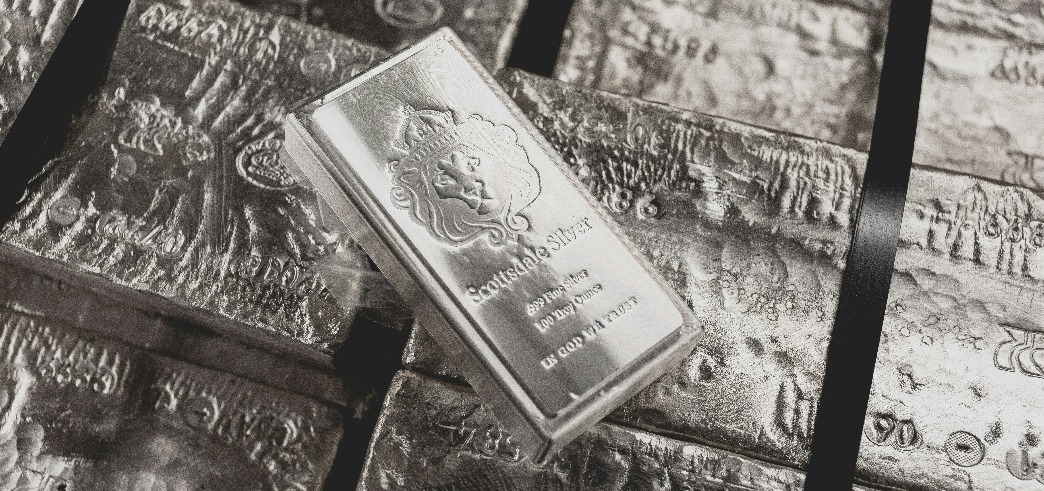
The silver price forecast for 2026 is attracting significant attention. Silver moves at the intersection of two worlds: it is both a precious metal that benefits from monetary uncertainty and a strategic raw material indispensable for industry, technology, and the energy transition. It is precisely this combination that makes the silver price sensitive to diverse economic and geopolitical developments.
The forecast for the silver price is therefore not a fixed certainty. In this article, we outline possible scenarios for the silver price in 2026 based on macro-economic analyses, industrial demand developments, monetary policy, historical price data, and the relative relationship between gold and silver.
In doing so, we look not only at short-term movements but also place the silver price within a broader context of structural trends.
At The Silver Mountain, we have been closely following the silver market for years. By combining market data, economic signals, and practical experience, a nuanced picture emerges of what can influence the silver price.
The silver price you see daily is the so-called spot price: the international reference price for silver on the world market. This price is continuously determined by supply and demand and acts as the basis for virtually all transactions in silver, both for large market players and for the physical silver market.
The spot price is quoted in US dollars per troy ounce (31.103 grams) and is established on international trading platforms where silver is traded in large volumes.
A significant part of price formation takes place on financial markets where silver is traded via futures contracts. These contracts represent silver that can be delivered in the future and provide a good reflection of market sentiment.
Because these markets react quickly to:
the silver price can move sharply in the short term. Silver often reacts more vehemently than gold because the market is smaller and more sensitive to sentiment.
In addition to financial trading, the physical market also plays an important role. Silver has a dual function:
More than half of global silver demand comes from industry. As a result, the silver price is more sensitive to economic growth or cooling than, for example, gold.
On the supply side, silver is unique because a large portion of silver is mined as a by-product of other metals, such as copper and zinc. This makes the supply less flexible and can lead to faster price movements when demand increases.
The silver price is traded worldwide in dollars. Consequently, the dollar's exchange rate has a direct influence:
The interest rate policy of central banks is also important. Higher interest rates make interest-bearing investments more attractive, which can slow down precious metals. When interest rates are lower or there is uncertainty about inflation, interest in silver often increases.
The spot price is a wholesale price and often differs from the price consumers pay for physical silver products. That price consists of:
Therefore, the price of silver coins or bars can temporarily rise even if the spot price remains relatively stable.
The silver price is established through a combination of:
This mix makes silver dynamic but also difficult to predict, making scenario-thinking extra important for a silver price forecast.
The development of the silver price up to and including 2025 shows a cyclical and volatile pattern. While gold historically moves more gradually, silver is characterized by sharper peaks and corrections.
In periods of economic uncertainty or financial stress, the silver price frequently managed to rise sharply, while economic cooling or rising interest rates were followed by significant pullbacks.
In recent years, the silver price was influenced by a combination of monetary easing, inflation concerns, and increasing industrial demand, particularly from technology and renewable energy. At the same time, interest rate hikes and varying economic outlooks caused clear fluctuations.
These movements underscore that silver does not have a linear price path but reacts to changing expectations and sentiment.
At the end of 2025, the silver price per kilogram stood at 2,086.52 euros (reference date December 31). By mid-January, this price for a kilo of silver had already risen to 2,574.52 euros (reference date January 15, 2026).
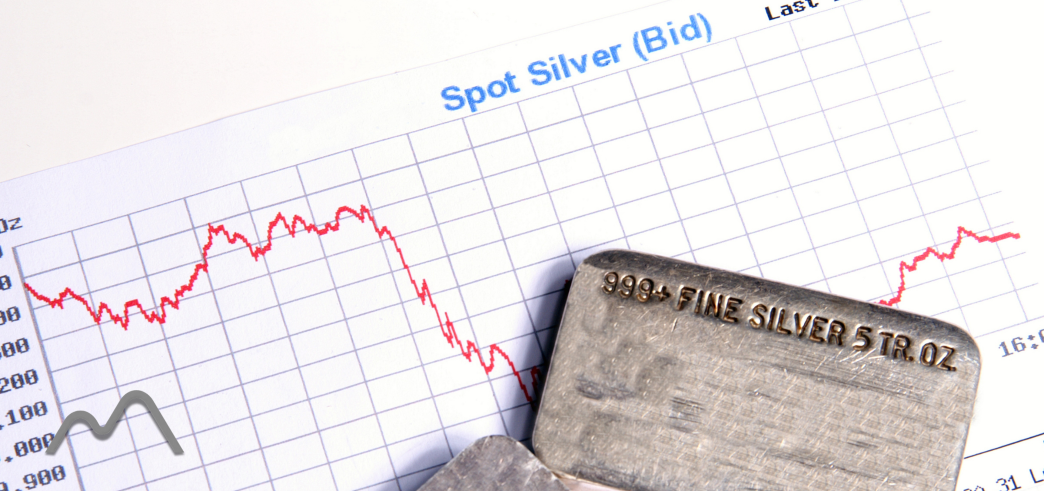
The silver price forecast is influenced by both industrial demand and monetary factors.
The silver price in 2026 will not be determined by a single factor. Just as in previous years, it is the combination of economic, monetary, and structural developments that gives direction to the market.
By looking at these factors individually, a clear picture emerges of the forces that can support the silver price or put it under pressure.
One of the main differences between silver and other precious metals is its heavy industrial dependence. More than half of the annual silver demand stems from industrial applications.
For 2026, the following sectors are particularly relevant:
If the world economy develops stably in 2026 and investments in the energy transition continue, this can structurally support the demand for silver. In the event of an economic slowdown or recession, silver is more vulnerable than gold, as industrial demand then falls more rapidly.
Silver moves more strongly with the economic cycle than gold. This makes the outlook for 2026 closely linked to questions such as:
In a growth scenario, silver often benefits twice: from industrial demand and from investor interest. In a contraction scenario, that same industrial sensitivity can lead to downward pressure.
The policy of central banks remains an important factor in 2026. Interest rates affect silver indirectly but noticeably.
Silver generally reacts more strongly to this than gold because it is often seen as a more cyclical metal. Changes in interest rate expectations can therefore become visible in the silver price relatively quickly.
Although silver is seen less explicitly as inflation protection than gold, inflation still plays a role. Uncertainty about inflation is often more important than the exact inflation figure.
In times of persistent inflation, uncertainty about purchasing power, or doubt about monetary policy, interest in precious metals can increase, with silver often moving in tandem (albeit with larger fluctuations).
Because silver is traded worldwide in US dollars, the dollar exchange rate is a structural factor.
For 2026, this plays out primarily in combination with interest rate differentials between the US and other economies.
In addition to fundamental factors, sentiment also plays a role. Silver is sensitive to:
In times of unrest, silver can quickly come into focus, but that same mechanism can also lead to sharp corrections. This explains why the silver price historically moves more erratically than the gold price.
The silver price in 2026 is influenced by an interplay of:
Precisely because silver is both a precious metal and an industrial raw material, these factors often have an amplified effect on each other. This makes the silver price dynamic but also difficult to predict, highlighting the importance of working with scenarios.
Because the silver price depends on multiple, interacting factors, an exact prediction is not possible. Therefore, we work with scenarios. These show how the silver price could develop in 2026 under different economic conditions.
The goal is not to name one outcome, but to provide insight into the range within which the silver price may move.
In this scenario, the global economy develops stably to positively in 2026. Industrial activity picks up, and investments in technology and the energy transition remain steady.
At the same time, inflation concerns decrease, creating room for a less restrictive interest rate policy.
Characteristics of this scenario:
In these circumstances, silver can benefit from its dual role. The combination of industrial demand and investor interest can lead to a relatively strong price development, where silver historically often moves harder than gold.
This scenario assumes moderate economic development in 2026. Growth is present but limited. Central banks remain cautious and keep interest rates at a stable level for a longer period. Industrial demand for silver remains intact but does not accelerate.
Characteristics of this scenario:
In this scenario, the silver price moves mainly sideways, with interim fluctuations. The market seeks direction but lacks clear impulses to move structurally higher or lower. Historically, this is a common scenario when uncertainty prevails but major crises are absent.
In the negative scenario, the global economy faces a clear cooling or recession in 2026. Industrial production decreases, and investments are postponed. At the same time, interest rates remain relatively high, or the dollar increases further in strength.
Characteristics of this scenario:
Because silver is more heavily dependent on industrial applications than gold, the silver price can fall relatively harder in this scenario. Historically, gold often remains more stable during such periods, while silver reacts more sensitively to economic headwinds.
The three scenarios make it clear that the silver price in 2026 is highly dependent on:
Silver can perform above average in favorable conditions but also carries a higher downward risk during economic headwinds. This is precisely why scenario-thinking is essential when interpreting the silver price forecast.
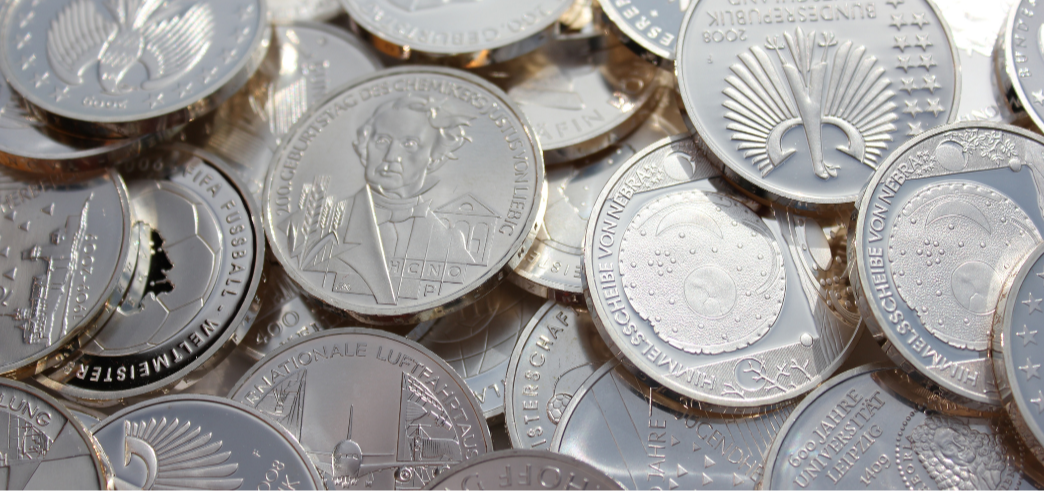
For 2026, we consider a neutral scenario to a moderately positive scenario most likely.
Silver and gold are often mentioned in the same breath, but the dynamics behind both precious metals differ substantially. Those who want to interpret the silver price forecast for 2026 correctly are well-advised to understand these differences.
They explain why silver often moves more erratically than gold and why both metals react differently in various economic phases.
Curious about the goldprice? Check our gold price prediction for this year.
The biggest difference lies in the function of both metals.
As a result, silver is much more strongly linked to economic growth and industrial activity, while gold primarily reacts to monetary and geopolitical developments.
The silver market is significantly smaller than the gold market. This has direct consequences for price movements:
In positive market conditions, silver can therefore rise relatively sharply. However, in periods of economic uncertainty or declining industrial demand, the price can also fall faster than that of gold.
Silver reacts more strongly to the business cycle than gold.
Gold more frequently functions as a safe haven in such periods and historically remains more stable. This explains why silver often underperforms gold in recessions but can catch up during recovery phases.
The gold/silver ratio indicates how many ounces of silver are needed to buy one ounce of gold. This ratio is often used to analyze the relative valuation between the two metals.
While this ratio is not a prediction, it provides context when comparing silver and gold, especially within scenario analyses such as those for 2026.
Investors often approach silver and gold differently:
Consequently, silver often moves more strongly with changing market sentiment. In times of calm, silver may lag behind, while it can accelerate when there is renewed interest in precious metals.
The differences between silver and gold make it clear why the silver price in 2026 is more sensitive to:
Silver can benefit from structural trends such as the energy transition but remains vulnerable to economic headwinds. Gold often offers more stability in that regard, while silver shows more mobility.
Based on current information, we consider a combination of the base scenario and a moderately positive scenario to be the most likely for the silver price in 2026.
A factor here is that silver behaves differently than gold: it is more sensitive to economic cycles but can also react more strongly in favorable conditions.
Our vision is based on a number of observations:
This does not mean that sharp corrections in the silver price are ruled out. On the contrary: silver is known for its volatility. But the underlying forces currently seem more supportive than structurally undermining for the silver price.
For 2026, we expect for silver:
We expect silver to react more strongly to varying macro-economic signals in 2026 than gold. For this reason, the price development will likely be less gradual but will remain characterized by clear movements.
If we look a bit further ahead than just 2026, we see structural support for silver from industrial applications, particularly in energy and technology. At the same time, silver remains cyclical and sensitive to economic headwinds.
Our view is therefore that:
This vision is intended to provide context and direction for the silver price forecast for 2026. It is explicitly not investment advice and not an attempt to predict exact price levels. Silver remains a metal where timing is difficult and external factors play a major role.
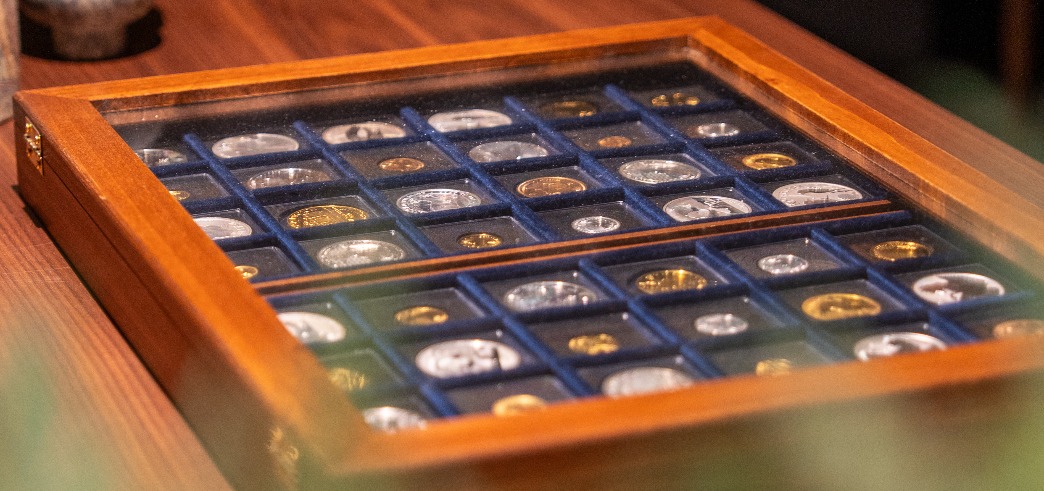
At The Silver Mountain, you can buy silver coins for a price based on the current silver price.
Our analysis and scenarios for the silver price forecast 2026 are based on macro-economic developments, market structure, and structural supply and demand data. We utilize insights from the annual World Silver Survey by The Silver Institute, an internationally recognized authority on the silver market.
In addition, we include information from the London Bullion Market Association (LBMA), which plays a central role in global precious metal trading and offers insight into market dynamics, liquidity, and price mechanisms within the silver market.
The silver price moves continuously with international markets and often reacts more strongly to economic and industrial developments than gold. On our website, you can follow the current silver price per gram, kilogram, and troy ounce, supplemented with historical price data for insight into both short-term and long-term movements.
The interactive silver price chart shows fluctuations per hour, day, month, or over several years. This gives you direct insight into how the silver price reacts to economic news and market sentiment, while the long-term development makes visible the cyclical nature of silver and its recurring role as a precious metal in times of uncertainty.
At The Silver Mountain, you can buy physical silver in the form of silver coins and silver bars from renowned producers.
You buy at transparent prices and benefit from discreet and insured shipping or from secure, fully insured storage via Edelmetaal Beheer Nederland. Thanks to our buy-back guarantee, you also know that you can sell your silver easily and reliably whenever you wish.
The silver price forecast for 2026 is determined by an interplay of industrial demand, economic growth, interest rate developments, and market sentiment. Silver distinguishes itself through its dual role as a precious metal and industrial raw material, resulting in higher volatility and a less predictable price path than gold.
Based on current circumstances, we consider a combination of a base scenario and a moderately positive scenario to be the most likely, with room for interim corrections. Scenario-thinking therefore offers the best guidance when interpreting the silver market in 2026 and beyond.
Anyone following silver is well-advised to:
This article is updated annually so that insights into the silver price remain current.
The Silver Mountain does not provide individual investment advice. This article is intended for information purposes only. Expectations, scenarios, market developments, and past results offer no guarantee for future results.
The silver price forecast for 2026 depends on industrial demand, economic growth, interest rate developments, and market sentiment. Based on current insights, a base scenario to a moderately positive scenario is likely, while interim fluctuations and corrections must be taken into account.
The silver price is primarily influenced by industrial demand, interest rate and inflation expectations, the US dollar, and economic growth. Because silver is both a precious metal and an industrial raw material, these factors often have an amplified effect on each other, resulting in higher volatility.
Yes, silver is historically more volatile than gold. The silver market is smaller, and silver is used intensively in industry. Consequently, the silver price reacts faster and more violently to economic changes, while gold generally moves more stably as a store of value.
The silver price is difficult to predict due to the combination of industrial dependence, investor sentiment, and a relatively small market volume. Changes in economic expectations, interest rates, or demand can therefore quickly lead to sharp price movements, both upward and downward.
The silver price usually refers to the international spot price. The price of physical silver is often higher and consists of the spot price plus production costs, premiums, logistics, and fiscal factors such as VAT. As a result, both prices can temporarily diverge.
During economic uncertainty, gold more frequently functions as a stable store of value, while silver moves more erratically. Silver can benefit from precious metal demand but remains more sensitive to economic contraction due to its industrial applications, making the price path less predictable.
Rolf van Zanten is the founder and owner of The Silver Mountain, a specialist in physical precious metals since 2008. With nearly twenty years of experience in the precious metals trade, Rolf shares his expertise on investing in gold, silver, and platinum in an accessible and reliable way. His knowledge of the international gold and silver markets helps investors make well-informed decisions. In his role as an expert, he strives to ensure that transparency, security, and trust are at the heart of every purchase.

Be the first to discover the latest products and the latest news about precious metals.



 Nederlands