
 Buy gold bars
 Buy gold coins
 Series
 Buy silver coins
 Buy silver bars
 Series
 Buy silver collectible coins
 Silver collectible coin series
 Buy gold collectible series
 Gold collectible coin series
 Author:
  Date: 13 March 2026
Why does the gold price rise or fall? The influence of interest rates, inflation, and geopolitics
 Rolf van Zanten
5 February 2026
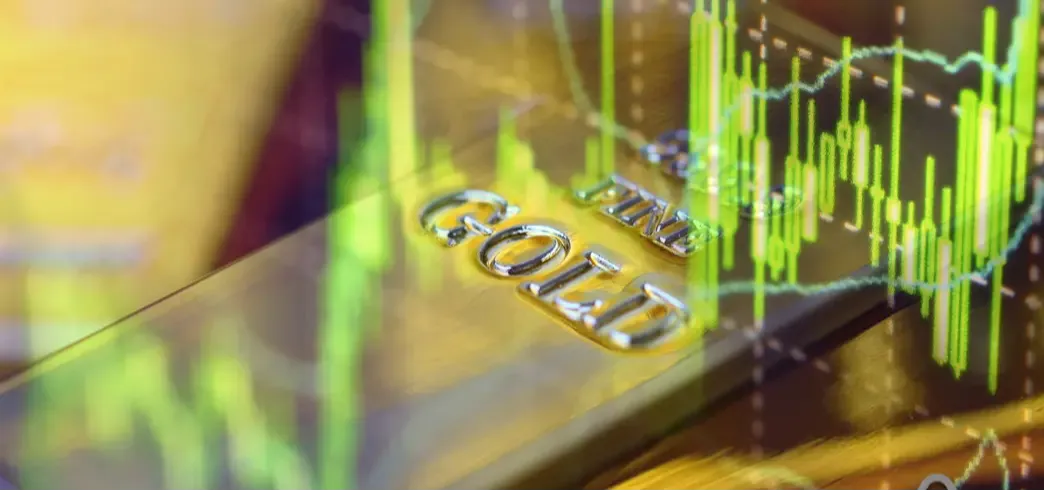
The gold price remains highly volatile as tensions in the Middle East escalate. While gold normally benefits from unrest in financial markets, the combination of rising oil prices, a stronger dollar, and inflation concerns is actually causing an erratic price trend.
This makes the current phase remarkable: The demand for gold as a safe haven remains present, but profit-taking and interest rate fears are slowing down the upward momentum.
This is a relevant signal for investors. The current market shows that geopolitical unrest does support the gold price, but it does not automatically lead to a straight upward line. Especially in times like these, it becomes clear that gold responds to multiple forces simultaneously: uncertainty, energy prices, inflation expectations, interest rate policies, and currency movements.
In this news article, we analyze the main factors influencing the gold price today and examine the differences in global physical demand.
The geopolitical situation has entered a new phase. There are serious plans to reopen the Strait of Hormuz, which significantly tempers acute oil fears and inflation expectations. At the same time, the ceasefire remains precarious due to ongoing mutual threats.This fragile balance is currently causing an unstable and volatile gold price.
The direct cause is the increased geopolitical uncertainty. In such situations, investors traditionally look more often for assets that are considered relatively stable. Gold benefits from this because it is globally recognized as a scarce and tangible asset without counterparty risk.
Recent gold analyses also show that unrest in the Middle East supports the demand for gold as a safe haven, while that same uncertainty simultaneously creates extra volatility in the market.
Market analysis also reveals that geopolitical tensions generally strengthen the interest in gold. Concerns about energy supplies and rising inflation play a major role in this.
At the same time, the effect is not unambiguous. Inflation and interest rate concerns can actually put pressure on the gold price. As a result, gold remains attractive in turbulent times, but this is often accompanied by short-term fluctuations.
This combination of geopolitical uncertainty and growing inflation fears gives a significant boost to the fundamental demand for precious metals. Investors are simply repositioning their wealth to arm themselves against further escalations.
The gold price currently finds a strong foundation in the ongoing geopolitical unrest. The recent developments in the Middle East, in particular, play an absolutely key role here.
Investors and central banks are massively seeking financial security. This leads to a significantly increased demand for physical precious metals. Below, we discuss the three main factors currently supporting the gold price.
The war in the Middle East is causing unprecedented uncertainty in global financial markets. In times of international crisis, the need for a stable factor increases sharply. Gold has successfully fulfilled this protective role for decades and is proving its value once again.
The recent military actions by the United States and Israel against Iran took place without a clear mandate from the United Nations. This raises fundamental questions among managers of large international reserve funds.
They increasingly doubt whether their assets are still safe within US borders. This leads to an accelerated diversification into precious metals. A major advantage of physical gold is that countries can store it under their own management or with direct allies.
The effective closure of the Strait of Hormuz by Iran has direct and major consequences for the global energy supply. The market fears significant shortages of oil and gas. This rapidly drives up prices in the energy market.
Higher energy costs almost always translate into broadly rising inflation in practice. Because gold has historically been an excellent shield against this currency devaluation, investors step in to protect their purchasing power.
Summary of supporting factors:
| Driving force | Current cause | Effect on the gold market |
|---|---|---|
| Geopolitics | War in the Middle East | Increasing demand for safe havens |
| Reserve management | Military actions without UN mandate | Accelerated diversification by large funds |
| Inflation fears | Closure of the Strait of Hormuz | Demand for protection against currency devaluation |

The tension in the Middle East affects the global gold price.
In addition to direct armed conflicts, another major geopolitical force is at play in the background. The political course of the United States, and in particular the so-called 'Trump effect', has a big impact on global financial stability.
The strong emphasis on a protectionist America First agenda is causing fundamental shifts in international trade relations.
The economic policy, which explicitly focuses on more domestic production and the imposition of import tariffs, brings a lot of unpredictability. This erratic policy inevitably leads to friction on the world stage.
In addition, the retreating diplomatic movement of the Americans creates a power vacuum, which can actually further fuel existing geopolitical tensions elsewhere in the world.
Historically, this constant political unrest is a huge driver for the gold price. To illustrate: during Donald Trump's first term, the gold price already rose by a massive fifty percent.
When the foreign policy of the world's largest economy is difficult to predict, the need for certainty logically increases.
The relationship between oil, inflation, and precious metals has rarely been as visible as in the current phase of the conflict in the Middle East. The bottleneck in this economic chain reaction is the Strait of Hormuz.
When transit in this strategic strait is obstructed, oil prices worldwide skyrocket. More expensive oil translates rapidly into higher transport costs and rising prices in supermarkets.
Historically, this surging inflation is one of the strongest catalysts for a rising gold price, as investors flee en masse to precious metals to protect their purchasing power.
Recent talks of a ceasefire and securing the Strait of Hormuz are currently bringing relief to the financial markets. The prospect of undisturbed oil trade removes acute inflation fears from the market. Consequently, we are seeing the extreme price increases of gold temporarily stabilize.
Yet, analysts warn against excessive optimism. Diplomatic consultations between the major powers involved are exceptionally fragile. New threats can turn the situation around within hours. For precious metal investors, this means that volatility remains the norm for the time being.
As long as the geopolitical situation has not fully stabilized, gold retains its fundamental luster as the ultimate independent shock absorber in an uncertain world.
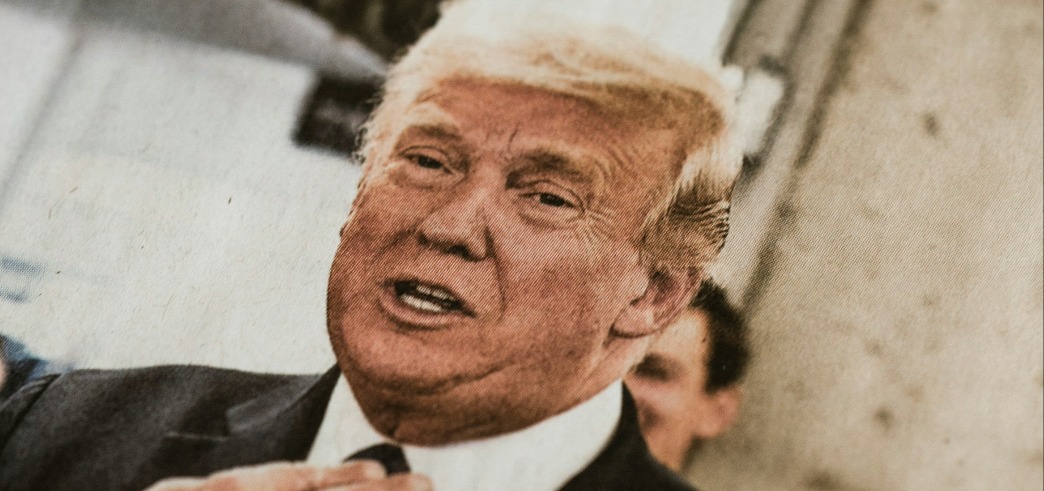
The political stance of the United States (Trump Effect) has a great influence on the worldwide financial stability.
Although geopolitical unrest causes a flight to safety, the gold price is simultaneously under pressure from various macroeconomic factors. There are currently three key elements slowing down a further rise in the gold price.
First, there is the risk of persistently tight monetary policy. If expensive oil causes a further rise in inflation, central banks may feel compelled to intervene. They could raise interest rates further or keep them high for longer.
Higher real interest rates make gold, which after all pays no interest or dividend, relatively less attractive to investors. In this article we explain more about the influence of interest on the gold price.
In addition, potential margin calls on the stock market play a major role. A tighter monetary policy often puts stock exchanges under significant pressure. When share prices fall, investors regularly have to provide additional collateral to keep their positions open.
In practice, we see that investors are forced to sell their well-performing assets at such times, including gold and silver. This creates a sudden wave of selling in the precious metals market.
Finally, a phase of profit-taking is a logical and healthy market phenomenon. The gold price has recently experienced an impressive rally.
It is perfectly normal for investors to decide to cash in part of their profits after such a massive increase. This temporarily puts extra pressure on the price.
Overview of slowing factors:
| Slowing factor | Underlying cause | Consequence for the gold market |
|---|---|---|
| Monetary policy | Persistent inflation due to expensive oil | Higher interest rates make gold less profitable |
| Margin calls | Falling share prices | Forced sale of precious metals |
| Profit-taking | Recent extreme price rally | Temporary increase in selling pressure by investors |
The extreme volatility and high price levels have a direct impact on the physical gold market worldwide. Great contrasts are currently visible, especially on the Asian continent, in how buyers react to geopolitical and economic developments.
In India, traditionally one of the largest markets for precious metals, the conflict in the Middle East has tangible consequences. The important supply chains from the United Arab Emirates have been disrupted.
This relative scarcity is driving up local premiums significantly. Combined with the already high international gold price, this is causing a substantial slowdown in local consumer demand.
In stark contrast to India, the need for physical gold in China remains undiminished. Chinese investors continue to buy steadily to protect their wealth against economic uncertainties.
This robust demand translates into stable local premiums. These are currently around $13 to $15 per troy ounce above the international spot price.
In other major Asian financial centers, the market is reacting much more calmly to current price levels. In Singapore, there is moderate demand, with premiums recently dropping to around $2.25 per ounce.
In cities like Hong Kong and in Japan, the market sentiment can even be described as neutral. Physical gold changes hands there around the nominal spot price or with a very slight premium of up to $1.
Overview of Asian demand for gold:
| Country or Region | Demand for physical gold | Current premiums per troy ounce |
|---|---|---|
| India | Declining | High (due to disrupted supply) |
| China | Robust | Stable at $13 to $15 |
| Singapore | Moderate | Dropped to approx. $2.25 |
| Hong Kong and Japan | Neutral | Nominal or slight premium (up to $1) |
In the short term, a further drop in the gold price cannot be ruled out. A pullback to the support level around $4,655, or even $4,400, is a possibility. A clear breakthrough above the resistance of $5,420 is needed to turn the sentiment completely positive again.
The silver price is also currently stabilizing around $83, after an earlier peak of over $121 and a subsequent rapid correction.
In the medium term, however, the outlook remains positive. Factors such as structurally deteriorating government finances due to an aging population and the transition to a new world order with the US and China as dominant powers will keep geopolitical tensions structurally high.
In this environment, central banks and private investors will likely further diversify their portfolios towards gold.
The current dynamics in the precious metals market do not stand alone. The insights in this article are partly based on recent analyses from the ECR Research Gold Report.
According to Eddy Markus, Chief Economist and founder of ECR Research, the current financial climate shows striking similarities to the 1970s. During that period, the global economy also struggled with high inflation and geopolitical tensions. At that time, gold positioned itself strongly as a necessary alternative to traditional stocks and bonds.
With his decades of experience navigating similar market cycles, Markus underscores the growing strategic importance of gold in today's investment portfolio.
The current market shows that the gold price can fluctuate heavily. Although short-term interest rate expectations cause pressure, the fundamental basis remains strong. The ongoing geopolitical unrest and inflation fears confirm the historical role of precious metals as a stable factor.
For investors, this market dynamic actually offers opportunities to structurally strengthen a portfolio and spread risks.
Do you want to effectively protect your wealth against global uncertainties and inflation? Discover the possibilities to buy physical gold or buy silver safely and securely at The Silver Mountain today.
The Silver Mountain does not provide individual investment advice. This article is intended for information purposes only. Expectations, scenarios, market developments, and past results offer no guarantee for future results.
During geopolitical tensions, such as in the Middle East, investors massively seek financial security. Gold is a traditional safe haven that is independent of governments. The increased demand for this physical protection ensures that the price of precious metals often rises significantly during crises.
A rising oil price often leads to higher inflation because transport and production become more expensive. To protect their purchasing power against this currency devaluation, investors buy extra gold. Precious metals are globally seen as a reliable shield against structurally rising consumer prices and energy costs.
When share prices fall sharply, investors often face margin calls. This means they have to deposit extra collateral with their broker. To quickly free up cash, they are forced to sell their well-performing and liquid assets, including physical gold and silver.
Central banks often raise interest rates to combat inflation. A higher real interest rate makes gold less attractive to large investors. Physical precious metals do not pay out any interest or dividends, which means that when interest rates rise, investors are quicker to choose alternatives such as government bonds or savings accounts.
In India, the physical demand for gold has currently fallen sharply. The conflict in the Middle East is disrupting important trade routes and supply chains. This causes a local shortage, causing premiums on physical gold to rise significantly. Combined with high international prices, this slows down consumer purchases.
The medium and long-term outlook remains very positive. Structural factors such as an aging population, deteriorating government finances, and geopolitical shifts keep uncertainty high. Central banks and private individuals will therefore continue to diversify their portfolios with gold to protect wealth against these macroeconomic risks.
You can safely and securely purchase physical gold or silver through a specialized dealer like The Silver Mountain. We offer a wide range of bars and coins from recognized producers. This allows you to effectively protect your wealth against inflation and ongoing global economic uncertainties.
Rolf van Zanten is the founder and owner of The Silver Mountain, a specialist in physical precious metals since 2008. With nearly twenty years of experience in the precious metals trade, Rolf shares his expertise on investing in gold, silver, and platinum in an accessible and reliable way. His knowledge of the international gold and silver markets helps investors make well-informed decisions. In his role as an expert, he strives to ensure that transparency, security, and trust are at the heart of every purchase.

Be the first to discover the latest products and the latest news about precious metals.



 Nederlands