
 Buy gold bars
 Buy gold coins
 Series
 Buy silver coins
 Buy silver bars
 Series
 Buy silver collectible coins
 Silver collectible coin series
 Buy gold collectible series
 Gold collectible coin series
 Author:
  Date: 26 February 2025
Gold ETF explained: how it works, risks, and physical gold
 Rolf van Zanten
26 February 2025
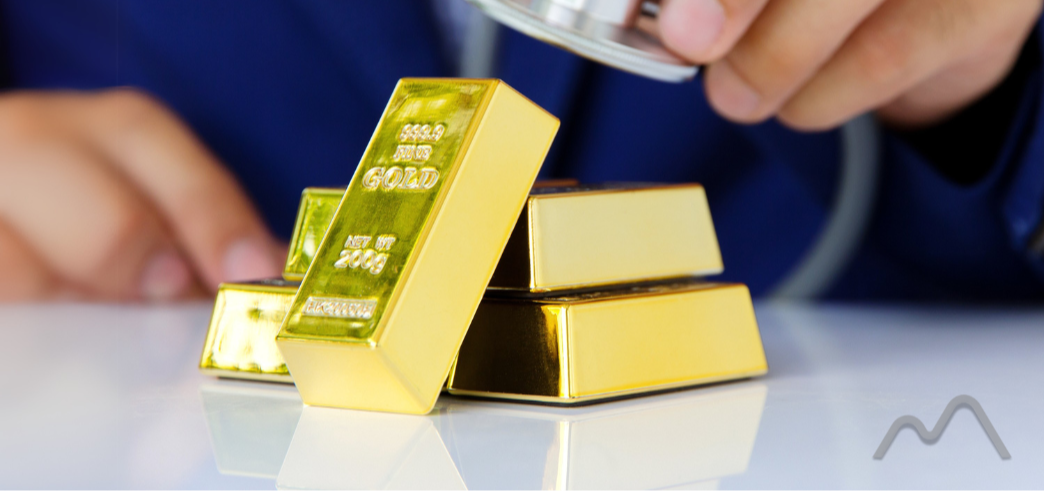
When the best time to buy gold depends less on the perfect moment than on your investment horizon and a consistent approach. The ideal entry point cannot be reliably predicted in advance. After all, no one knows for certain whether the gold price will rise or fall tomorrow. For those who buy gold as a long-term holding, the period over which you hold it matters more than the day you enter.
In this knowledge center article you will read why market timing rarely works, which factors move the gold price and how you can arrive at a purchase moment that suits your situation with a thoughtful strategy. We discuss the difference between buying in instalments and buying all at once, the role of your investment horizon and the mistakes that beginning buyers most often make. That way you base your decision on a plan, not on today's price.
There is no clearly identifiable ideal time to buy gold that can be determined in advance with certainty. The gold price moves continuously under the influence of interest rates, inflation, currencies and geopolitical developments, and those factors are not reliably predictable. Whoever keeps waiting for the perfect entry point risks, above all, not making any decision at all while the price can move in any direction.
More important than the question of when is the question of why and for how long you want to hold gold. Gold is typically bought to diversify wealth and protect purchasing power over the long term, not to trade on the short term.
Feel free to check the current rate on our page with the current gold price, but don't let a single daily price determine a decision with a horizon of years.
A suitable time to buy arises when the purchase fits within your financial plan, you can afford to be without the money for an extended period, and you accept that the gold price may fall in the meantime. Which approach fits depends on the situation. The table below provides a first indication.
| Your situation | Possible approach | Main consideration |
|---|---|---|
| Long horizon and a predetermined goal | One-off purchase or enter partially immediately | Accept price fluctuations after purchase |
| Strong doubts about the current price | Stagger purchases | Reduces timing risk, not market risk |
| Money possibly needed in the short term | Wait for the time being | Avoid selling at an inopportune time |
| Urge to buy just after a strong price increase | Reassess the decision first | Avoid trading out of fear of missing out |
| No storage or sales plan yet | Settle the practical choices first | Ownership, storage, costs and selling are part of the same decision |
This table does not replace personal judgment; The Silver Mountain does not provide individual investment advice. It is primarily intended to help you recognize which situation is guiding your decision.
Consistently predicting the bottom and the top of the gold price succeeds for almost no one, not even professionals. The gold market processes new information almost immediately. Expectations about interest rates, inflation or unrest are often already reflected in the price before a buyer reacts. So anyone who waits for "the right moment" is basing themselves on information the market has usually already priced in.
In addition, actively getting in and out costs money. With physical gold you pay a premium above the gold value on each purchase, and on selling you face the spread, the difference between the buy and sell price. Frequent trading accumulates those costs and is counterproductive for those who hold gold as a calm long-term asset.
Finally, emotion plays a role: buying out of fear when the price is peaking, or hesitating when it falls, more often leads to worse rather than better decisions.
Waiting feels like "doing nothing", but it is an active choice with the same uncertainty as buying. Whoever waits for a lower price implicitly bets that such a drop will occur, while the price may just as well continue rising. So both buying and waiting are bets on direction. The difference is that with a purchase you can follow a plan, whereas when waiting you mainly react to the price.
Whether this is the right time for you depends more on your own situation than on the market. Five factors matter most.
Unlike the future price, one thing is known in advance: the buyback price. At The Silver Mountain you see both the purchase and the buyback price at the time of purchase, so you know the spread before you decide. The price direction remains uncertain, but this part of your costs does not. This way you base your decision on what you can know rather than on what you have to guess.
The gold price is driven by a limited number of recurring macroeconomic factors, but no single indicator independently points to the best buying moment. It helps to know them, primarily to understand movements, not to predict them.
| Factor | Possible effect on gold | Important caveat |
|---|---|---|
| Real interest rate | A falling real interest rate makes gold relatively more attractive | The market may have already priced in an interest rate change |
| US dollar | A weaker dollar can support the gold price | For buyers in euros, the euro-dollar exchange rate also matters |
| Inflation (expectations) | Concerns about currency devaluation can increase demand for gold | Gold does not automatically rise with every inflation spike |
| Market uncertainty and geopolitics | Turmoil often increases demand for gold as a safe haven | The magnitude and duration of the reaction are not predictable |
| Central banks | Structural purchases influence long-term demand | Decisions are not always announced immediately |
These factors usually explain a price movement better in hindsight than they predict it in advance.
If you want to delve deeper into the relationship between interest rates, inflation and geopolitics, or into the scenarios analysts outline, we refer you to our article on the factors behind the gold price and our gold price outlook. For a broader comparison between defensive investments, read gold or bonds.
The perfect time to buy gold cannot be predicted. It is wiser to set a long-term strategy.
A common way to reduce dependence on a single entry point is to spread your purchases over time. Instead of investing your entire amount on one day, you periodically buy a fixed amount of gold. This approach is also known as dollar-cost averaging (DCA).
That way you sometimes buy at a higher and sometimes at a lower price, which makes your average purchase price less dependent on one specific day. This does not remove price risk, but it makes your purchase less sensitive to an unfortunately chosen moment.
Buying periodically means you invest a fixed amount across multiple occasions:
Buying all at once means you invest the entire amount at one moment:
Which approach is appropriate depends on your amount, your horizon and how much price fluctuation you are willing to accept. There is no approach that is right for everyone.
A record high in itself is not proof that gold is too expensive or must fall soon. A price can continue to rise after a record, move sideways for a long time or correct, and only in hindsight is it clear which scenario occurred. Waiting only because the price is higher than you remember from the past is just as much a timing decision as buying immediately.
At a high price it is better to assess three things:
If your goal is long-term diversification, a record level does not have to be an automatic reason to do nothing. If you mainly expect a rapid further rise, the speculative nature of the purchase increases.
Most mistakes around the purchase timing stem from the desire to outsmart the market. These four are the most frequent:
There is no month that consistently offers the best time to buy gold each year. Seasonal patterns can temporarily arise because of holidays, wedding seasons or regional demand, but they are not stable enough to base a purchase solely on a calendar month. Interest rate expectations, currency movements and unexpected news easily outweigh any seasonal effect.
Those who buy periodically can distribute purchase moments across the year in advance. The advantage then is not an alleged best month, but spreading the entry point. Read more about possible seasonal patterns in our article on the best months to buy gold and silver.
You arrive at a suitable purchase time by starting from your own premises, not the price. Go through these steps:
Investors often ask me when they should get in, as if there is one right day. I cannot answer that question, and neither can anyone else, really. What I do see: those who buy calmly, spread their purchases and hold their gold for years eventually do not worry about the price on a single Tuesday. So choose a strategy, not a moment.
Rolf van Zanten - founder The Silver MountainYou buy gold with the greatest peace of mind from an accredited, specialised dealer with transparent prices and a clear buy‑back policy. The Silver Mountain has specialised in physical precious metals since 2008 and is listed in the AFM register under licence number 12048860 for offering investment objects.
Our coins and bars come from recognised mints and from refineries on the LBMA Good Delivery List. The prices on our website are updated every three minutes based on the current rate, so you can see before ordering which price applies at that moment. You can have your order delivered insured via our own delivery service or pick it up by appointment in Baarn and The Hague.
Thanks to the buy‑back guarantee via our sister company Inkoop Edelmetaal, you can easily sell your gold back to us later. If you are ready to make a purchase, you can find the full range on the buy physical gold page.
Asking when the best time to buy gold is is ultimately the wrong question; the better question is with which strategy and horizon you enter. The perfect moment cannot be predicted, and attempts to time the market cost most buyers money and peace of mind. Those who set their goal and horizon, consciously choose between buying gradually or all at once and then hold their gold calmly, do not make themselves dependent on the price of a single day.
So first determine your starting points, then choose your product and denomination, and place your purchase when it fits your plan. That way you buy with confidence, regardless of what the gold price does that day.
The Silver Mountain does not provide investment advice and this article should therefore not be regarded as such. Past results offer no guarantees for the future. The gold price can both rise and fall.
Whether now is a good time depends on your goal, horizon and financial situation, not on the daily price alone. No one can reliably predict whether the gold price will rise or fall. For those who buy gold as a long‑term holding, the exact entry moment is usually less decisive than the period over which it is held.
Waiting for a lower price can turn out favourably or unfavourably in hindsight; both are unknown beforehand. The gold price may fall or rise further after your decision. Those who wait for a dip risk staying on the sidelines for a long time. If in doubt, you can buy part now and spread the rest.
There is no month that offers the best moment every year. Seasonal patterns can occur, but are easily outweighed by interest rates, currencies, geopolitics and investor flows. If you want to spread your timing risk, it is better to plan several purchase moments across the year in advance than to rely on a single calendar month.
That is a personal judgement that depends on your goal, assets and risk tolerance. The Silver Mountain does not provide individual investment advice on this. Gold can suit those who want to diversify their assets and protect purchasing power over the long term. If you are unsure, discuss your situation with an independent financial adviser.
That depends on your situation. Buying spread out reduces dependence on a single entry moment but leads to more purchases and sometimes a higher premium per gram. Buying all at once makes you fully invested immediately and can lower total costs, but exposes you fully to that one moment. Both suit different preferences.
A record high is not a standalone buy or sell signal. After a record, the price can continue to rise, move sideways or correct, and that is unknown beforehand. Assess whether your goal and horizon still fit. If you are uncertain about the level, you can enter with a smaller amount or spread purchases to soften the entry moment.
A rising real interest rate often puts pressure on the gold price, because interest‑bearing investments then become relatively more attractive and gold itself pays no interest. This relationship is not automatic: inflation expectations, the dollar and market uncertainty can simultaneously exert an opposite influence.
For a long‑term holding, watching the price daily is rarely useful and mainly feeds impulsive trading. It is sufficient to check the current price at the moment you actually want to buy or sell. That way you base your decision on your plan and not on the day's fluctuation.
Rolf van Zanten is the founder and owner of The Silver Mountain, a specialist in physical precious metals since 2008. With nearly twenty years of experience in the precious metals trade, Rolf shares his expertise on investing in gold, silver, and platinum in an accessible and reliable way. His knowledge of the international gold and silver markets helps investors make well-informed decisions. In his role as an expert, he strives to ensure that transparency, security, and trust are at the heart of every purchase.

Be the first to discover the latest products and the latest news about precious metals.



 Nederlands