
 Buy gold bars
 Buy gold coins
 Series
 Buy silver coins
 Buy silver bars
 Series
 Buy silver collectible coins
 Silver collectible coin series
 Buy gold collectible series
 Gold collectible coin series
 Author:
  Date: 21 February 2025
 About
About BRICS countries: de-dollarization, the BRICS currency, and influence on the gold price
 Daan Wesdorp
4 December 2024
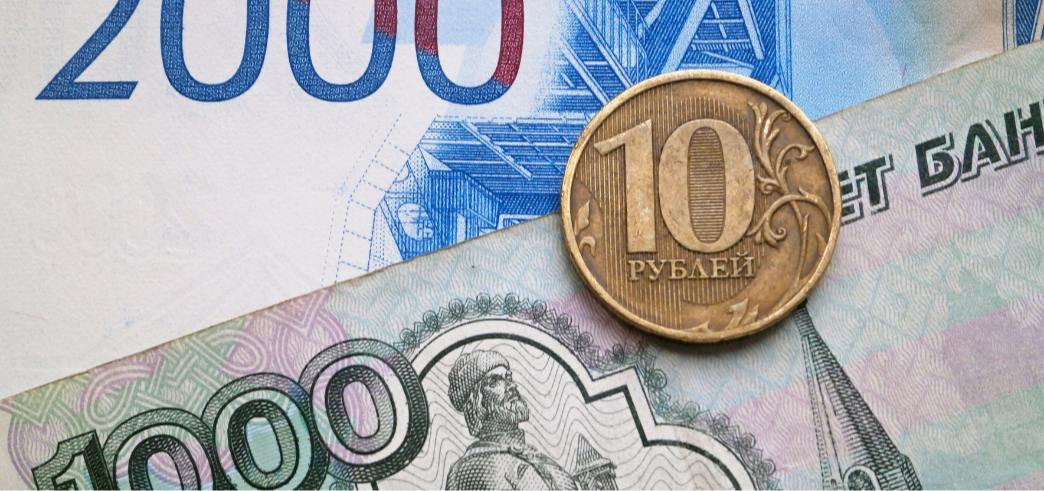
In early 2022, the Russian ruble came completely into the global spotlight. The central bank of Russia announced that it would temporarily buy gold at a fixed price of 5000 rubles per gram. This created a persistent image among many investors that the Russian currency was actually pegged to gold again. But did that really become a reality in practice?
In this knowledge center article from The Silver Mountain, we dissect the exact facts. We discuss the true meaning of this monetary intervention, the current status of the Russian gold reserves, and we explain why investing in the historical golden ruble differs from speculating in modern paper money.
On March 25, 2022, the Russian central bank announced a historic and drastic monetary step. The Bank of Russia officially announced that from March 28 it would buy physical precious metal from domestic credit institutions at a fixed rate of exactly 5000 Russian rubles per gram.
This specific purchase scheme ran until June 30, 2022. The primary goal of this heavy intervention was crystal clear. Following the mounting geopolitical unrest and subsequent Western sanctions, the national currency was under enormous pressure.
Large foreign exchange reserves were partly frozen, and the government was desperately looking for a quick method to stabilize the financial system and immediately stop the free fall of its own currency.
At the same time, the Russian government deployed a second strategic weapon. Foreign buyers of Russian gas were suddenly required to settle their outstanding bills exclusively in rubles. The combination of these two factors created a unique dynamic in the currency markets:
This smart combination of heavy capital controls and the direct link to buy physical gold helped the Russian currency successfully absorb the hardest economic blows.
For serious investors, it perfectly demonstrates how superpowers always immediately fall back on the undisputed certainty of precious metals in times of acute financial crisis.
Despite euphoric media reports, the ruble was in practice not pegged to gold according to the classic gold standard. Under a full-fledged gold standard, a government must guarantee that citizens and businesses can always freely exchange their paper money for a fixed amount of precious metal. In that case, a mutual obligation to exchange applies.
In Russia, exactly the opposite happened at the time. The central bank exclusively bought precious metal at a fixed price of 5000 rubles per gram. However, they did not sell the gold back to the free market for that same price. You could therefore not simply exchange your saved banknotes for physical gold bars.
It is therefore factually more correct to speak of a temporary gold reference. This monetary intervention served purely as a hard price floor during an unprecedented geopolitical crisis. As soon as the currency strengthened sufficiently, the purchase price was let go by the policymakers.
To permanently remove all misunderstandings for investors, we compare this Russian intervention and the true gold standard in a practical overview below.
| Property | The Russian intervention in 2022 | A classic gold standard |
|---|---|---|
| Convertibility | Exclusively purchases by the central bank. You could not request gold. | Mutual and guaranteed convertibility for all citizens. |
| Status of the currency | A temporary reference to support a faltering system. | The national currency is directly and solidly backed by physical precious metal. |
| Duration of the policy | Very temporary and directly dependent on current market conditions. | Permanent and structurally anchored in national legislation. |
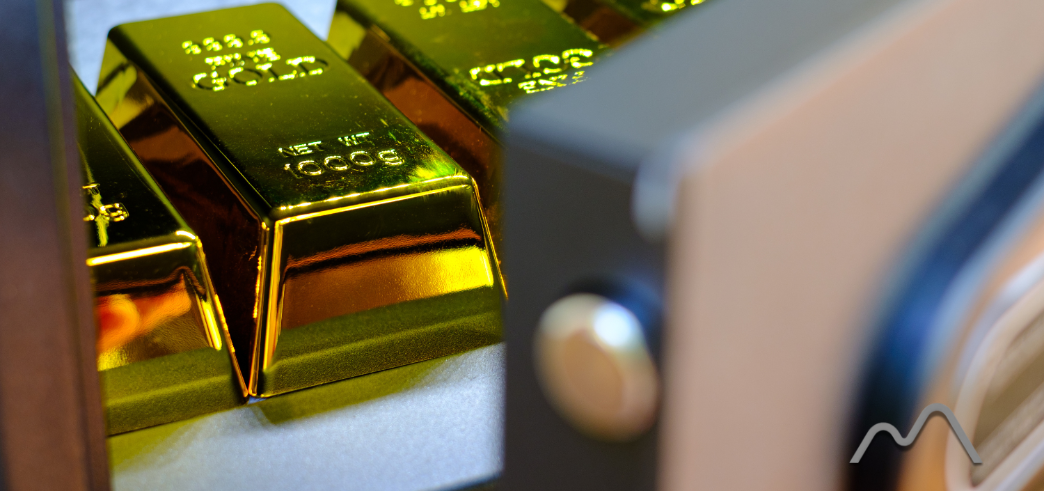
In 2022 the Russian ruble was temporarily pegged to gold in order to protect the national economy and currency.
The choice to temporarily support the ruble with precious metals was absolutely no coincidence or panic reaction. The Russian central bank intervened deliberately with a well-thought-out, three-pronged plan. The heavy Western sanctions isolated the country rapidly from the global financial payment system.
To prevent a total collapse of the national economy, physical gold served as the perfect and indestructible lifeline. The government had 3 weighty economic motives for this:
When the value of paper money evaporates in a crisis due to sky-high inflation, investors traditionally flee to safe havens. Gold is not a digital debt instrument and cannot possibly be frozen by a foreign government.
By strategically deploying its massive national reserves, the government immediately sent a powerful signal. Showing this tangible wealth created much-needed calm and restored faltering trust in the national currency.
Russia is among the very largest producers of physical precious metals worldwide. Due to closed borders and strict international trade blockades, these giant mining companies suddenly lost their main export markets.
By guaranteeing a fixed purchase price of 5000 rubles per gram, the central bank acted as a savior. Domestic production levels were kept up because of this, and mass bankruptcies in this sector were successfully prevented.
The paper wealth protections and drastic monetary intervention accelerated a much broader geopolitical process that had been prepared in the background for years. The government wants to become structurally independent from the Western banking system and the dominant rule of the US dollar.
By positioning gold as a rock-solid alternative for international payments, the country effectively created a completely parallel financial circuit to bypass Western sanctions.
Interesting: read more about the de-dollarization plans of the BRICS countries in this article.
These strategic arguments demonstrate the superiority of physical gold to serious investors. Where fiat currency always remains highly vulnerable and dependent on the international political playing field, precious metal retains its intrinsic value worldwide and under all extreme conditions.
In addition to the strategic deployment of precious metals, the massive Russian energy sector played an equally important role in the rapid monetary recovery. In 2022, the government suddenly demanded that all foreign buyers of Russian gas settle their outstanding bills exclusively in rubles.
President Putin signed a special decree for this, which took effect immediately on the first day of April. This strict requirement immediately created a new dynamic in international markets with three major consequences:
The smart combination of these mandatory gas payments, the temporary gold reference, and extremely strict capital controls proved to be a highly effective line of defense. It helped the heavily battered currency rebound strongly in the short term and prevented a total collapse of the Russian economy.
The current exchange rate of the Russian currency is naturally not exclusively determined by the earlier measures surrounding precious metals. The currency remains at its core a modern fiat money whose international value is directly dependent on a very complex economic web.
The actual value of the currency is currently driven by 3 factors:
The fixed purchase price of 5000 rubles per gram therefore functioned primarily as a strong psychological anchor for the currency market at the time. When the international gold price rises and the internal reference price is fixed, it suggests that the currency is heavily undervalued.
Following this logic, this mechanism is extremely fragile. In practice, it only works as long as the market firmly believes that the government can and will financially sustain this backing.
In the longer term, the national currency remains extremely vulnerable. Its value is completely at the mercy of volatile geopolitical developments and strongly fluctuating export revenues. This makes speculating in this currency significantly riskier for retail investors than choosing physical gold.
It is abundantly clear that physical gold plays a leading role in Russia's long-term strategy. Through years of aggressive purchasing policy, the Russian central bank has built up one of the largest gold reserves in the world.
This policy served as a direct preparation for economic isolation and to structurally minimize dependence on the Western financial infrastructure.
In 2026, these strategic reserves have reached an unprecedented size. According to recent publications by the Bank of Russia, the national gold currently represents a value of exactly 337.5 billion dollars.
Given that total international reserves amount to approximately 758.7 billion dollars, physical precious metal now covers almost 45 percent of the state reserves. This exceptionally high percentage underscores the success of the implemented de-dollarization.
This gold reserve is a vital buffer that is also actively used for wealth management. In early 2026, the central bank sold approximately 700,000 troy ounces of gold. This immediately provided the national wealth fund with direct liquidity, optimally benefiting from the historically high gold value.
| Year | Total size (in tons) | Estimated market value (in billion USD) |
|---|---|---|
| 2016 | 1,615 tons | 60.2 bln USD |
| 2017 | 1,838 tons | 76.6 bln USD |
| 2018 | 2,113 tons | 86.9 bln USD |
| 2019 | 2,271 tons | 110.3 bln USD |
| 2020 | 2,299 tons | 138.7 bln USD |
| 2021 | 2,302 tons | 133.1 bln USD |
| 2022 | 2,333 tons | 135.8 bln USD |
| 2023 | 2,351 tons | 155.9 bln USD |
| 2024 | 2,360 tons | 188.5 bln USD |
| 2025 | 2,355 tons | 245.0 bln USD |
| 2026 | 2,340 tons | 337.5 bln USD |
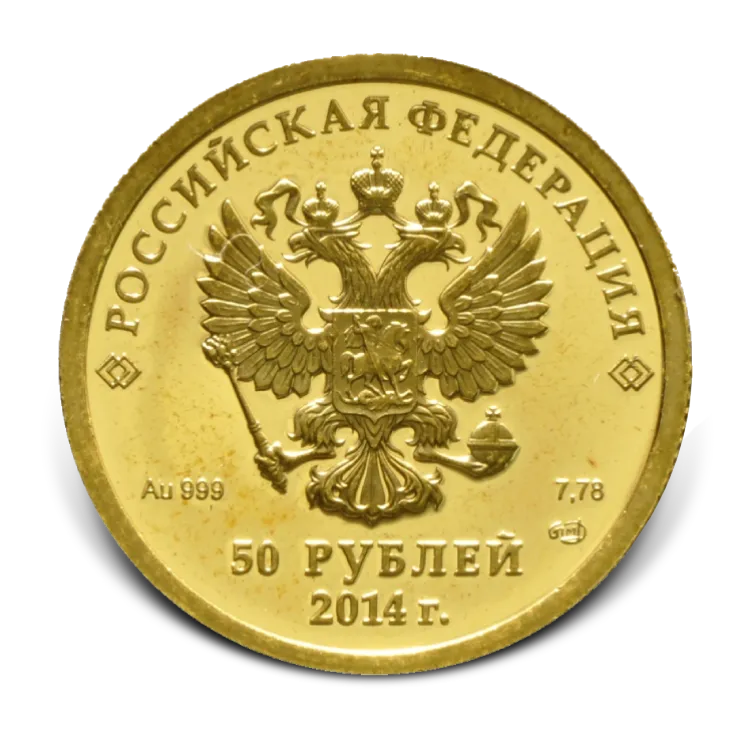
A 'real' gold Russian ruble, of which the value is determined by the international gold price.
When analyzing the Russian currency, investors must distinguish between modern paper money and historical gold coins. Speculating in contemporary fiat money is currently extremely risky for individuals.
The current exchange rate is constantly under heavy pressure due to capital controls and international sanctions. You are completely at the mercy of the political choices of a foreign government.
For those who choose true wealth protection, the historical golden ruble is a much wiser alternative. These authentic coins from the Tsarist era offer you tangible certainty based on three strong assets:
The term golden ruble can have two meanings.
Historically, the golden ruble refers to Russian gold coins, such as gold rubles from the Russian Empire. These coins had a gold content and were used as a means of payment or an investment coin.
In the modern context, "golden ruble" is often used for the idea that the current Russian ruble is backed by gold. However, that is not an official gold coin, nor is it a full gold standard. The modern ruble is still a fiat currency, issued by the Russian central bank.
The Russian peg between ruble, gold, and energy fits into a broader development. More and more countries are looking at alternatives to the dollar system. This does not mean that the dollar will quickly disappear as the world reserve currency, but it does mean that gold is once again playing a visible role in geopolitics and monetary policy.
For investors, the most important lesson is that currencies ultimately require trust. When that trust is under pressure, governments, central banks, and individuals look once again to tangible assets like gold.
The temporary pegging of the Russian ruble to gold in 2022 proved once again the timeless power of precious metals. Although the central bank's intervention was a strategic emergency measure, it reminds investors of a harsh lesson.
Paper money always remains vulnerable to geopolitical uncertainty and inflation. Physical gold, on the other hand, offers a universal and completely independent protection of your accumulated purchasing power.
Do you also want to protect your wealth with the tangible certainty of precious metals? The Silver Mountain follows these developments from years of expertise in physical gold, silver, and platinum. Since 2008, The Silver Mountain has been helping retail and business clients with the purchase, storage, and sale of physical precious metals.
The Silver Mountain does not provide investment advice. This article is for educational purposes only. Past performance is not indicative of future results.
No, there is no permanent gold peg. In the year 2022, the central bank solely established a temporary fixed purchase price for domestic banks. This was a strategic emergency measure to calm the market and absolutely not a return to the classic gold standard with free convertibility.
Russia used gold to immediately restore faltering trust in the national currency after heavy Western sanctions. Additionally, the fixed purchase price helped support the domestic gold mining sector, and the strategic independence from the US dollar and the euro was successfully increased because of this.
This specific pricing created an artificial floor under the value of the national currency in 2022. Because the global gold price is calculated in dollars, an indirect exchange rate emerged via the precious metal. This psychological anchor helped the ruble rebound very strongly and quickly at the time.
The central bank's gold reserve has reached a record value of 337.5 billion dollars. Physical precious metal now covers almost 45 percent of total national reserves. This enormous volume offers the economy a vital and liquid buffer beyond the reach of the Western banking system.
Investing in the modern paper currency is currently extremely risky due to strict capital controls and persistent sanctions. A much safer alternative for wealth protection is the historical golden ruble. These authentic coins derive their value solely from the global gold price and carry absolutely no political counterparty risk.
Rolf van Zanten is the founder and owner of The Silver Mountain, a specialist in physical precious metals since 2008. With nearly twenty years of experience in the precious metals trade, Rolf shares his expertise on investing in gold, silver, and platinum in an accessible and reliable way. His knowledge of the international gold and silver markets helps investors make well-informed decisions. In his role as an expert, he strives to ensure that transparency, security, and trust are at the heart of every purchase.

Be the first to discover the latest products and the latest news about precious metals.



 Nederlands