
 Buy gold bars
 Buy gold coins
 Series
 Buy silver coins
 Buy silver bars
 Series
 Buy silver collectible coins
 Silver collectible coin series
 Buy gold collectible series
 Gold collectible coin series
 Author:
  Date: 4 December 2024
 About
About Gold vs Bitcoin: Are They Comparable?
 Rolf van Zanten
26 February 2025
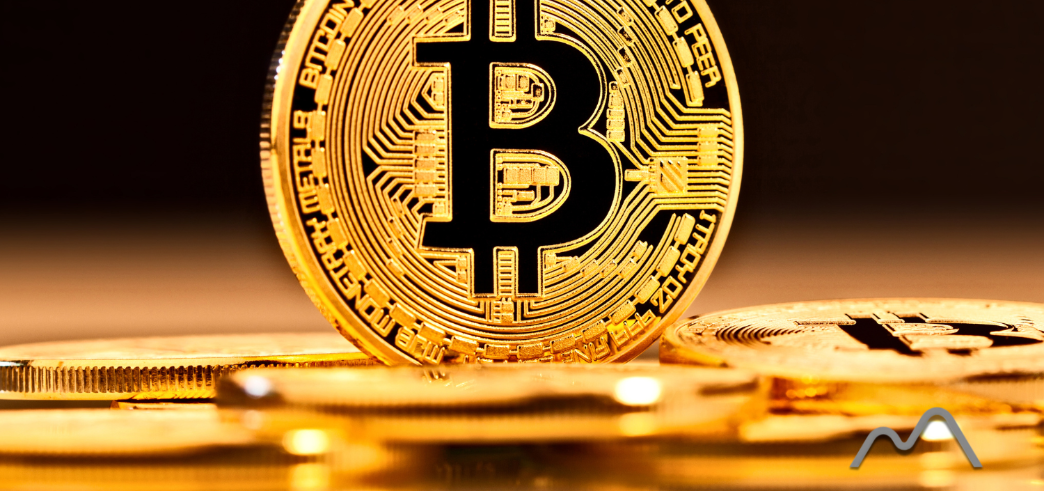
Since its launch in 2009, Bitcoin has grown from an obscure digital experiment into a global financial phenomenon. It is the very first decentralized digital currency that functions completely independently without the intervention of a central bank or government. The network is peer-to-peer, which means that users exchange value directly with each other without financial intermediaries.
The rapid rise and global adoption of this cryptocurrency raise a question. Does Bitcoin have the technical, economic, and political capacity to replace our current fiat money and grow into the new global currency?
Before we can objectively assess the potential of Bitcoin, it is necessary to establish what a global currency entails. A global currency, also known as a global reserve currency, is a currency that is internationally accepted and used on the most significant scale.
It serves as the foundation for global trade, is used for pricing commodities such as oil and investment gold, and is the standard for international loans.
The US dollar currently fulfills this role most prominently. Central banks worldwide hold massive amounts of dollars as their strategic financial reserve. To grow into such a dominant and universal currency, a coin must meet 5 strict economic conditions:
Only when a currency masters all these pillars does it have the capacity to support the global economy. The big question for investors now is how Bitcoin performs when we apply these strict traditional requirements to the digital network.
Despite the strict requirements a global currency must meet, many financial experts see Bitcoin as a serious challenger to the current monetary system.
This is because the digital currency possesses a number of characteristics that are completely unique in monetary history. It offers an alternative to the weaknesses of traditional fiat money.
The strongest argument for Bitcoin is its absolute scarcity. The protocol irrefutably dictates that a maximum of 21 million Bitcoins can ever enter the market. Nearly 20 million have already been mined. This hard-coded limit makes the currency completely immune to unlimited money creation by governments.
Whereas central banks easily print new fiat money in times of economic crisis and thereby cause inflation, Bitcoin always retains its structural scarcity.
In addition, the cryptocurrency is completely decentralized. There is no central bank, government, or commercial entity that can change the rules, freeze accounts, or pause the network.
Transactions are processed transparently via a global network of independent computers. This makes the system robust, secure, and immune to political manipulation or censorship.
Finally, the network is completely cross-border. You can send large amounts of value lightning-fast to another user, regardless of where this person is located in the world. This happens entirely without the intervention of a traditional bank or payment processor.
For residents of countries with sky-high inflation, corrupt governments, or strict capital restrictions, Bitcoin thus offers an accessible financial escape route.
To fully understand how Bitcoin has achieved this serious position as a potential global currency, it is important to look at its history. In less than two decades, it has transformed from an unknown digital experiment into a globally recognized financial asset.
| Year | The most important monetary milestones of Bitcoin |
|---|---|
| 2008 | Publication of the famous whitepaper by the anonymous creator Satoshi Nakamoto amidst the global credit crisis. |
| 2009 | Official launch of the network and the mining of the very first block, also known as the Genesis block. |
| 2010 | The very first commercial transaction takes place where someone buys two pizzas for ten thousand Bitcoins. |
| 2017 | The cryptocurrency definitively breaks through to the general public and reaches a then-record value of nearly twenty thousand dollars. |
| 2021 | El Salvador makes world news by officially accepting Bitcoin as legal tender, becoming the very first country in the world to do so. |
| 2024 | The US regulator approves the first spot Bitcoin funds, causing massive institutional adoption by major asset managers. |
| 2026 | Bitcoin is now firmly anchored in the global financial system and acts as a modern store of value alongside gold for millions of investors. |
A global currency must be able to effortlessly process billions of daily payments. Although Bitcoin is increasingly accepted as a means of payment, its practical implementation fundamentally has significant limitations.
To properly assess the potential of Bitcoin as a global medium of exchange, the following developments and bottlenecks are important:
The original base layer of the Bitcoin blockchain processes an average of only seven transactions per second worldwide. Without technological innovations, the network is simply not scalable enough for massive global use.
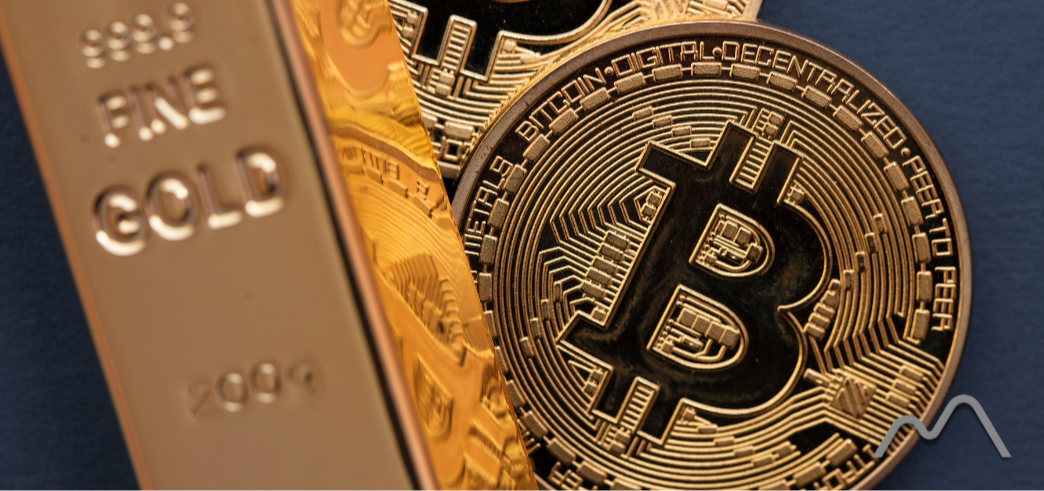
Bitcoin is accepted as payment at increasing places, but several obstacles prevent it from being a new global currency.
Despite its unique technological advantages, Bitcoin faces a number of gigantic challenges. To actually grow into the dominant global currency, the network must overcome 3 complex obstacles.
A reliable global currency demands stable purchasing power. Companies and consumers must have the certainty that their wealth will retain its value over a longer period. However, the price of Bitcoin is determined exclusively by supply and demand in what is still a relatively young and speculative market.
This results in extreme price fluctuations. As long as this high volatility persists, the cryptocurrency is completely unusable for concluding long-term business contracts or stably paying out salaries.
The current financial system relies heavily on the control of central banks and governments. They steer the economy through monetary policy and enforce strict legislation regarding taxation and anti-money laundering. A completely decentralized and anonymous network like Bitcoin directly clashes with these geopolitical interests.
Superpowers such as the United States will not easily relinquish control over their own currency and the associated economic levers of power to an independent computer network.
Securing the network and processing all transactions occurs through a process called mining. This requires a gigantic amount of computing power and electricity worldwide.
Although the crypto sector is increasingly switching to renewable energy sources, the enormous ecological footprint remains a weighty political discussion point. For full global adoption, this energy consumption must be socially justifiable in the long term.
In the table below, you can see at a glance why the characteristics of Bitcoin currently still clash with the strict demands placed on a global currency.
| The fundamental obstacle | The current challenge for Bitcoin | The absolute requirement for a global currency |
|---|---|---|
| Price stability | Extreme volatility makes daily purchasing power highly unpredictable. | Rock-solid price stability for reliable trade and contracts. |
| Legislation and supervision | The decentralized nature clashes directly with national supervision and monetary policy. | Fully regulated and actively supported by geopolitical power. |
| Energy and sustainability | The mining process demands gigantic amounts of electricity worldwide. | An efficient network that can be maintained in a socially responsible manner. |
When we analyze the theory of Bitcoin as a global currency, the situation in El Salvador forms the ultimate practical example. In the fall of 2021, President Nayib Bukele surprised the world by formally recognizing Bitcoin as legal tender, alongside the US dollar, making it the very first country to do so.
The government had three clear economic and social goals in mind for this:
Although this decision was successfully executed technologically, societal acceptance proved to be much more stubborn. Despite government subsidies, the massive and daily use of the cryptocurrency by the local population fell short of expectations.
According to a 2025 IMF publication, the introduction of Bitcoin as legal tender in El Salvador has not led to clear improvements in financial inclusion or digital transfers.
This unique national experiment demonstrates that merely enforcing legal recognition is insufficient to achieve broad adoption and unconditional trust among an entire population.
Due to its scarcity and independence from central banks, Bitcoin is often called digital gold. Yet, there are a number of important differences. Gold is a physical asset with a proven history of thousands of years as a globally accepted store of value. It is not dependent on internet connections, power grids, or complex software.
Bitcoin, on the other hand, is easier to move digitally, but is significantly more volatile and has technological risks. For a detailed analysis between these two assets, you can read our extensive comparison between gold and Bitcoin in our knowledge center.
Do you want to directly secure your digital returns in tangible assets? Through our sister company Bitgild, it is extremely easy to buy physical gold with your cryptocurrency. They are fully specialized in these safe and discreet transactions.
This way, you seamlessly combine the modern technology of Bitcoin with the centuries-old security of precious metals. Discover the full range directly on Bitgild.com.
Does Bitcoin have the capacity to replace the US dollar as the dominant global currency in the short term? The answer is currently no. Technological scalability, high volatility, and political resistance make the currency currently unsuitable as a universal daily means of payment.
The true strength of Bitcoin today lies in its role as a digital store of value and alternative reserve asset. Just as governments and central banks hold physical gold as a strategic reserve outside the financial system, Bitcoin is increasingly positioning itself as a digital diversification.
Within a well-diversified wealth management portfolio, physical precious metals and cryptocurrencies can therefore perfectly coexist, each with their own unique dynamics.
The Silver Mountain does not provide investment advice. This article is for educational purposes only. Past performance is not indicative of future results.
Bitcoin possesses unique characteristics such as global accessibility and absolute scarcity. However, the cryptocurrency is currently not suitable as a dominant global currency. The fundamental obstacles to this are extreme price volatility, limited scalability for daily transactions, and a lack of global political acceptance.
Specialists regularly call Bitcoin 'digital gold' due to its hard-coded scarcity. A maximum of twenty-one million Bitcoins will come into circulation. Because of this, the currency offers you protection against currency devaluation. The big difference, however, is that physical gold offers centuries-old tangible security, while Bitcoin remains digital.
The original base layer of the blockchain is unsuitable for massive payment traffic. It processes an average of only seven transactions per second. Innovative solutions such as the Lightning Network do make lightning-fast payments possible, but this technology still requires significantly more adoption by the general public.
At the moment, the digital currency is absolutely not stable enough to function as a reliable means of payment. The price is highly volatile because it depends exclusively on current supply and demand. As a result, you and businesses run too great a financial risk during transactions.
It is extremely unlikely that Bitcoin will completely replace the dollar. The dollar is supported worldwide by enormous institutional and geopolitical power. It is much more realistic that Bitcoin will slowly grow into an alternative digital reserve alongside your traditional wealth in physical precious metals.
Daan Wesdorp is Purchasing Manager at Inkoop Edelmetaal, part of The Silver Mountain, and a specialist in trading physical precious metals. With a background in economics and years of experience in the financial markets, Daan possesses in-depth knowledge of stocks, cryptocurrencies, and precious metals. His broad market insight makes him a reliable source for investors looking to diversify and protect their assets. In his articles, Daan combines up-to-date market information with practical insights for both new and experienced investors.

Be the first to discover the latest products and the latest news about precious metals.



 Nederlands