
 Buy gold bars
 Buy gold coins
 Series
 Buy silver coins
 Buy silver bars
 Series
 Buy silver collectible coins
 Silver collectible coin series
 Buy gold collectible series
 Gold collectible coin series
 Author:
  Date: 4 December 2025
 About
About BRICS countries: de-dollarization, the BRICS currency, and influence on the gold price
 Daan Wesdorp
4 December 2024
Between 25 November 2025 and 10 January 2026, every household in the Netherlands will receive the government’s new information booklet “Prepare for an Emergency.” With this nationwide campaign, the government urges citizens to consider situations in which daily life may be temporarily disrupted, such as extended power outages, cyberattacks or extreme weather events. The core message is clear: every household should be able to support itself for at least 72 hours, with adequate supplies and a degree of financial self-reliance.
What surprised many readers is the government’s explicit advice to keep cash at home. The booklet even specifies recommended amounts: €70 per adult and €30 per child. In the event of digital payment system failures, cash remains the only immediate and reliable means of payment.
At The Silver Mountain, this campaign has prompted many customers to ask new questions. What does such a disruption mean for access to your money? How vulnerable is our digital financial infrastructure? And what role can physical gold and silver play within a broader approach to financial preparedness?
In the government booklet, cash is explicitly highlighted as an essential part of the emergency kit. The reasoning is straightforward: during power outages or internet disruptions, ATMs, banking apps and payment terminals simply do not work. Cash is the only payment method that remains functional under all circumstances.
For a family of four, the government advises keeping roughly € 200 available for the first 72 hours. This amount is intended for basic needs and does not replace long-term savings.
The first 72 hours are a guideline. In practice, disruptions to digital systems can last longer. This raises a key question: how do you access your money if your bank or digital wallet is unavailable?
During extended digital outages:
In such situations, some people choose to hold a physical reserve that does not depend on digital infrastructure.
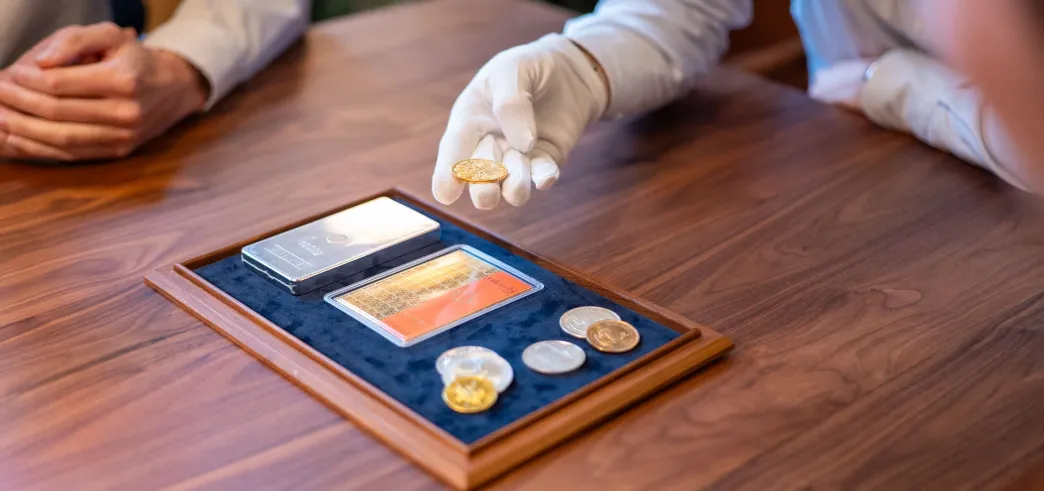
Precious metals are not a replacement for cash in the first 72 hours, but they can serve as a robust emergency reserve when disruptions last longer. They operate independently of technology and are recognised worldwide.
Physical gold and silver:
For emergency situations, smaller units are most practical, such as 1-gram gold bars, 1/10 oz gold coins or various silver bullion coins.
Modern bullion coins sometimes carry an official face value, but their real value is much higher. In emergency conditions, familiar coins function primarily as a medium of exchange. This mirrors historical use of silver guilders and ducats.
The same principle applies today: coins offer portable, recognisable value, but they are not meant for routine daily payments.
A one-kilogram gold bar is efficient for investors but not suitable in a crisis:
Smaller formats such as 1 gram or 1/10 oz are far more practical.
To avoid overlap with other TSM articles, we focus on the essentials:
For more detailed guidance, see our article about safe gold storage.
Combibars consist of breakable gold or silver plates that can easily be separated into smaller pieces. They are popular as a flexible emergency reserve. Our shop offers several variants within the gold bar and silver bar categories.
Bitcoin operates outside the banking system but still depends entirely on digital infrastructure. Without internet, electricity or network access, wallets cannot be reached and transactions cannot be validated.
For that reason, Bitcoin is not a practical emergency tool, although it can play a role in long-term diversification.
In an emergency, it is important that you can take care of yourself and your household. This is why assembling an emergency kit is essential. It ensures preparedness for the first 72 hours, but it also raises the question: what if the disruption lasts longer?

Disclaimer: The Silver Mountain does not provide individual investment advice. This article is intended for informational purposes only. Past results and market developments described do not guarantee future outcomes.
Cash continues to function even when digital systems fail. With the recommended amounts, households can still purchase basic necessities when card payments are unavailable. This emergency cash is intended specifically for the initial phase of a crisis, when essential services and emergency responders may not yet be fully operational.
Yes. Gold retains its value even when banks or digital systems are temporarily unavailable. While it is not suitable for day-to-day payments during the first 72 hours, it can function as an additional store of value when access to banking or online financial services is limited for a longer period.
Small denominations, such as 1-gram gold, 1/10 oz gold coins and combibars, are the most practical options. Large bars are less suitable in crisis situations because of their high value and the fact that they cannot be divided into smaller units.
Yes. Silver is affordable, globally recognised and practical for smaller value units. Popular coins such as the Maple Leaf and Philharmoniker, found in our silver coin category, offer accessible and widely trusted options. This makes silver a suitable alternative for smaller transactions or exchanges during disruptions.
The government’s recommendation of €70 per adult and €30 per child provides a practical baseline for the first 72 hours. Keeping additional cash can be useful, but it also introduces safety risks. For that reason, it is wise to store cash discreetly and primarily in small denominations.
No. Bitcoin cannot serve as part of a physical emergency kit. Although it operates outside the traditional banking system, it still depends entirely on functioning digital infrastructure. Without internet or electricity, you cannot access your wallet and transactions cannot be validated.
Rolf van Zanten is the founder and owner of The Silver Mountain, a specialist in physical precious metals since 2008. With nearly twenty years of experience in the precious metals trade, Rolf shares his expertise on investing in gold, silver, and platinum in an accessible and reliable way. His knowledge of the international gold and silver markets helps investors make well-informed decisions. In his role as an expert, he strives to ensure that transparency, security, and trust are at the heart of every purchase.

Be the first to discover the latest products and the latest news about precious metals.



 Nederlands