
 Buy gold bars
 Buy gold coins
 Series
 Buy silver coins
 Buy silver bars
 Series
 Buy silver collectible coins
 Silver collectible coin series
 Buy gold collectible series
 Gold collectible coin series
 Author:
  Date: 3 March 2025
Silver price forecast 2026: scenarios and outlook
 Rolf van Zanten
22 January 2026
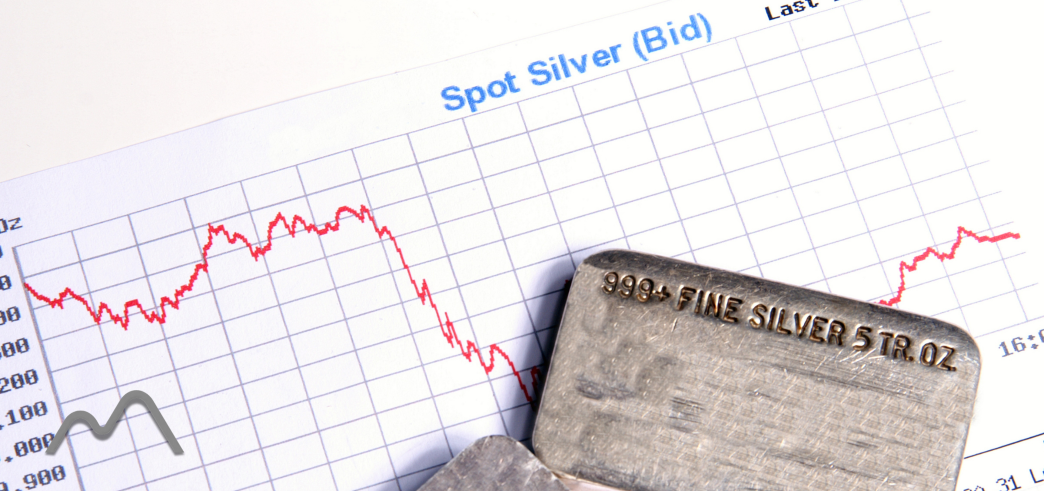
For many investors, silver is the most logical alternative to gold. That is easily explained. The precious metal is tangible, globally tradable, and the entry price is considerably lower.
However, silver is not a one-dimensional investment. The market is dynamic, and practical matters such as VAT and storage space play a major role when purchasing.
Is investing in silver a wise choice for you? To help you make the right decision, we have listed all the facts. In this article, we discuss all the pros and cons of investing in silver. We also make an interesting comparison with gold.
Silver occupies a completely different position in the financial markets than gold. The precious metal has a unique dual role. On the one hand, it has functioned for centuries as a reliable monetary anchor to protect purchasing power. On the other hand, it is an absolutely indispensable raw material for the modern technological industry.
This special combination creates a market foundation that we do not see with any other investment product. This offers investors four very powerful advantages:
Physical silver is fundamentally cheaper than gold. This makes the precious metal the perfect choice for novice investors or investors with a smaller budget who want to build up wealth periodically.
You can easily spread your purchases over time. This lowers the risk of a wrong entry moment and makes building a physical portfolio highly accessible.
Silver is technically unparalleled in terms of thermal and electrical conductivity. Current data from The Silver Institute shows that industrial demand has well exceeded the 700 million ounce mark. Without silver, the mass production of solar panels, electric vehicles, and medical equipment is simply impossible.
Because the supply from global mining is inelastic and reacts very slowly to this explosive demand, analysts foresee a significant market deficit for the coming years as well. This physical deficit forms a rock-solid foundation for structural value appreciation.
The total market value of the global silver market is relatively small compared to the gold market. When new capital flows into precious metals during economic turmoil, this has a much larger percentage impact on the silver price.
During a rising market (a bull market), silver historically almost always performs stronger and faster than gold. This offers you as an investor a much higher upside potential.
In times of persistent inflation, regular savings quickly lose purchasing power. Physical silver is a tangible asset that cannot be printed endlessly by governments or central banks.
Moreover, physical precious metal in your own possession carries zero counterparty risk. You are completely independent of the creditworthiness or the survival of a bank or financial institution to preserve your accumulated value.
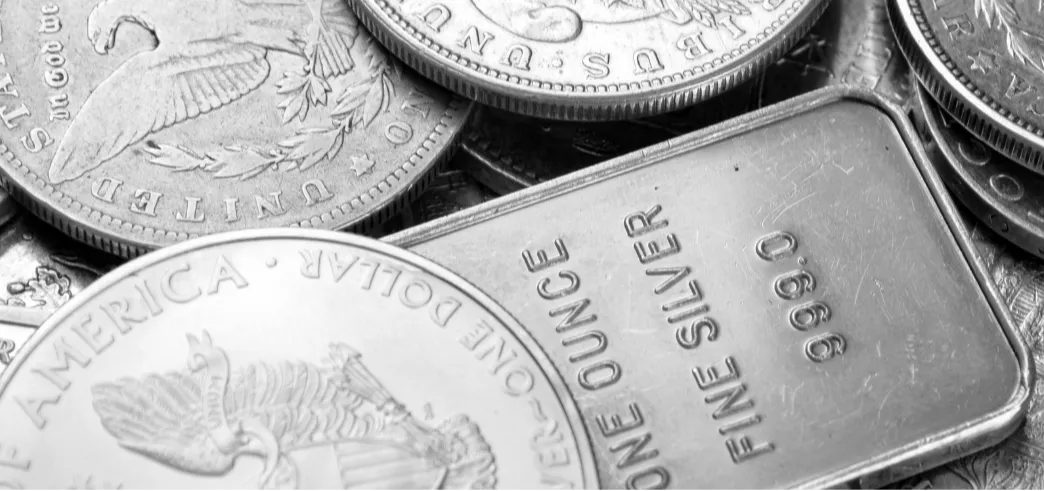
Silver has an accessible entry price and offers high return potential.
At The Silver Mountain, we attach the highest value to transparency and honest advice. Buying physical silver offers fantastic opportunities, but it is certainly not an investment that suits every type of investor. Silver has a number of specific characteristics and cost structures that you must understand well beforehand.
To prevent disappointments, we discuss the four most important disadvantages or objections to investing in silver below:
The current silver price moves significantly more violently than the gold price. This is because the market is smaller and silver is highly dependent on industry. In the event of a global economic recession, the production of electronics can decline, which temporarily depresses the demand for silver.
This high volatility means that the value of your portfolio can fluctuate considerably in a short time. As a silver investor, you need a strong stomach and an investment horizon of at least several years.
The 'spread' is the percentage difference between the exchange price (spot price) and the final price you pay or receive at the dealer. Because silver has a relatively low absolute value, the fixed production costs of minting a coin or casting a bar weigh much heavier in the final selling price.
As a result, it generally takes a little longer before your silver investment breaks even compared to an investment in gold.
Silver requires an enormous amount of volume to represent the same financial value as gold. To illustrate: an investment of one hundred thousand euros in gold fits easily in your jacket pocket.
That same financial value in silver quickly results in more than a hundred heavy kilograms of metal. With larger capitals, you must therefore think very carefully about logistics, maximum carrying weight, and spacious, external vault storage.
This is the biggest fiscal pitfall for private investors in the Netherlands. The Tax Authority legally considers cast silver bars as an industrial raw material.
This means that when purchasing a silver bar, you always immediately pay the high VAT rate of 21 percent. This is an immediate loss on your investment, as you will never get this VAT back in a subsequent sale to a dealer.
Fortunately, there are excellent, legal, and tax-friendly solutions for this last disadvantage. We will discuss these further on in this article in the section on how best to invest.
| Advantages of silver | Disadvantages of silver |
|---|---|
| Low entry price: Very accessible for periodically building wealth with a smaller budget. | High volatility: The price fluctuates significantly stronger and reacts more fiercely to economic cycles. |
| Industrial scarcity: A structural market deficit in 2026 due to an absolute record demand from the industry. | Higher spread: Relatively high production costs, which means it generally takes longer to break even. |
| Higher return: During a rising market, the silver price historically rises a lot faster than gold. | Physical volume: Due to the lower value per kilo, it takes up significantly more weight and vault space. |
| Tangible protection: Completely physical ownership outside the regular banking system and without any counterparty risk. | VAT levy: Private investors immediately pay 21 percent VAT when purchasing regular silver bars. |
One of the most frequently asked questions in the precious metal market is whether you, as an investor, are better off buying gold or silver. Although both precious metals successfully protect your wealth against inflation, they are absolutely not direct substitutes for each other. They serve a fundamentally different purpose within your strategic investment portfolio.
Gold is the ultimate defensive anchor. It is relatively price-stable, extremely compact to store, and is used by central banks worldwide as a primary monetary reserve. Investors buy gold primarily for security, peace of mind, and long-term wealth preservation.
Silver, on the other hand, is much more offensive. Due to the lower entry price, the smaller total market value, and the gigantic industrial demand, it is much more volatile. Investors choose silver when they are looking for market dynamics and active wealth growth.
Professional analysts and traders almost always use the gold/silver ratio to determine which metal offers the best opportunities at a specific moment. This ratio simply shows how many ounces of silver you need to buy exactly one ounce of gold.
The natural, geological ratio of these metals in the earth's crust is approximately 1 to 10. However, if we look at the financial markets, this ratio has often fluctuated well above 1 to 80 in recent years.
For many experts, this massive gap is the mathematical and historical proof that silver is currently fundamentally cheap and significantly undervalued compared to gold.
There are three specific situations in which an investment in silver makes more sense for many investors than an investment in gold:
In practice, it is rarely a hard choice between the two metals. A modern and smart portfolio almost always contains a balanced combination. In that case, gold functions as the robust, defensive foundation, while silver takes on the role of the offensive growth accelerator.
For a clear overview, we have summarized the core differences between the two precious metals for you in the table below:
| Feature | Silver | Gold |
|---|---|---|
| Primary function in portfolio | Offensive (Wealth growth and opportunities) | Defensive (Wealth preservation and security) |
| Volatility (Risk profile) | High (Stronger price movements) | Low (Stable and relatively price-stable) |
| VAT status private individual | Silver bars 21% VAT (Coins 0% via margin scheme) | Always 0% VAT (Both bars and coins) |
| Storage space per €10,000 | Takes up significantly more physical space | Extremely compact and easy to hide |
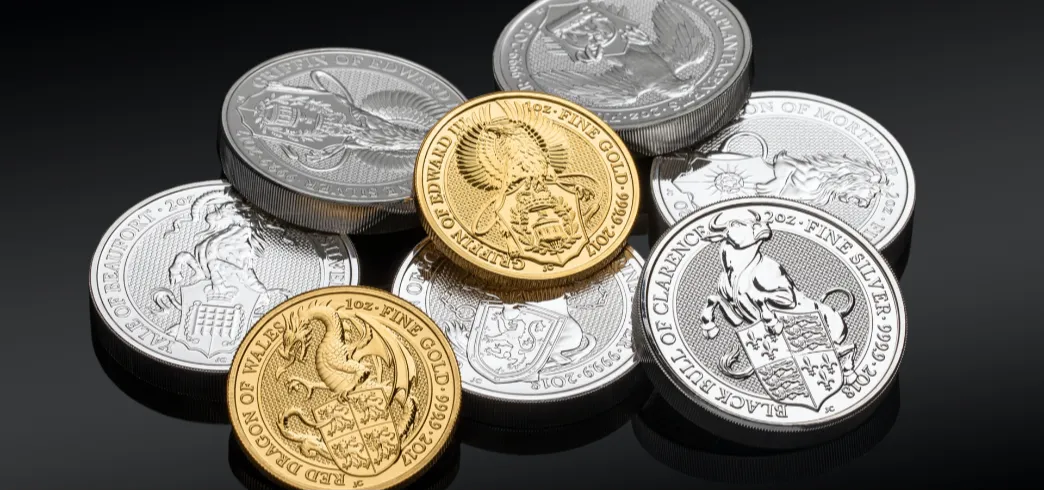
Gold is considered to be more stable, where silver is an offensive investment with a more volatile price.
When you have made the strategic choice to purchase physical silver, you face an important decision as a private investor regarding the form of the precious metal.
The Dutch Tax Authority makes a very strict distinction between silver bars and silver coins. A wrong choice in this area will immediately cost you a large part of your investment.
As mentioned earlier in this article, the tax office views a cast or minted silver bar as an industrial raw material. Are you buying a silver bar as a private individual and do you want it delivered to your home? Then you are legally obliged to pay 21 percent VAT on the full purchase value.
Interesting? Here you can read more about the VAT rules when buying silver.
Because you will never get this VAT back in a subsequent sale to a dealer, you start your investment with a huge loss. This makes regular silver bars completely unprofitable for private individuals.
Fortunately, there are two excellent, tax-advantaged routes to circumvent this tax levy completely legally:
For investors who want to hold their physical silver themselves or store it at home in a safe, the silver bullion coin is the absolute standard.
Globally recognized coins such as the Canadian Maple Leaf, the Austrian Philharmonic, and the Australian Kangaroo fall under the favorable margin scheme in the Netherlands.
Under this scheme, the Tax Authority only calculates VAT on the dealer's profit margin, and therefore not on the total intrinsic silver value of the coin. The result is that you purchase these coins effectively VAT-free.
Furthermore, these 1 troy ounce (31.103 grams) coins are highly liquid internationally. You can always and everywhere exchange them directly for currency worldwide.
Do you want to invest a larger capital and would you rather benefit from the low production costs of heavy silver bars? Then 'VAT-free silver in storage' is the perfect solution. In this construction, you buy large, industrial silver bars (for example, 1 or 15 kilos), but you do not have them shipped to the Netherlands.
Instead, the bars are safely stored in your own name in a highly secured and independent customs bonded warehouse in, for example, Switzerland. Because the silver never enters the customs zone fiscally, you pay zero percent VAT on the purchase value.
Your silver is one hundred percent allocated (physically present and your legal property) and fully insured. This way, you benefit from the lowest price per gram, without having to search for a safe, physical storage location for tens of kilos of silver yourself.
Do you want to benefit maximally from this efficient way of wealth accumulation? Through The Silver Mountain, you can easily buy VAT-free silver and have it safely stored immediately via Edelmetaal Beheer Nederland. As the absolute specialist in the storage of VAT-free silver, they offer the very highest security standards.
Investing in silver is an excellent strategic choice, provided you understand how the market works. The energy transition ensures persistent market deficits, which offers silver a rock-solid perspective. It is perfect for investors looking for a tangible asset with a high return potential and who can tolerate temporary price fluctuations.
Always bypass the fiscal pitfall of VAT-taxed bars by smartly choosing silver coins or VAT-free storage via Edelmetaal Beheer Nederland. For optimal wealth accumulation, we recommend a powerful combination: gold as your robust foundation and silver as the dynamic growth accelerator of your portfolio.
The Silver Mountain does not provide individual investment advice. This article is intended for informational purposes only. Past performance and described market developments offer no guarantees for the future.
Physical silver offers a unique combination of monetary protection and unprecedented industrial demand. Applications in solar panels and electronics cause a fundamental market deficit. In addition, the relatively low entry price ensures that you can build physical wealth very accessibly and with smaller amounts.
The main disadvantage is the high volatility. The silver price fluctuates significantly more than the gold price and reacts more fiercely to economic cycles. In addition, silver takes up relatively much physical storage space, and as a private individual, you pay unprofitable VAT when purchasing regular silver bars.
This depends on your personal objective. Gold is defensive, holds its value well, and is ideal for security and wealth preservation. Silver is more offensive, more volatile, and offers more chance of wealth growth due to industrial scarcity. Many successful investors therefore choose a smart diversification between both precious metals.
The Dutch Tax Authority legally classifies cast silver bars as an industrial raw material, not as an investment product. As a result, you immediately pay the standard VAT rate of 21 percent. Because you lose this tax upon later sale, this is a very fiscally unattractive option for private individuals.
Private investors can avoid the VAT by investing in silver bullion coins. These coins fall under the favorable margin scheme, which means you effectively purchase them VAT-free. For large capitals, VAT-free silver in a secure customs bonded warehouse is the absolute and most secure alternative.
Yes, silver is highly suitable for starting investors. Thanks to the lower purchase price, you can easily start building a physical precious metal portfolio with a low barrier to entry. However, it is crucial that you read up well beforehand about the margin scheme and prepare yourself mentally for price fluctuations.
Rolf van Zanten is the founder and owner of The Silver Mountain, a specialist in physical precious metals since 2008. With nearly twenty years of experience in the precious metals trade, Rolf shares his expertise on investing in gold, silver, and platinum in an accessible and reliable way. His knowledge of the international gold and silver markets helps investors make well-informed decisions. In his role as an expert, he strives to ensure that transparency, security, and trust are at the heart of every purchase.

Be the first to discover the latest products and the latest news about precious metals.



 Nederlands