
 Buy gold bars
 Buy gold coins
 Series
 Buy silver coins
 Buy silver bars
 Series
 Buy silver collectible coins
 Silver collectible coin series
 Buy gold collectible series
 Gold collectible coin series
 Author:
  Date: 10 January 2025
Gold mining stocks: everything you need to know
 Rolf van Zanten
26 February 2025
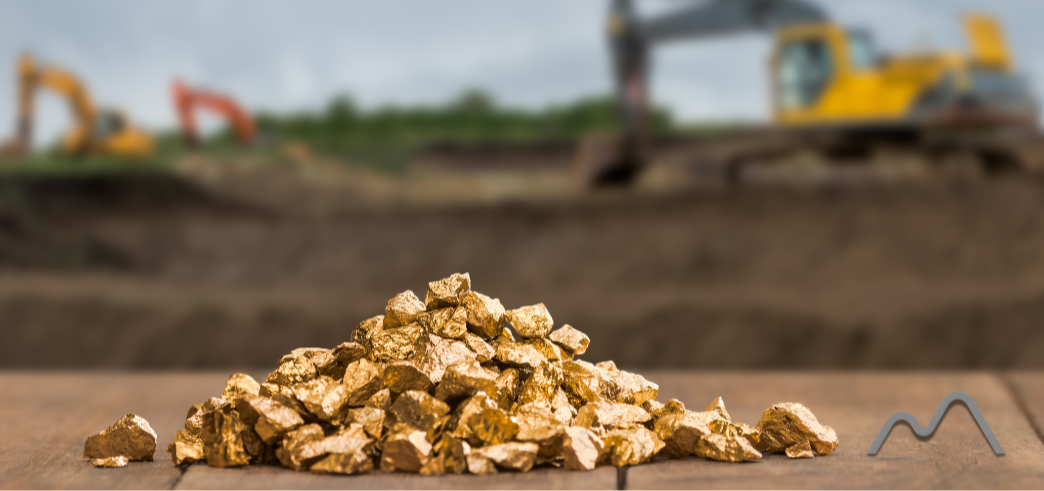
Investing in commodities appeals to investors who value tangible assets and diversification beyond traditional financial markets. After all, commodities form the foundation of the global economy: without precious metals, energy, and industrial metals, virtually every production chain would grind to a halt.
In this article, we explain what investing in commodities entails, what options are available, and what you as an investor need to take into account.
Commodities are natural, unprocessed materials that are extracted directly from nature and serve as the basis for almost all economic activity. They form the building blocks of products, infrastructure, energy supply, and technology. Without commodities, there is no industry, no agriculture, and no modern society.
In the context of investing in commodities, this refers to materials that are traded globally and whose price is determined by supply and demand on international markets.
Commodities distinguish themselves from stocks and bonds through a number of specific properties:
It is precisely these characteristics that make commodities interesting as an investment for investors who want to diversify their wealth beyond traditional financial markets.
Commodities are typically divided into four main groups:
Precious metals have played a role as a store of value and medium of exchange for centuries. They are not only used industrially but are also seen as monetary metals.
Examples:
Precious metals are unique because they can also be physically bought and stored, which distinguishes them from many other commodities.
These metals are essential for production, infrastructure, and technology. Demand for these raw materials grows along with economic development and innovation.
Examples:
Investing in industrial metals, such as investing in cobalt, is often more strongly dependent on economic cycles and technological trends.
Energy commodities form the basis of the global energy supply and are sensitive to geopolitical developments.
Examples:
These commodities are primarily traded via financial products and are less suitable for physical ownership by private investors.
Agricultural commodities originate from farming and food production. Prices are influenced by harvests, climate, and seasonal effects.
Examples:
Although these commodities are important for the global economy, as an investment they are often volatile and primarily accessible via financial markets.
An important distinction is that commodities are unprocessed. As soon as a material is processed into an end product, such as a car, electronics, or jewelry, it no longer falls under the category of commodities.
For investors, this distinction is relevant because only commodities themselves are traded on international commodity markets.
At The Silver Mountain, the emphasis lies on precious metals, such as gold and silver, as a commodity investment. These offer:
As a result, precious metals are the most accessible and clear way for many private investors to start investing in commodities.
Investing in commodities is often used as a supplement to traditional investments such as stocks and bonds.
Commodities fulfill a different role within a portfolio: they represent real, physical value and are less dependent on the financial system. Precisely for this reason, they can contribute to stability and risk diversification.
One of the main reasons to invest in commodities is protection against inflation. When the purchasing power of money decreases due to rising prices, commodities often retain their value better.
This is because commodities themselves are part of those price increases: energy, metals, and food form the basis of almost all consumer goods.
In particular, buying precious metals like gold has been seen for decades as protection against currency devaluation and monetary policy of central banks.
Commodities often move differently than stocks and bonds. In times when financial markets are under pressure, commodities can actually offer stability.
This makes commodities interesting as an investment for investors who want to diversify their portfolio and be less dependent on a single market or sector.
Physical commodities, such as precious metals, also have no direct counterparty risk. You are not dependent on the solvency of a company or financial institution.
Many commodities are scarce or even finite. At the same time, global demand continues to grow due to population growth, industrialization, and technological developments.
Think, for example, of industrial metals needed for electrification, or precious metals used both industrially and monetarily.
This combination of scarcity and persistent demand forms an important reason for many investors to investigate which commodities might be interesting to invest in for the long term.
Unlike financial products, commodities represent physical ownership. This applies in particular to precious metals, which can actually be bought, stored, and sold again. For investors who value tangibility and transparency, this offers a sense of control and security.
Precisely for this reason, many private investors choose not only to track commodities on paper but also to actually buy commodities in physical form.
Historically, investors more often take refuge in commodities during periods of economic uncertainty, geopolitical tensions, or financial crises.
Commodities then function as a form of value storage when confidence in currencies or markets declines.
Although commodities offer no guarantee against price fluctuations, they are often used as a stabilizing factor within a long-term strategy.
Investing in commodities is particularly suitable for investors who:
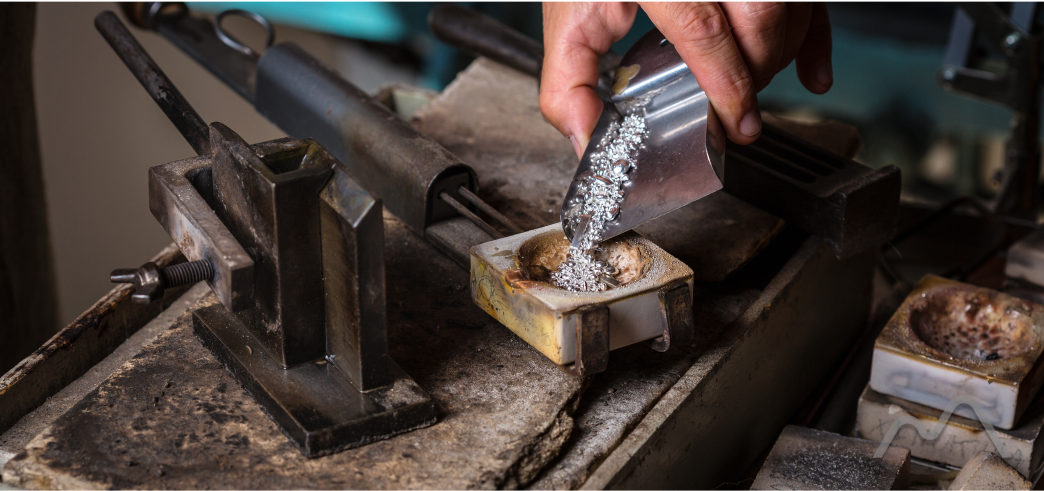
Investing in commodities, such as gold, silver, cobalt, and coal, is becoming increasingly popular.
Anyone wanting to start investing in commodities will encounter different investment forms. The way you invest determines not only the risk but also the degree of control, transparency, and involvement.
Roughly, there are three main forms: physical investing, investing via financial products, and indirect investing via companies.
The most direct way of investing is actually buying commodities. This is particularly possible with precious metals such as gold, silver, platinum, and palladium.
With physical investing:
Physical ownership is often chosen by investors with a long horizon who use commodities as a store of value or protection against inflation.
With precious metals, one can choose coins or bars, with options for home storage or professional, insured storage.
Discover more about investing in gold bars and buying physical silver.
Investing via financial products gives you exposure to commodity prices without having to store the commodity yourself. However, how they work and their associated risks vary significantly per product.
Examples include:
Some exchange-traded products physically hold the underlying commodity, while others use futures, swaps, or an index structure. Therefore, the product name alone does not tell you enough about what you actually own. Always check the legal structure, backing, costs, and risks in the prospectus and the Key Information Document (KID).
The choice of an investment form depends on your goal and profile:
For many private investors, simplicity and transparency outweigh complexity.
ETFs, ETCs, and futures can provide exposure to commodity prices, but vary greatly in terms of ownership, backing, costs, and risk. It is therefore important not to treat all exchange-traded commodity products under the generic label of 'paper commodities'.
An ETP is an umbrella term for investment products traded on an exchange. This includes ETFs, ETCs, and ETNs, among others. These acronyms appear similar, but their legal structure can differ fundamentally.
The product name alone does not automatically clarify how exposure is achieved. Always review the prospectus and the Key Information Document before evaluating a product.
A commodity product can track the price of the underlying market in several ways. The chosen method determines which additional risks and costs arise.
| Structure | How it works | Key considerations |
|---|---|---|
| Physically backed | The product holds the physical commodity, such as gold bars, with a custodian | Custody structure, costs, legal claim, and physical delivery option |
| Via futures | The product holds futures contracts and replaces them prior to expiration | Roll effect, contango, backwardation, and deviation from the spot price |
| Synthetic | The return is obtained via a swap agreement, for example | Counterparty risk, collateral quality, and product structure |
| Debt structure | The issuing institution promises to pay the return of an index or commodity | Creditworthiness of the issuing institution |
Even with a physically backed exchange product, retail investors typically own a financial instrument rather than a specifically designated coin or gold bar that can be freely retrieved. Exact rights vary per product.
Want to learn more specifically about the operation and backing of gold trackers? Read our article on gold ETFs.
Contango and backwardation describe the relationship between futures prices for different delivery months. This term structure can positively or negatively affect the return of a futures product.
A futures contract has an agreed expiration or delivery date. A fund seeking continuous exposure closes an expiring contract and opens a position in a contract with a later expiration date. This is called rolling over. How often and when this occurs depends on the product's strategy.
Contango does not mean that every commodity fund automatically incurs a fixed loss every month. The ultimate return also depends on futures price movements, the contract months selected, collateral, management fees, and the roll strategy. A futures product can therefore perform differently than the current spot price of the commodity.
Counterparty risk varies per commodity product and is not identical for every ETF or ETC. A synthetic product operating with swaps, for instance, has different dependencies than a product holding physical gold bars.
Pay attention to, among other things:
With a debt instrument, the creditworthiness of the issuing institution can be a major risk factor. With a physically backed product, the custody structure, costs, and legal claim are paramount. Specific risks are detailed in the prospectus and the Key Information Document (KID).
An exchange-traded product almost never tracks commodity prices entirely without deviation. The difference between the return of the product and the tracked commodity or index is called the tracking difference.
This divergence can result from:
Therefore, a low annual fee does not automatically mean the product closely tracks the spot price. In addition to stated costs, compare the historical tracking difference and the replication method used.
An exchange-traded commodity product may suit investors who value rapid tradability and do not want to arrange physical storage. Conversely, the investor remains dependent on the product structure, exchange, broker, manager, and any custodians or counterparties.
With physical precious metal, you own coins or bars directly. This form involves no fund management or roll effect, but carries other costs and risks, such as the premium above spot price, the sell-side spread, insured delivery, and secure storage.
| Feature | Exchange-traded commodity product | Physical precious metals |
|---|---|---|
| Ownership | Financial instrument | Coins or bars |
| Trading | Via broker and stock exchange | Via precious metals dealer |
| Ongoing costs | Management, structure, and potential roll costs | Potential storage and insurance costs |
| Tracking | Can deviate from spot price or index | Value tracks metal price, factoring in premium and spread |
| Counterparties | Dependent on product structure | More limited with self-custody; custody agreement with third-party storage |
| Physical availability | Usually no direct delivery | Direct ownership or allocated professional storage |
Which option is appropriate depends on your objectives. For short-term trading and quick execution, an exchange product can offer practical advantages. Those seeking tangible ownership and a long-term store of value may consider physical precious metals.
Read also our comparison of physical gold vs. gold mining stocks. For more details on premiums, spreads, and storage, see our article on the costs of investing in precious metals.
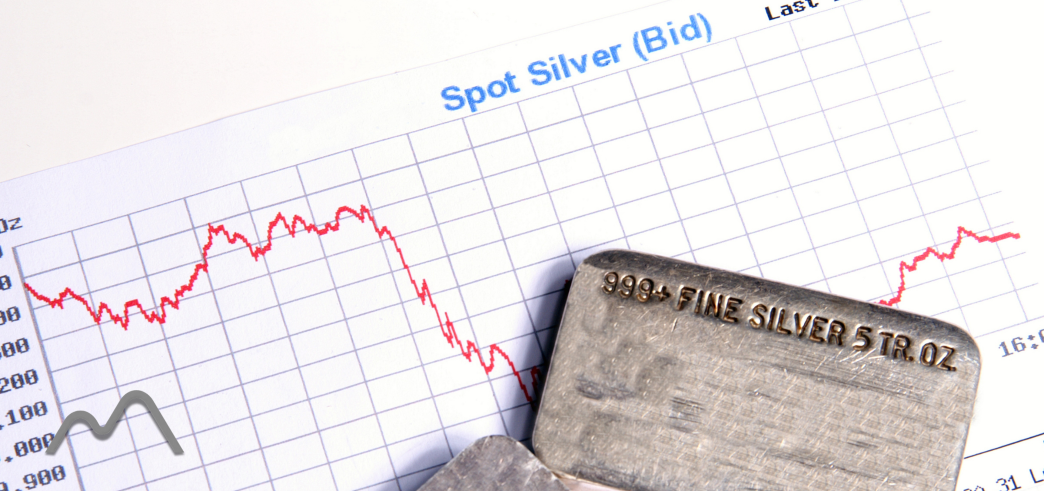
You can invest in various commodities. The Silver Mountain focuses on precious metals such as gold, silver, and platinum.
Commodity trading brings together producers, buyers, traders, and investors across physical markets and financial futures markets. They buy and sell precious metals, industrial metals, energy products, and agricultural commodities, each with a different objective.
For example, a mining company seeks certainty regarding the future selling price of copper, while a manufacturer aims to limit the risk of rising copper prices. Investors and active traders take positions to gain exposure to anticipated price movements.
Commodity trading occurs on spot markets, regulated futures exchanges, and in private over-the-counter (OTC) markets.
On the spot market, commodities are bought and sold at the current market price, with delivery taking place immediately or within a standard short settlement window. This price is referred to as the spot price.
The spot market plays a vital role in the physical economy. Mining companies deliver metals to refineries, oil producers sell to refining and energy companies, and agricultural producers deliver their harvests to traders and food processors.
Prices for physical precious metals are also tied to an international spot price. However, a retail buyer of a coin or bar pays more than just the intrinsic metal value. Production, distribution, and insurance costs are added on top of the spot price. This price difference is known as the premium.
A commodity future is a standardized contract to buy or sell a specified quantity of a commodity at an agreed-upon price on a future date. The exchange defines parameters such as quantity, quality, delivery conditions, and expiration date.
This standardization enables many market participants to trade the exact same contract. A clearinghouse sits between buyer and seller to handle financial settlement. While this mitigates certain counterparty risks, it does not eliminate the price volatility or leverage risks inherent to the contract.
Futures can be physically or financially settled. With physical settlement, delivery of the underlying commodity takes place according to exchange specifications. With financial settlement, price differences are settled in cash.
Retail and financial investors typically close or roll over a futures position before the delivery date. They are primarily interested in price movements rather than taking physical delivery of oil, copper, or wheat.
Producers and buyers use futures primarily to mitigate the risk of adverse price movements. This practice is known as hedging.
A producer can sell a futures contract to secure greater certainty about the price they will receive for their commodity later. Conversely, an industrial buyer can purchase a futures contract to partially hedge against higher future procurement costs.
Gains or losses on the futures position can thus offset opposing price movements in the physical market. However, a hedge is rarely perfect, as contract prices and actual physical market prices can diverge.
The commodity market consists of parties with an underlying economic need for the physical commodity and parties seeking purely financial exposure.
| Market participant | Primary objective |
|---|---|
| Producers | Hedge future selling prices and make revenue streams more predictable |
| Industrial buyers | Limit the risk of rising procurement costs |
| Traders and distributors | Organize physical flows and bridge price discrepancies between markets |
| Processing companies | Manage inventory and production costs |
| Investors | Gain exposure to a commodity, index, or broader market trend |
| Speculators | Attempt to profit from rising or falling prices |
| Arbitrageurs | Exploit price differentials across contracts, maturities, or trading venues |
Speculators generally do not hold an underlying physical position to hedge; instead, they knowingly assume price risk in anticipation of profits. While their trading activity enhances market liquidity, speculation via futures or options carries substantial loss potential.
Commodities are traded globally on specialized exchanges and OTC markets. The relevant venue depends on the specific commodity and contract structure used.
Prominent commodity exchanges include:
These exchanges serve multiple functions: they connect buyers and sellers, standardize contracts, and establish benchmark prices used across physical trade contracts. Not all commodity transactions occur on exchanges; large producers, trading houses, and industrial buyers frequently negotiate terms directly in the OTC market.
Buying commodities typically aims for long-term ownership or value storage, whereas trading centers on taking advantage of or hedging short-term price movements. Your underlying objective dictates which format and associated risks are relevant.
| Feature | Buying physical commodities | Financial exposure | Active trading |
|---|---|---|---|
| Example | Gold or silver coins and bars | ETF, ETC, ETP, or commodity fund | Futures and options |
| Main objective | Ownership and store of value | Track a commodity price or index | Hedge price risks or speculate on movements |
| Typical horizon | Primarily long-term | Short, medium, or long-term | Often short-term or contract-bound |
| Physical delivery | Yes, or allocated storage | Usually no | Only with specific contracts if position is held to expiry |
| Leverage | Usually none | Depends on the product | Frequently present |
| Key costs | Premium, spread, delivery, storage, and insurance | Management, structural, and transaction fees | Transaction fees, margin, and potential roll costs |
| Key risks | Price, storage, theft, and product liquidity | Product structure, tracking, market, and potential counterparty risks | Volatility, leverage, margin calls, and contract expiration |
Buying physical gold or silver gives you tangible ownership without needing to roll over futures contracts. In return, you pay premiums, spreads, and potential storage costs.
With financial products, you usually do not acquire direct ownership of a specific physical commodity. The exact mechanics depend on the product structure: some products are physically backed, while others utilize futures, swaps, or shares in commodity companies.
Active commodity trading involves elevated risk because prices can react rapidly to production disruptions, inventory figures, weather conditions, geopolitical events, and macroeconomic forecasts. In futures and options trading, leverage can magnify gains as well as losses.
A futures position typically requires maintaining margin. Adverse price swings can trigger margin calls requiring additional collateral. If an investor cannot meet a margin call, the position may be forcibly liquidated at a substantial loss.
Maturity dates also demand close monitoring. Futures contracts expire on predetermined dates. Investors wishing to maintain exposure must close, settle, or roll over positions into later contracts. As a result, total performance may diverge from the prevailing spot price of the commodity.
Commodity trading therefore demands thorough understanding of contract terms, product structures, leverage mechanics, and settlement requirements. It represents a fundamentally different approach than holding physical precious metals long-term as part of a diversified portfolio.
At The Silver Mountain, you can buy physical silver, gold, and platinum easily and securely. Choose direct home delivery or our secure, VAT-free storage in Zurich.
Investing in commodities entails specific risks that require careful consideration. The commodities market is sensitive to geopolitical influences, natural disasters, and changing economic conditions. Prices can fluctuate sharply, presenting both opportunities and risks.
Beyond market risks, regulations also influence commodity trading. Environmental legislation and energy policy impact oil and gas, while agricultural products are subject to seasonal factors and trade restrictions.
Furthermore, some commodities have limited liquidity, making them not always easy to trade. Consider silver, where industrial demand is rising and available supply is limited.
Investing in commodities offers investors the opportunity to diversify their portfolios with tangible, real value. Commodities can offer protection against inflation, economic uncertainty, and fluctuations in financial markets. In this regard, the distinction between buying commodities and active trading is very important.
For many private investors, precious metals such as gold and silver form a clear and stable basis within commodity investing, thanks to their global tradability and the possibility of physical ownership.
The Silver Mountain does not provide investment advice, and this article should therefore not be considered as such. Past performance is no guarantee of future results.
Investing in commodities means investing in natural materials such as precious metals, industrial metals, or energy sources. These commodities represent physical value and are traded globally. They are often used for diversification, inflation protection, and as a supplement to stocks and bonds.
Yes, especially physical investing in precious metals like gold and silver is suitable for beginners. This form is clear, transparent, and focused on the long term. More complex forms, such as futures or leveraged products, require more knowledge and are less suitable for novice investors.
Private investors choose gold and silver most often. These precious metals are globally recognized, liquid, and suitable for physical ownership. Other commodities, such as copper or cobalt, are primarily used by investors wanting to capitalize on economic growth or technological developments.
Commodities are often used as protection against inflation because they do not derive their value directly from currency. Precious metals, in particular, historically retain their purchasing power better in times of currency devaluation and uncertain monetary policy.
Commodity prices can fluctuate due to geopolitics, economic cycles, and supply and demand. Additionally, some commodities are less liquid. With paper commodities, there is also counterparty risk. Diversification and a long investment horizon help limit these risks.
Yes, especially when commodities are used for wealth protection and diversification. Physical investing in precious metals fits well with a long-term strategy because these commodities are scarce, remain globally tradable, and are not dependent on a single financial system.
Rolf van Zanten is the founder and owner of The Silver Mountain, a specialist in physical precious metals since 2008. With nearly twenty years of experience in the precious metals trade, Rolf shares his expertise on investing in gold, silver, and platinum in an accessible and reliable way. His knowledge of the international gold and silver markets helps investors make well-informed decisions. In his role as an expert, he strives to ensure that transparency, security, and trust are at the heart of every purchase.

Be the first to discover the latest products and the latest news about precious metals.



 Nederlands