
 Buy gold bars
 Buy gold coins
 Series
 Buy silver coins
 Buy silver bars
 Series
 Buy silver collectible coins
 Silver collectible coin series
 Buy gold collectible series
 Gold collectible coin series
 Author:
  Date: 13 May 2020
 About
About Testing Silver Authenticity: How to tell if your silver is real
 Rolf van Zanten
26 February 2025
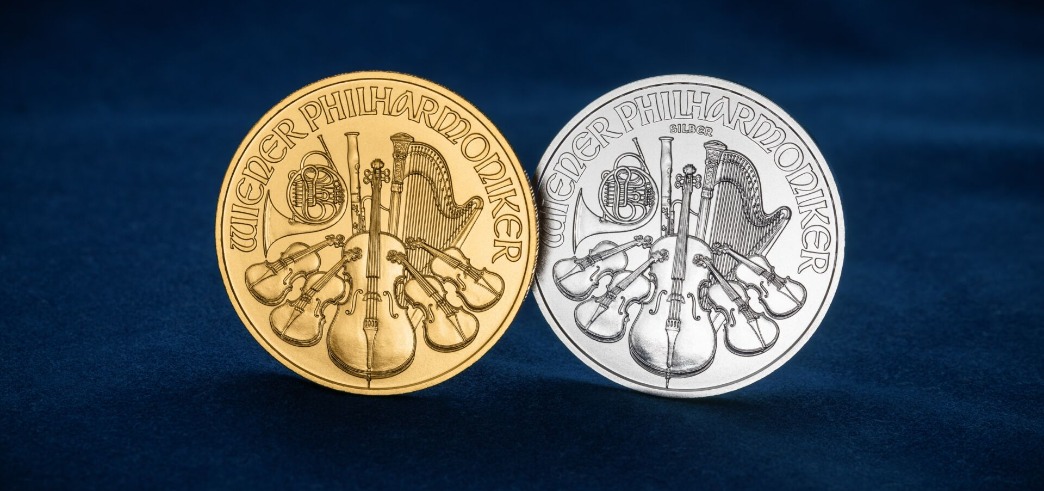
Gold and silver are precious assets that are often passed down for generations. Whether you want to buy physical gold or have inherited coins: the question "Is this gold actually real?" is the most important question you should ask yourself. Unfortunately, there are counterfeits in circulation, ranging from simple gold-plated metals to advanced tungsten cores.
In this article, we explain how you can get certainty. We discuss the importance of recognized producers (LBMA), which simple tests you can do at home, and how we at The Silver Mountain guarantee 100% authenticity with advanced equipment.
Before you start testing yourself, it is good to know where the gold comes from. The best guarantee of authenticity is the origin of the precious metal.
At The Silver Mountain, we exclusively sell precious metals from producers recognized by the London Bullion Market Association (LBMA).
A certificate of authenticity (COA) is valuable, but offers no watertight guarantee if you buy through private marketplaces. After all, paper is easier to forge than gold. Therefore, never blindly trust a certificate, but look at the reputation of the seller and the stamps on the bar itself.
In the past, recognizing a counterfeit was relatively easy. A 'gold' coin felt too light or the gold-plated layer wore off over time. Nowadays, that is different. Due to the historically high gold price, it has become increasingly lucrative for criminals to invest in advanced counterfeiting techniques.
There are three major developments making vigilance more important now than ever:
The biggest challenge for the modern gold buyer is tungsten. This is a cheap industrial metal with almost exactly the same density (specific gravity) as gold.
Counterfeiters no longer focus solely on the metal, but also on the presentation. There are large quantities of gold bars in circulation sealed in perfectly counterfeited 'blisters' (plastic packaging), complete with a fake certificate of authenticity.
Due to high precious metal prices, investors often look for bargains on platforms like Marktplaats or eBay.
The danger here is twofold: you may encounter deliberate scammers, but also well-meaning individuals who once unknowingly bought a counterfeit themselves. Without the right testing equipment, the private market has become a risky playing field.
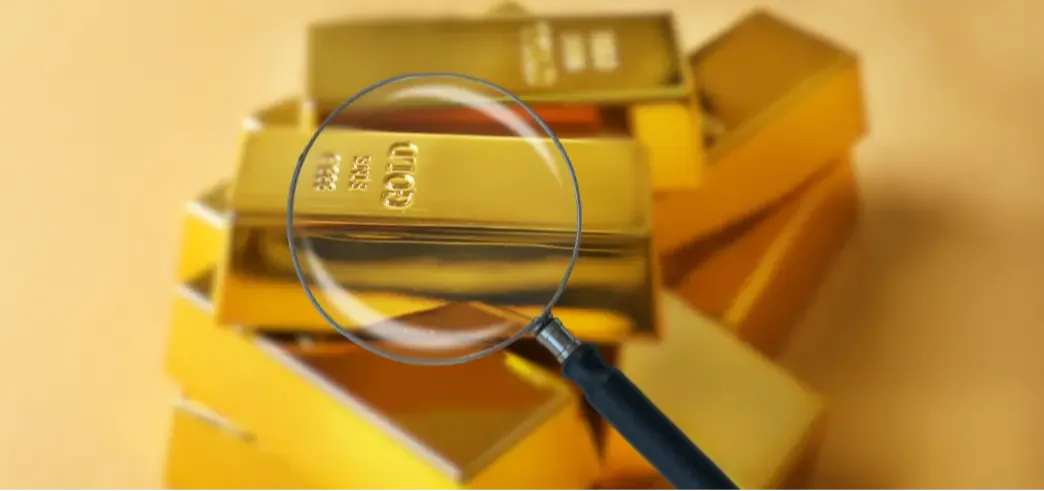
To prevent yourself from buying fake gold, it's important to test the authenticity.
Do you own gold or silver of unknown origin? There are various "at-home" ways to get an initial indication of authenticity. Although these tests do not offer a watertight guarantee (professional equipment is required for that), they can help you spot obvious counterfeits.
Note: Always be careful. Some aggressive testing methods, such as the 'bite test' or testing with acids, can permanently damage your precious metal. The methods below are safe to perform.
The first step is simple: look closely at the object, possibly with a magnifying glass.
Gold and silver are naturally non-magnetic. You need a strong magnet for this test (for example, a neodymium magnet).
Gold has an extremely high density (specific gravity). A small amount of gold is already surprisingly heavy.
This test is particularly popular with gold and silver coins. Precious metals have a specific resonance.
Tip: There are handy smartphone apps available today that measure the frequency of the sound and tell you if the ring matches the specific coin.
Silver is the best thermal conductor of all metals. It conducts heat and cold incredibly fast.
DIY tests like a magnet or density test give an initial indication. For larger amounts or doubts about the origin, however, professional authenticity checking is the safest choice. Modern counterfeits can be visually convincing and even correct in weight. Only specialized equipment can provide complete certainty in such cases.
Professional precious metal dealers use multiple testing methods to verify both the composition and the internal structure of a gold or silver bar.
With an XRF analysis, the exact metal composition is measured without damaging the product.
This device uses X-ray technology to analyze which elements are present and in what ratio. Within seconds, it is visible whether a bar actually contains 99.99% gold or if other metals are present.
Advantages:
Limitation:
Ultrasonic equipment detects anomalies in the core of a gold bar.
For example, when a bar contains a tungsten core, an abnormal signal occurs in the internal structure. This makes this method particularly effective for larger bars from 50 grams and up.
This test is completely non-destructive and does not affect the precious metal.
Precious metals react in a unique way to magnetic fields. Specialized equipment can measure very accurately how an object reacts to a magnetic field.
Materials frequently used in counterfeits, such as tungsten or other alloys, show an abnormal reaction. This method is contactless and does not damage the product.
In addition to equipment, each product is assessed on:
Experienced specialists recognize subtle deviations that occur in counterfeits.
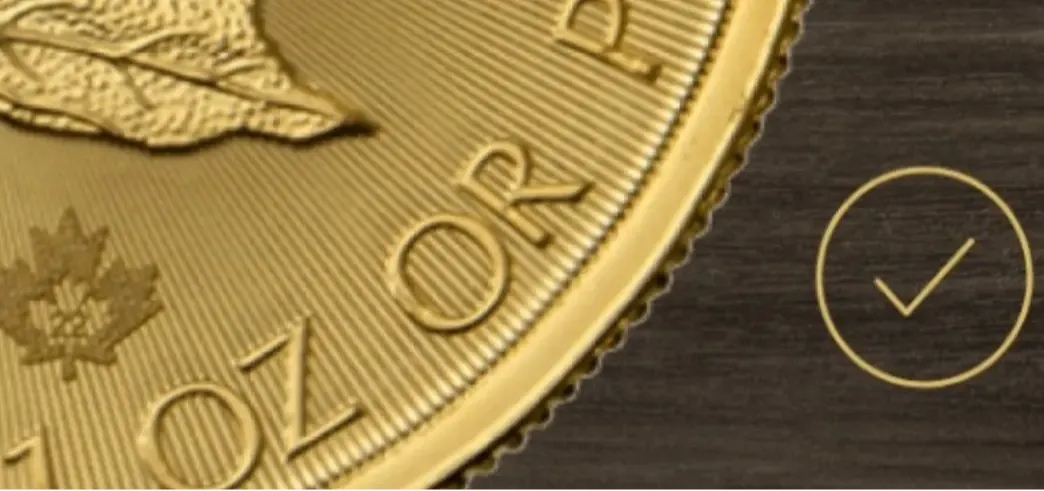
You can test gold and silver at home, but to be sure it's better to use a professional gold tester.
At The Silver Mountain, every purchased product is checked before being offered again. This applies to both gold and silver, regardless of weight or origin.
Our procedure consists of several steps:
We work exclusively with recognized producers and official distributors. New gold bars come from LBMA-accredited refineries. This significantly reduces the risk of counterfeiting.
All products are checked for weight, dimensions, engraving, packaging, and serial number.
For products purchased from private individuals, we perform additional tests with professional measuring equipment, including magnetic analysis and composition checks. This is how we guarantee that the purity and weight are correct.
We maintain strict protocols for buying and selling. This prevents inauthentic precious metals from entering circulation.
Many people confuse jewelry gold with investment gold. Although both are made of gold, they differ greatly in purity, purpose, and value development.
It is important to understand this distinction when you test gold for authenticity or consider investing.
Jewelry gold is used for jewelry such as rings, necklaces, and bracelets.
Because pure gold (24 karat) is relatively soft, it is usually mixed with other metals such as copper, silver, or palladium in jewelry to make it stronger and more wear-resistant.
Common purities:
The remaining percentage consists of other metals. Because of this, jewelry gold is less pure than investment gold.
Characteristics of jewelry gold:
Investment gold is gold that is specifically produced as an investment. It meets strict international standards and typically has a very high purity.
Characteristics:
Investment gold is usually issued as gold bars or gold bullion coins.
When someone asks, “How do I know if gold is real?”, they are often referring to jewelry. But with investment gold, it is not just about authenticity, but also about:
A 14-karat gold ring can be completely real, but it is not investment gold. Investment gold must meet strict purity standards and is designed for wealth preservation, not for use as jewelry.
| Jewelry Gold | Investment Gold |
|---|---|
| 14–22 karat | Minimum 99.5% pure |
| Mixed with other metals | Almost entirely pure |
| Value based on melt value | Tradable worldwide as a standard product |
| Designed for wearing comfort | Designed for investment |

Testing your precious metal yourself is a good first step, but for higher amounts, one hundred percent certainty is simply essential. Advanced counterfeits cannot always be distinguished from real gold or silver with the naked eye or simple home tests.
Therefore, always engage a professional for an authenticity check in the following situations:
Prevention is always better than cure. The very best and most effective protection against purchasing fake gold is to exclusively buy your precious metals through a recognized precious metals dealer.
But how do you separate the wheat from the chaff? When choosing a precious metals partner, always pay attention to the following points:
Anyone investing in physical precious metals wants absolute certainty about authenticity and purity. That is why it is important to buy exclusively from a specialized and transparent party.
The Silver Mountain has been safely and transparently providing the online sale of precious metal products since 2008. In addition, we have an AFM license, which means that the Dutch Authority for the Financial Markets supervises the reliability of our investment products.
At The Silver Mountain, precious metals are exclusively purchased from recognized producers or professionally verified using advanced testing equipment. This ensures you receive authentic gold and silver with correct specifications.
Want to know more about safely buying physical precious metals or about our quality controls? Feel free to contact us for personal advice.
Testing gold and silver for authenticity requires care and knowledge of material properties. DIY tests such as a magnet or density check provide an initial indication, but do not always offer complete certainty. Professional analysis is essential, especially for investment gold and larger amounts.
By paying attention to purity, hallmarks, and origin, you significantly reduce the risk of counterfeits. Therefore, buy exclusively from recognized parties who professionally verify authenticity and offer transparency about their working methods.
The Silver Mountain does not provide investment advice. This article is for educational purposes only. Past performance is not indicative of future results.
You know if gold is real through a combination of tests: a magnet test, checking the hallmark (999 or 9999), measuring the specific gravity, and verifying the certificate. For complete certainty, a professional XRF analysis or ultrasonic test is recommended, especially for larger gold bars.
No, pure gold is not magnetic. If a gold bar or coin is strongly attracted to a magnet, it does not contain solid gold. A slight reaction can occur due to other metals in an alloy or packaging, but clear attraction almost always indicates a counterfeit.
You test silver with a magnet test, density measurement (10.49 g/cm³), checking the hallmark (999 or 925), and possibly a sound test for coins. Real silver is not magnetic and can slightly oxidize. For investment silver, professional analysis offers additional certainty.
Yes, that is possible. Certificates and packaging can be counterfeited. Therefore, always check the serial number, the producer, and the quality of the packaging. Preferably buy gold from recognized producers or have the bar professionally tested with specialized equipment.
The specific gravity of pure gold is 19.32 grams per cubic centimeter. This high weight makes gold compact and heavy relative to its size. An abnormal density can indicate a different metal or a counterfeit with a core of cheaper material.
Tungsten has almost the same density as gold, namely about 19.25 g/cm³. As a result, a gold bar with a tungsten core can appear realistic in terms of weight. Only advanced tests, such as ultrasonic testing or XRF analysis, can reliably detect such counterfeits.
No, discoloration is usually normal oxidation. Silver reacts with sulfur in the air and can turn dark. This is a natural process and does not mean the silver is fake. Polished silver usually regains its original shine.
Professional verification is wise for larger bars, private purchases, damaged packaging, or doubts about the origin. An official analysis is also important when you want to sell gold. Specialized equipment can accurately determine composition and internal anomalies without causing damage.
Daan Wesdorp is Purchasing Manager at Inkoop Edelmetaal, part of The Silver Mountain, and a specialist in trading physical precious metals. With a background in economics and years of experience in the financial markets, Daan possesses in-depth knowledge of stocks, cryptocurrencies, and precious metals. His broad market insight makes him a reliable source for investors looking to diversify and protect their assets. In his articles, Daan combines up-to-date market information with practical insights for both new and experienced investors.

Be the first to discover the latest products and the latest news about precious metals.



 Nederlands