
 Buy gold bars
 Buy gold coins
 Series
 Buy silver coins
 Buy silver bars
 Series
 Buy silver collectible coins
 Silver collectible coin series
 Buy gold collectible series
 Gold collectible coin series
 Author:
  Date: 23 April 2024
 About
About Gold price forecast 2026: scenarios, opportunities and analysis
 Rolf van Zanten
11 December 2025
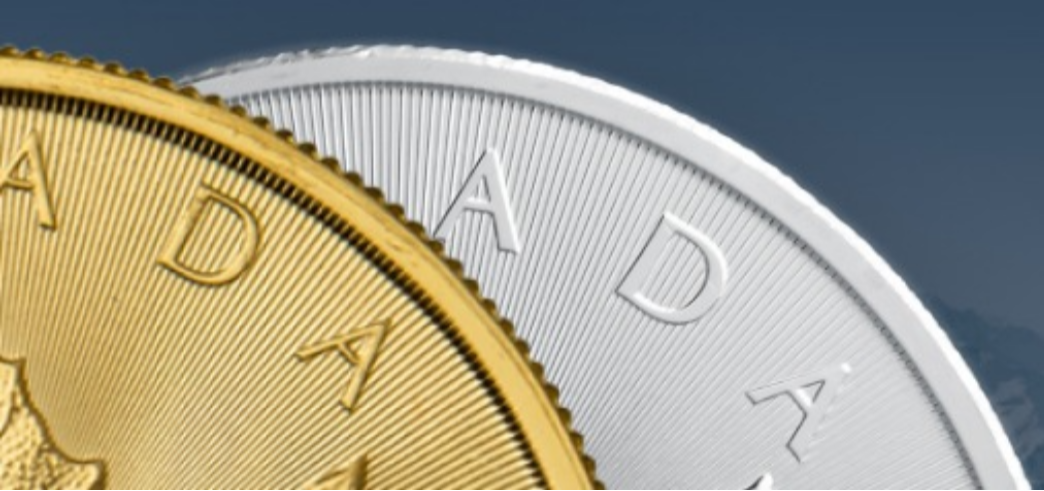
Deciding whether to buy gold or silver is a question that many investors face. While both precious metals have served as safe havens for thousands of years, their roles in today's financial system are fundamentally different. Gold acts as a monetary hedge against fiat currency, whereas silver has become an essential industrial commodity. In this article, we weigh the key factors, including VAT regulations and the historical gold-silver ratio.

| Feature | Investment gold | Investment silver |
|---|---|---|
| VAT rate | 0% (Exempt) | 21% (Bars & new coins) |
| Primary function | Monetary reserve / Safety | Industrial commodity / Growth |
| Counterparty risk | None (Physical ownership) | None (Physical ownership) |
| Volatility | Relatively low | High |
| Storage | Compact (High value density) | Bulky (Low value density) |
| Liquidity | Very high | High |
Although currencies are no longer officially pegged to gold, central banks worldwide continue to hold substantial gold reserves. In an era where fiat money like euros and dollars can be printed without limit, gold remains the only form of currency that cannot be diluted by government policy.
The scarcity of gold is largely due to the complexity of mining. Companies must dig deeper to find lower concentrations of ore, which keeps production costs high. Remarkably, annual mining production only adds about 1.5% to 2% to the total world supply.
For the investor, this provides unique security. Gold is exempt from VAT and carries no counterparty risk. Unlike bank deposits or digital assets, physical gold is a tangible asset that does not depend on a third party. It has functioned for over 6,000 years as a universally accepted store of value.
Since the legislative changes in 2025, the VAT burden on silver has increased significantly. While gold is VAT-exempt, silver is taxed as a commodity. This has a direct impact on the spread:
The gold-silver ratio is the most widely used metric to determine the relative value between the two metals. This ratio simply indicates how many troy ounces of silver are needed to purchase one troy ounce of gold. Currently, the ratio fluctuates around 60. In modern history, this level is considered an equilibrium point.
There is a practical difference in value density. One kilogram of gold is compact and easy to store. However, to own the equivalent value in silver in 2026, you would need nearly 60 kilograms. This requires more storage capacity or the use of a secure storage facility.
Your choice between buying gold or silver should depend on your goals. Buying gold is the most efficient way to protect wealth against the devaluation of fiat money; it is compact, VAT-free, and the ultimate reserve. Buying silver is a strategy based on industrial scarcity and the potential to outperform gold during market rallies.
The Silver Mountain does not provide investment advice and this article should not be considered as such. Past performance is no guarantee of future results.
Gold is generally considered more stable due to its lower volatility and its role as a monetary reserve for central banks. Silver is more sensitive to economic fluctuations because of industrial demand, which leads to larger price swings and a higher risk profile.
Counterparty risk is the chance that another party, such as a bank or broker, cannot fulfill its obligations. Physical precious metals in your own possession do not have this risk. It is a tangible asset that retains its value independent of the solvency of third parties.
The value of gold is supported by the high costs of mining. As new reserves become harder to access and ore grades decline, extraction costs rise. These production costs create a fundamental price floor. Since gold cannot be printed like paper money, the cost of bringing it to market helps safeguard its long-term value.
Daan Wesdorp is Purchasing Manager at Inkoop Edelmetaal, part of The Silver Mountain, and a specialist in trading physical precious metals. With a background in economics and years of experience in the financial markets, Daan possesses in-depth knowledge of stocks, cryptocurrencies, and precious metals. His broad market insight makes him a reliable source for investors looking to diversify and protect their assets. In his articles, Daan combines up-to-date market information with practical insights for both new and experienced investors.

Be the first to discover the latest products and the latest news about precious metals.


 Gerwin van Veelen
 Nederlands