
 Buy gold bars
 Buy gold coins
 Series
 Buy silver coins
 Buy silver bars
 Series
 Buy silver collectible coins
 Silver collectible coin series
 Buy gold collectible series
 Gold collectible coin series
 Author:
  Date: 20 August 2026
Gold or bonds: what role do they play in your assets?
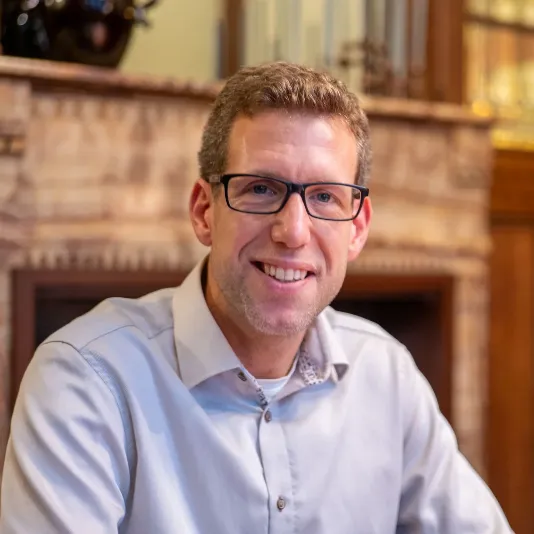 Rolf van Zanten
22 July 2026

FIRE stands for Financial Independence, Retire Early: becoming financially independent and gaining the freedom to stop compulsory work earlier. The core is that you save and invest a large part of your income until your assets are sufficient to cover your expenses. FIRE mainly relies on a high savings rate, long-term investing and conscious spending choices, not on any single specific investment.
In this article you will read what the FIRE movement involves, how to calculate your FIRE number, why the 4% rule is not a guarantee and what to watch for in the Dutch situation.
We also honestly discuss the role that precious metals can play within a FIRE portfolio, including the limitations, so you get a complete picture without us prescribing a single route.
FIRE is a financial movement and strategy focused on financial independence and the possibility of retiring earlier. The first part, financial independence, is the foundation; the second part, retiring early, is a possible outcome. Someone can be financially independent and still continue working because the work provides enjoyment or meaning.
Within the FIRE movement three principles are usually central: consistently spending less than you earn, saving or investing the difference, and eventually being able to live off the accumulated assets and other income sources.
The implementation varies greatly. Some aim for a fully early retirement, while others mainly want to become less dependent on a single employer or income. Financial independence is therefore not a fixed amount that is the same for everyone.
FIRE has different variants ranging from a frugal full retirement to financial freedom with part-time income. They mainly differ in ambition level and lifestyle, and have no official definition.
| Variant | Core | Key consideration |
|---|---|---|
| Lean FIRE | Independent with a frugal spending pattern | Little room for unexpected or costly phases |
| Fat FIRE | Independent with a more generous spending pattern | Requires a larger amount of assets |
| Barista FIRE | Partly from assets, partly from part-time work | Dependence on earned income doesn't disappear entirely |
| Coast FIRE | Enough invested to grow on its own | You usually still cover ongoing expenses from work |
| Slow FIRE | Gradually building up without an extreme savings regime | The target date lies further in the future |
Which variant fits depends on your desired lifestyle, your expenses and how much frugality and risk you find acceptable.
FIRE works by consistently turning the difference between income and expenses into assets that can later help cover your living costs. The process usually consists of an accumulation phase and a withdrawal phase, and the two call for different trade-offs.
In the accumulation phase you grow your assets by regularly putting money aside and investing it. Three variables determine the pace: how much you already have, how much you add periodically, and what net return remains after inflation, costs and taxes. The savings rate, the portion of your income that you invest, weighs heavily: someone who earns more but spends everything will not accumulate faster.
You can read more about this in our article on structural wealth accumulation.
In the withdrawal phase you use part of the assets to pay your expenses. From that moment, not only the average return matters, but also the sequence in which good and bad years occur. A steep decline at the beginning of this phase can cause significant damage, because you simultaneously sell assets to live on.
A good FIRE plan therefore describes not only the buildup, but also how you cover expenses in weak market years.
Your FIRE number is a simplified estimate of the capital needed to finance your annual expenses. The basic formula is: FIRE number = annual expenses ÷ chosen withdrawal rate. With a withdrawal rate of 4% that comes down to 25 times your annual expenses.
A simplified example, purely illustrative and without taxes, costs or AOW:
The FIRE number is a useful starting point, but not a guarantee that the assets will remain sufficient for the entire period. On its own it does not take into account taxes, investment costs, AOW, pension, a market downturn shortly after your FIRE date, healthcare costs or a longer lifespan than expected. So consider it a first orientation, not a retirement calculation.
The 4% rule is a historical rule of thumb where you withdraw 4% of your portfolio in the first year and then adjust that amount annually for inflation. The rule comes from research by American financial planner William Bengen in 1994, later popularized through the so-called Trinity Study.
Bengen based it on historical US stock and bond returns and on a retirement period of thirty years, and he himself did not describe it as a universal guarantee.
Those assumptions make the rule less "safe" for a FIRE investor than it sounds. Someone who stops at forty may need the assets to last fifty years or longer, much longer than the thirty years the rule is based on.
Furthermore, future returns differ from the past, and Dutch taxes, investment costs, currency effects and unexpected expenses also play a role. The 4% rule is therefore a starting point for scenarios, not a guaranteed percentage.
Sequence-of-returns risk is the risk that poor market years early in the withdrawal phase have a disproportionately large effect on the sustainability of your assets. Two portfolios with the same average return over twenty years can turn out completely differently purely because of the order of the good and bad years.
Someone who suffers heavy losses in the early years and at the same time withdraws money sells relatively more assets at low prices and has less left to benefit from a later recovery. You can reduce this risk, but not eliminate it.
Common measures include a separate liquid buffer, lower or flexible withdrawals in bad years, continuing to work part-time, postponing the FIRE date, broad diversification, periodic rebalancing and sufficient margin on top of the base calculation.
A FIRE plan starts with insight into your goal, your actual expenses and your existing provisions, not with an investment. These steps help you get started:

Your FIRE number is roughly your annual expenses divided by your withdrawal rate and often comes out to around 25 times your annual expenses.
A Dutch FIRE plan must take into account AOW, employer pensions and box 3, factors that are missing in many international examples. That makes the difference between a realistic and an overly optimistic plan.
AOW only begins at your personal statutory AOW age and cannot be taken early. If you stop earlier, you must fully bridge the years until that date from your own assets, after which AOW and pensions can cover part of your income needs.
Employer pensions also have their own conditions and are usually not freely available at any time. Finally, your net assets, including investments and precious metals, count in box 3 of income tax, which affects your net withdrawal.
Because AOW ages, pension rules and the box 3 treatment change regularly, we deliberately do not include fixed amounts, ages or percentages here. Check your personal situation via Mijnpensioenoverzicht, the Social Insurance Bank and the Tax Authorities.
The main FIRE risks are disappointing returns, inflation, an overly long withdrawal period, unexpected expenses and insufficient flexibility. A FIRE plan is therefore never final, but a scenario that requires ongoing maintenance.
| Risk | Possible consequence | Possible preparation |
|---|---|---|
| Poor initial market years | Assets decline rapidly during withdrawal | Emergency buffer, diversification, flexible spending |
| Prolonged inflation | The purchasing power of assets decreases | Plan with real (inflation-adjusted) amounts, adjust periodically |
| Longer life expectancy | Assets must last for more years | Longer time horizon and extra margin |
| Higher healthcare or housing costs | Annual expenses may be higher | A generous, realistic budget |
| Overly optimistic returns | FIRE date estimated too early | Use multiple return scenarios |
| Insufficient liquidity | Assets may need to be sold at unfavorable times | A separate cash buffer |
| Behavioral risk | Panic selling during downturns | Establish rules in advance |
Precious metals can play a stabilizing supporting role in a FIRE portfolio, but they are not the engine behind FIRE and not a source of periodic income. Physical gold and silver pay no interest or dividends; returns come only from price movements, reduced by premium, spread and any storage costs. The compound growth that makes FIRE possible therefore comes from yield-generating investments, not from precious metals.
The role also differs by phase. In the accumulation phase the emphasis is on growth, and gold that generates no cash flow fits less naturally there. Around the FIRE date diversification, liquidity and protection against large losses may weigh more heavily, and a limited allocation to precious metals can serve as a counterbalance that damps the overall portfolio's fluctuations.
In the withdrawal phase physical gold can be a sellable asset component, but it does not replace a readily available cash buffer. For monthly expenses liquid assets are more practical, and there is no guarantee that gold will rise precisely when you need money.
Gold and silver differ from each other. Silver is more volatile and, due to its industrial demand, has a different risk profile, making it more of a volatile complement than a defensive anchor.
| Risk | Possible consequence | Possible preparation |
|---|---|---|
| Poor early market years | Portfolio value declines rapidly during withdrawal | Buffer, diversification, flexible spending |
| Prolonged inflation | Purchasing power of assets decreases | Work with real amounts, adjust periodically |
| Longer lifespan | Assets must last for more years | Longer time horizon and extra margin |
| Higher healthcare or housing costs | Annual expenses turn out higher | Generous, realistic budgeting |
| Overly optimistic returns | FIRE date estimated too early | Multiple return scenarios |
| Insufficient liquidity | Assets may have to be sold at an unfavorable time | Separate cash buffer |
| Behavioral risk | Panic selling during downturns | Set rules in advance |
There is no universal gold percentage that is right for every FIRE portfolio; it depends on your other assets, horizon, liquidity needs and risk tolerance. The Silver Mountain does not provide individual advice on this. If you want to better understand the trade-off between protection and return, read more about gold or bonds.
In my view, FIRE is not just about quitting work as quickly as possible. It is mainly about the freedom that arises when you know your expenses, deliberately build assets and do not remain entirely dependent on a single income or market. Precious metals can play a supplementary role in such a plan, but never as a cure-all. Growth, liquidity and protection should each consciously be given their own place.
Rolf van Zanten - The Silver MountainAnyone who wants to add precious metals as a stabilising component to a long-term portfolio can turn to The Silver Mountain with confidence. We have specialised in physical precious metals since 2008 and, as an AFM licence holder, are used to working carefully and transparently. Our prices continuously follow the market, so you always see which rate applies at that moment.
You can have your order delivered insured via our own delivery service or pick it up by appointment in Baarn and The Hague. Our gold bars come from refineries on the LBMA Good Delivery List and our coins from recognised mints, so you acquire a recognisable and globally tradable product.
If you want to sell later, sister company Inkoop Edelmetaal offers you the certainty of sale to easily sell your precious metals back to us. You can find more general articles in our Wealth Management knowledge centre.
FIRE is an attainable goal for those willing to save a lot, invest for the long term and calculate realistically. Build enough capital with a high savings rate and compound returns to live off the proceeds, and use your annual expenses and the 4% rule as an initial guideline, not as a certainty.
A Dutch plan also takes into account AOW, pensions, box 3, inflation and the risk of poor market years at the start of the withdrawal phase.
Within that, precious metals can be a deliberately chosen stabilising component, but not the driver of your wealth growth. Therefore first determine your goal, your expenses and your horizon, and only then choose how to structure your portfolio, including what role gold or silver plays for you.
The Silver Mountain does not provide individual investment, pension or tax advice; this article is for information purposes only. The 4% rule and other rules of thumb are not guarantees. Investing carries risks and you may lose part of your capital. Past results are no guarantee of future performance.
The required FIRE capital depends on your annual expenses, time horizon and withdrawal rate. A common rule of thumb is 25 times annual expenses, based on a 4% withdrawal. With €30,000 in annual expenses that is about €750,000. This is a first estimate; taxes, costs, AOW, pensions and inflation can change the amount significantly.
Not without adjustment. The 4% rule is based on historical US returns and a thirty-year timeframe. Dutch FIRE plans have to deal with box 3, AOW, employer pensions and often a longer timeframe. Therefore use the rule as a starting point for scenarios, not as a guaranteed safe withdrawal rate.
Yes, a high income is not strictly necessary, although it makes the path shorter. What matters is the difference between income and expenses, i.e. your savings rate. With a lower income, a high savings rate is more difficult, but controlling expenses, increasing income and a longer accumulation period all contribute to independence.
No, FIRE does not force anyone to stop completely. Financial independence can also be used to work less, change careers or take time off temporarily. Variants like Barista FIRE and Coast FIRE combine capital with employment income. The core is more freedom of choice about how much and what you work on, not necessarily permanent retirement.
A decline shortly after your FIRE date can be extra harmful because you sell assets while the portfolio is worth less. This is called sequence-of-returns risk. A liquid buffer, flexible spending, broad diversification or temporary employment income reduces the vulnerability, but no measure eliminates the risk entirely.
AOW and employer pensions can reduce the capital requirement after their start date, but are usually not available before that. Those who stop early therefore often need separate bridging capital for the intervening years. Check your personal entitlements and start dates via Mijnpensioenoverzicht, the SVB and your own pension provider before you set up scenarios.
Yes, gold can fit as a diversification component, but it produces no interest or dividends and does not replace a cash buffer. The price can fall in the meantime and you pay purchase and selling costs, premiums and spread. The appropriate position depends on your other assets, horizon, liquidity needs and risk tolerance, and is a personal consideration.
Rolf van Zanten is the founder and owner of The Silver Mountain, a specialist in physical precious metals since 2008. With nearly twenty years of experience in the precious metals trade, Rolf shares his expertise on investing in gold, silver, and platinum in an accessible and reliable way. His knowledge of the international gold and silver markets helps investors make well-informed decisions. In his role as an expert, he strives to ensure that transparency, security, and trust are at the heart of every purchase.

Be the first to discover the latest products and the latest news about precious metals.



 Nederlands