
 Buy gold bars
 Buy gold coins
 Series
 Buy silver coins
 Buy silver bars
 Series
 Buy silver collectible coins
 Silver collectible coin series
 Buy gold collectible series
 Gold collectible coin series
 Author:
  Date: 20 March 2023
 About
About What is the value of an ounce of gold?
 Rolf van Zanten
26 February 2025

Are you just starting to explore the world of physical gold and silver? Then, when looking at prices and coins, you will almost immediately come across an age-old, but somewhat confusing term: the troy ounce (often abbreviated as 'oz').
This is the absolute global standard within the precious metals industry. But this is also exactly where the most common mistake among new investors occurs. Many people confuse the troy ounce with the regular 'ounce' used for groceries in countries like America and England.
To prevent you from comparing apples to oranges, we explain in detail in this knowledge center article exactly what a troy ounce is, exactly how many grams 1 oz weighs, and what the crucial difference is with the regular ounce. This way, you step in with the right knowledge and always know exactly how much pure precious metal you are actually getting.
A troy ounce is the absolute global standard measure for weighing precious metals such as gold, silver, platinum, and palladium. Whether you look at the current gold price in New York, London, or Amsterdam: the spot price on the exchange is standardly expressed per troy ounce.
In the international precious metals industry, this unit is usually abbreviated as 'oz' or sometimes as 'ozt'.
When you are orienting yourself towards the purchase of precious metals, the most important question is naturally: what exactly is 1 troy ounce in our metric system? Because we are used to calculating in grams and kilos in the Netherlands, it is important to keep a close eye on this conversion:
It is important to know that the designation of a troy ounce always refers to the pure precious metal (the net weight).
For example, if you buy a well-known 1 troy ounce gold coin, such as the Canadian Maple Leaf or the Austrian Philharmoniker? Then it contains exactly 31.103 grams of pure gold.
A well-known exception that often causes confusion among beginners is the South African Krugerrand. This gold coin weighs slightly more in total (33.93 grams), because a small amount of copper has been added to make the coin more scratch-resistant.
Yet this is simply sold as a 1 troy ounce coin, because the amount of pure gold in the coin is still exactly 31.103 grams. After all, you only pay for the precious metal.
This unit is the global standard for:
The international gold price and silver price are always quoted per troy ounce. When you see the gold price, for example €2,000, this concerns the price per troy ounce of gold.
Although the troy ounce is the undisputed global standard for gold and silver today, its exact origin is surprisingly shrouded in some mystery. Historians have been pondering for years where exactly this specific unit of weight originated. Within the precious metals world, there are two prominent theories about its origin:
Some experts trace the troy ounce back to the monetary system of the ancient Roman Empire. During the Roman Republic, the "Aes Grave" coinage system was developed.
This system worked with heavy bronze bars that were divided into twelve equal pieces. A twelfth part was called an uncia by the Romans, which is linguistically the direct predecessor of the modern word 'ounce'.
The most logical and widely supported explanation takes us to the Middle Ages, specifically to the bustling trading city of Troyes in northeastern France. This city was a crucial European hub for international precious metal traders.
Because buyers and sellers came from all corners of the world, there was an urgent need for a universal, standardized measure to weigh precious metals fairly and distinguish them from everyday merchandise.
The weighing system from Troyes proved so effective that it spread rapidly across Europe. This initially led to various local variants, such as the Holland Troy and the Paris Troy system.
It was ultimately the British variant that would conquer the world. In the year 1527, the British Troy system was officially adopted as the legal unit of measurement for gold and silver within the British coinage system. When this weight was also included in the Imperial Standard System in the 19th century, the foundation for a global standard was laid.
Because the British Empire had enormous global influence during that period and colonized a large part of the world, their culture and trading system spread rapidly. Their standard became the global norm, which is why today at The Silver Mountain we still calculate in troy ounces.
Interested in history? Read our article about the top 10 countries with the most gold reserve.
Although the troy ounce is the absolute Western exchange standard, traditional weights are sometimes still used for physical gold in other parts of the world. For example, in India and the Middle East, people traditionally calculate in the Tola (11.66 grams), in China and Taiwan they use the Tael (often 37.5 grams), and in Thailand, the Baht (15.24 grams) is the norm.
On the international global market, however, these weights are always immediately converted back to the familiar troy ounce.
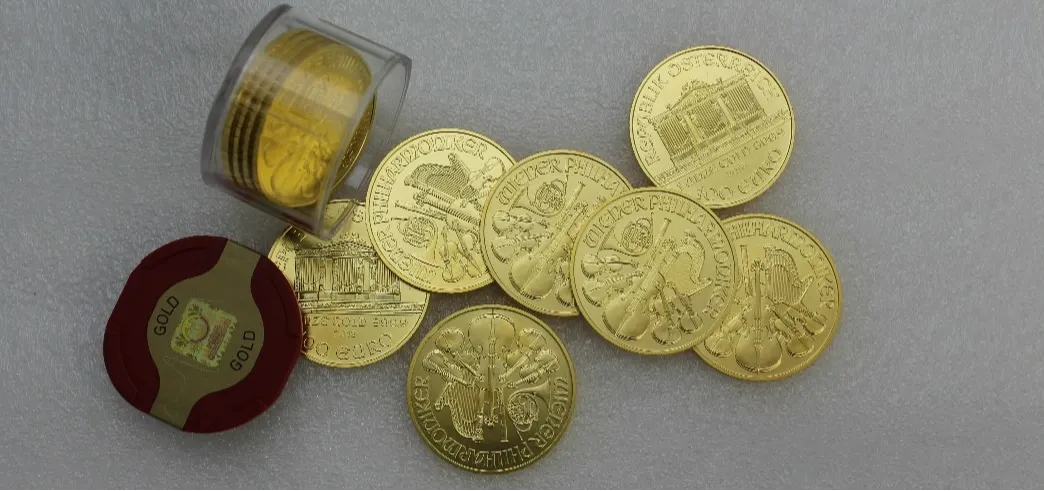
One troy ounce always weighs exactly 31.103 grams of pure precious metal.
In addition to the troy ounce for precious metals, there is also a 'regular' ounce. To make the confusion complete, this unit is also popularly and on packaging often simply abbreviated as 'oz'. The official name for this regular unit of weight is the Avoirdupois ounce.
This regular ounce is mainly used in the United States and Great Britain as a standard unit for everyday items. Think of weighing groceries in the supermarket (such as sugar, flour, or meat), weighing people, or determining postage costs for parcels.
It therefore has nothing to do with the trade in physical gold or silver.
Because we use the metric system (with grams and kilos) in the Netherlands, many novice investors search online for exact conversion tables. The most important answers at a glance:
The difference between the two weights might seem small at first glance (about 2.75 grams), but in the precious metals world, this is a world of difference.
If you buy gold from a private seller via an online marketplace and this person weighs the gold on a standard kitchen scale set to the regular 'ounce' (28.35 grams), then you get almost 10% less gold than what you are internationally entitled to with a troy ounce (31.103 grams).
With today's high gold prices, that quickly makes a difference of hundreds of euros. Therefore, always buy your precious metals from a recognized dealer, such as The Silver Mountain, who is guaranteed to calculate using the official troy ounce.
A troy pound consists of 12 troy ounces, while a regular pound consists of 16 ounces.
This underlines that these are two completely different systems.
Now that you know exactly what both units of weight entail, it is time to take stock. The difference between the troy ounce and the ounce is fundamental when you enter the precious metals market. Confusing these two units is the most common beginner's mistake, with potentially major financial consequences.
The core of the difference lies in the actual weight. A troy ounce (used for precious metals), at 31.103 grams, is almost 10% heavier than the regular ounce (28.349 grams) used for groceries. This difference of exactly 2.754 grams of pure gold or silver represents a significant value.
In addition, the two units differ greatly in their origin and abbreviation. Although the troy ounce should officially be abbreviated as 'oz t' or 'ozt', in practice you will see simply '1 oz' on many gold and silver coins.
At The Silver Mountain, we naturally guarantee that every mention of 'oz' on our precious metals always refers to the heavier troy ounce of 31.103 grams.
In the table below, we have clearly listed the main differences side by side for you:
| Feature | Troy Ounce (oz t) | Regular Ounce (oz) |
|---|---|---|
| Weight in grams | 31.103 grams | 28.349 grams |
| Difference in weight | ~ 9.7% heavier (+ 2.754 grams) | ~ 9.7% lighter (- 2.754 grams) |
| Primary use | Gold, silver, platinum, palladium | Groceries, mail, body weight |
| Most used abbreviation | oz (official: oz t or ozt) | oz |
| Historical origin | Troyes (France) / British coinage system | Avoirdupois system |
A common beginner's mistake is confusing the weight with the purity of the metal. Remember the following rule of thumb: the troy ounce exclusively indicates the weight of the precious metal (31.103 grams). Terms such as karat (for example 24 karat gold) or thousandths (such as 999/1000 silver) indicate the purity.
A 22 karat coin can therefore just as well contain 1 troy ounce of pure gold as a 24 karat coin; it is only slightly heavier in total due to the added copper or silver alloy.

Because the gold price has risen significantly over the years, a full troy ounce of gold nowadays represents a substantial investment.
To make (and keep) the purchase of physical precious metals accessible for every budget, globally renowned mints also strike their most popular gold coins in smaller weights. Within the industry, we call these 'fractional coins'.
These fractions are exactly derived from the standard troy ounce (31.103 grams). Should you consider building up gold in smaller steps, these are the most common formats and their exact net weight in pure gold:
World-famous bullion coins such as the South African Krugerrand, the Canadian Maple Leaf, the Austrian Philharmonic, and the British Britannia are standardly issued in all these aforementioned fractions.
Buying a 1/10 troy ounce or a 1/2 troy ounce offers investors maximum flexibility. First, it makes periodic saving (for example, converting a small amount into gold monthly) a lot easier.
Second, it gives you the freedom to sell your gold in smaller parts in the future, instead of having to sell an entire troy ounce at once when you only want to liquidate a small part of your wealth.
When purchasing, do keep in mind that the production costs (the 'premium') for smaller coins are relatively slightly higher than for a coin of 1 full troy ounce. After all, you pay for the striking of the coin, regardless of the size.
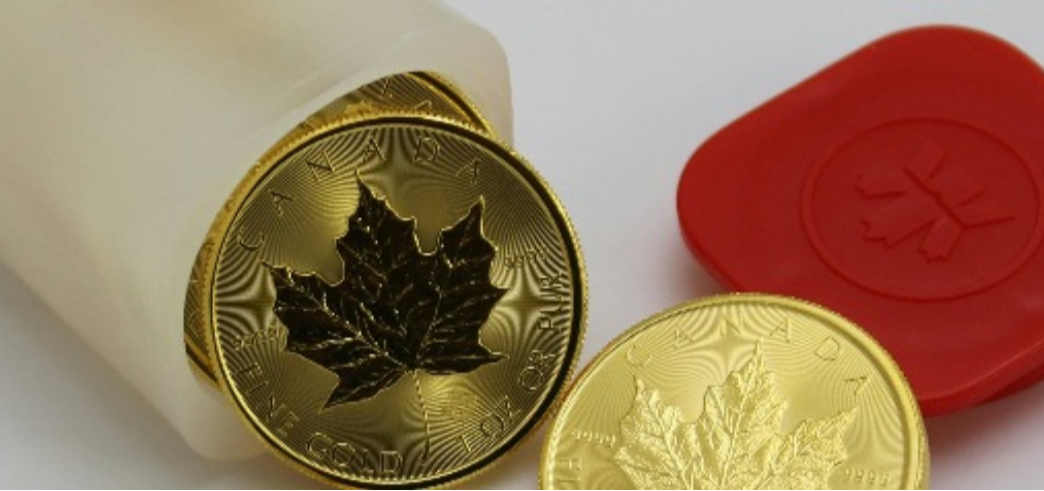
The Silver Mountain also offers gold coins in 1/10, 1/4 and 1/2 troy ounce.
Anyone who follows the gold price will quickly discover that the troy ounce and the gold price are inextricably linked. Worldwide, the current prices on the financial markets are standardly expressed per troy ounce of gold. This is important to understand when you want to calculate the value of your investment.
Thanks to this global standardization, you always know for sure that you are paying a fair, transparent, and verifiable price for your physical precious metal.
Although gold often gets the most attention in the news, the troy ounce is the absolute standard for all physical precious metals. Whether you invest in silver, platinum, or palladium: the international exchanges and dealers always calculate with exactly the same unit of weight.
This means that 1 troy ounce of silver or platinum is exactly as heavy as 1 troy ounce of gold, namely 31.103 grams.
In practice, you will encounter the troy ounce for other precious metals in the following ways:
A frequently asked question from novice investors who buy both gold and silver is about the size of the coins. A silver coin of 1 troy ounce is physically much larger and thicker than a gold coin of 1 troy ounce.
How is this possible if they both weigh exactly 31.103 grams? This has to do with the density of the material. Gold is a much more compact and heavier (denser) metal than silver. Simply put, more silver (in volume) is needed to achieve the same weight of 1 troy ounce. However, the weight on your scale will always be exactly the same.
Especially when purchasing silver bars, we often calculate in kilos instead of individual troy ounces in the Netherlands. But how do these weights relate to each other? One kilogram of pure precious metal equals exactly 32.1507 troy ounces.
So if you choose a 1 kilo silver bar, you are buying more than 32 times the amount of pure silver of a standard 1 oz bullion coin in one go.
The difference between a troy ounce (31.103 grams) and a regular ounce (28.35 grams) is crucial for every precious metals investor. By clearly separating these weights, you prevent unknowingly missing out on 10% in value during a purchase. You now know exactly how much pure precious metal '1 oz' actually represents.
Armed with this fundamental knowledge, choosing a reliable partner is the logical next step. At The Silver Mountain, you invest 100% safely and transparently. We always strictly calculate using the official troy ounce and offer a full authenticity guarantee.
The Silver Mountain does not provide investment advice and this article should therefore not be considered as such. Past performance is no guarantee of future results.
A troy ounce is exclusively used for precious metals and weighs 31.103 grams. A regular (Avoirdupois) ounce is used for groceries and weighs only 28.349 grams. A troy ounce is therefore about 10% (2.75 grams) heavier. Pay close attention to this when buying gold or silver.
One troy ounce weighs exactly 31.1034768 grams. In international precious metals trading, and also at The Silver Mountain, we standardly round this to 31.103 grams. This is the net weight of pure precious metal that you are guaranteed to receive when purchasing a 1 oz coin.
A regular or standard ounce weighs exactly 28.3495 grams. This unit of weight is mainly used in countries like the United States and Great Britain for everyday products like sugar and flour. This weight is therefore never used for officially weighing precious metals.
The letters 'oz' on a gold or silver bullion coin almost always stand for a troy ounce (31.103 grams). Although the official abbreviation in the precious metals industry is actually 'oz t' or 'ozt', most well-known mints worldwide simply use 'oz' to indicate this weight.
No, the weight is exactly the same: 31.103 grams. However, there is a clearly visible difference in size. Because gold has a much higher density than silver, a silver coin of 1 troy ounce is physically much larger and thicker than a gold coin of the same weight.
A gold coin of a half (1/2) troy ounce contains exactly 15.55 grams of pure gold. This is exactly half of the standard 31.103 grams. These fractional coins are immensely popular because they have a lower entry price and are perfect for flexible and periodic investing.
The troy ounce is a historical, international standard that prevents countries from using different units on the global market. Because of this universal benchmark, the spot price on exchanges worldwide is kept uniform. This way, the current price of gold and silver is transparent, comparable, and completely fair everywhere.
The name most likely descends from the French trading city of Troyes. In the Middle Ages, this was a crucial international hub for trade. Traders there developed a standardized weight for precious metals, which was later adopted by the vast British Empire as the absolute global standard.
Daan Wesdorp is Purchasing Manager at Inkoop Edelmetaal, part of The Silver Mountain, and a specialist in trading physical precious metals. With a background in economics and years of experience in the financial markets, Daan possesses in-depth knowledge of stocks, cryptocurrencies, and precious metals. His broad market insight makes him a reliable source for investors looking to diversify and protect their assets. In his articles, Daan combines up-to-date market information with practical insights for both new and experienced investors.

Be the first to discover the latest products and the latest news about precious metals.



 Nederlands