
 Buy gold bars
 Buy gold coins
 Series
 Buy silver coins
 Buy silver bars
 Series
 Buy silver collectible coins
 Silver collectible coin series
 Buy gold collectible series
 Gold collectible coin series
What are precious metals? A precious metals overview
 Author:
  Date: 3 March 2025
Precious metals have captured the imagination for thousands of years, from jewelry and coins to their use in modern electronics and as components of investment portfolios. But what exactly are precious metals, which ones exist, and why are they considered valuable worldwide?
In this knowledge center article, you will read about what makes a precious metal precious, which types exist, what properties they share, what they are used for, and the role they can play in protecting wealth.
Short summary
Precious metals are rare metals that do not or barely corrode or oxidize, retain their luster and value, and are therefore highly favored in jewelry, industry, and as investments. The most well-known are gold, silver, platinum, and palladium. Due to their scarcity and durability, gold and silver have historically served as a store of value and a safe haven in uncertain times.
Key take aways about precious metals:
- A precious metal is a metal that resists corrosion and oxidation, retaining its luster and value.
- The four primary precious metals are gold, silver, platinum, and palladium; in addition, rhodium, iridium, osmium, and ruthenium belong to the platinum group.
- Precious metals are used in jewelry, in industry, and as investments.
- Their price depends on global supply and demand, inflation, interest rates, the US dollar exchange rate, and demand from central banks.
- Gold and silver serve as stable assets and as protection against inflation and economic uncertainty.
What is a precious metal?
A precious metal is a metal that resists corrosion and oxidation, thereby retaining its luster, purity, and value over the long term. The term "noble" originates from chemistry: a precious metal barely reacts with oxygen, water, or other substances because it does not easily give up an electron.
The best example is gold: a gold coin can lie on the ocean floor for hundreds of years and still retain its luster and structure.
The difference with base metals lies precisely in this reaction with the environment. Base metals such as iron, copper, and zinc do react: iron rusts, copper turns green. Precious metals like gold and platinum remain unaffected and even occur in nature in pure, uncombined forms.
Silver is slightly less noble and can develop a dark tarnish over time, but this is easy to polish away, meaning silver still belongs to the precious metals asset class. Combined with their scarcity, this durability explains their enduring value.
Which precious metals are there?
The four most well-known and heavily traded precious metals are gold, silver, platinum, and palladium. These are also the metals most frequently invested in. In addition, there is a broader group: the platinum group metals, which includes rhodium, iridium, osmium, and ruthenium alongside platinum and palladium.
These latter four are less relevant for most investors and are primarily used industrially, including in catalytic converters and specialized alloys. In this article, we focus on the four primary metals.
| Precious metal | Type | Key characteristic |
|---|---|---|
| Gold | Primary metal | Store of value and highly corrosion-resistant |
| Silver | Primary metal | Affordable and heavily industrial |
| Platinum | Primary metal | Rarer than gold, high melting point |
| Palladium | Primary metal | Primarily for automotive catalytic converters |
| Rhodium | Platinum group | Extremely rare, often the most expensive |
| Iridium | Platinum group | Very hard, heat-resistant |
| Osmium | Platinum group | Highest density of all elements |
| Ruthenium | Platinum group | Strengthens alloys, industrial applications |
The properties of precious metals
Precious metals share a number of distinct properties that separate them from ordinary base metals:
- Resistant to corrosion and oxidation: They do not rust and barely react with their environment.
- Rare: They occur relatively infrequently in the earth's crust, which structurally supports their market value.
- Enduring luster: Their visual appearance makes them highly desired for fine jewelry.
- Malleable and ductile: They lend themselves well to being processed into coins, bars, or intricate jewelry designs.
- Excellent conductivity: Silver actually possesses the highest electrical and thermal conductivity of all known metals, making it invaluable in technology.
- High value per unit of weight: A small physical weight represents a large monetary value, making storage and transport relatively simple.
- Cannot be artificially printed: Unlike fiat paper money, the global supply of precious metals cannot simply be expanded at will, which underpins their intrinsic value.
The four primary precious metals to invest in
Of the many precious metals, there are four that truly matter to investors: gold, silver, platinum, and palladium. They share the same noble properties but differ greatly in price, volatility, and application.
Gold serves as the stable foundation, while silver, platinum, and palladium are more sensitive to industrial demand. These differences determine which metal suits which objective. Below you can see the key characteristics side by side.
| Precious metal | Key characteristic | Primary application | Volatility |
|---|---|---|---|
| Gold | Store of value, highly corrosion-resistant | Investment, jewelry, central bank reserves | Relatively stable |
| Silver | Highest conductivity of all metals | Electronics, solar panels, jewelry | More volatile |
| Platinum | High melting point, rarer than gold | Industry, hydrogen technology, jewelry | Volatile |
| Palladium | Absorbs large amounts of hydrogen | Automotive catalytic converters | Highly volatile |
Gold is viewed as the most stable precious metal and retains its value in uncertain times. It is barely consumed industrially and serves as the classic store of value.
Silver is more affordable than gold, but its price fluctuates more sharply because a large portion of demand originates from industry, such as electronics, solar panels, and batteries.
Platinum is scarcer than gold and features an exceptionally high melting point and high density. It is primarily used industrially, including in catalytic converters and hydrogen technology, and occasionally in jewelry.
Palladium can absorb large quantities of hydrogen gas and is mostly applied in catalytic converters for gasoline vehicles, making its price heavily dependent on the automotive sector and prone to significant market shifts.
We further elaborate on these individual dynamics in our article about the differences between platinum, palladium, gold, and silver.
Purity, carat, and weight
The value of a precious metal depends heavily on its verified purity. Investment gold and investment silver typically feature a purity of 999 or higher (99.9 percent pure), often referred to as fine gold or fine silver. In commercial jewelry, precious metals are usually alloyed with base metals to increase durability and hardness.
For gold, purity is historically expressed in carats: 24 carat represents pure gold, 18 carat consists of 75 percent gold, and 14 carat consists of 58.5 percent gold. For silver, sterling silver (925, meaning 92.5 percent silver) is highly common in jewelry and tableware.
The trading weight of precious metals is internationally expressed in troy ounces (approximately 31.1 grams), while quoting prices per gram or kilo is more practical for private individuals in the Netherlands.
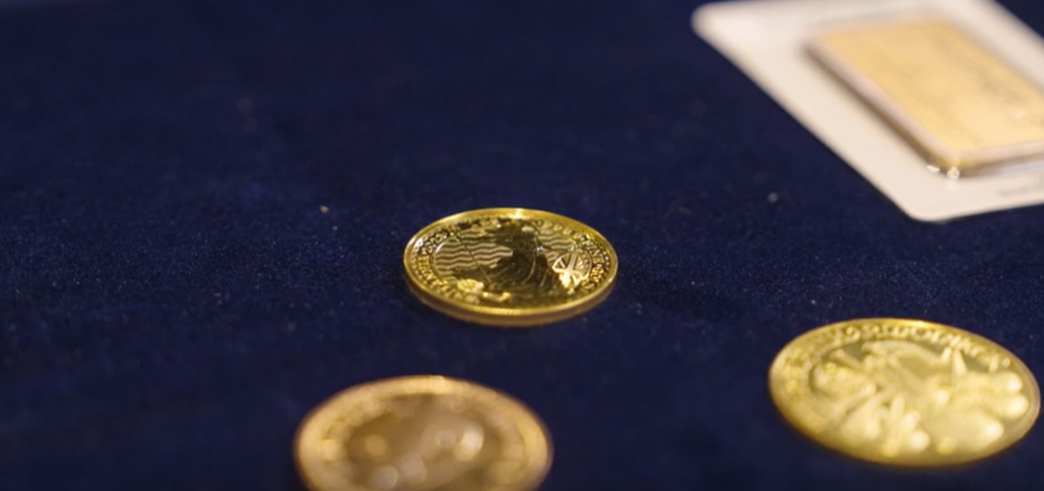
The four most important precious metals are gold, silver, platinum and palladium.
What are precious metals used for?
Precious metals have roughly three primary applications, plus a long history as money.
In jewelry, they have been loved for centuries due to their luster, wear resistance, and status. In industry, they are indispensable: platinum and palladium in catalytic converters, silver in electronics and solar panels, and gold in high-grade connectors. As an investment, gold and silver are primarily seen as a store of value.
Furthermore, precious metals have a rich monetary history. Gold and silver served as a medium of exchange and as raw materials for coins for centuries. Under the gold standard, the value of money was linked to a fixed amount of gold.
Although that link has since been abandoned, central banks still maintain vast gold reserves, and they have even been purchasing record amounts of gold in recent years.
From medium of exchange to the gold standard
Precious metals have formed the basis of our monetary system for thousands of years. Gold and silver were first used as a medium of exchange and later minted into coins because they were rare, durable, and universally recognizable. Under the gold standard, which took shape globally around 1871, the value of paper money was directly linked to a fixed weight of gold.
In 1971, this linkage was fully abandoned. Yet central banks still hold massive gold reserves today, a clear sign that precious metals have never lost their role as a store of value.
What influences the price of precious metals?
The price of precious metals moves alongside the global economy and is ultimately determined by supply and demand. If demand rises while supply lags, the price goes up; if more supply hits the market, it falls.
It is important to know that the inherent quality of a precious metal always remains identical. A bar of gold remains the exact same amount of gold; only the nominal price the market pays for it changes. A number of factors play a leading role here:
- Inflation: During periods of currency depreciation, investors seek stability in gold and silver, which drives up demand.
- Interest rates: Because precious metals do not pay out structural interest, they become relatively more attractive when interest rates are low.
- The US dollar exchange rate: Precious metals are priced internationally in US dollars, so the strength of the dollar impacts the nominal price directly.
- Demand from central banks: Their large-scale gold accumulation provides structural support to the baseline price.
- Industrial demand: For silver, platinum, and palladium, industry is a major price determinant, specifically electronics and automotive manufacturing.
- Geopolitics and uncertainty: Tensions and economic instability make precious metals more attractive as a historical safe haven.
Silver and platinum generally react faster and more intensely to market changes, while gold behaves more stably. You can track the live gold price and silver price in real time on our market chart pages.
When purchasing physical precious metals, you also pay not just the raw metal value (the spot price), but also a premium for manufacturing, secure transport, and liquidity. When selling back, the bid-ask spread plays a role, which is the difference between the buying and selling price.
Physical precious metals or paper gold?
Anyone wishing to invest in precious metals can choose between physical ownership and financial derivatives. With physical precious metals, such as coins or bars, you legally and physically own the metal itself. In addition, there are investment products like gold ETFs, ETCs, or shares in mining companies, where you usually own a contractual claim or a derivative product instead of the physical metal itself.
This distinction is crucial. Physical precious metals carry no counterparty risk: it is not a claim on a bank, company, or government that can collapse. Financial products are practical and easily tradable, but they do introduce dependence on the issuer.
Investors who view precious metals primarily as systemic wealth protection therefore often prefer physical ownership, opting for either secure home delivery or professional vault storage.
The role of precious metals in your portfolio
Precious metals give an investment portfolio extra stability. When the stock market declines or inflation rises, physical gold or silver provides a tangible counterweight: you hold a real asset in your hands, not a promise on paper. As a result, gold and silver are frequently viewed as a safeguard for purchasing power. We dive deeper into this in our article on gold as protection against inflation.
By allocating a portion of your wealth to gold, silver, platinum, or palladium, you diversify your risk across different asset classes. Precious metals are not completely risk-free, as the price can drop, but they often behave independently compared to stocks and bonds. How much fits your portfolio depends entirely on your financial goals, your time horizon, and your risk tolerance.
Buying physical precious metals at The Silver Mountain
The Silver Mountain has specialized in physical precious metals since 2008 and holds an official license from the financial regulatory authority, the AFM. We supply products from LBMA-certified producers, ensuring their authenticity is globally recognized and instantly tradable. You buy transparently at the current market spot rate, backed by a clear buyback guarantee should you wish to liquidate later.
Your purchase is delivered fully insured and discreetly, or you can collect it at our offices in Baarn or The Hague. If you want to store your precious metals securely outside your home, professional vault storage is available.
Whether you choose to buy gold, buy silver, buy palladium, or buy platinum, everything is professionally handled from order to final delivery. If you prefer personal guidance, please feel free to contact us.
Conclusion on what precious metals are
Precious metals are rare, durable metals that do not or barely corrode or oxidize, thereby retaining their luster and long-term value. The most well-known are gold, silver, platinum, and palladium, each with its own distinct properties and applications in jewelry, industry, and investment portfolios.
For investors, they are particularly interesting due to their tangible nature and their ability to provide diversification and purchasing power protection. Gold often forms the stable foundation, while silver, platinum, and palladium remain more sensitive to broader industrial economic demand.
Disclaimer:
The Silver Mountain does not provide investment advice and this article should not be considered as such. Past performance is no guarantee of future results.
These are the most asked questions about precious metal.
Frequently asked questions about precious metals
1. What are precious metals?
Precious metals are rare metals that do not or barely corrode or oxidize, thereby retaining their luster and value. The most well-known are gold, silver, platinum, and palladium. They are used in jewelry, in industry, and as investments, and have historically served as a reliable form of value storage.
2. Which precious metals are there?
The four primary precious metals are gold, silver, platinum, and palladium; these are also the metals most frequently invested in. In addition, rhodium, iridium, osmium, and ruthenium belong to the platinum group metals. These latter ones are primarily used industrially and are less relevant to most private investors than the four primary metals.
3. Is gold a precious metal?
Yes, gold is the most famous precious metal. It is highly resistant to corrosion and oxidation, retains its luster, and is used worldwide as jewelry, a historical currency, an investment product, and a store of value. It is precisely because of this rarity and durability that gold has been considered valuable for thousands of years.
4. Why are precious metals valuable?
Precious metals are valuable due to a rare combination of characteristics: they are scarce, virtually never degrade in quality, and are globally recognized and tradable. Furthermore, they cannot be printed like paper money. Gold and silver also have a long history as a store of value and a medium of exchange.
5. What are precious metals used for?
Precious metals are used in jewelry, in industry, and as investments. In technology, they are found in catalytic converters, electronics, and solar panels, and gold is used in high-quality connectors. Gold and silver additionally serve as a store of value and have a long history as a medium of exchange and raw material for coins.
6. What is the rarest precious metal?
Rhodium is often considered the rarest and most expensive precious metal. It belongs to the platinum group and is much scarcer than gold. Because it is difficult to extract and crucial for the automotive industry, a small deficit in global supply can cause the market price to rise sharply.
7. What is the difference between precious and base metals?
Precious metals barely react with oxygen and moisture, thereby retaining their luster and value. Base metals such as iron, copper, and zinc do react: they rust, corrode, or tarnish. Furthermore, precious metals are rare, while base metals are abundantly available and less expensive.
8. Why is copper not a precious metal?
Copper is a useful metal, but it oxidizes when exposed to air and moisture, forming a familiar green layer. Because copper does react with its environment and is also abundantly available, it is classified among base metals, not precious metals.
 About
About Rolf van Zanten is the founder and owner of The Silver Mountain, a specialist in physical precious metals since 2008. With nearly twenty years of experience in the precious metals trade, Rolf shares his expertise on investing in gold, silver, and platinum in an accessible and reliable way. His knowledge of the international gold and silver markets helps investors make well-informed decisions. In his role as an expert, he strives to ensure that transparency, security, and trust are at the heart of every purchase.



 Nederlands