
 Buy gold bars
 Buy gold coins
 Series
 Buy silver coins
 Buy silver bars
 Series
 Buy silver collectible coins
 Silver collectible coin series
 Buy gold collectible series
 Gold collectible coin series
 Author:
  Date: 20 March 2023
 About
About What is the gold standard and why does it no longer exist?
 Rolf van Zanten
24 April 2026
When you start buying coins, whether it concerns pure investment gold or rare collectibles, terms fly around your ears. What is the difference between Proof and Prooflike? Why is an FDC coin more expensive than a UNC example? And what does a score of MS-70 mean on a certified coin?
The quality of a coin is, alongside the gold or silver price and rarity, the most important factor determining its value.
In this article, we explain exactly what the different quality standards for coins mean, how the international Sheldon scale works, and what you as an investor should look out for when inspecting a coin.
In numismatics and the world of precious metals, we make a strict distinction between coins intended for circulation (or bullion trade) and coins specially minted for collectors.
The price is often determined not just by the weight in gold or silver, but precisely by the quality of the strike.
Below you will find the definitions of the most common qualities, ranked from low to high.
These are coins minted to serve as legal tender or traded purely for their metal value.
A coin is Uncirculated if it has left the coin press and has never circulated in payment traffic.
This is a quality step higher than the standard UNC. BU coins are minted with new, polished dies.
The term Fleur de Coin (literally: flower of the coin) is mainly a concept in the Netherlands and Europe. It indicates the absolute highest achievable quality for a circulation coin.
As the name suggests: these coins look like Proof coins, but are not quite there.
Proof is the very highest quality a mint can produce. Important to know: Proof is not a state of preservation, but a special minting technique for, among other things, collector coins.
Collectors also use other terms. Prachtig (Pr - About Uncirculated) refers to coins with barely any wear from short circulation. Zeer fraai (ZF - Very Fine/Extremely Fine) shows light wear, while fraai (Fr - Fine) has clear traces of use.
Coins in the category zeer goed (ZG - Very Good) show significant wear from long-term use, and at goed (G - Good), the wear is greatest after very long circulation.
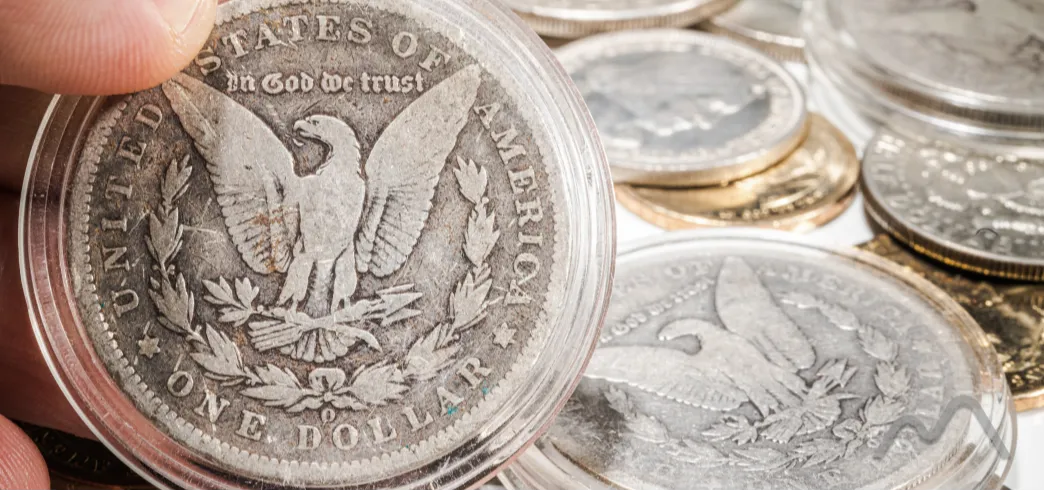
A Proof coin is the highest quality coin you can buy.
While in the Netherlands we often use terms like 'Zeer Fraai' or 'FDC', the international trade (and especially the American market) uses the Sheldon scale. This measurement system was developed in 1949 by Dr. William Sheldon and has since become the global standard for grading coins.
The scale runs from 1 to 70, where 70 stands for absolute perfection. For investors and collectors dealing in certified coins (in so-called 'slabs' from PCGS or NGC), knowledge of these numbers is essential. A small difference in the number, for example between an MS-64 and an MS-65, can mean a huge difference in value.
The most important distinction on the scale lies at the number 60. Everything below 60 has traces of wear (circulation). Everything from 60 and higher is uncirculated (Mint State).
Below you can see how the international numbers relate to the Dutch terms.
Note: for normal coins, the abbreviation MS (Mint State) is used. For Proof coins, PF or PR is often used (e.g., PF-70).
| Sheldon score | American term | Dutch term | Description |
|---|---|---|---|
| MS-70 | Mint State Perfect | FDC (perfect) | An absolutely perfect coin. Even under 5x magnification, not a single scratch or contact mark can be seen. |
| MS-65 to MS-69 | Gem Uncirculated | FDC / FDC- | A beautiful coin with full, original luster. A tiny contact mark may be visible, but the coin looks practically perfect. |
| MS-60 to MS-64 | Uncirculated | UNC | Uncirculated, but with some 'bag marks' (contact marks from production) or a slightly less sharp strike. |
| AU-50 to AU-58 | About Uncirculated | Prachtig (Pr) | Barely any wear, only on the very highest parts of the relief (such as a lock of hair or cheek). The mint luster is still largely present. |
| XF-40 to XF-45 | Extremely Fine | Zeer Fraai (ZF) | Light wear on the details, but still an attractive coin. The finest details are starting to fade. |
| VF-20 to VF-30 | Very Fine | Fraai (F) | Clear wear from circulation, but all details and letters are still legible and distinguishable from one another. |
| F-12 to F-15 | Fine | Zeer Goed (ZG) | The coin has been in circulation for a long time. Details have faded into flat areas, but the major lines and texts are still readable. |
| G-4 to VG-8 | Good / Very Good | Goed (G) | Very heavy wear. The coin is actually "no longer good", but the type and year are just identifiable. |
The condition of a coin is directly linked to its value. For an investor in pure gold weight, a scratch is no disaster, but for a collector, the difference between 'Fine' and 'FDC' can sometimes make a difference of thousands of euros. Knowledge of quality protects you against bad purchases and maximizes your potential return.
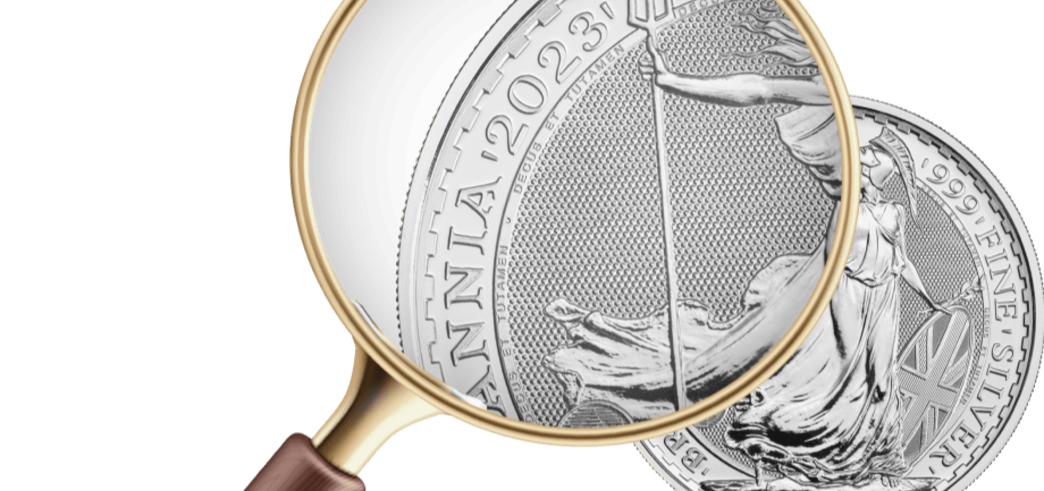
Do you want to make an estimation of the quality of your coin yourself? You don't have to be an expert to recognize the first signs of wear. Grab a good loupe (preferably 5x or 10x magnification) and ensure bright, direct light.
Pay specific attention to the following three points during your inspection, as wear is often visible here first:
Wear always starts on the parts of the coin that protrude the most. With portraits of kings or queens (such as on the Dutch Gold Ten Guilder), these are often the locks of hair, the cheek, or the crown.
Examine the rim of the coin critically. Are there small pits, dents, or chips visible on the rim? This indicates that the coin has fallen at some point or bumped hard against other coins in a cash drawer or wallet.
Look at the flat, open parts of the coin surrounding the portrait or coat of arms.
Tip: polishing dirty coins? In this article, you can read how best to clean your coins.
Never touch a high-quality coin with your bare hands on the surface. The acid and oil from your fingerprint can etch into the metal over time and is irreparable. Always hold the coin by the rim or use cotton gloves. A fingerprint on a proof coin renders it worthless to the connoisseur in one fell swoop.
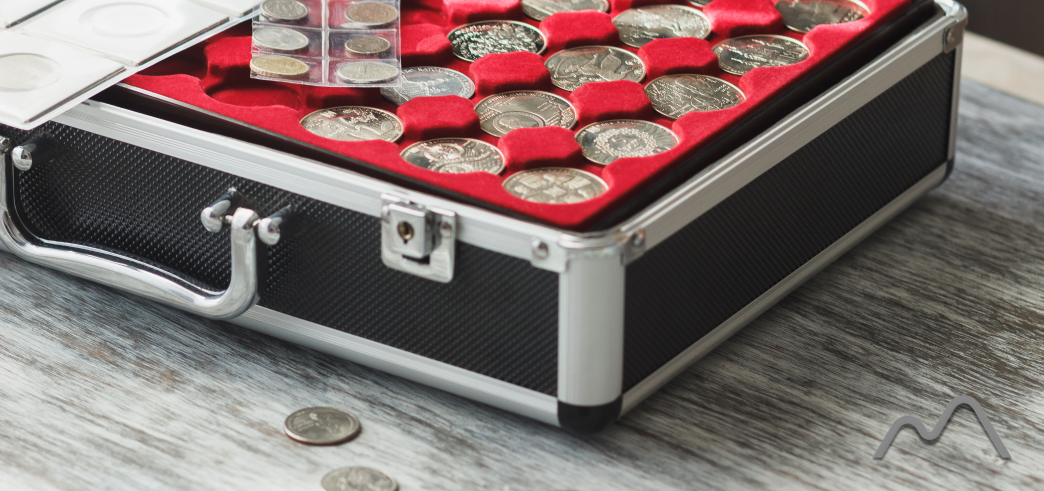
The Sheldon-scale is used to grade coins. MS-70 is the highest score possible, for a perfect coin.
With valuable and rare coins, it is sometimes difficult to determine the quality exactly yourself. The difference between a coin that is just not quite perfect (MS-69) and a coin that is absolutely perfect (MS-70) is barely visible to the naked eye. Yet this difference in quality can be worth hundreds, if not thousands of euros in the trade.
To prevent discussion between buyer and seller, there are independent assessment companies, the so-called third-party grading services. The two largest and most respected players worldwide are:
When a coin is sent to one of these services, it is assessed by multiple anonymous experts. They look at two things:
After the assessment, the coin is hermetically sealed in a hard, transparent plastic holder. In the collecting world, we call this a 'slab'.
The holder features a unique serial number (which can be checked online), the established quality, and a barcode. For you as a buyer or seller, this offers major benefits:
Should you, as a gold investor, worry about these quality standards? That depends entirely on your goal. In the world of precious metals, we distinguish between two markets:
Are you buying purely for the physical metal value (gold or silver) to protect your wealth? Then bullion or circulation quality is sufficient.
Are you looking for historical or collectible value in addition to the metal value? Then quality is all-determining. Here it pays to look for BU, proof, or certified examples.
The total value of a collector coin is determined by a combination of four factors. Quality is just one of them:
A coin of 'only' very fine quality can therefore sometimes be more valuable than an FDC coin of which millions were made.
Whether you invest in physical gold for wealth preservation or are building a rare numismatic collection: knowledge of quality is important. The distinction between a circulation coin and a perfect Proof strike directly determines the value and future tradability of your purchase.
Use the Sheldon scale as your guide and be critical of details. At The Silver Mountain, you are assured of transparency. All our coins are strictly checked so that you know exactly what you are buying: from affordable bullion to certified top quality.
The Silver Mountain does not provide individual investment advice. This article is intended for information purposes only. Expectations, scenarios, market developments, and past results offer no guarantee for future results.
Proof (Polierte Platte) is the highest quality due to a special minting technique with polished dies and blanks. The result is a mirrored background. FDC (Fleur de Coin) is the perfect state of a circulation coin: undamaged with original matte luster, but without the extreme mirrored effect of Proof.
No, never clean coins with cloths or polish. Rubbing causes thousands of micro-scratches (hairlines) that immediately destroy the numismatic value. A coin degrades significantly in quality because of this. If necessary, only use a special dipping bath without touching the coin.
FDC stands for 'Fleur de Coin' (flower of the coin/die). It indicates a coin in an absolutely perfect state of preservation, without any form of wear or damage. The coin still has its full, original mint luster and looks as if it has just left the coin press.
With investment coins (bullion) such as the Krugerrand, a small scratch has barely any influence; the value is determined by the gold weight. With rare collector coins, however, this is fatal: any damage lowers the quality score (for example from FDC to Very Fine) and thus the collector value significantly.
The Sheldon scale is the international standard for assessing coin quality, running from 1 to 70. A score of 70 (MS-70) stands for an absolutely perfect coin. Everything above 60 is uncirculated (Mint State); below that, there is visible wear from circulation.
A slab is a hard, sealed plastic holder in which a coin is placed by grading services such as PCGS or NGC. The slab contains the coin, a label with the established quality score (e.g., MS-69), and guarantees authenticity. This makes global trade easier and safer.
'First Strike' or 'Early Release' refers to the very first coins minted with a new pair of dies. Because the dies are still fresh and sharp, these coins often have exceptionally high quality and detail sharpness (sometimes prooflike), which makes them extra popular with collectors.
Prooflike (PL) coins have strongly mirrored fields, comparable to Proof. They are often minted with polished dies, but at normal production speed. As a result, the contrast between the mirrored background and the matte relief is less sharp and deep than with real Proof coins. A popular, affordable alternative for collectors.
Daan Wesdorp is Purchasing Manager at Inkoop Edelmetaal, part of The Silver Mountain, and a specialist in trading physical precious metals. With a background in economics and years of experience in the financial markets, Daan possesses in-depth knowledge of stocks, cryptocurrencies, and precious metals. His broad market insight makes him a reliable source for investors looking to diversify and protect their assets. In his articles, Daan combines up-to-date market information with practical insights for both new and experienced investors.

Be the first to discover the latest products and the latest news about precious metals.



 Nederlands