
 Buy gold bars
 Buy gold coins
 Series
 Buy silver coins
 Buy silver bars
 Series
 Buy silver collectible coins
 Silver collectible coin series
 Buy gold collectible series
 Gold collectible coin series
 Author:
  Date: 24 June 2024
 About
About Gold vs Bitcoin: Are They Comparable?
 Rolf van Zanten
26 February 2025
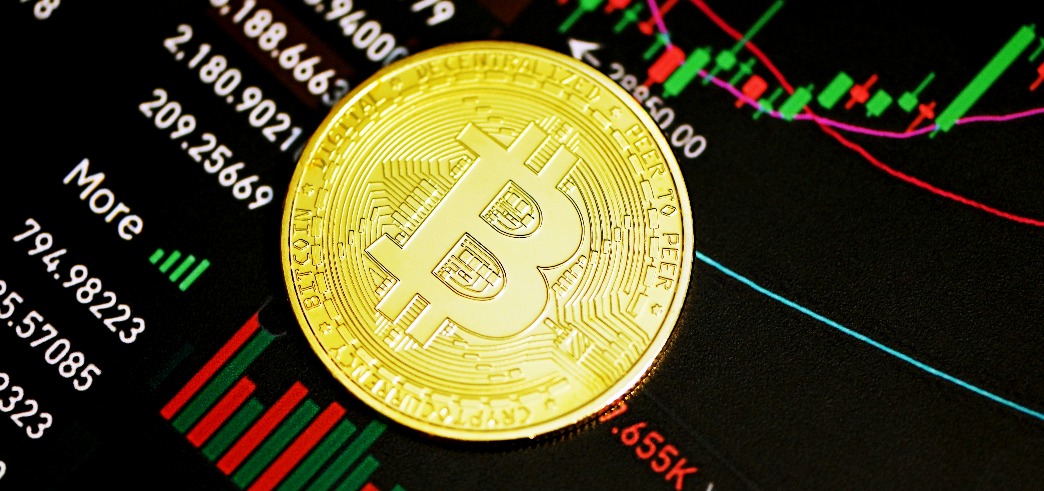
Buying gold with crypto in the Netherlands can be done at a specialized precious metals dealer by paying with Bitcoin (BTC), Ethereum (ETH) or stablecoins; the payment is processed via a crypto payment gateway and the physical gold is then delivered insured or stored. While Bitcoin is often called "digital gold", physical gold remains the tangible safe haven. More and more investors are converting part of their digital gains into precious metals.
But how exactly does this work? Why is the exchange rate between the two assets so important, and which regulations, such as KYC and taxes, will you encounter? In this article you will read the main considerations, risks and a step-by-step guide for buying gold with crypto.
Buying gold with crypto offers practical benefits: transactions are fast, unaffected by bank hours or national borders, and occur without the involvement of a traditional bank. The blockchain records every transaction transparently and immutably, making the payment process auditable and resistant to fraud. Complete anonymity does not exist: identification requirements apply just like with a bank payment, and that combination of transparency and oversight makes the purchase secure.
When you buy gold with euros, you only look at the gold price. If you buy with crypto, you must take two rates into account. The relative relationship determines your purchasing power.
In the ideal scenario the crypto market is high and the gold price consolidates or falls slightly. Your crypto then has relatively high purchasing power; you get more grams for your digital currency.
It is less attractive if the crypto market is in a dip while the gold price is at or near record highs. In that scenario it is often wiser to hold your crypto and temporarily buy gold with fiat money.
A useful tool here is the bitcoin-gold ratio: how many grams or troy ounces of gold you get for one bitcoin. If that ratio rises, your crypto has relatively more purchasing power against gold; if it falls, you pay relatively more bitcoin for the same amount of gold. So, in addition to the crypto price, keep an eye on the current gold price chart, and remember that gold is quoted internationally in dollars, so the euro-dollar exchange rate also matters.
Curious about Bitcoin's long-term role in the monetary system? Read our article Can Bitcoin become a new world currency?
Buying gold with crypto happens in three steps: you choose a wallet, select your cryptocurrency and pay for the order via the merchant's payment environment. Via our sister company Bitgild it works as follows:
Depending on the merchant, the payment is processed via an external payment processor or via an in-house crypto payment environment. Bitgild has developed its own crypto payment gateways, which means the transaction is processed without an external intermediary and you pay directly from your own wallet or exchange.
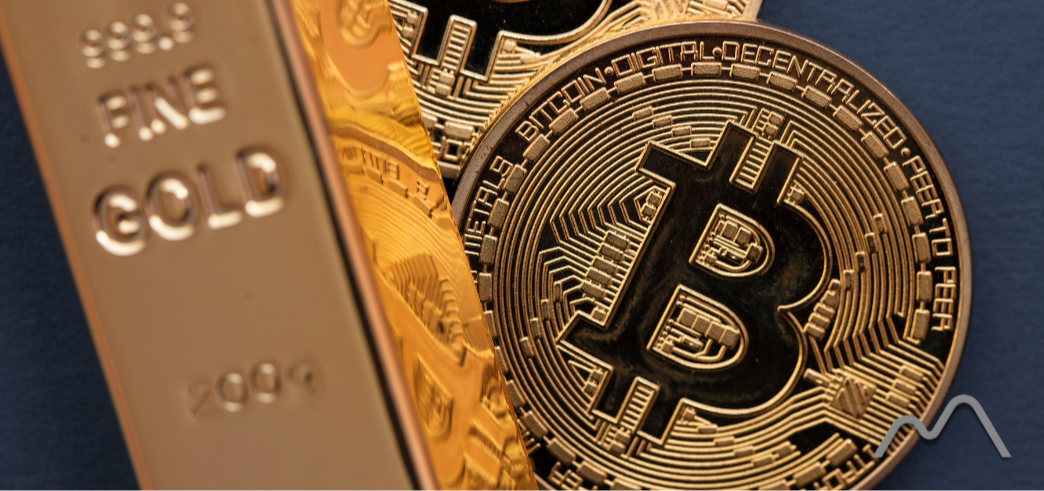
By buying gold with crypto you can convert digital gains into physical precious metal.
Not every provider that offers "gold with crypto" actually delivers physical gold. There are also gold tokens: digital coins on the blockchain that represent a claim to gold. These can be practical, but you then hold a claim against an issuing party. You do not receive tangible precious metal in your own hand or your own safe.
If you want actual physical possession without counterparty risk, check whether the provider delivers genuine gold bars or gold coins, with insured shipping or professional storage.
Want to know more about the fundamental differences between the two worlds? Read our article gold versus Bitcoin: are they comparable?
Invoice details are required for every order; in addition, legal verification obligations apply and vary by situation. Gold dealers such as The Silver Mountain must comply with the Wwft (Dutch Anti‑Money Laundering and Terrorist Financing Prevention Act).
The rules around crypto are becoming stricter and more transparent in Europe. Since late 2024, the European MiCAR regulation governs the supervision of crypto service providers; in the Netherlands the AFM issues licenses and DNB co-supervises. In addition, from 1 January 2026 crypto providers are required to collect and share user data with the tax authorities of EU member states, even when crypto is used for a purchase.
For you as a buyer, this mainly means that crypto is increasingly tied to your regular administration. Therefore always keep the purchase invoice, the order number, the transaction data (wallet address and blockchain hash), the exchange rate used and the value in euros at the time of purchase. That documentation supports your Box 3 tax return and any questions about the origin of your assets.
In the Netherlands both cryptocurrency and physical gold fall under Box 3 (savings and investments) in the income tax. You do not pay tax on immediate exchange gains at the moment you convert crypto into gold. Investment gold is also exempt from VAT.
However, the Tax Authorities look at the reference date of January 1. The combined value of your crypto wallet and your physical gold on that date counts towards the calculation of your total Box 3 assets.
For completeness: gold investment coins are considered "other assets" for Box 3, not as cash
You can go to our sister company Bitgild. Through Bitgild.com it is possible to buy precious metals and pay with cryptocurrencies, including Bitcoin, Ethereum and stablecoins on multiple networks. Bitgild has been active since 2013 as one of the first European precious metals platforms offering crypto payment, developed its own crypto payment gateways and has already shipped tens of thousands of insured deliveries. This way you combine the expertise of The Silver Mountain with a payment process that is fully set up for crypto.
We increasingly see investors wanting to convert part of their crypto profits into something tangible. Through Bitgild this can be done directly from your own wallet, without detours via the bank. Pay particular attention to timing: the ratio between the crypto price and the gold price determines how many grams you ultimately receive.
Daan Wesdorp - July 2026After payment, your gold is handled like any other order at The Silver Mountain. You can choose insured home delivery, via our own in-house courier or registered shipping, or professional insured storage via Edelmetaal Beheer Nederland (EBN). Pickup by appointment is possible at our offices in Baarn and The Hague.
If you want to sell your gold later, you can do so via our sister company Inkoop Edelmetaal, with bid prices linked to the current market rate.
Buying gold with crypto is an accessible way to convert digital gains into physical precious metal. Pay attention to three things: timing (the bitcoin-gold ratio and current prices), costs (network fees and exchange rate margins) and the rules (identification requirements and the Box 3 declaration).
Those who buy via a specialised platform like Bitgild can be sure that the payment is secure and that physical gold is actually delivered.
The Silver Mountain does not provide personal investment or tax advice. This article is intended as general information. If in doubt, consult your tax advisor, accountant or the Tax Authorities.
For transactions over €10,000, the Wwft legislation requires traders to investigate the source of the funds. This client due diligence ensures that the assets originate from legitimate sources, such as the sale of crypto assets accumulated over a longer period.
The invoice you receive after your purchase via Bitgild.com is an official proof of purchase. This document is important for your records and serves as substantiation for the Dutch tax authorities (Belastingdienst) to demonstrate the value and origin of your assets in Box 3 for the annual tax return.
Stablecoins such as USDT and USDC are pegged to the dollar, allowing them to avoid the volatility of the crypto market. Investors often use these coins as an intermediate step to lock in the purchase value of their gold at a time when the gold price is favorable, without being affected by fluctuations in the Bitcoin price.
Yes, buying gold with Bitcoin is possible at specialized precious metal dealers. Through our sister company Bitgild you can pay for gold bars and gold coins directly from your own wallet or exchange with Bitcoin, Ethereum or stablecoins. The gold is then delivered insured or professionally stored.
No, a completely anonymous purchase of gold with crypto is not possible. Invoice details are required for every order and there are legal identification and record-keeping obligations under the Wwft. Crypto payment platforms also have their own identification process. These rules protect both the buyer and the trader.
No, in the Netherlands you do not pay tax on capital gains at the moment of conversion; the Netherlands does not have a capital gains tax on this type of transaction. However, both your crypto and your gold are counted as assets in Box 3 on the reference date of January 1.
When buying gold with crypto, in addition to the product premium you may also pay network fees and an exchange rate margin charged by the payment platform. These costs vary by cryptocurrency, network and market timing. Therefore always check the total order value in euros as shown in the checkout before payment.
The exchange rate combines two live rates: the gold price and the price of your cryptocurrency. At checkout the ratio is locked in for a short period during which you must complete the payment. After that the order is processed at the locked rate.
Daan Wesdorp is Purchasing Manager at Inkoop Edelmetaal, part of The Silver Mountain, and a specialist in trading physical precious metals. With a background in economics and years of experience in the financial markets, Daan possesses in-depth knowledge of stocks, cryptocurrencies, and precious metals. His broad market insight makes him a reliable source for investors looking to diversify and protect their assets. In his articles, Daan combines up-to-date market information with practical insights for both new and experienced investors.

Be the first to discover the latest products and the latest news about precious metals.


 Daan Wesdorp
 Nederlands