
 Buy gold bars
 Buy gold coins
 Series
 Buy silver coins
 Buy silver bars
 Series
 Buy silver collectible coins
 Silver collectible coin series
 Buy gold collectible series
 Gold collectible coin series
 Author:
  Date: 3 July 2020
Silver price forecast 2026: scenarios and outlook
 Rolf van Zanten
22 January 2026

Silver is one of the most fascinating precious metals on earth. For thousands of years, it has been used as a reliable medium of exchange and as lustrous jewelry. Today, however, the metal has transformed into an indispensable raw material for our modern industry and the green energy transition.
Due to this massive surge in industrial demand, many investors are wondering how much longer we can rely on current supplies. How much silver exists in the world, where is it mined, and how large is the silver supply really today? In this article, we provide you with a complete and up-to-date overview of the total amount of silver in the world.
To understand the actual scarcity of silver, it is important to precisely define which figures we are looking at. A common mistake in the precious metals market is confusing historically mined silver with silver that is immediately available.
According to the most recent and authoritative data from the U.S. Geological Survey (USGS), approximately 1.74 million tonnes of silver have been discovered in all of human history.
However, this impressive figure does not tell the whole story. To understand the current market situation and true physical availability, market experts make a strict distinction between three fundamental levels:
When looking at this above-ground availability, we immediately encounter the greatest contrast between gold and silver. After mining, gold is almost always carefully preserved in high-security vaults or processed into precious jewelry. Virtually all the gold ever mined is still in human possession today.
Silver, on the other hand, is consumed on a massive scale. Over the past decades, millions of tonnes of silver have been processed into small consumer electronics, solar panels, and medical equipment. Because recycling these minute amounts of silver from old devices is often too complex and economically expensive, a significant portion ends up structurally and irrecoverably in landfills.
Consequently, the actually available investment supply of physical silver on the world market is many times smaller and significantly scarcer than the historical total from the USGS would suggest.
In addition to the above-ground supply, it is important for long-term expectations to look at the known silver reserves still hidden in the earth's crust. According to the most current geological data from early 2026, worldwide proven silver reserves in the ground amount to approximately 641,400 tonnes.
With an average global mine production of about 25,000 tonnes per year, the mathematical calculation is simple. At a constant production rate and without the surprising discovery of massive new ore veins, we could theoretically exhaust currently known reserves within a few decades.
Within the international mining sector and among geologists, the phenomenon of 'Peak Silver' is increasingly discussed. This is the turning point at which maximum global silver production has definitively been reached, and annual mine extraction begins a structural and irreversible decline.
However, the theoretical figure of 641,400 tonnes does not mean that mines will simply continue to run at full capacity until the very last gram of silver is unearthed. Mining is and remains an extremely capital-intensive industry. Remaining silver reserves are now often located much deeper in the earth or in remote areas with significantly lower ore concentrations.
Mining this remaining silver simply costs mining companies much more energy, manpower, and equipment. Whether these remaining supplies will ever actually be seen is therefore entirely dependent on the current market situation.
Only when the market price of silver rises high enough to cover these rapidly increasing production costs do these complex geological reserves become economically recoverable again.
With approximately 641,400 tonnes of known reserves remaining and stagnating mine production, we are approaching the point of Peak Silver. Because remaining ore layers are deeper and more complex to extract, a structurally higher silver price is necessary to keep future mining profitable.
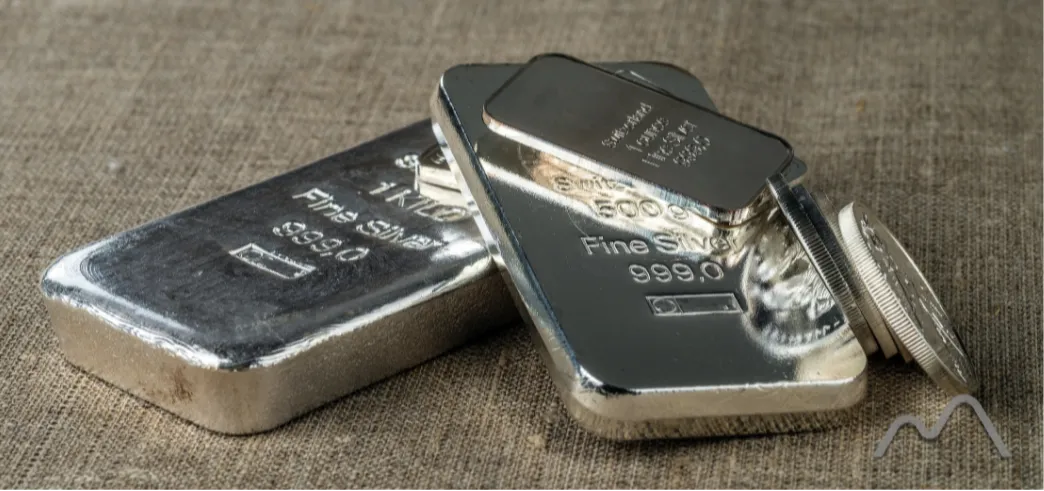
Approximately 641,400 tonnes of known silver reserves remain in the ground worldwide.
Where do you find silver in nature? Although silver occurs in the earth's crust all over the world, actual commercial production is highly concentrated. The lion's share of global mine production comes from a select number of countries in Latin America and Asia.
In the table below, you will find the current top 5 countries where the most tonnes of silver are currently mined. Mexico has undisputedly led this list for years, followed closely by China and Peru.
| Position | Country | Annual production (approximate) | Share of proven reserves |
|---|---|---|---|
| 1. | Mexico | 6,300 tonnes | Average |
| 2. | China | 3,600 tonnes | Average |
| 3. | Peru | 3,300 tonnes | Very high (approx. 140,000 tonnes) |
| 4. | Chile | 1,600 tonnes | High |
| 5. | Poland | 1,300 tonnes | Average |
Although Mexico is the absolute leader in terms of national production, the largest individual silver mine in the world is surprisingly located in Europe. This is the massive mine of the listed mining company KGHM Polska Miedź in Poland.
A major and often underestimated characteristic of the global silver market is the extremely inelastic supply. Silver is rarely extracted from a pure and standalone silver ore in mining.
In over seventy percent of cases, the precious metal is a direct by-product of mines where the primary search is for copper, lead, or zinc. This unique fact has enormous and far-reaching consequences for global market dynamics.
When industrial demand for silver sky-rockets, mining companies cannot simply scale up silver production unilaterally. After all, they are primarily mining for copper or zinc. If global demand for these specific base metals stagnates, it automatically and directly affects the supply of new silver to the world market.
This explains exactly why physical supply reacts so slowly and with extreme difficulty to a suddenly rising silver price or a growing market deficit.
Global demand for silver has fundamentally changed over the past decades. While in the past the precious metal was mainly used for the production of coins, silverware, and traditional jewelry, today over sixty percent of all mined silver is directly swallowed up by heavy industry.
Silver possesses the highest electrical and thermal conductivity of all elements on earth. This unique chemical property makes the metal literally irreplaceable in our technological society. Partly for this reason, the Silver Institute predicts a significant expansion of silver demand within key technological sectors.
For what is silver mostly used? We can divide this massive and still growing industrial demand into three main categories:
The worldwide production of solar panels is currently the absolute and unprecedented driver of industrial silver demand. The green energy transition relies heavily on this precious metal to safely and efficiently convert solar energy into electricity.
Despite attempts by manufacturers to reduce silver usage per individual panel, the gigantically increased production volumes more than compensate for these savings.
Silver is the invisible engine of our modern mobility. A modern electric car contains significantly more silver in its numerous circuit boards, advanced batteries, and complex electronic components than a regular internal combustion engine car.
In smartphones, computers, and high-quality switches, silver is simply necessary for reliable connections.
In addition to its superior conductivity, silver naturally possesses very strong antibacterial properties. The medical sector utilizes the metal on a massive scale for specialized wound care, sterile surgical instruments, special hospital coatings, and innovative water purification systems.
Alongside this enormous and constant industrial consumption, global private and institutional demand for silver as a monetary safe haven remains undiminished. Investors are choosing en masse to protect their accumulated purchasing power against inflation and geopolitical unrest by investing in physical precious metal.
Within a well-diversified and mature investment portfolio, purchasing globally recognized silver coins or large physical silver bars is a strategic choice to directly capitalize on increasing global scarcity.
A common question among investors is how much silver the Netherlands actually has on hand as a national buffer. There are quite a few misunderstandings online regarding the exact vault contents of the Dutch Central Bank (DNB).
DNB communicates extremely transparently about gold as part of the national reserves. In 2026, the Netherlands owns over six hundred tonnes of physical gold. This precious metal serves as the ultimate anchor of trust for our financial system during severe economic crises.
However, when we look at the silver supply, the reality is completely different. The Netherlands holds no strategic or monetary silver reserves whatsoever.
The reason for this absence is purely historical and monetary in nature. Since definitively abandoning the silver standard, this precious metal is simply no longer used by central banks as official backing for the global monetary system.
Over the years, silver has made the definitive transition from a monetary anchor of the state to an indispensable industrial raw material and a private investment.
Does this mean there isn't a single gram of silver in the vaults of the Dutch government? Not quite. DNB does manage the so-called National Numismatic Collection. This contains thousands of historical silver guilders, rijksdaalders, and rare ducats securely stored.
However, it is important to emphasize that this impressive collection is managed purely as cultural heritage. These coins are explicitly not counted as an active financial reserve to support the economy.
| Precious Metal | Status at the Dutch Central Bank | Quantity in Reserve | Primary (Monetary) Goal |
|---|---|---|---|
| Gold | Official monetary reserve | Approx. 612 tonnes | Anchor of trust and ultimate financial emergency buffer. |
| Silver | No monetary reserve (cultural heritage only) | 0 tonnes | Not applicable. Today primarily serves as an industrial raw material and private wealth. |
| Platinum and Palladium | No monetary reserve | 0 tonnes | Not applicable. Function exclusively as industrial metals and private investments. |
The vast majority of the physical silver supply in the Netherlands today is therefore not held by the central bank, but is stored safely in the private vaults of private investors, collectors, and industry.
Can massive recycling solve the global silver deficit? The hard data shows otherwise. Currently, only twenty percent of the annual supply comes from recycled silver scrap. The amount of silver in solar panels and electronics is so minimal that high recovery costs simply do not pay off. As a result, this precious metal is lost permanently.
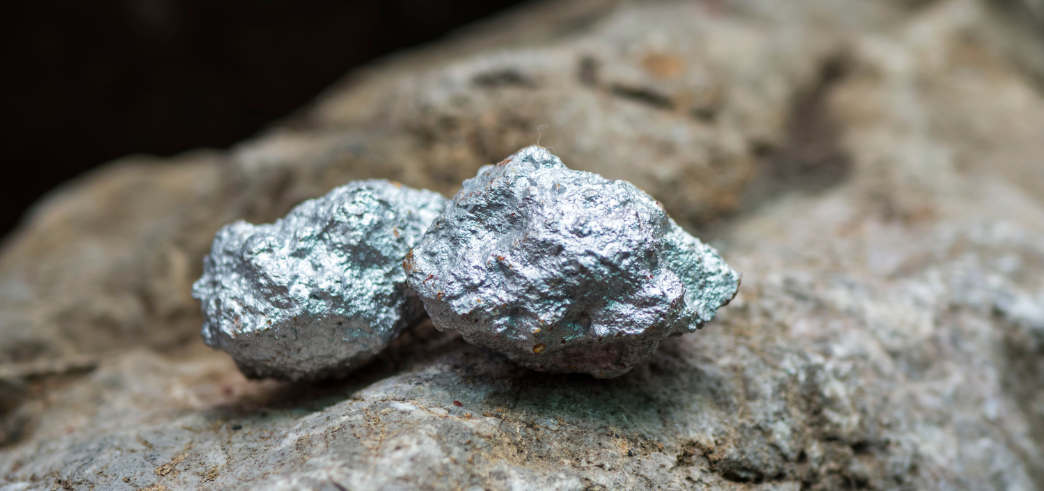
Silver is primarily mined as a by-product of other metals.
For investors hesitating between purchasing gold or silver, it is extremely valuable to look at the natural ratio between these two precious metals in the earth's crust. Geologists estimate that for every gram of gold, there are approximately eight to ten grams of silver in the ground. The natural ratio is therefore roughly 1:10.
However, if we look at the financial markets, we see a completely different picture. The so-called gold/silver ratio (how many grams of silver you need to buy one gram of gold) often fluctuates in practice between 1:70 and 1:90.
This massive gap between the physical scarcity in the ground and the current price ratio on the exchange is, for many professional wealth managers, the ultimate proof that silver is fundamentally and historically heavily undervalued compared to gold.
When we set global supplies against consumption, an explosive picture emerges. Looking at current figures for supply and demand, we see unprecedented tightness in the physical market.
While global mine production recently plateaued around 819.7 million ounces, total global demand reached a peak of over 1.16 billion ounces. Industrial demand alone broke all records with 680.5 million ounces.
The combination of exploding technological demand and a rigid, inelastic supply makes silver fundamentally strong. This massive and structural silver deficit will inevitably continue to impact the current silver price.
Do you want to secure your wealth against inflation and benefit directly from the unique dynamics in this market? Then discover our extensive range of silver coins and silver bars and see how easily you can buy silver safely and reliably at The Silver Mountain.
The Silver Mountain does not provide individual investment advice. This article is intended for information purposes only. Expectations, scenarios, market developments, and past results offer no guarantee for future results.
According to current data from the U.S. Geological Survey, approximately 1.74 million tonnes of silver have been discovered in all of human history. This impressive figure includes both the available above-ground supply and the precious metal that is still deep in the earth's crust.
Worldwide, there are currently approximately 641,400 tonnes of known silver reserves deep in the ground. Whether these remaining theoretical supplies will ever actually be mined depends entirely on the current market price. If the silver price is too low, complex mining is simply not profitable to perform.
Mexico has been the absolute leader for years and annually provides by far the most tonnes of silver to the world market. This is followed by large producing countries such as China and Peru. Remarkably, the largest individual silver mine in the world is currently located in Poland.
Absolutely not. A significant portion is still in the earth's crust. Additionally, a gigantic amount of above-ground silver has since been irrecoverably consumed in electronics or industrial applications. Discovered silver is therefore fundamentally different from silver that is immediately available for private and institutional investors.
Over sixty percent of silver is directly consumed by industry. Due to its superior thermal and electrical conductivity, the precious metal is absolutely indispensable for solar panels, medical equipment, and electric vehicles. Additionally, global demand for physical silver investment coins remains undiminished.
Industrial and private demand has exceeded available supply for several years in a row. Mine supply is extremely rigid and reacts slowly. This results in another significant global silver deficit in 2026, which structurally strengthens the underlying value of the precious metal.
No, the Netherlands holds no strategic silver reserves. The Dutch Central Bank currently maintains over six hundred tonnes of physical gold as the ultimate monetary emergency buffer. Silver is simply no longer used by modern central banks to officially back the financial and global monetary system.
This is virtually impossible. In global mining, silver is almost always extracted as a by-product of other metals such as copper or zinc. As a result, supply reacts extremely inelastically. Mining companies cannot simply scale up silver production without simultaneously mining additional base metals.
Rolf van Zanten is the founder and owner of The Silver Mountain, a specialist in physical precious metals since 2008. With nearly twenty years of experience in the precious metals trade, Rolf shares his expertise on investing in gold, silver, and platinum in an accessible and reliable way. His knowledge of the international gold and silver markets helps investors make well-informed decisions. In his role as an expert, he strives to ensure that transparency, security, and trust are at the heart of every purchase.

Be the first to discover the latest products and the latest news about precious metals.



 Nederlands