
 Buy gold bars
 Buy gold coins
 Series
 Buy silver coins
 Buy silver bars
 Series
 Buy silver collectible coins
 Silver collectible coin series
 Buy gold collectible series
 Gold collectible coin series
 Author:
  Date: 12 June 2024
 About
About The first paper money
 Rolf van Zanten
27 February 2025

Fiat money is the type of money we all use today, such as euros, dollars, and pounds. Unlike gold or silver, fiat money has no intrinsic value. Its worth comes from the trust in the economy and the central bank that issues it.
In this article, we explain what fiat money means, how it originated, how it functions, and why understanding its risks and limitations is crucial. We’ll also look at alternatives such as investing in gold, silver, or cryptocurrencies.
The term fiat comes from Latin, meaning “let it be done” or “so it shall be”. This reflects the nature of fiat money: its value does not stem from physical assets like gold or silver, but from a government decree that recognises it as legal tender.
In essence, fiat money holds value because society agrees it does and because people trust that others will accept it for payments, savings, or debt settlement.
Fiat money is a type of fiduciary money, derived from the Latin fiducia, meaning “trust”. It represents value based on confidence in the issuer, typically a central bank. As long as that trust remains, the system functions smoothly.
The rise of fiat money is closely linked to the abolition of the gold standard in the 20th century. Until then, people could exchange banknotes for a fixed amount of gold or silver.
Fiat money forms the foundation of the modern financial system. Its value is not derived from physical backing but from public trust and government regulation.
It operates through legal recognition and societal acceptance. Everyone must accept it as a means of payment, and everyone assumes it will retain its purchasing power tomorrow.
Unlike under the gold standard, governments can now create money without tangible reserves. While this offers flexibility for economic policy, it also makes the system more vulnerable to inflation and currency depreciation.
Today’s monetary system evolved over centuries. Where once currencies were directly tied to gold or silver, they now depend purely on confidence. This shift from the gold standard to fiat currency marked a fundamental change in how value is defined and managed.
Key historical milestones:
Interested? Read more about the origins of banking and fiduciary money.
While fiat currency is indispensable in modern economies, it has clear drawbacks. Its value depends entirely on trust in governments and financial institutions, making it vulnerable to mismanagement, inflation, and loss of purchasing power.
A major risk is excessive money creation. Governments and central banks can issue more money to stimulate growth. But in the long run, this causes devaluation: savers lose purchasing power while debts become cheaper to repay.
Fiat money is also sensitive to monetary and political decisions. Poor policy choices, such as prolonged low interest rates or overuse of stimulus measures, can lead to structural inflation.
Furthermore, digitalisation introduces new vulnerabilities: reliance on banking systems, electronic infrastructure, and central control can make the system fragile during crises or technical failures.
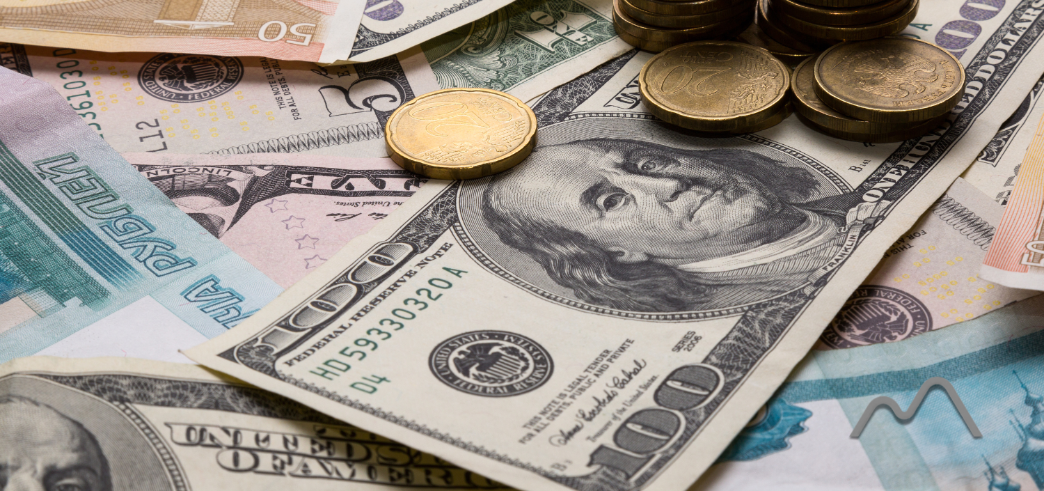
The euro and dollar are examples of fiat money.
Hyperinflation occurs when prices rise uncontrollably, and money rapidly loses value. This typically happens when governments print excessive amounts to finance deficits or debt.
As trust collapses, people rush to spend money before it devalues further. This will accelerate inflation even more.
When hyperinflation strikes, people turn to stable stores of value such as gold, silver, or foreign currencies.
Although fiat money dominates the global economy, many investors look for store-of-value assets to safeguard their wealth. The most common alternatives are physical gold, silver, and digital assets such as Bitcoin.
Gold and silver have served as money and a store of wealth for thousands of years. Their intrinsic value lies in their scarcity, physical properties, and universal acceptance. Unlike fiat money, precious metals cannot be printed and thus preserve purchasing power during inflation or crises.
At The Silver Mountain, investors can buy physical gold and silver with guaranteed authenticity and insured storage through Edelmetaal Beheer Nederland.
Digital currencies such as Bitcoin and Ethereum offer decentralised alternatives to fiat money. Their supply is limited, Bitcoin, for instance, is capped at 21 million coins, creating a form of digital scarcity comparable to gold.
While cryptocurrencies remain volatile and driven by market sentiment, they serve as protection against monetary inflation and government intervention.
| Fiat money | Precious metals | Crypto | |
|---|---|---|---|
| Value basis | Trust | Intrinsic value | Digital scarcity |
| Supply | Unlimited (monetary policy) | Limited and physical | Hard-coded in software (blockchain) |
| Inflation sensitivity | High | Low | Low |
| Volatility | Relatively stable | Low in the long term | High in the short term |
| Use as a means of payment | Accepted everywhere | Limited | Mainly online |
| Use as an investment | No (due to inflation) | Yes, a store-of-value investment | Speculative with high growth potential |
Fiat money underpins today’s global economy, yet its value relies entirely on trust and monetary policy. This makes the fiduciary system flexible but inherently fragile. History, from the gold standard to episodes of hyperinflation, shows that money without physical backing can lose its purchasing power over time.
To protect your wealth, consider diversifying into tangible assets like gold and silver, which maintain intrinsic value regardless of government or central bank policy.
The Silver Mountain does not provide investment advice. This article is for educational purposes only. Past performance is not indicative of future results.
Fiat money is currency without intrinsic value that is accepted because the government declares it legal tender. Its worth is based entirely on trust in the issuing authority, usually a central bank, and economic stability.
Fiat money retains value because people believe others will accept it for goods and services. As long as confidence in the system remains, it functions as both a medium of exchange and a store of value.
The greatest risk is inflation caused by overproduction of money. When governments print too much, purchasing power declines, in severe cases leading to hyperinflation and loss of trust in the currency.
Gold-backed money could be exchanged for a fixed quantity of gold. Fiat money cannot; its value depends solely on trust and government regulation, not on a physical commodity.
By investing in tangible assets such as physical gold or silver. These metals maintain purchasing power over time and provide a hedge against inflation and economic uncertainty.
Yes, cryptocurrencies like Bitcoin operate independently from governments and banks. Their supply is limited, making them less inflation-prone, though they are far more volatile than gold.
Central banks create money to stimulate the economy during recessions or crises. While this can boost growth short-term, excessive printing often leads to inflation and erosion of purchasing power.
Yes. When trust in a currency collapses, due to political instability, excessive debt, or uncontrolled money creation, hyperinflation can occur. As a result the currency may cease to function as a reliable means of exchange.
Daan Wesdorp is Purchasing Manager at Inkoop Edelmetaal, part of The Silver Mountain, and a specialist in trading physical precious metals. With a background in economics and years of experience in the financial markets, Daan possesses in-depth knowledge of stocks, cryptocurrencies, and precious metals. His broad market insight makes him a reliable source for investors looking to diversify and protect their assets. In his articles, Daan combines up-to-date market information with practical insights for both new and experienced investors.

Be the first to discover the latest products and the latest news about precious metals.



 Nederlands