
 Buy gold bars
 Buy gold coins
 Series
 Buy silver coins
 Buy silver bars
 Series
 Buy silver collectible coins
 Silver collectible coin series
 Buy gold collectible series
 Gold collectible coin series
 Author:
  Date: 25 February 2025
What is palladium?
 Rolf van Zanten
24 February 2025
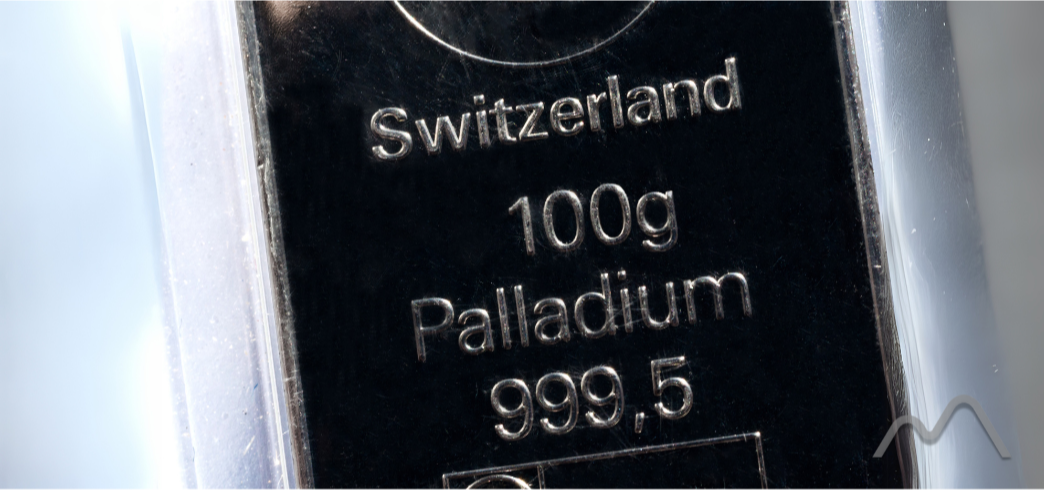
Predicting the palladium price is challenging. Although palladium is a very rare precious metal, its price is strongly influenced by industrial demand and geopolitical developments. Historically, the palladium price trend has mirrored gold’s, with one major difference: during times of economic uncertainty, palladium tends to decline rather than rise.
The palladium price (Pd) is once again attracting investor attention. In this article, we explore the palladium price forecast, the key factors driving the palladium price, and current prices in both troy ounces and grams.
Palladium is a rare precious metal belonging to the platinum group. It has a silvery-white color, low weight, and excellent resistance to corrosion.
The largest demand for palladium comes from the automotive industry, where it is used in catalytic converters that reduce harmful exhaust emissions. Palladium is also used in electronics, jewelry, and hydrogen technology.
The palladium price is important because the metal is scarce and reacts strongly to shifts in supply and demand. Mining disruptions or increased industrial demand can quickly push prices higher.
The palladium market is known for its sharp fluctuations. In the early 2000s, palladium traded around €3,500 per kilo, but reached an all-time high of €76,000 per kilo in 2021.
Since then, the palladium price has fallen significantly due to the rise of electric vehicles and reduced demand for catalytic converters.
In 2025, the palladium price averages between €35,000 and €40,000 per kilo (around €1,100–€1,250 per troy ounce), still well above historical levels. Currently, palladium is slightly cheaper than buying platinum.
Over the past five years, the palladium price has moved from record highs to sharp declines. From 2018 to 2020, palladium surged, peaking at €72,430 per kilo. The price then fluctuated between €46,792 and €76,341 before dropping sharply in late 2022.
2023 was a strong year for gold, which rose by 13%, while other precious metals weakened. Palladium suffered the steepest decline, losing nearly 39% in value.
The palladium price forecast depends on a mix of industrial demand, supply, commodity markets, and global economic trends. Roughly 80% of global palladium production comes from Russia and South Africa, making the market highly sensitive to supply disruptions.
Demand from the automotive sector is critical. Palladium is essential in catalytic converters for gasoline engines. Rising car production increases demand and pushes the palladium price higher. Conversely, the rise of electric vehicles reduces demand, putting downward pressure on prices.
Geopolitical risks also play a major role. Russia produces about a quarter of the world’s palladium. During the Russia–Ukraine conflict, fears of shortages pushed prices to a record €76,341 in 2021. When no shortage materialized, prices corrected sharply.
Lastly, the U.S. dollar exchange rate affects European prices. Because palladium is traded in dollars, a strong euro makes it cheaper in Europe, while a weak euro raises the local price.
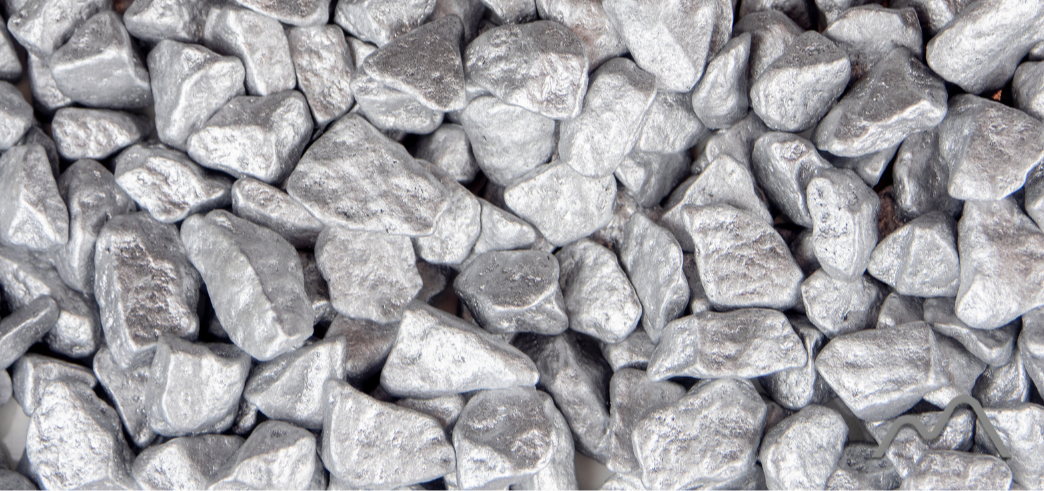
Palladium is a rare precious metal belonging to the platinum group.
The short-term palladium price prediction is cautiously optimistic but remains tied to industrial demand and geopolitical developments. The palladium price has rebounded slightly in the first half of 2025 following sharp declines in previous years.
This recovery is supported by improving car production and stable demand for hybrid vehicles. However, supply remains vulnerable, as mining is concentrated in Russia and South Africa. Export disruptions or reduced car sales could quickly affect prices.
Currency movements also matter. A weaker U.S. dollar often boosts palladium’s appeal for investors, while persistent inflation continues to support precious metals.
Analysts generally expect the palladium price to remain between €1,100 and €1,300 per troy ounce in 2025.
Looking further ahead, palladium price predictions remain uncertain. While short-term prices depend on auto sector trends, the long-term outlook is shaped by technological and structural changes.
The global energy transition reduces demand for catalytic converters, and thus for palladium. Over time, this could create downward pressure on the palladium price.
However, analysts see new opportunities in hydrogen production and storage, where palladium is used in fuel cells and electrolysers. Rising investment in hydrogen technology could offset some lost demand from the automotive industry.
Supply will likely remain tight. Mining output is barely increasing, and geopolitical risks in Russia and South Africa continue to affect stability. These factors help maintain a long-term price floor.
Most analysts expect a stable to slightly upward price trend between €1,200 and €1,500 per troy ounce by 2030.
Globally, palladium prices are quoted in U.S. dollars per troy ounce. For European investors, it’s useful to convert the price to euros per gram. Exchange rate fluctuations directly affect the palladium price in euros. A stronger euro lowers the local price, while a weaker euro makes palladium more expensive.
At a kilogram price of €35,000–€40,000, this equals roughly €1,090–€1,245 per troy ounce, or €35–€40 per gram.
The palladium price remains volatile but is showing signs of stabilization. Prices are primarily influenced by industrial demand, limited supply, and geopolitical risks.
In the short term, modest recovery is likely; in the long term, the energy transition and hydrogen technology will determine the market’s direction.
At current levels of €35,000–€40,000 per kilo, palladium remains a rare and valuable metal. For investors, it offers diversification potential but also higher risk due to its volatility.
The Silver Mountain does not provide investment advice and therefore this article should not be considered as such. Past results do not guarantee future results.
Currently, the palladium price ranges between €35,000 and €40,000 per kilo, or about €1,100 to €1,250 per troy ounce. Prices change daily based on supply, demand, and currency exchange rates.
Because most palladium production comes from Russia and South Africa, the market is sensitive to supply disruptions. Changes in car production, industrial demand, or geopolitical tensions often cause large price swings.
Analysts expect a stable to slightly rising palladium price. Demand from the automotive sector and interest in hydrogen technology support prices, though electric vehicle growth poses a risk.
Long-term prices depend on industrial innovation, the shift to hydrogen energy, mining output, and global political stability. These factors make palladium both risky and potentially rewarding for long-term investors.
Gold and silver typically have a broader investor base and wider industrial applications. Palladium, on the other hand, has a more concentrated source of demand, mainly from the automotive industry. This makes palladium riskier, but also potentially more rewarding when timed correctly. Moreover, developments such as the electric vehicle (EV) transition strongly influence palladium’s position in the market.
Rolf van Zanten is the founder and owner of The Silver Mountain, a specialist in physical precious metals since 2008. With nearly twenty years of experience in the precious metals trade, Rolf shares his expertise on investing in gold, silver, and platinum in an accessible and reliable way. His knowledge of the international gold and silver markets helps investors make well-informed decisions. In his role as an expert, he strives to ensure that transparency, security, and trust are at the heart of every purchase.

Be the first to discover the latest products and the latest news about precious metals.



 Nederlands